
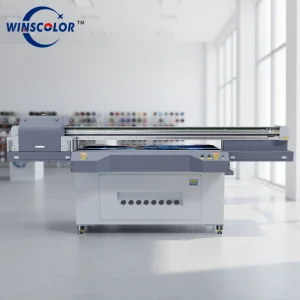
Direct factory production lines integrating industrial grayscale printheads, multi-zoned vacuum beds, and high-intensity LED-UV cure engines for commercial signmakers and high-speed industrial lines.
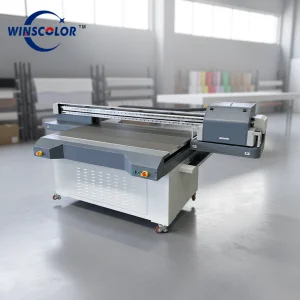
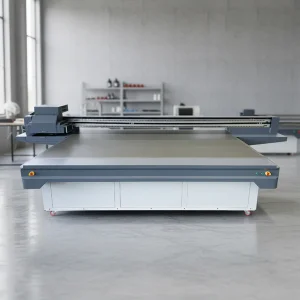
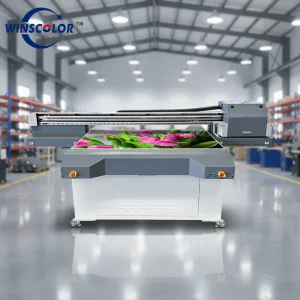
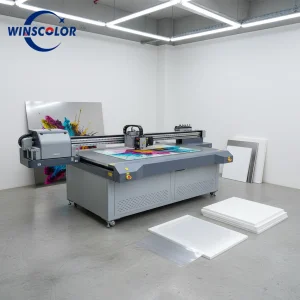
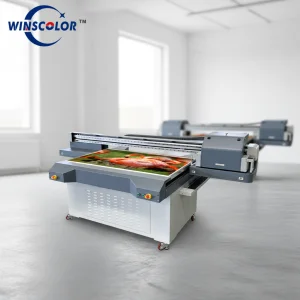
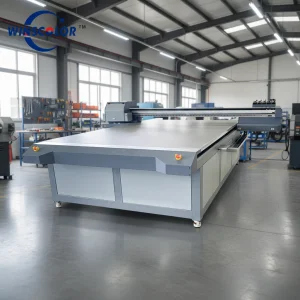
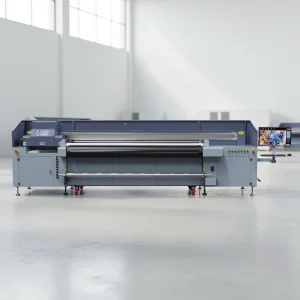
The worldwide wide format printing hardware industry is undergoing a structural transition from legacy solvent systems to non-VOC, energy-efficient LED-cured platforms and hybrid transport mechanisms.
Global environmental mandates (such as EU REACH, RoHS, and US EPA emissions caps) have forced commercial print service providers (PSPs) to decommission toxic, slow-drying solvent hardware. Instant polymerization via UV-LED diode arrays provides 100% solids ink transfer without outgassing.
Traditional gravure, offset, and analog screen setups carry prohibitive platemaking expenses and extended setup cycle times. Wide format digital inkjet systems eliminate pre-press plates entirely, making unit-of-one custom packaging and short production runs immediately profitable.
Commercial shops can no longer justify single-purpose machinery. Modern high-volume enterprises actively procure hybrid conveyorized belts that seamlessly alternate between rigid corrugated display panels and flexible continuous vinyl or textile web rolls.
Engineered in state-of-the-art facilities in Jinan, Shandong, Winscolor leverages localized cluster supply ecosystems to provide precision industrial gantry mechanics at a fraction of traditional western capital costs.
Unlike third-party assemblers, our plant utilizes dedicated five-axis CNC gantry milling centers to machine dual THK linear rail beds directly from aged high-tensile steel frames. This process eliminates micro-deflections and carriage oscillations across spans up to 3.3 meters.
Every print engine is paired with in-house programmed driver boards tailored specifically for industrial piezo actuators (such as Ricoh Gen6, Gen5, and Epson i3200). Custom fire-pulse voltage profiles guarantee satellite-free drop placement at maximum carriage traverse velocities.
Prior to export packaging, every manufactured chassis undergoes a rigorous 72-hour continuous test cycle. This protocol evaluates high-frequency vacuum stability, dynamic carriage balance, negative pressure calibration, and multi-layer spot varnish registration.
Engineered for direct-to-object and direct-to-substrate deposition across complex materials without peeling, flaking, or thermal warping.
Equipped with dual-lamp UV curing and inline adhesion promoter jetting. Print shops produce backlit decorative glass, kitchen splashbacks, and vitrified ceramic tiles with superior cross-hatch scratch resistance (up to 4H hardness).
Eliminate die and flexo tooling setup costs. Convert coated and uncoated corrugated cartons, honeycomb boards, and cardboard displays instantly with variable data serialization, barcodes, and vibrant photorealistic product branding.
Precise multi-drop micro-layering of white inks underneath high-gloss transparent UV varnish creates realistic wood grain simulations, oil painting brushwork reproductions, and tactile ADA-compliant architectural signage.
Print directly on anodized aluminum, Dibond composite panels, and brushed stainless steel with high-flexibility UV inks that withstand subsequent industrial sheet stamping, cutting, bending, and thermal forming operations.
Strategic equipment upgrades are focused on automated ink circulation, intelligent drop-size distribution, and synchronized inline drying.
Heavy titanium dioxide pigments in white ink formulations are susceptible to rapid sedimentation. Advanced printers now feature continuous internal negative pressure recirculation through the printhead cavity itself, preventing nozzle starvation and micro-clogging.
Traditional mercury vapor UV lamps operate at extreme surface temperatures, causing lightweight styrenes, thin PVC films, and corrugated flutes to deform. Solid-state UV-LED curing engines generate cold light wavelengths (395nm/365nm), reducing thermal strain and lowering energy costs by up to 70%.
Modern industrial printheads employ variable droplet actuation from 5 pl to 24 pl. Ultra-fine drops create smooth skin tones, delicate micro-text, and seamless gradients, while larger droplets fill heavy solid color blocks quickly in single-pass operations.
When procuring wide format inkjet systems across borders, engineering audits should evaluate mechanical stiffness, ink delivery topologies, and total cost of ownership (TCO) beyond the base purchase price.
Check the bare frame net weight. Light chassis flex during fast carriage reversals. Industrial systems must integrate magnetic scale linear encoders and high-wattage AC servo motors (such as Panasonic or Delta) to prevent raster step distortion over high-duty cycles.
Proprietary cartridge-chip lockouts can inflate recurring operating costs by 400%. Ensure your equipment manufacturer provides an open bulk-supply reservoir system compatible with certified global ink formulators (such as Toyo, Nazdar, or approved OEM chemistries).
Machine downtime halts your delivery pipelines. Verify the vendor's modular parts support, real-time board-level firmware debugging via cloud diagnostics, and localized logistics for critical components including boards, filters, and valves.
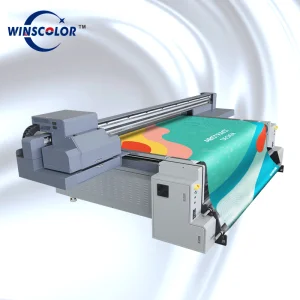
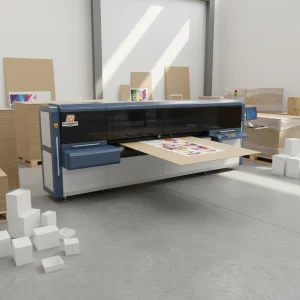
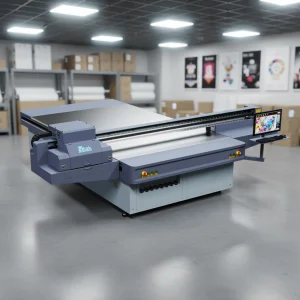
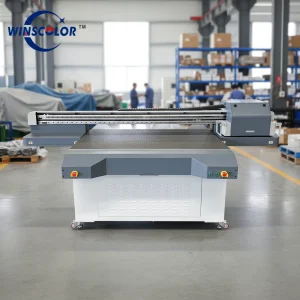
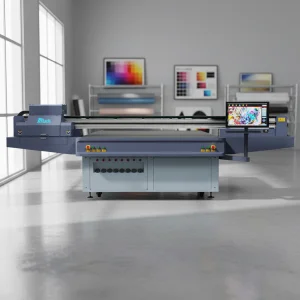
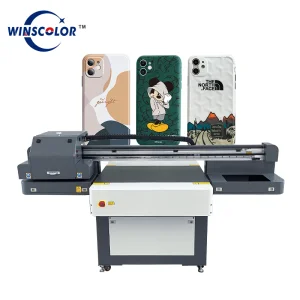
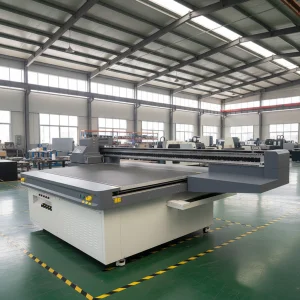
Explore our extended industrial machinery portfolio covering dedicated roll-to-roll banner systems, super-wide format corrugated lines, and compact precision flatbed machinery.

Direct answers from our senior engineering team covering mechanical integration, printhead configurations, and global operational standards.
Contact our Jinan manufacturing plant directly. Send us your substrate profiles and expected daily output, and our senior engineers will calculate optimal printhead layouts, formulate custom ink configurations, and provide comprehensive wholesale factory pricing.