Explore our leading plate-free digital corrugated production lines and heavy-duty UV flatbed hybrid systems, precision-engineered to meet stringent international convertor standards.
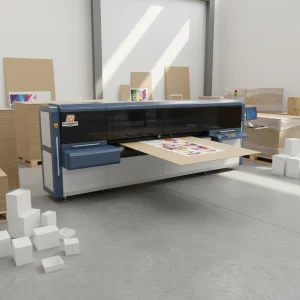
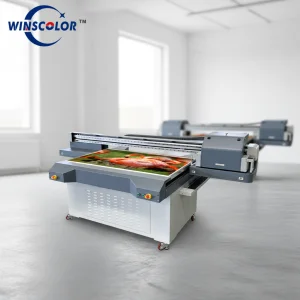

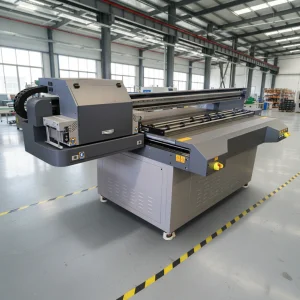

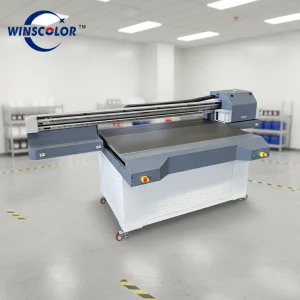
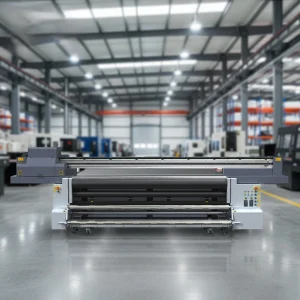
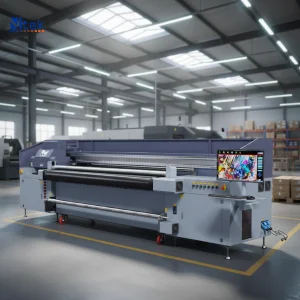
Analyzing search intent, operational bottlenecks, and macroeconomic trends driving global packaging converters toward flexible digital inkjet architectures.
Traditional flexographic printing commands substantial upfront investments in photopolymer plates, rotary cutting dies, and complex cylinder set-ups. A single four-color flexographic plate changeover can incur hundreds of dollars in material overhead and consume 45 to 90 minutes of unproductive press line downtime. As a premier corrugated board printing machine manufacturer, our digital inkjet solutions operate strictly on a zero-plate (direct-to-board) workflow, accepting native raster or vector files directly from prepress workflow systems (such as Caldera, Onyx, or ColorGate).
Global consumer packaged goods (CPG) brands are accelerating SKU fragmentation through seasonal campaigns, localized promotional packaging, and targeted e-commerce subscription boxes. Analog converters struggle to fulfill run lengths below 3,000 sheets economically. Our digital machines empower packaging plants to accept profitable on-demand orders ranging from 1 unit to 50,000 units, drastically shortening lead times from weeks to hours without compromising margin structures or encountering Minimum Order Quantity (MOQ) resistance.
Conventional heavy rubber rotary impression cylinders compress the delicate fluting profile of single-wall (E, B, C flute) and double-wall (BC, EB flute) corrugated liners. This compression compromises the structural Edge Crush Test (ECT) and Box Compression Test (BCT) ratings by up to 18-25%. Our digital non-contact drop-on-demand inkjet technology releases picoliter micro-droplets with micron-scale trajectory precision above the substrate surface, preserving 100% of the flute geometry and carton structural integrity.
A granular deconstruction of why our heavy-gauge Jinan manufacturing yields superior droplet placement accuracy, continuous thermal stability, and mechanical longevity.
We engineer our corrugated systems utilizing industry-benchmarked Ricoh Gen6 (MH5320) and high-speed Kyocera KJ4B / KJ4A industrial printheads. Engineered with isolated stainless steel fluid chambers and PZT actuators, these heads support jetting frequencies up to 50 kHz. The multi-drop grayscale control produces microscopic picoliter droplet volumes, ensuring micro-text as fine as 2pt remains sharp and legible on open porous brown Kraft, bleached white top-liners, and coated clay paperboards.
Our dual-line production architecture satisfies differing regulatory and aesthetic requirements across global packaging sectors:
One of the primary causes of head strikes on corrugated converters is warped, heat-buckled, or moisture-imbalanced board edges. Winscolor machines feature high-power multi-zone aluminum vacuum beds backed by dual high-torque turbine regenerative blowers. Independent aerodynamic matrix partitions isolate localized suction pressure, pulling warped corrugated and heavy honeycomb boards flat to maintain a consistent 1.5mm to 2.0mm nozzle-to-substrate standoff distance.
A rigorous engineering audit comparing Multi-Pass Flatbed, High-Speed Single-Pass Digital, and Conventional Flexographic post-print workflows.
| Performance Metrics | Multi-Pass Digital Flatbed (e.g. YC2513 / YC2030) | High-Speed Single-Pass Digital Line | Conventional Rotary Flexo Post-Print |
|---|---|---|---|
| Target Output Range | Short-to-medium prototyping & bespoke POP displays (100–1,500 m²/shift) | Continuous industrial run rates (up to 30–80 m/min linear throughput) | Ultra-high static volume (10,000+ identical units per run) |
| Pre-Press & Make-Ready Time | < 2 minutes (direct RIP transfer) | < 3 minutes (variable queuing) | 45 to 120 minutes (plate mounting, anilox ink washup) |
| Initial Tooling / Plate Cost | $0.00 (Purely digital rastering) | $0.00 (Purely digital rastering) | $350–$1,800+ per four-color set |
| Color Gamut Capability | CMYK + LC + LM + White + Gloss Varnish tactile 3D relief | CMYK + Optional Double Cyan/Magenta or Orange/Green expansion | Spot PMS spot colors limited by physical deck count (typically 3-5 colors) |
| Flute Caliper Retention | 100% (Zero mechanical contact compression) | 100% (High-precision synchronized belt feed) | 80%–88% (Mechanical nip-point cylinder pressure) |
| Eco-Compliance & Chemical Footprint | VOC-free UV LED cross-linking or aqueous pigment | Non-toxic food-grade aqueous water-based formulations | Solvent or water effluents requiring municipal wastewater treatment |
Why procurement officers, plant directors, and international brand partners leverage our 20,000 m² production facility for direct OEM/ODM industrial machinery procurement.
Located in the heart of China’s heavy machinery manufacturing cluster in Jinan, our facility directly leverages local high-precision CNC heavy casting, precision linear guide rolling stock, electrical cabinet fabrication, and optical sensor supply networks. By consolidating metal structural fabrication, annealing furnaces, five-sided bridge milling centers, and specialized cleanroom printhead assembly lines within our own factory walls, Winscolor eliminates 30-40% of the intermediary markup standard among Western white-label equipment brand names.
Every industrial corrugated printing machine manufactured at our Jinan plant undergoes a multi-point quality assurance verification process prior to dispatch. Structural components undergo finite element analysis (FEA) to confirm vibrational damping characteristics at high carriage accelerations. Assembled systems are subjected to a continuous 72-hour burn-in stress test, validating RIP processing bandwidth, ink negative-pressure consistency under ambient temperature fluctuations, and multi-layer ink registration tolerances across heavy fluted substrates.
As a seasoned exporter across North America, Europe, Latin America, and Southeast Asia, our R&D team engineers custom equipment envelopes tailored to regional production configurations. We deliver tailored gantry widths (from 1.6m up to 3.3m superwide spans), bespoke vacuum suction configurations for heavy double-wall fluting, customized automated auto-loading/unloading roll tables, specialized inline barcode/vision verification cameras, and localized software interfaces supporting multi-language operational environments.
A transparent breakdown of direct consumables, depreciation amortization, energy efficiency, and operational labor metrics for packaging executives.
For mid-sized carton manufacturers producing between 500 and 8,000 units per order, an industrial digital corrugated system achieves full capital amortization significantly faster than an analog post-print line. By eliminating polymer flexo plate manufacturing fees, plate storage logistics, manual alignment scrap sheets, and specialized operator preparation hours, our clients typically observe a verified return on investment (ROI) within 11 to 16 operating months based on a two-shift daily production cycle.
Through our intelligent variable droplet algorithms (which apply smaller 5pl droplets for delicate highlight gradients and larger 12pl/24pl droplets for dense flood-coat areas), ink consumption is optimized to approximately 6.5 ml to 9.2 ml per square meter at 100% CMYK coverage. Compared to older continuous continuous-ink jetting architectures, our drop-on-demand piezo systems recover up to 18% in annual liquid consumables expenses, while preserving vivid color saturation (Delta E < 1.8 across ISO 12647-7 printing standards).
Conventional hot-air gas or IR driers installed on traditional corrugated printing machines draw substantial electrical loads (often exceeding 65 kW to 110 kW/hour). Our advanced UV LED curing and rapid-wicking aqueous pigment systems draw a fraction of this power consumption, averaging a consolidated 8.5 kW to 14.5 kW total line draw during full carriage traversal. This allows plants in regions with stringent peak-tariff industrial electrical costs to significantly suppress operational overhead.
Strategic analysis of upcoming technological disruptions: water-based food-safe barriers, inline conversion, and closed-loop AI visual inspection.
The global regulatory tightening on single-use plastic laminates has spurred intense demand for fully recyclable, plastic-free mono-material fiber packaging. Modern corrugated printing machines are transitioning toward functional aqueous inks enriched with water-resistant and grease-barrier properties. By depositing protective resins in-line with chromatic pigments, packaging converters can deliver water-resistant corrugated shippers for fresh agricultural produce and frozen meat logistics without non-recyclable polyethylene wax treatments.
The historical separation between the printing press and subsequent digital flatbed die-cutting tables is narrowing. Next-generation corrugated machinery lines are converging toward integrated single-pass architectures where high-speed digital inkjet heads are mechanically married with inline digital creasers, rotating rotary slitting modules, and automated stacking shinglers. This unified inline footprint removes intermediate manual skid transport, reducing factory floor transit damage and operator handling risks.
Unscheduled machine stops due to clogged nozzles represent costly downtime. Our engineering roadmap integrates high-resolution linear CCD cameras directly behind the printhead array. Operating in tandem with on-board edge AI microprocessors, the vision system scans live test strips at full production speed, immediately detecting missing jets or micro-banding. If a deflected nozzle is identified, the RIP system automatically recalculates the spatial dot matrix, delegating adjacent nozzles to fire compensation droplets in real-time.
From fragile luxury cosmetic packaging to rugged maritime shipping boxes, review the diverse production environments powered by our digital corrugated machinery.
With DTC (Direct-to-Consumer) retail expanding, the secondary shipping box has become the frontline of brand identity. Our machines excel at dual-side printing: applying cost-efficient high-contrast monochrome routing codes on the exterior brown Kraft liner, while printing high-fidelity, vibrant full-color inside unboxing artwork directly onto bleached Kraft or coated white liners, eliminating litho-laminated label gluing.
Supermarket end-caps, shelf-ready trays, and Free Standing Display Units (FSDU) constructed from heavy double-wall (EB or BC) corrugated and honeycomb structural boards require both structural strength and photographic fidelity. By deploying spot gloss varnish and vivid white ink channels on our large-format flatbed systems, packaging fabricators create striking three-dimensional embossed textures that stand out on retail floors.
For heavy machinery parts, automotive components, and international export crating, solid wood is increasingly replaced by ultra-dense paper honeycomb boards and multi-wall heavy corrugated. Our vacuum gantry platforms handle materials up to 100mm in structural thickness with high material weight loads, allowing direct printing of international hazardous material (HAZMAT) warnings, export shipping manifests, and moisture-resistant barcoding.
A resilient international deployment framework ensuring zero downtime through proactive parts provisioning, remote telemetry, and qualified local engineering partners.
To ensure frictionless plant commissioning across highly regulated jurisdictions, all Winscolor machines conform to the European Union’s CE Machinery Directive 2006/42/EC and Low Voltage Directive (LVD). Electrical cabinets are wired to rigorous industrial standards utilizing premium, globally accessible switchgear components (Schneider, Omron, Mean Well). Optical safety light curtains, pneumatic emergency shut-offs, and dual-interlock operator guards ensure compliance with OSHA and CE industrial safety protocols.
Each production line is equipped with an encrypted industrial IoT diagnostic gateway. With customer authorization, our Jinan senior application engineers can remotely inspect ink channel pressurization curves, board feed servo synchronization logs, and carriage encoder status in real-time. Over 88% of minor operational or color-calibration queries are diagnosed and resolved remotely within hours, minimizing unplanned downtime and avoiding costly waiting times for overseas technician transit.
We maintain guaranteed inventories of critical consumables and mechanical wearing components — including printhead boards, linear raster encoders, negative pressure pumps, UV LED power supplies, and ink sub-tanks. Through air-freight agreements with DHL Express and FedEx International Priority, emergency replacement modules reach client facilities across North America, Europe, the Middle East, and Latin America within 48 to 72 business hours, backed by local certified service agency networks.
In-depth answers curated by our senior applications and export engineering departments to clarify technical specifications, operational costs, and substrate compatibility.
Explore our heavy-duty hybrid roller, wide-bed flatbed, and specialized multi-substrate industrial printers, proven across high-throughput production environments worldwide.
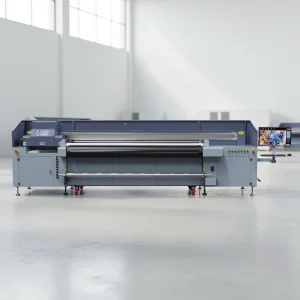
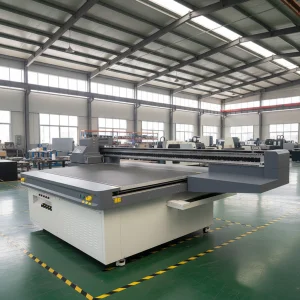
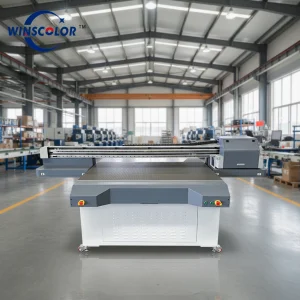
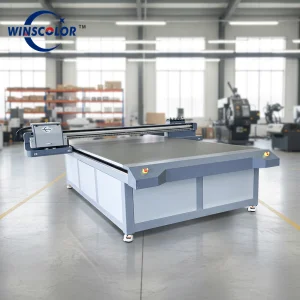
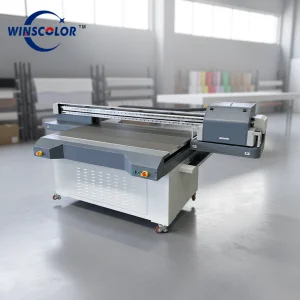



Submit your substrate fluting specifications, daily m² production targets, and ink formulation preferences. Our senior applications engineers will model a bespoke Total Cost of Ownership (TCO) breakdown and provide customized test print samples within 48 hours.
