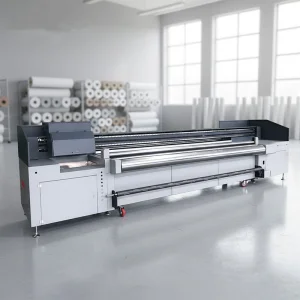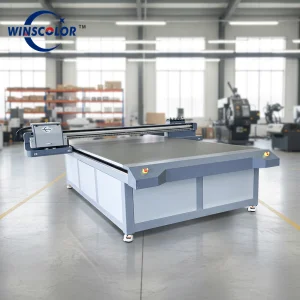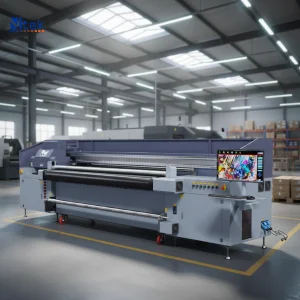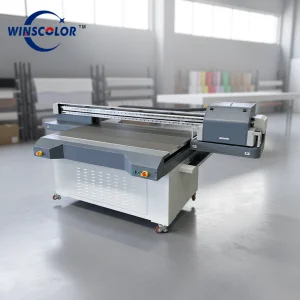
High-Quality Manufacturer of Acrylic Metal Wood PVC Board Glass LED UV Flatbed Printer Suppliers, Factories
Explore Product
Direct factory export configurations engineered for high-precision rigid substrates, packaging, and custom industrial manufacturing workflows.
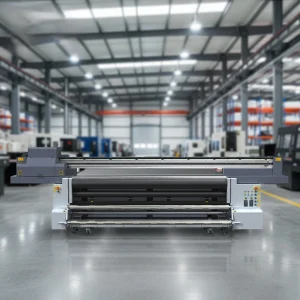
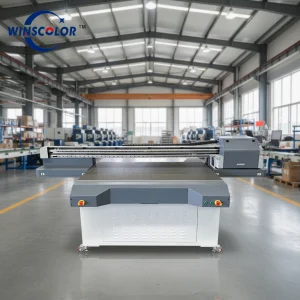
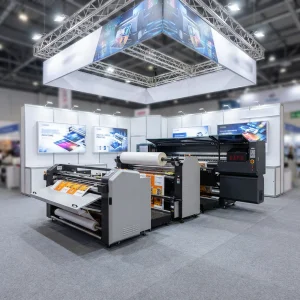
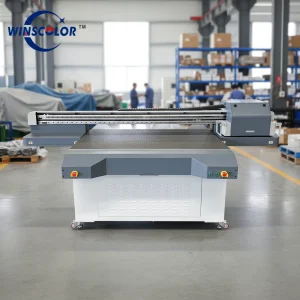
An authoritative analysis of industrial print migration from conventional analog methods to automated, agile digital flatbed infrastructure.
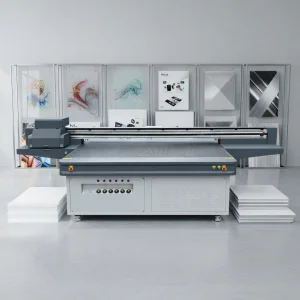
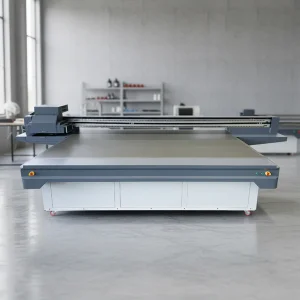
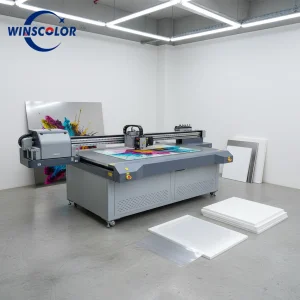
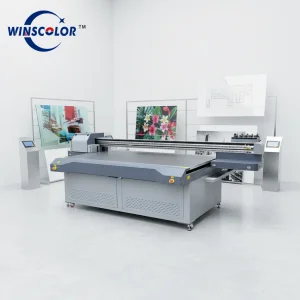
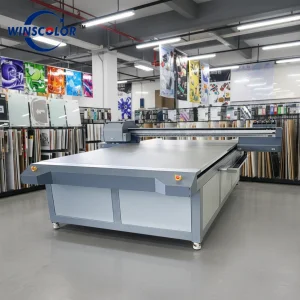
In high-throughput fabrication ecosystems across North America, Europe, Southeast Asia, and Latin America, the designation YC2513H has transitioned from a specialized machine reference to a global industrial benchmark. Representing a standard 2500 mm × 1300 mm (approximately 8.2 ft × 4.2 ft) working print envelope, the YC2513H precisely aligns with internationally standardized sheet stock: 4x8 ft architectural acrylics, cellular PVC boards, aluminum composite panels (ACP/Dibond), corrugated plastics, and engineered structural glass. In prior decades, regional converters relied heavily on screen-printing lines requiring film positives, photopolymer stencils, and extended drying kilns. The modern international trade demands ultra-short cycle times, localized mass customization, and zero-chemical-recovery washdowns.
As premier exporters of the YC2513H architectural flatbed series, tier-one manufacturers must address complex international operational tolerances. Print operations in varying climates—such as the high-humidity packaging hubs of Southeast Asia or the arid manufacturing corridors of Northern Mexico and the American Southwest—require absolute environmental stability. The modern YC2513H engineering platform incorporates thermal-isolated dual linear guideways, self-compensating linear encoder strips, and intelligent negative-pressure ink delivery circuits. Exporters catering to cross-border logistics coordinate rigorously with international regulatory bodies, providing turnkey compliance including CE-Machinery Directive (2006/42/EC), EMC testing, and UL-certified electrical sub-assemblies.
Furthermore, international procurement teams no longer evaluate equipment purely on acquisition cost; capital expenditure strategies now scrutinize Total Cost of Ownership (TCO), daily yield per square meter, ink drop placement accuracy, and uptime resilience. An enterprise investing in a YC2513H from verified OEM exporters gains a multi-substrate factory capable of shifting seamlessly from rapid high-density PVC POP displays to five-layer haptic relief Braille printing without mechanical retooling.
Key technological shifts reshaping the profitability, ecological compliance, and throughput of industrial UV printing.
Traditional mercury-vapor arc curing bulbs generated extreme operational heat, often exceeding 75°C at the substrate plane, leading to heat-distortion on delicate expanded polystyrene and thin fluted polypropylene. The YC2513H utilizes dual liquid-cooled LED arrays that operate at low curing temperatures while providing instant on/off triggering, reducing power usage by over 45% and completely eliminating hazardous ozone ventilation requirements.
Modern export-grade YC2513H platforms integrate high-frequency grayscale piezoelectric printheads (such as the industrial Ricoh Gen6 family) firing micro-droplets ranging from 5 to 15 picoliters. With high jetting frequencies exceeding 30 kHz to 50 kHz, the platform achieves remarkable photo-realistic gradations, razor-sharp 2pt typography, and rich, saturated solids across industrial-speed multi-pass cycles.
Substrate warpage causes micro-collisions and printhead strikes. The YC2513H features a heavy-duty, aircraft-grade milled aluminum honeycombed vacuum bed divided into independently controlled chambers. Operators can lock down 4x8 ft sheets or smaller customized nested templates without physical edge clamps, preserving planarity within a ±0.03 mm vertical deviation across the entire table area.
How global enterprises utilize the YC2513H across distinct industrial sectors to replace legacy processes and capture high margins.
By employing customized chemical nano-primers applied inline or via precision atomizers, the YC2513H binds directly to silicate architectural glass. Ideal for exterior facades, hotel elevator wraps, interior office partition manifestations, and splashbacks with long-term scrub resistance and moisture stability.
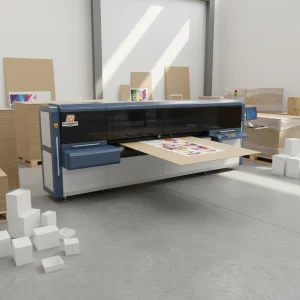
Converters leverage the platform for prototyping and short-run production of rigid setup boxes, corrugated presentation suites, and high-density wooden luxury cases. Capable of simultaneous white opacity laydowns and selective spot gloss varnish for simulated selective embossing and metallic foiling emulation.
Sub-surface printing on polycarbonate, clear polyester films, and brushed anodized aluminum instrument control panels. The high-density white background prevents backlighting bleed-through in automotive, aerospace, and medical device human-machine interface (HMI) manufacturing.
By repeatedly micro-stacking UV white and clear structural varnish droplets, the printer constructs precise tactile geometry meeting international ADA regulations, producing resilient Braille characters and architectural wayfinding displays in a single digital automated run.
Anticipating the technological horizon of the YC2513H series through next-generation automation and integrated factory data architectures.
The traditional method of manual substrate edge positioning against retractable registration pins is rapidly evolving into dynamic, camera-guided spatial compensation. Future YC2513H export configurations incorporate high-resolution multi-camera gantry systems that capture substrate position, rotation, and micro-warping in real time. The RIP software instantly transforms the print coordinate matrix, compensating for board skew within milliseconds. This eliminates operator loading errors and makes the printer ready for automated loading via robotic suction arms and automated guided vehicles (AGVs).
Next-generation YC2513H machines integrate continuous environmental and hydraulic sensor arrays. By monitoring ink viscosity, acoustic drop behavior, ambient relative humidity, and LED curing wattage at millisecond intervals, onboard edge processors adjust sub-tank heating and negative meniscus vacuum pressure autonomously. Exporters and factory support engineers can remotely interrogate internal machine logs through encrypted telemetry, identifying nozzle performance issues or linear guide wear prior to catastrophic production failures.
Stringent European REACH, RoHS, and California Proposition 65 mandates are reshaping industrial ink formulations. The YC2513H platform is rigorously tested and optimized for ultra-low monomer migration inks, bio-based reactive diluents, and heavy-metal-free pigment dispersions. This unlocks verified production channels in consumer-facing corrugated food packaging, children's toys, and indoor educational displays requiring GREENGUARD Gold certifications.
Why leading global distributors and corporate print facilities partner with professional YC2513H original equipment exporters.
Every YC2513H export unit undergoes a rigorous 72-hour continuous motion test, vacuum pressure retention verification, and multi-layer drop-positioning calibration under simulated factory load. Full print test certificates and electronic interferometer reports accompany each shipped chassis.
Maritime cross-continental transit exposes machinery to salt fog, extreme thermal swings, and violent container resonance. Units are sealed in barrier vacuum-foil with molecular-sieve desiccant blocks, bolted to reinforced steel-base skids, and enclosed in heavy-duty fumigated wooden crates.
Recognized exporters provide comprehensive lifecycle assurance: multi-language technical manuals, direct engineer-to-engineer video support, rapid spare-parts distribution networks, and ICC profile creation for custom substrates to maximize production uptime.
Detailed insights compiled directly by senior mechanical engineers and international supply chain directors.
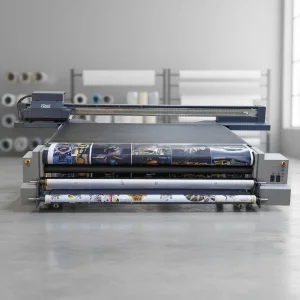
Expand your manufacturing capabilities with our complementary large-format flatbed, hybrid roller, and high-speed rotary printing machinery.