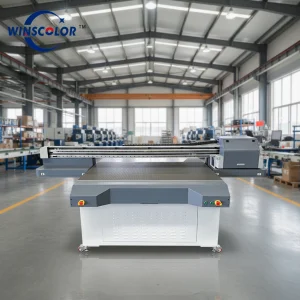
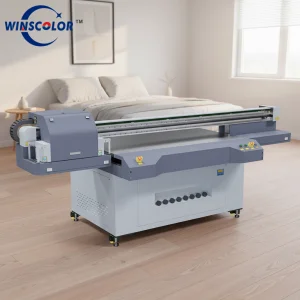
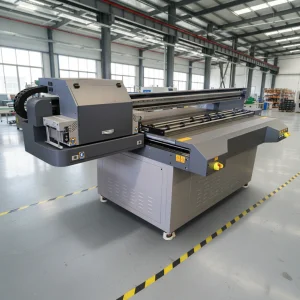
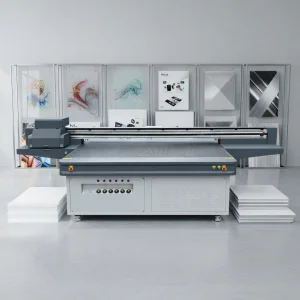
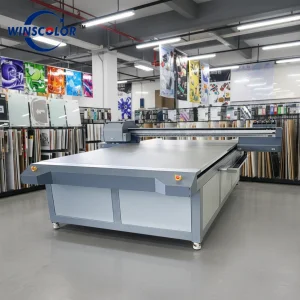
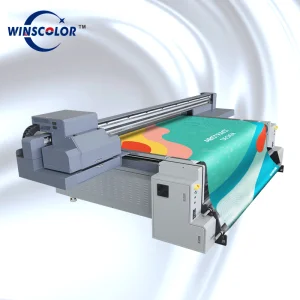
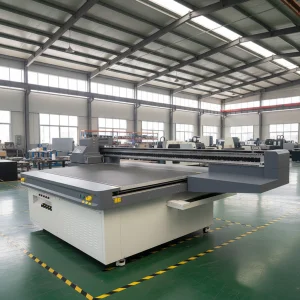
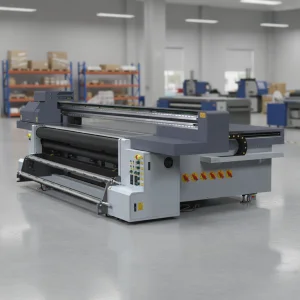
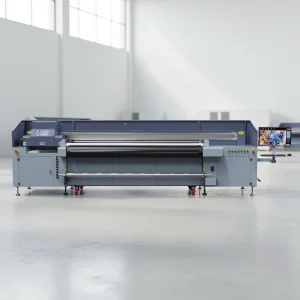
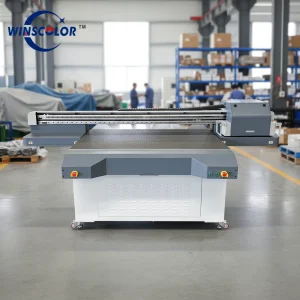
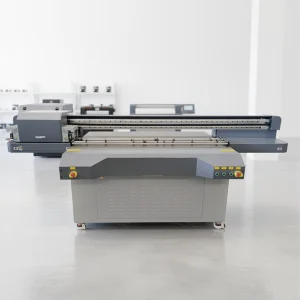
Explore our industrial-grade hybrid and flatbed platforms equipped with Ricoh Gen6 printheads, advanced negative pressure delivery, and variable drop greyscale technology.

A comprehensive analysis of dual-media digital converting, fluid mechanics, and supply chain shifts in wide-format manufacturing.
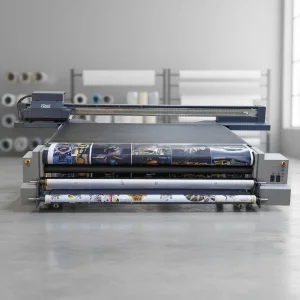
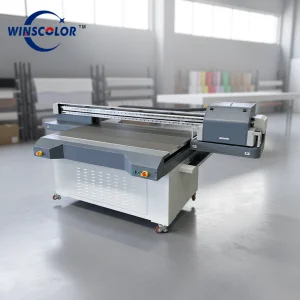
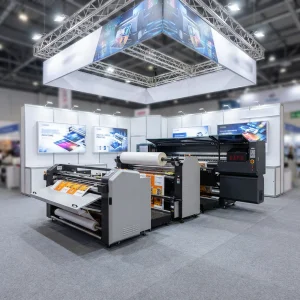
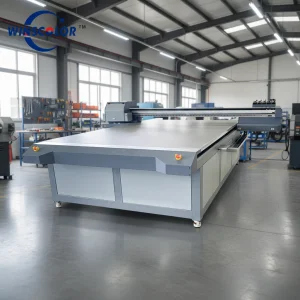
The wide-format digital graphics and industrial decoration sectors are undergoing an unprecedented structural transition. Conventional manufacturing facilities historically segregated production workflows by deploying dedicated rigid vacuum flatbed machines alongside independent roll-fed continuous plotters. This structural separation introduced excessive capital expenditure, doubled operational footprints, and increased idle machine hours. The modern UV hybrid printer addresses this structural inefficiency by integrating high-traction industrial conveyor belts, vacuum-assisted transport zones, and pneumatic extension tables into a single chassis.
In the contemporary global market, manufacturing agility determines survival. Industrial print service providers (PSPs) face shrinking order turnaround times, hyper-customization demands, and variable media specifications. Modern UV hybrid printing equipment engineered by Winscolor reconciles the rigidity required for dense glass, acrylic, and composite architectural panels with the micro-tension feedback loops mandatory for lightweight backlit films, textiles, and self-adhesive vinyl. Driven by industrial-grade piezoelectric printheads operating at high firing frequencies (up to 50 kHz), these hybrid engines establish continuous uptime while minimizing thermal distortion on temperature-sensitive polymers.
Overcoming viscosity shifts across flexible and rigid inks. Winscolor utilizes universal multi-matrix UV curing formulations coupled with continuous ink degasification and sub-tank negative pressure regulation to prevent micro-air pockets at high carriage velocities.
Equipped with magnetic linear scales and heavy-duty rubber-coated continuous conveyor systems, hybrid machines deliver dot placement accuracy within 0.01 mm, eliminating stepping discrepancies across 50-meter roll runs or segmented sheet feeds.
By transitioning entirely to solid-state UV-LED curing assemblies emitting at targeted 395nm wavelengths, power usage is decreased by up to 65% compared to metal-halide lamps, emitting virtually zero ozone and negligible heat onto substrates.
Where high-throughput digital printing is heading: Artificial Intelligence integration, variable data inline finishing, and photonic curing evolution.
Next-generation CCD industrial camera systems track substrate drift, skewed edges, and pre-cut contour positions in real time. Algorithms compensate carriage firing delay on the fly to eliminate manual physical registration fixtures.
Tunable dual UV-LED arrays dynamically adjust radiant exposure based on layer thickness. This facilitates simultaneous subterranean adhesion bonding and top-coat surface hardening for unmatched abrasive and chemical resistance.
Cloud-connected diagnostic boards continuously monitor piezo actuator waveforms, sub-tank vacuum fluctuations, meniscus pressure levels, and thermistor telemetry, warning maintenance operators prior to physical nozzle deflection.
Simultaneous deposition of CMYK + White + Structural Varnish creates physical embossed reliefs, Braille lettering, and simulated wood grain textures up to 2.0 mm thick in a unified printing pass without mechanical tooling.
Engineered deployment strategies across diverse production sectors, from architectural installations to short-run sustainable packaging.
Direct printing on monolithic and laminated glass, ceramic panels, and acoustic wood slats. Utilizing nano-particle coupling primers and concentrated opaque white backing allows back-lit hotel partitions and durable floor tiling to withstand environmental humidity.
Eliminating plate-making costs for micro-flute, double-wall corrugated card, and honeycomb paperboard. Perfect for dynamic versioning, brand sampling, and localized retail displays with immediate scratch resistance and structural fold integrity.
Continuous roll processing across 3.2-meter widths for seamless building wraps, vehicle side-curtains, and heavy flex banners. The cured cross-linked polymer matrix remains highly elastic, ensuring no micro-cracking upon heavy vinyl tensioning or mechanical grommet punching.
Detailed technical responses addressing printhead fluid dynamics, curing chemistry, and return on investment.
Engineered for high duty-cycles, customized packaging plants, architectural glass processing, and high-speed commercial printing.