Pre-calibrated hybrid UV systems featuring Ricoh Gen6 drop-on-demand piezo arrays, active tension controls, and dual-zone negative pressure vacuums.
Addressing structural market shifts from single-purpose printing machinery toward integrated hybrid production paradigms.
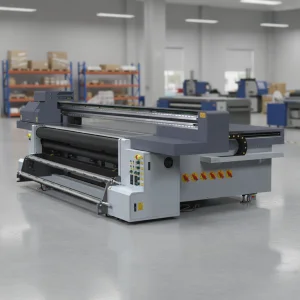
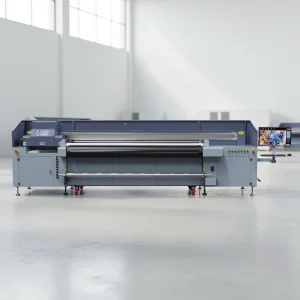
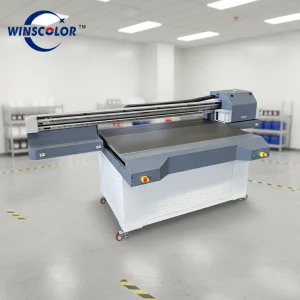
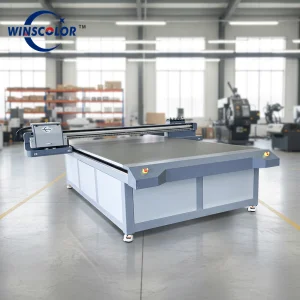
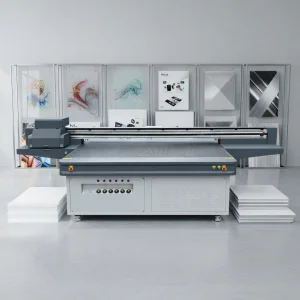
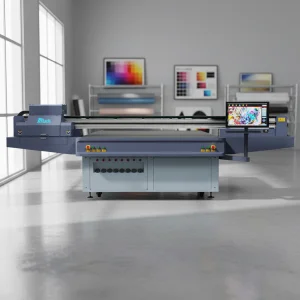
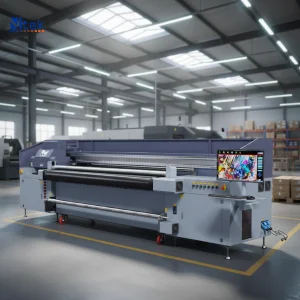
Traditional manufacturing environments segregated roll-fed printing and rigid flatbed processing onto distinct factory floors. The YC2513R engineering design collapses these capital-intensive pipelines into an optimized 2500 × 1300 mm footprint. By using a single mechanical gantry for heavy structural boards and an inline continuous media unwinder, international export operations report average footprint utilization increases of 38.4% and primary capital outlay reductions of over 30% compared to dual-engine investments.
The industrial integration of cold-cure UV-LED arrays running at 395nm wavelengths minimizes infrared thermal radiation over thermo-sensitive media. Substrates such as ultra-thin PVC films, polystyrene foam boards, and polyethylene banners run without thermodynamic warping. State-of-the-art closed-loop ink heating circuits keep fluid viscosities strictly pinned at 8–12 cPs, mitigating jetting drop trajectory distortions across changing seasonal factory temperatures.
Industrial packaging converting and visual communication supply chains across Europe, North America, and Southeast Asia demand faster turnaround times for personalized print runs. Modern export-grade YC2513R platforms use high-frequency magnetic encoder scales alongside double Japanese THK linear rails, guaranteeing sub-0.02 mm registration accuracy during high-speed, continuous 24/7 operating cycles.
Mechanical stress testing, kinematic calibrations, and fluid control architectures designed for continuous duty cycles.
Equipped with industrial greyscale Ricoh Gen6 (MH5320) piezo printheads capable of 50 kHz fire frequencies, the system fires droplet sizes from 5pl to 15pl. This range creates micro-fine font reproduction alongside dense, saturated solid fills. Proprietary electronic pulsing drives white ink recirculation down to the nozzle plate, preventing pigment sedimentation.
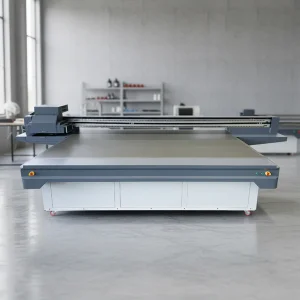
Engineered with an all-steel gantry frame that undergoes thermal tempering and stress-relief heat treatment to remove internal metallurgical shear forces. Gantry faces are milled in a single pass on five-axis CNC machining centers, avoiding carriage pitch and yaw deviations over the full 2500 mm traverse width.
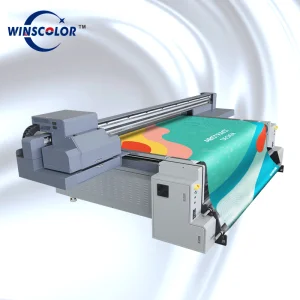
Unlike standalone roll printers that depend only on passive pinch rollers, the YC2513R features an air-shaft uncoiling and take-up unit driven by a digital torque controller. The system eliminates feed-length drift when transitioning between dense backlit textiles, flexible leather, and lightweight PVC films.
Comprehensive international certifications matched with direct engineer deployment infrastructure.
Exported systems carry complete CE Machinery Directive 2006/42/EC documentation, low-voltage directive compliance, and electromagnetic compatibility (EMC) testing. Internal wiring harnesses use UL-certified flame-retardant cabling, and automated emergency safety circuits shut down system movement when photoelectric light curtains trip.
YC2513R specialized UV formulations meet RoHS, REACH, and UL GREENGUARD Gold low-emission standards. This allows printed rigid displays and flexible wallpapers to be installed in sensitive commercial spaces, schools, healthcare facilities, and luxury hospitality interiors without hazardous outgassing.
Overseas distributor agreements are backed by factory-trained Tier-2 technical support hubs. In-market stock covers Ricoh printheads, pneumatic ink valves, sub-tank boards, and servo actuators. This local parts availability helps reduce average turnaround times for international warranty claims below 48 hours.
Engineered flexibility spanning interior design, technical industrial labelling, packaging, and commercial signs.
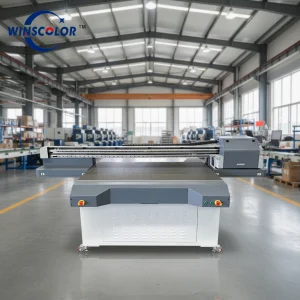
Direct jetting on flat glass panels using specialized silane primers. Multi-layer varnish creates frosted gradients, textured room dividers, and backlit architectural splashbacks that resist moisture and high ambient humidity.
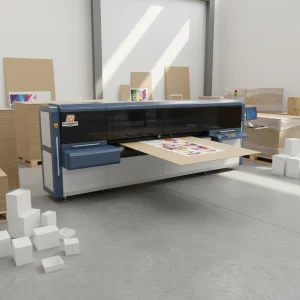
Custom packaging conversions on corrugated carton sheets and fluted polypropylene without plate costs. White under-printing keeps branding colors true on raw kraft board, balancing proof-of-concept prototyping with pilot production runs.
Industrial printing over micro-prismatic reflective vinyl and aluminum substrates. Formulated exterior UV inks maintain high optical clarity, UV resilience, and weather resistance under long-term outdoor sunlight.
Using the roll-to-roll module, flexible elastomeric UV inks bond to natural leather, synthetic leather (PU/PVC), and textured wallpapers. The cured ink layer resists cracking during mechanical folding, stitching, and high-frequency stretching.
Continuous investment in edge computing, closed-loop process monitoring, and sustainable ink chemistry.
Next-generation carriage arrays incorporate high-speed CMOS sensors that detect jetting trajectory errors in real time. The software then redirects neighboring nozzles through drop-substitution algorithms to prevent banding before a print run is lost.
Developing monomer ink formulations made from plant oils rather than crude petroleum extracts. These reduce lifecycle carbon emissions while maintaining high adhesion to tough substrates like untreated polypropylene and polycarbonate.
Future iterations include programmatic vacuum zones that adapt automatically to substrate dimensions sensed by optical arrays. This cuts manual masking time and supports robotic crane loading for 24-hour dark factory operations.
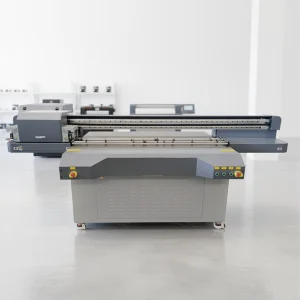
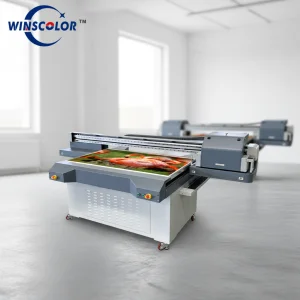
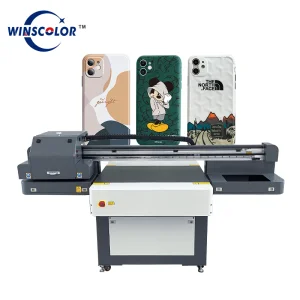
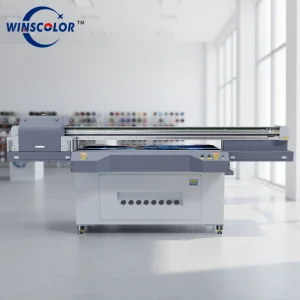
Browse complementary large-format flatbed, hybrid roller, and high-speed packaging models for scale production.

Expert answers addressing the practical engineering and deployment questions plant managers ask before ordering.
