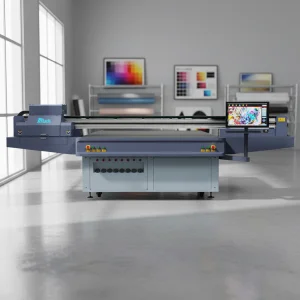
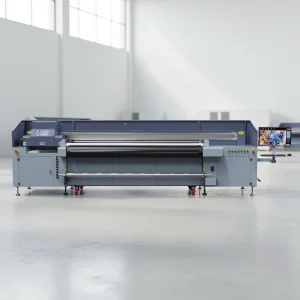
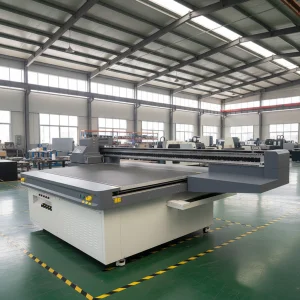
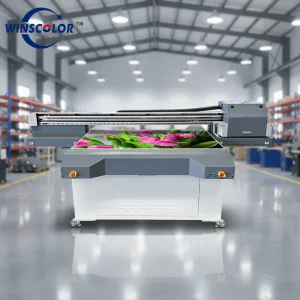
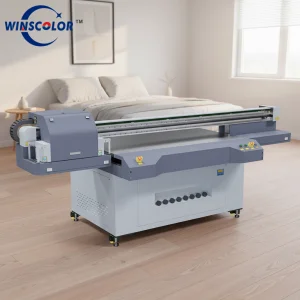
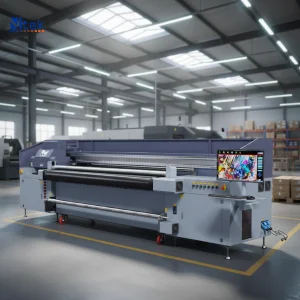
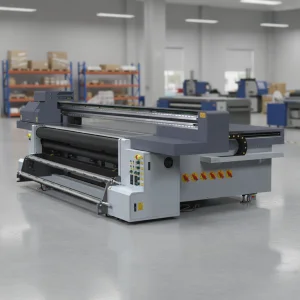
Explore our industrial-grade digital UV flatbed systems configured with greyscale multi-drop printhead arrays, precision multi-zone vacuum holds, and instantaneous cold LED UV curing.
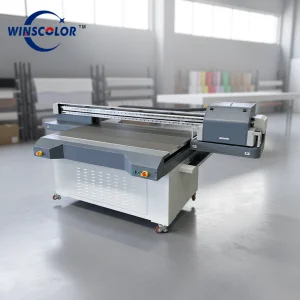
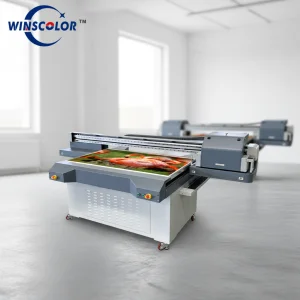
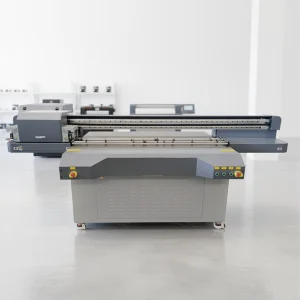
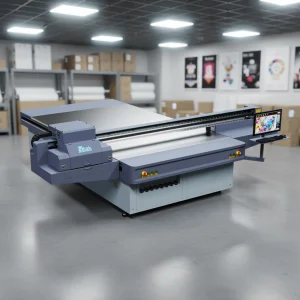
Addressing the shifting paradigm from analogue screen and offset presses to agile, zero-plate digital inkjet manufacturing across global supply chains.
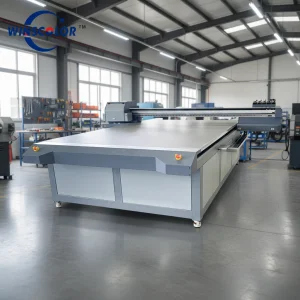
The global wide-format UV flatbed market is experiencing a profound transition toward high-mix, variable-data manufacturing. Traditional solvent setups face stringent VOC regulations, driving European, American, and Asian print bureaus toward low-heat, zero-ozone UV-LED curing chemistries. The 2000 × 3000 mm bed format represents an international engineering standard, purpose-built to process full-sized structural panels without intermediate slitting.
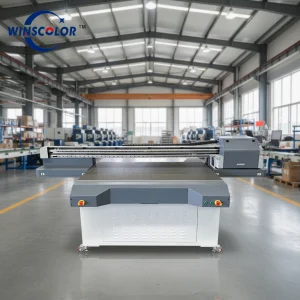
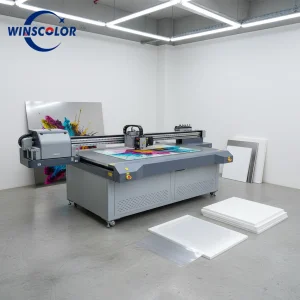
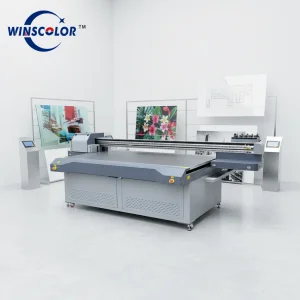
Architectural fabrication across North America and EMEA relies on standardized 2 × 3 meter and 4 × 8 foot panel substrates. The UV Flatbed Printer 2030 platform allows unconstrained edge-to-edge printing across heavy Dibond, solid wood, cast acrylic, tempered architectural glass, and corrugated sheets. It eliminates the registration drift and edge waste common to smaller 1610 or 2513 configurations.
Configured with multi-channel Ricoh Gen6 or industrial Kyocera piezoelectric drop-on-demand (DOD) heads, our systems utilize variable droplet firing down to 5 picolitres. Dual high-precision linear motor drives, magnetic encoders, and double heavy-duty THK rails guarantee sub-millimeter droplet placement repeatability under 24/7 industrial multi-shift cycles.
Moving beyond basic CMYK reproduction into chemically anchored adhesion layers, micro-embossed textures, and photorealistic architectural coatings.
Direct printing on dense, non-porous float glass, porcelain tiles, and engineered stone. Our system pairs an automated inline chemical silane primer misting process with high-density white underbases, yielding cross-hatch tape test Class 5B adhesion resistant to freeze-thaw cycles, moisture, and intense UV exposure.
Processing standard 2000 × 3000 mm ACM sheets, Dibond, brushed brass, and stainless steel housing panels. Our robust dynamic vacuum table features 6 independent suction zones, keeping heavy panels perfectly flat and mitigating electrostatic buildup to prevent satellite ink misting.
Replacing high-cost flexographic and photopolymer rotary tooling for corrugated packaging prototypes, honeycomb boards, and point-of-sale displays. Delivers high-density blacks and certified food-safe secondary packaging prints with zero make-ready overhead.
Ensuring cross-border industrial compliance, stringent electrical safety, and responsive technical engineering backbones.
Every Winscolor YC2030 platform is manufactured following stringent ISO 9001 certified assembly procedures. Electrical architectures are CE certified and fully harmonized with UL508A safety codes for North American installations, incorporating dual safety-circuit e-stops and low-voltage control modules.
We eliminate extended machine downtime through regional dispatch hubs across Europe, Latin America, North America, and Southeast Asia. Standard components—including Omron sensors, Panasonic servo drives, and IGUS cable track carriers—are regionally interchangeable and supported by factory-stocked replacement parts.
Our intelligent controller interfaces connect directly via encrypted cloud telemetry. Winscolor field service engineers monitor real-time negative pressure balance, printhead thermals, and waveform performance, addressing calibration issues remotely before physical interventions are needed.
Next-generation innovations engineered to minimize cycle times, optimize ink consumption, and introduce automated workflow loops.
Upcoming 2030 machine iterations integrate multi-camera edge vision processing directly onto the print carriage. This dynamically corrects for rotated, warped, or non-rectilinear sheet placements in real-time, eliminating physical jig repositioning and indexing errors on irregular production materials.
Moving toward adaptive multi-wavelength LED arrays. These intelligent cure modules modulate UV emission spectra and output intensities based on individual RIP layer data, guaranteeing deep substrate curing on thick acrylics while preventing thermal shrinkage on sensitive foam boards.
Working alongside prominent chemical formulators, our R&D team is qualifying sustainable, low-viscosity UV monomers derived from renewable plant bases. These deliver superior weatherability, scratch resistance, and simplified substrate separation during end-of-life recycling programs.
In-depth technical answers compiled by our application engineers for plant managers, industrial technicians, and print facility directors.
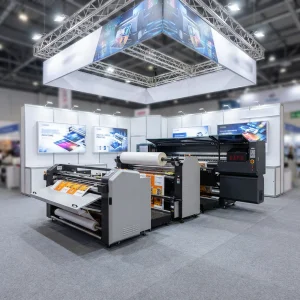
Complete production setups engineered for continuous multi-shift production across roll materials, dense rigid sheet stock, and custom thermoformed parts.