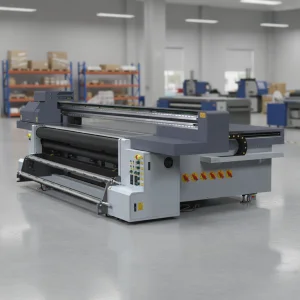
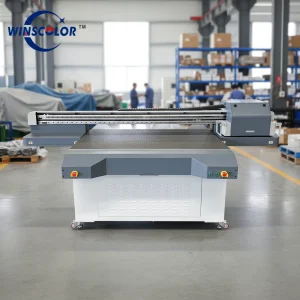
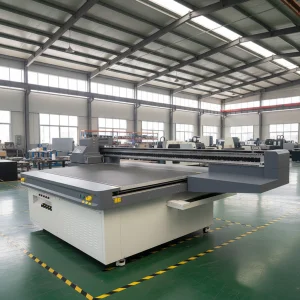
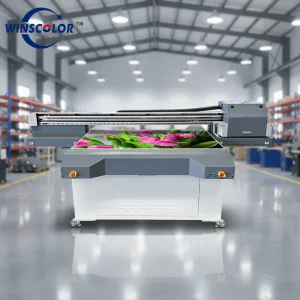
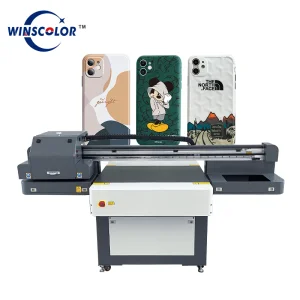
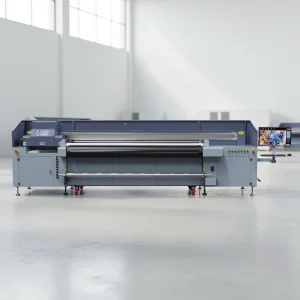
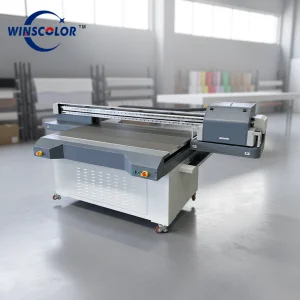
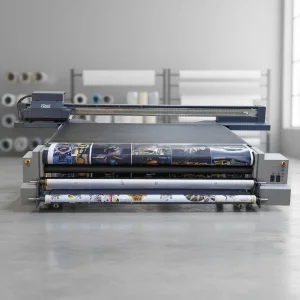
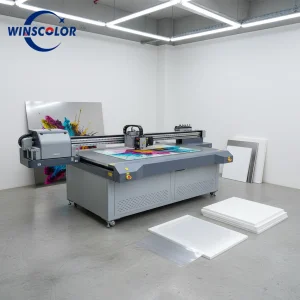
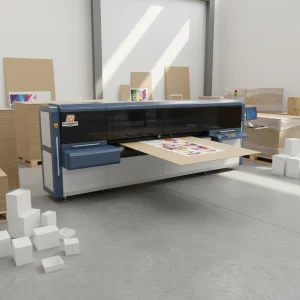
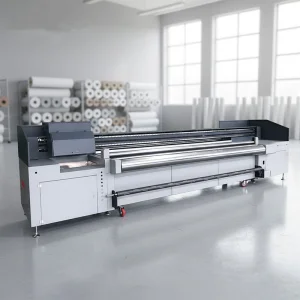
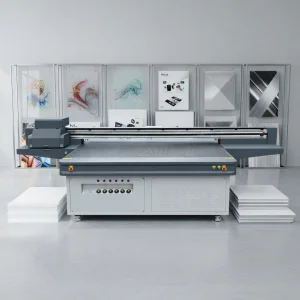
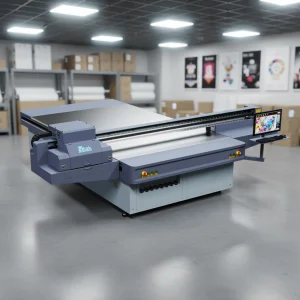
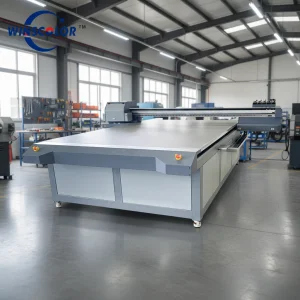
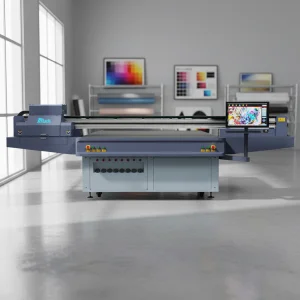
Engineered by Jinan Yingcai Digital Technology (Winscolor) — Certified industrial flatbed and hybrid solutions for global manufacturing output.
Analyzing key structural shifts from legacy screen/solvent systems to high-efficiency, multi-drop digital UV inkjet hardware.
The global manufacturing terrain is witnessing an unprecedented migration toward short-run agility, on-demand customisation, and sustainable production paradigms. Traditional analogue screen printing and solvent-based roll systems, once the cornerstone of signcraft and surface finishing, are rapidly being superseded by Industrial Large UV LED Printing Systems. This shift is not merely incremental; it represents an overhaul of manufacturing economics driven by the elimination of plate-making costs, radical VOC reduction, and immediate inline polymerisation.
"For modern printing operations, the strategic decision to adopt industrial UV flatbed and hybrid systems is grounded in operational adaptability. The ability to handle glass, metals, composites, and flexible banners within a unified shop footprint minimizes capital overhead while opening high-margin industrial applications."
Three primary technological catalysts govern this macro trend across international markets:
Replacing high-heat mercury vapour arc lamps with solid-state UV-LED curing arrays minimizes thermal distortion on heat-sensitive polymers such as PVC foam, thin styrenes, and corrugated cardboard, extending diode lifespan past 20,000 continuous hours.
Adoption of grayscale printheads (such as Ricoh Gen5/Gen6 and Kyocera KJ4A) deploying variable drop sizes between 5pl and 15pl ensures photorealistic halftones while sustaining dense solid ink film coverage at high linear carriage velocities.
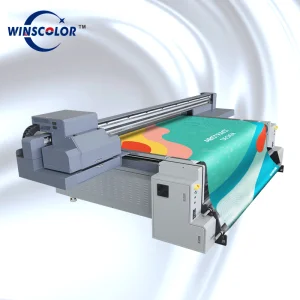
Modern production facilities avoid redundant machine investments by choosing hybrid belt and roller platforms capable of printing high-gauge 50mm acrylic boards as smoothly as 3.2m flexible rolls of backlit vinyl or self-adhesive film.
What multinational distributors, OEMs, and industrial converters mandate when evaluating direct Chinese manufacturers.
Large format printing machines are long-term capital investments subject to strict ROI, mean time between failures (MTBF), and substrate adaptability criteria. International procurement officers across North America, Europe, Latin America, and Southeast Asia have transitioned past purely pricing-based purchasing toward evaluating mechanical structural rigidity, motion-control component origin, and electrical compliance.
Sourcing teams prioritize open or non-proprietary ink systems, field-serviceable wear parts, and cost-effective printhead replacement pricing over closed cartridge models that drive up consumable overheads.
Milled steel gantry structures with dual THK or Hiwin linear mute guide rails ensure carriage travel stability across 2.5m to 3.3m beds without micro-vibrations at carriage speeds exceeding 1.2 m/s.
Enterprise buyers require continuous, closed-loop negative pressure systems with timed magnetic stirring in sub-tanks to prevent titanium dioxide pigment settlement and eliminate printhead nozzle clogging.
Standardized integration of dual emergency stop circuits, anti-static ionizer bars, carriage crash-prevention sensors, and fully certified CE / RoHS electrical systems matching regional safety codes.
Detailed chemical, adhesion, and workflow methodologies across key industrial vertical sectors.
Direct printing onto non-porous silica structures requires silane-based nano-priming to form covalent bonds with UV crosslinked oligomers. Post-cure mechanical adhesion withstands damp internal environments, backsplashes, and commercial partitions with up to 5B cross-hatch tape test ratings.
Eliminating photopolymer flexographic plate manufacturing cuts prepress lead times from days to minutes. Utilizing dedicated non-cracking flexible UV formulations preserves structural integrity along carton score lines while maintaining deep, vibrant brand colors across fluted boards.
Synchronized multi-layer printing (White + CMYK + Varnish) enables day-and-night backlit acrylic installations and tactile 3D embossed finishes on brushed aluminum composites without registration offsets or plate misalignment.
Ensuring operational reliability through technical service programs, factory training, and international certifications.
Deploying wide-format equipment across international borders demands structured technical support. Winscolor (Jinan Yingcai Digital Technology Co., Ltd) operates an engineering-led export workflow designed to maintain uptime across North American, European, and emerging printing plants.
Direct Ethernet integration enables our factory technical team to perform live motion-control troubleshooting, RIP curve optimization, and board-level signal analyses with local distributor technicians, resolving 92% of operational challenges without waiting for on-site dispatch.
Stocked hub inventories in critical regional transit locations ensure express delivery of piezo printheads, secondary ink tanks, peristaltic pumps, float sensors, and UV power supply modules within 48 to 72 hours.
Every flatbed and hybrid unit undergoes a strict 72-hour continuous test cycle in our Jinan facility, verifying platform planarity down to ±0.03 mm, high-speed bidirectional carriage registration, and ink purge stability prior to export packaging.
Upcoming engineering milestones defining industrial speed, material flexibility, and smart workflow integration.
As the digital wide-format printing industry matures, engineering focus is shifting beyond raw carriage speed toward software-driven precision, adaptive automated material handling, and sustainable chemistry. R&D trajectories across prominent engineering companies are focusing on three primary production bottlenecks:
1. Single-Pass High-Volume Automation: Integrating high-density printhead arrays along fixed linear gantries allows non-stop single-pass printing of corrugated boards and decorative architectural panels at speeds exceeding 60 linear metres per minute. This brings digital turnaround speeds inline with traditional offset production lines.
2. Smart Vision Positioning & Surface Profiling: Onboard laser height sensors combined with overhead multi-spectral optical cameras dynamically map irregular, warped, or non-uniform substrates. This real-time positioning feedback automatically adjusts carriage clearance and compensates for surface contours on natural wood planks, stone slabs, and thermoformed plastics.
3. Low-Energy Bio-Derived Inks: Formulating non-toxic monomers derived from renewable plant resins helps operations reduce petrochemical reliance while enhancing substrate flexibility, ensuring compliance with strict international air quality and consumer safety mandates.
Comprehensive engineering insights into installation, daily maintenance, and operational capabilities.
Explore our specialized range of high-capacity flatbeds, multi-drop hybrid units, and packaging printers.