Engineered for high-volume rigid boards, flexible substrates, and industrial roll-to-roll continuous output. Direct factory configurations with micro-piezo grayscale arrays and UV-LED instant curing.
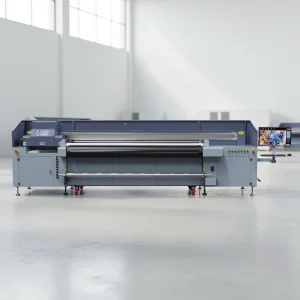

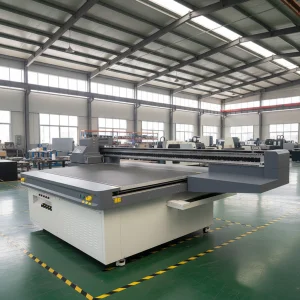
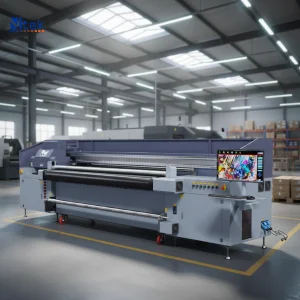
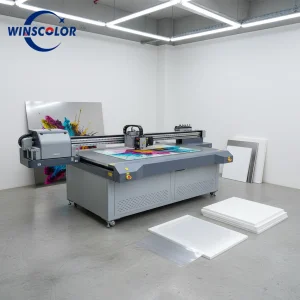


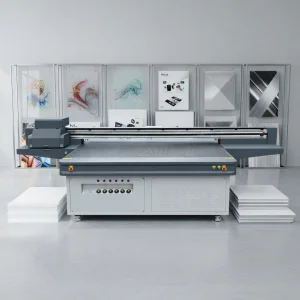
The global industrial printing ecosystem is witnessing a historic transition away from volatile organic compound (VOC) intensive solvent platforms and high-setup screen printing toward high-efficiency, multi-drop digital UV inkjet hardware.
In mature markets across North America, the European Union, and East Asia, environmental directives such as EU RoHS 3, REACH SVHC, and US EPA Clean Air regulations have accelerated the decommissioning of conventional thermal drying and eco-solvent printing corridors. Industrial UV curing technology relies on cold ultraviolet light emitting diodes (UV-LED, radiating at 395nm or 365nm peak wavelengths) to initiate ultra-fast free-radical polymerization of acrylic monomers and oligomers. This instantaneous photochemical process eliminates drying queues, prevents substrate cockling, and cuts line energy consumption by up to 65% compared to mercury vapor discharge systems.
Simultaneously, global procurement teams face increasing SKU fragmentation. Traditional analog screen printing necessitates physical screen manufacture, photochemical emulsion coating, manual color matching, and extensive washdowns, rendering print runs beneath 500 units economically non-viable. Modern wide-format digital UV flatbed and hybrid machines, represented by the Winscolor / NTEK engineering matrix, achieve zero make-ready time, continuous automated droplet compensation, and variable data personalization without tooling expenses.
From architectural curtain wall glazing in Western Europe to custom thermoformed components in North American automotive supply chains, our UV printing platforms resolve core mechanical and chemical adhesion bottlenecks.
Direct printing onto non-porous float and tempered glass demands rigorous molecular adhesion. By incorporating in-line silane coupling primers and specialized dual-cure UV formulations, flatbed systems (such as the YC2030 and YC2513L) print ceramic-grade murals, daylight-diffusing decorative panels, and elevator interior splashbacks that resist scratch delamination and humidity cycling.
Standard UV curable inks fracture under thermal expansion. Industrial thermoforming applications across acrylic (PMMA), polycarbonate, and ABS require specialized ultra-flexible inks (up to 250% elongation). These machines maintain structural film integrity during post-print vacuum forming, manufacturing backlit three-dimensional channel lettering, automotive trim, and appliance fascias.
Compliant ADA signage and high-end sensory packaging require raised surface topography. Utilizing variable multi-pass varnish deposition, Winscolor printers stack UV varnish layers in micron-level increments up to 3mm thickness, producing high-definition embossed logos, wood-grain textures, water droplet simulations, and certified Grade 2 Braille dots.
How Jinan Yingcai Digital Technology (Winscolor) leverages Jinan’s heavy industrial manufacturing corridor to produce rigid CNC chassis, micron-level guidance systems, and reliable electronics at scale.
A digital UV printer is first and foremost an ultra-precision CNC coordinate machine. The carriage of a 3.2-meter hybrid or 2.5m flatbed printer weighs between 60kg and 120kg with multiple industrial printheads, ink manifolds, degassing sub-tanks, and water-chilled UV lamp assemblies. Operating at traverse velocities exceeding 1.2 meters per second with 1.5G acceleration induces extreme inertia.
Unlike light-frame assemblers, Winscolor utilizes all-steel stress-relieved bed frames subjected to high-temperature thermal annealing furnaces (600°C) to eliminate internal welding stress. Bed surfaces and gantry mounting seats are finished on a five-axis heavy gantry milling center in a single setup, guaranteeing absolute rail parallelism within ±0.015mm over a 3000mm span. This prevents harmonic vibration, ensures linear magnetic or dual-servomotor synchronization, and eradicates bi-directional pitch banding at photographic resolutions.
Equipped with dual mute linear guides and high-torque AC servo drives, eliminating carriage micro-tilting during high-speed multi-pass scanning.
Independent dual negative pressure control for white and color channels prevents ink dripping, nozzle starvation, and settling during multi-shift idle states.
Every assembled machine executes continuous full-coverage pattern prints under climatic variance before crate sealing to verify board-level signal stability.
Renishaw laser interferometers map and compensate mechanical lead error across X and Y gantry axes to achieve microscopic dot placement accuracy.
Selecting the optimal kinematic chassis: evaluating Flatbed, Hybrid Belt/Roller, and Dedicated Roll-to-Roll for total cost of ownership (TCO) and substrate fit.
| Architecture Type | Kinematic Mechanism | Target Substrates | Thickness / Load Capacity | Registration Accuracy | Ideal Production Scope |
|---|---|---|---|---|---|
| Dedicated Flatbed (e.g., YC2513L, YC2030) |
Stationary multi-zone vacuum table; moving heavy gantry via dual lead screws / linear magnetic motors. | Heavy glass, acrylic, engineered timber, ceramic tiles, aluminum Dibond, sheet metal. | Up to 100mm standard (customizable to 400mm); load up to 100kg/m². | ±0.02mm (Highest absolute registration for multiple passes). | Signage fabrication, architectural decoration, industrial appliance panels, fine art reproduction. |
| Flatbed + Roll Dual-Mode (e.g., YC2513R, YC3321R) |
Standard vacuum flatbed combined with auxiliary front/rear synchronized unwind-rewind rollers. | Rigid sheets + flexible self-adhesive vinyl, canvas, PVC banner, backlit films. | Rigid: 100mm; Roll: Up to 50kg roll weight with magnetic powder tensioners. | ±0.05mm on boards; stable web tracking on flexible media. | Commercial print shops requiring all-in-one capabilities without twin footprint investments. |
| High-Speed UV Hybrid (e.g., YC2500HR, YC3200HR) |
Industrial continuous vacuum conveyor belt or pinch-roller drum with automatic media feed extension tables. | Continuous corrugated sheets, foam board, synthetic paper, building wraps, mesh. | Up to 50mm rigid boards; continuous web roll feeding up to 3200mm width. | ±0.04mm (Dynamic tension air-shaft controls prevent stretch skew). | High-throughput visual communications, exhibition banners, short-run corrugated packaging. |
| Direct-to-Cardboard / Corrugated (e.g., RS1900-E16) |
Plate-free industrial feeder with high-speed vacuum transport and non-contact printhead elevation. | Kraft paper, corrugated B/C/E/F flute, honeycomb boards, coated duplex board. | Substrate height up to 50mm; automated sheet separation and stack feeder. | ±0.10mm (High tolerance for surface warp and fibrous expansion). | E-commerce fast turnaround cartons, POS display manufacturing, personalized secondary packaging. |
The convergence of artificial intelligence, high-frequency acoustic firing waveforms, and energy-efficient photochemistry is driving the next generation of industrial digital inkjet printing.
Modern printheads like the Ricoh Gen6 utilize multi-pulse acoustic waveforms to eject variable droplet volumes ranging from 5 picoliters (pl) for fine text and skin tones up to 15pl or 21pl for dense solid vector fills. Continuous software waveform tuning matches fluid rheology across varying temperatures, eliminating ink misting and satellites at elevated carriage speeds.
Integrated high-speed line scan cameras positioned alongside the print carriage dynamically inspect test patterns during operation. If micro-satellite deflection or missing nozzles occur, proprietary RIP algorithms automatically engage nozzle-compensation masking, substituting adjacent functional firing channels to maintain output quality without stopping the print job.
The technological horizon shifts toward fixed-head Single-Pass arrays. Rather than scanning across the medium, fixed printhead bridges (comprising 30 to 60 heads) span the entire substrate width. Corrugated blanks transit under the bridge at velocities up to 1.5 meters per second (90 m/min), directly challenging conventional analog flexo printing.
Purchasing directly from an industrial manufacturer requires stringent compliance with regional electrical safety directives, environmental standards, and dependable aftermarket technical backup.
Every Winscolor/NTEK printer exported overseas complies with international safety directives. Our hardware carries verified CE Marking conforming to the Machinery Directive 2006/42/EC, Low Voltage Directive 2014/35/EU, and EMC Directive 2014/30/EU. Pneumatic lines and industrial electrical cabinets follow UL508A and NFPA 79 design guidelines for North American installations.
Distance does not impede rapid technical resolution. All platforms feature integrated industrial IoT telemetry controllers. With operator consent, factory field service engineers access error logs, piezo waveform status, negative pressure sensor histories, and RIP raster data remotely, resolving over 85% of software or color profile deviations within two hours.
Unplanned downtime compromises production deadlines. Winscolor maintains strategic regional spare-part hub inventories (including mainboards, head carriage interfaces, linear encoders, sub-tanks, solenoid valves, and UV LED arrays) with express air shipping within 48 to 72 hours worldwide. In select regions, authorized local service technicians provide physical commissioning and emergency maintenance.
Engineered for industrial sign makers, packaging converters, specialty promotional item producers, and high-precision direct-to-object manufacturing lines.

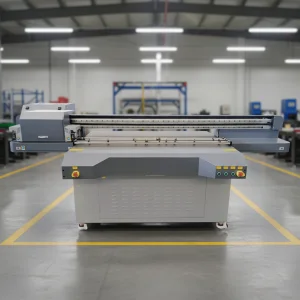


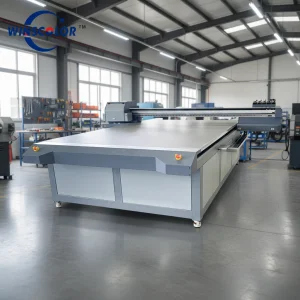


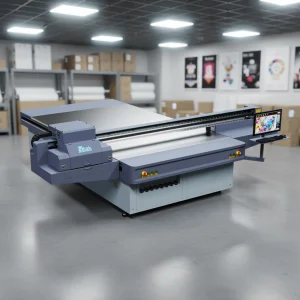
Expert answers addressing ink chemistry, mechanical registration, printhead selection, vacuum zoned tables, and lifecycle operational expenses.
