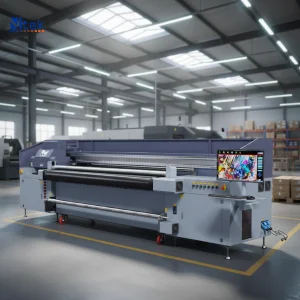
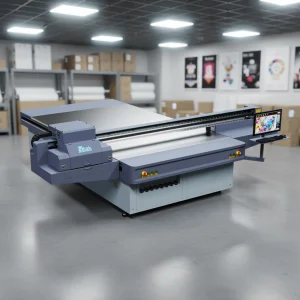
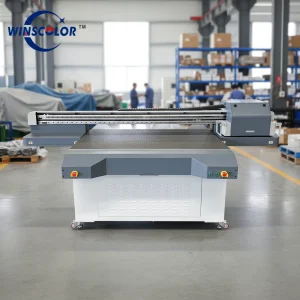
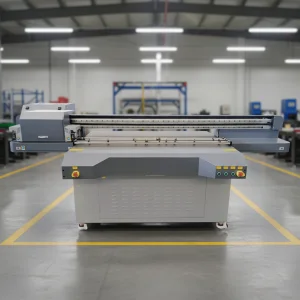
Engineered in our Jinan smart-manufacturing hub to meet the rigorous demands of multi-shift drinkware decoration, industrial signage, and packaging operations.
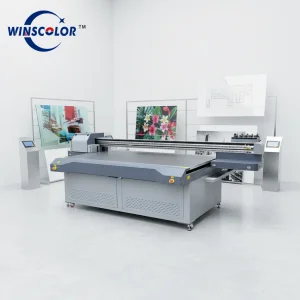
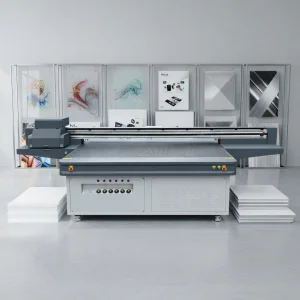

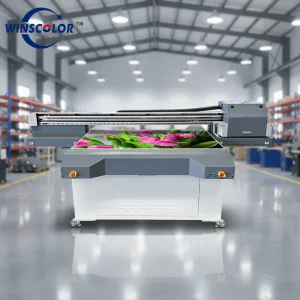
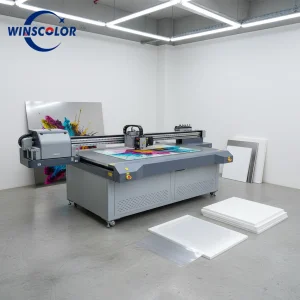
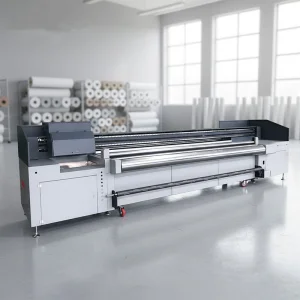
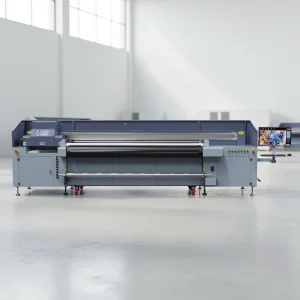
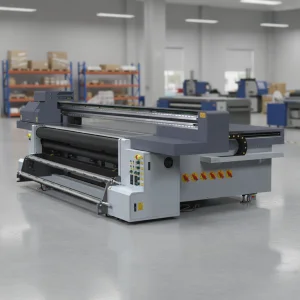
Analyzing the structural shift from analogue screen and pad decorating to automated digital UV rotary engineering across commercial drinkware markets.
Global demand for personalized hydration gear—spanning vacuum-insulated stainless steel tumblers, outdoor sports flasks, and boutique glassware—has rendered analogue rotary screen printing economically inefficient for runs under 5,000 units. Pad printing and rotary silk screens incur severe tooling overheads, including screen emulsion production, photopolymer plate burns, and extensive manual multi-color mechanical registration.
Modern consumers demand complex variable graphics, photo-realistic photoprint gradients, tactile relief embossing, and immediate fulfillment. Direct-to-object (DTO) UV inkjet technology eliminates prepress consumables entirely, allowing contract decorators and drinkware brands to execute profitable single-unit prototypes or 10,000-unit production runs with zero plate changes.
In high-throughput contract decoration, profitability hinges upon minimizing makeready latency and ink consumption per cylinder. Analogue methods waste substantial chemical solvent washes, inks, and set-up substrate blanks during color calibration. A dedicated industrial water bottle printer utilizes Drop-on-Demand (DoD) piezo actuation, reducing raw consumable consumption to micro-liters per bottle.
Furthermore, instant UV-LED photonic curing removes thermal oven curing cycles, lowering overall factory floor footprint and operational electrical draw by up to 68%. This shift enables regional fulfillment hubs and contract decorators to localize operations close to regional retail distribution centers.
Unlike standard flatbed printers, cylindrical digital printers interact with varied surface energies across hydrophobic powder coats, bare brushed 304/316 food-grade stainless steels, high-density polyethylene (HDPE), borosilicate glass, and co-polyester Tritan plastics. Achieving commercial adhesion requires coordinated jetting of digital adhesion primers alongside CMYK+W inks.
OEM factories like Winscolor integrate specialized in-line digital primer jetting channels or corona/plasma surface pre-treatment modules. This unlocks certified dishwasher resistance (exceeding 50 residential wash cycles) without necessitating manual chemical wipe pre-treatments, standardizing industrial yields across diverse supply chains.
Technical mechanics behind non-planar droplet projection, high-frequency piezo firing, and seamless overlap raster algorithms.
The primary barrier in cylindrical direct printing is "stitch line" visible seam distortion. When a cylinder completes a 360-degree rotation under the printhead carriage, infinitesimal discrepancies between the linear carriage travel (X-axis) and the rotational chuck velocity (R-axis) cause double-strike density accumulation or micro-gaps.
Our OEM machines leverage precision closed-loop Japanese servo drives paired with high-resolution magnetic rotary encoders (exceeding 20,000 pulses per revolution). Advanced feathering algorithms dynamically blend droplet distribution along the starting and ending overlap boundary, delivering visual continuity without registration seam artifacts.
Standard rotary fixtures assume a pure cylinder where surface peripheral velocity remains uniform from top to base. However, market-leading travel tumblers and tapered insulated vessels present differing surface circumferences along their vertical profile, generating disparate tangential linear speeds during rotation.
Our proprietary RIP-integrated Taper Compensation Module algorithmically scales the raster image data horizontally along the vessel’s conical slope. It modulates piezo nozzle firing frequencies in real time, compensating for projectile distance variations up to 8mm without droplet turbulence, satellite splashing, or distortion.
Unlike flatbed substrates where deposited liquid ink droplets remain static until cured, ink droplets on high-speed spinning cylinders are subjected to centripetal forces and gravity-induced sag before full polymerization. Without rapid stabilization, fine text edges and heavy varnish tactile embossings bleed.
Our platforms implement directional "pinning" UV-LED modules positioned immediately adjacent to the piezo nozzle plates. These narrow-wavelength 395nm arrays emit precise low-intensity flux to instantly freeze droplet viscosity, followed by a secondary high-output curing lamp that completes cross-linking without imparting excessive thermal stress to thin-walled plastics.
| Architecture Subsystem | Winscolor OEM Factory Standard | Conventional Commercial Grade | Engineering Impact on Output |
|---|---|---|---|
| Piezo Printhead Class | Ricoh Gen6 (MH5320) / Epson i3200-U1 Industrial | Repurposed Desktop / Entry Heads | Higher native jetting frequency (up to 50kHz) ensures crisp micro-text & industrial lifespan. |
| Rotary Axis Motion | Zero-Backlash Harmonic Reducer with Servo Control | Direct Stepper Motor Drive with Belt Slack | Eliminates rotational vibration; delivers ±0.02mm overlap seam registration. |
| Negative Pressure Ink Path | Independent Dual Meniscus Vacuum Regulation | Gravity Siphon or Single Common Line | Guarantees continuous ink supply during rapid carriage acceleration without nozzle starvation. |
| Taper Angle Capability | Dynamic Software Scaling up to 14° Conical Slope | Fixed Cylinders Only (< 2° slope) | Enables decorated travel mugs, cocktail shakers, and tapered champagne flutes. |
| Curing System | Dual-Stage Pinning & Final Water-Cooled UV-LED | Single Low-Power Air-Cooled Lamp | Prevents ink migration on smooth glass/metals; maximizes gloss level on 3D varnish textures. |
Tailoring digital inkjet solutions to specific commercial verticals, surface chemistry challenges, and automated loading configurations.
Substrate Dynamics: Double-walled 18/8 food-grade stainless steel with textured polyester powder coats or electro-polished finishes. Resistant to physical abrasion and outdoor UV degradation.
Ink Channel Recipe: Digital Primer + High-Opacity White Underbase + Full CMYK + Localized Tactile Varnish. Digital white allows dark powder-coated bases to reproduce vibrant brand Pantone matches with zero color bleed.
Factory Tooling: Pneumatic expanding mandrel internal chucks that grip the bottle from within the neck, preventing exterior marring while maintaining continuous concentric rotation at high RPMs.
Substrate Dynamics: High-clarity soda-lime and borosilicate glass. High surface tension requires specialized priming chemistry to prevent moisture-induced flaking in humid bathroom environments.
Finishing Aesthetics: Selective 3D tactile varnish simulation replicating embossed hot-stamping without mechanical dies. Multiple varnish passes build thick raised dimensional textures, brand crests, and braille markings.
Factory Tooling: Soft-durometer non-marking polyurethane idler rollers paired with adjustable bottom-support bearing cradles to secure delicate glass vessels without scratch risks.
Substrate Dynamics: Anodized aluminum cans, amber glass beer bottles, and stainless steel growlers. Fast turnarounds required for micro-batches, seasonal IPAs, and promotional events.
Workflow Advantage: Variable Data Printing (VDP) allows sequential bottle serialization, custom batch numbers, individualized QR codes, and dynamic distributor branding executed within a single uninterrupted production run.
Factory Tooling: Rapid quick-clamp quick-release fixtures tailored for standard 12oz/16oz can circumferences, allowing operators to complete format switchovers in under 90 seconds.
Why the centralized industrial digital equipment cluster in Shandong, China delivers unmatched cost-to-performance, component longevity, and rapid customization.
Jinan serves as China’s recognized epicenter for CNC machining, heavy industrial gantry fabrication, and precision digital printing machinery. At Winscolor (Jinan Yingcai Digital Technology Co., Ltd), our 20,000 m² facility executes all core manufacturing processes in-house.
From high-temperature stress-relieving of all-steel welded frames to 5-axis CNC gantry milling, linear guideway grinding, and negative-pressure ink board integration, controlling the entire manufacturing pipeline eliminates intermediate distributor markups and guarantees rigorous dimensional stability under continuous industrial operation.
While mechanical engineering and proprietary control electronics originate in our Jinan factory, our mission-critical motion and fluid components leverage Tier-1 international suppliers. Our rotary systems feature dual Taiwanese Hiwin linear guides, German IGUS drag chains, Japanese Omron optical safety sensors, and genuine Ricoh industrial piezo printheads.
This dual-engine strategy pairs the cost advantages and rapid agility of Chinese manufacturing with the precision reliability demanded by international distributors in North America, Western Europe, and Australasia.
Unlike trading entities that resell fixed standard equipment, our engineering division supports comprehensive OEM white-label programs. We customize chassis aesthetics, machine firmware, custom RIP profiles, multi-spindle rotary beds, automated robotic loading interfaces, and localized language UI software.
Every printer undergoes a rigorous 72-hour continuous multi-pass test regimen and dynamic drop-positioning laser calibration prior to crating, accompanied by individualized factory inspection certificates.
Where industrial cylinder inkjet is heading: Autonomous vision alignment, multi-station indexers, and low-energy electron beam curation.
Current rotary loading requires manual or mechanical jig alignment to orient logos relative to bottle handles, pre-existing debossed logos, or lid threads. Our next-generation roadmap integrates high-speed stereoscopic vision cameras above the load station.
By capturing 3D point-cloud data of the incoming cylinder in milliseconds, the onboard controller automatically calculates rotational offset and dynamically adjusts the print engine’s starting zero position, eliminating manual registration errors in high-volume contract lines.
To bridge the output gap between digital inkjet and massive analogue rotary lines (exceeding 1,500 bottles/hour), Winscolor is scaling continuous rotary carousels. Instead of loading a single cylinder per cycle, multi-station rotary turrets allow simultaneous loading, surface flaming/plasma treatment, white base jetting, color/varnish application, and automated unloading.
This architecture decouples substrate handling time from jetting time, bringing true continuous industrial throughput to digital personalization.
As consumer brands enforce stringent bans on migration-prone photoinitiators, chemical formulations are shifting toward low-odor, zero-VOC, heavy-metal-free ink sets compliant with FDA external food-contact safety frameworks and EU Regulation (EC) No 1935/2004.
Winscolor engineering collaborates closely with global industrial ink laboratories to certify ink-curing cross-linking efficiency under cold-cure LED profiles, ensuring printed drinkware releases zero chemical leachables during boiling liquid exposure or cyclic dishwasher detergent exposure.
Comprehensive global certifications, remote tele-diagnostics, and lifecycle maintenance engineering for uninterrupted production overseas.
All Winscolor industrial printing machinery exported to European, American, and Asia-Pacific markets adheres stringently to the European Machinery Directive 2006/42/EC, Low Voltage Directive 2014/35/EU, and Electromagnetic Compatibility (EMC) Directive 2014/30/EU.
Internal high-voltage electronics utilize UL94-V0 flame-retardant wiring harnesses, isolated emergency-stop circuits, and enclosed UV-protective optical shielding, passing independent third-party safety assessments and facilitating local regulatory approval in destination manufacturing facilities.
Unplanned machine downtime directly impacts contract production schedules. Our machines incorporate embedded IoT diagnostic modules that monitor real-time printhead thermals, ink line negative pressures, UV lamp power outputs, and board voltage stability.
Our senior technical engineering team in Jinan provides remote diagnostics, firmware upgrades, and calibration assistance via secure cloud bridges. With partner distribution hubs in over 100 countries, essential consumable spares—such as sub-tanks, solenoid valves, and rotary chuck dampers—are dispatched for next-day delivery.
Delivering photographic-quality imagery onto curved, reflective cylinders requires rigorous color management. Winscolor provides comprehensive remote or on-site engineering training covering multi-channel RIP calibration (ONYX, Photoprint, UltraPrint).
We supply pre-configured substrate-specific ICC profiles for brushed stainless steel, clear glass, gloss acrylic, and matte powder coats, ensuring precise Pantone spot-color reproduction from day one.
Engineering-level insights addressing common technical, operational, and commercial questions raised by international distributors and manufacturing buyers.
Browse our complete lineup of large-format flatbed, roll-to-roll, hybrid, and rotary-ready digital inkjet printers built for international export.