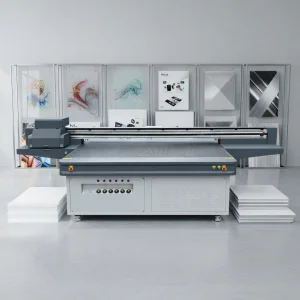
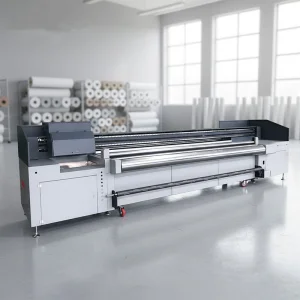
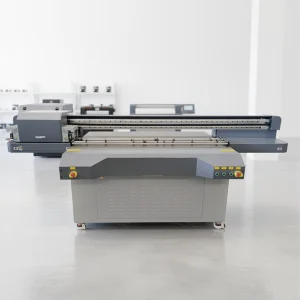
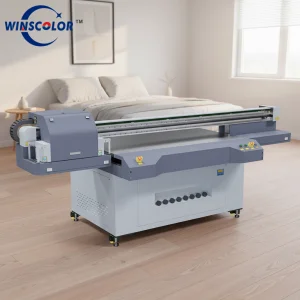
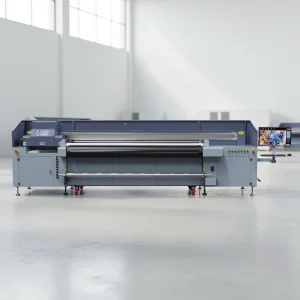
Explore our core digital UV platforms optimized for industrial ADA Braille dot creation, relief signage, rigid board architecture, and continuous hybrid throughput.


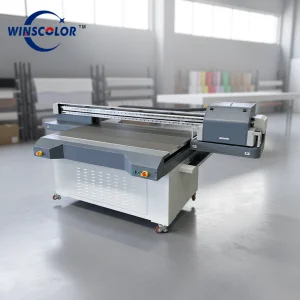


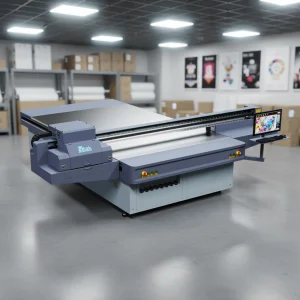
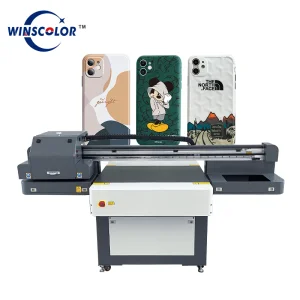

In modern architectural, transit, and public infrastructure developments, accessibility is no longer an afterthought—it is a strict statutory imperative enforced by international building codes and civil rights mandates. From Title III of the Americans with Disabilities Act (ADA) in the United States to the European Standard EN 301 549, the UK Equality Act 2010 (BS 8300), and Australia's Disability Discrimination Act (DDA/AS 1428.1), architectural signage must feature precisely calibrated raised tactile characters and Grade 2 Braille dots. Historically, signage fabricators were restricted to subtractive manufacturing or labor-intensive mechanical assembly methods: photopolymer chemical etching, rotary CNC routing with manual acrylic bead insertion (Raster Braille), or cast metal vulcanization. These methodologies entail prolonged turnaround cycles, substantial raw material wastage, toxic caustic baths, and severe constraints on multicolor graphic integration.
The global shift toward additive micro-droplet UV piezoelectric deposition has radically transformed the signage manufacturing economy. As a pioneer in industrial flatbed and hybrid digital systems, NTEK (engineered under Jinan Yingcai Digital Technology Co., Ltd / Winscolor) delivers state-of-the-art Braille signage printing solutions designed specifically to address this technical inflection point. NTEK Braille Signage Printers merge ultra-dense white ink build-up layers and resilient UV-curable tactile varnishes with sub-micron carriage positioning, enabling complete tactile ADA signage fabrication in a single integrated print pass.
Regulatory Engineering Standard: ADA Standards for Accessible Design Section 703 specify that Braille dots must have a domed or rounded shape with a base diameter of 1.5 mm to 1.6 mm (0.059 to 0.063 inches), a dot height of 0.6 mm to 0.9 mm (0.025 to 0.037 inches), and strict spherical consistency. NTEK UV drop-on-demand piezo engines achieve these tolerances natively via custom waveform control and micro-curing energy profiles.
Today's commercial sign shops and industrial printing exporters face unprecedented market pressure: client demands for bespoke decorative backgrounds (such as brushed Dibond, clear cast acrylic, timber veneer, architectural stone, and brushed brass) combined with non-negotiable accessibility standards. NTEK UV flatbed printers eliminate the multi-step complexity of routing, bead insertion, screen printing, and spray finishing. By loading raw boards onto a zoned vacuum table and deploying our specialized accessibility RIP slicing protocols, fabricators output full-color CMYK imagery, opaque high-contrast text, tactile raised characters (1/32" / 0.8 mm relief), and perfectly radiused Grade 1, 2, or 3 Braille spheroids in minutes.
A rigorous operational analysis contrasting digital inkjet tactile fabrication against Raster bead insertion and photopolymer chemistry across yield, durability, and cost metrics.
| Evaluation Parameter | NTEK UV Digital Braille Printer | CNC Rotary Router (Raster Bead) | Photopolymer Acid/Water Etch |
|---|---|---|---|
| Fabrication Velocity | High: 8-15 m²/hr full signage with Braille & graphics | Low: Requires individual hole drilling & bead popping | Medium: Multi-stage exposure, washout, and dry cycles |
| ADA & EN Compliance | Consistently within 0.025"–0.037" dot height specs | Prone to bead fallout or misaligned insertion depth | Variable dot shoulders; etching baths degrade over batches |
| Full-Color Graphics | Direct pass: CMYK + White + Primer + Varnish integrated | Secondary process: Screen print or vinyl overlay needed | Secondary process: Hot-stamping or screen printing needed |
| Compatible Substrates | Universal: Acrylic, Dibond, Glass, Wood, Steel, PVC | Limited primarily to softer plastics and acrylic sheets | Restricted to proprietary light-sensitive resin sheets |
| Chemical / Solvent Waste | Zero effluent: 100% solids UV-curable oligomer inks | High solid micro-plastic shavings and coolant mist | Hazardous caustic washout effluents & heavy VOC release |
| Cost Per Standard Sign (8x8") | $0.45 – $1.10 (Ink deposition & energy amortized) | $2.80 – $4.20 (Labor-heavy insertion + bit wear) | $3.50 – $6.00 (Costly raw photopolymer blanks) |
Understanding the physics of UV curing kinetics, multi-pass tactile algorithms, and piezoelectric printhead micro-control.
NTEK integrates Ricoh Gen6 and precision industrial drop-on-demand printheads equipped with sub-pulse voltage tailoring. By firing droplets ranging between 7pl and 35pl with high velocity stability, the printer suppresses satellite misting and constructs vertical droplet columns without dot slumping or lateral capillary bleed.
Achieving a compliant hemispherical Braille dot requires a delicate balance of surface tension and polymerization kinetics. NTEK utilizes zoned, variable-intensity UV-LED curing lamps. A controlled "pinning" exposure arrests droplet spread instantly, followed by a post-exposure saturation pass that locks the mechanical hardness (3H–4H pencil scale).
Our proprietary ADA accessibility RIP software mathematically decomposes vector Braille characters into 16 to 32 micro-relief strata. The engine optimizes carriage traverse passes, building tactile thickness at exponential speeds while keeping background CMYK graphics and raised lettering in absolute registration (±0.01 mm).
For demanding environments such as marine vessels, heavy-rail stations, and operating theaters, dot detachment is unacceptable. NTEK implements in-line digital chemical jetting of silane-based adhesion promoters, ensuring atomic cross-linking on stainless steel, anodized aluminum, toughened glass, and raw cast acrylic.
A warp of 0.3 mm on a composite board can compromise Braille dot height compliance across large beds. NTEK platforms feature an aircraft-grade milled aluminum vacuum bed with multi-chamber independent suction, securing warped rigid substrates completely flat against high-speed carriage airflow.
Featuring dual-channel infrared sensor arrays, NTEK carriages measure substrate height with 0.05 mm precision. If non-uniformities or inverted media are detected, the system halts motion instantaneously, safeguarding high-value industrial printheads against mechanical impact.
How NTEK accessibility printing platforms operate within worldwide public infrastructure, institutional spaces, and commercial developments.
Hospitals, diagnostic labs, and medical centers mandate sanitizable, chemical-resistant accessibility signs. NTEK tactile UV inks withstand quaternary ammonium, isopropyl alcohol, and sodium hypochlorite sterilization cycles without dot erosion or yellowing.
Subways, high-speed rail concourses, and international terminals demand extreme abrasion resistance and high contrast. Our printers output high-visibility yellow-on-black directional boards, escalator egress warnings, and tactile platform maps directly onto anodized metals.
Educational institutions require thousands of room identification plaques, restroom wayfinding signs, and emergency evacuation maps. NTEK's rapid batch-nesting workflow outputs 50–100 customized multi-room Braille plaques in a single continuous production run.
Hotels and corporate headquarters demand signage that complements high-end interiors. NTEK UV engines print raised Braille and tactile room numbers on genuine wood grain, polished travertine marble, acrylic panels, and metallic Dibond substrates without compromising aesthetics.
A streamlined digital workflow that eliminates manual bead insertion, chemical processing, and multi-machine handoffs.
Input text into translation software to generate accurate Grade 2 Braille dot coordinates alongside vector artwork and raised tactile letter outlines.
The NTEK RIP divides the artwork into distinct layer channels: substrate adhesion primer, CMYK background, high-density white tactile build, and protective varnish cap.
The flatbed vacuum locks the substrate in place while Ricoh Gen6 piezo heads jet variable-drop layers, building spherical dots with instantaneous UV-LED curing.
Signs emerge dry, fully polymerized, and scratch-resistant right off the print bed—ready for immediate adhesive mounting or mechanical fastening.
In-depth responses compiled by NTEK application engineers covering accessibility compliance, ink durability, and production economics.
ADA Standards Section 703 requires dot heights between 0.6 mm and 0.9 mm with spherical domed profiles. NTEK achieves this through multi-pass micro-layer jetting using industrial drop-on-demand piezo heads. By synchronizing droplet volume (7pl–35pl) with tuned UV-LED pinning irradiance, our systems deposit perfectly rounded Braille spheres that consistently pass micrometric dial gauge inspections.
Dots printed on NTEK systems undergo rigorous cross-hatch adhesion testing (ASTM D3359 Class 5B) and fingernail scratch resistance challenges. Our specialized inks formulate high cross-link polymer chains. On non-porous media like glass and metal, our in-line digital primer ensures permanent chemical bonding that prevents dot shear or delamination.
Yes. NTEK's multi-channel carriage architecture accommodates Primer, CMYK, Light Cyan, Light Magenta, High-Density White, and Gloss Varnish channels simultaneously. The carriage deposits opaque white bases, vibrant color graphics, raised tactile typography, and clear Braille domes in one coordinated print sweep, eliminating secondary machine setups.
Our vacuum flatbeds handle virtually any rigid or semi-rigid substrate up to 100 mm (or custom 150 mm) in thickness. This includes acrylic (cast and extruded), aluminum composite material (Dibond), stainless steel, brass, hardwood, architectural glass, PVC foam sheet, ceramic tiles, and textured stone veneer.
CNC routing requires drill bits that dull quickly, precision raster insertion tools, and extensive manual assembly. Labor makes up over 70% of the cost of legacy Braille production. NTEK digital printing automates this entirely: an 8x8" room sign consumes roughly $0.05 to $0.15 of UV ink and prints in under 45 seconds, reducing unit manufacturing costs by up to 60-80%.
NTEK exports to over 100 countries and supports overseas sign manufacturers through comprehensive video-guided installation, real-time remote engineering diagnostics, accessibility RIP profile packages, and global courier dispatch for spare parts and consumable print components.
Browse our complete catalog of small-format, wide-format, and hybrid UV machines designed for demanding sign shops, décor converters, and industrial signage exporters.