
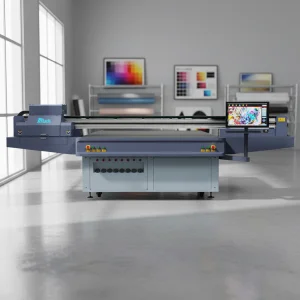
Engineered to handle high-surface-energy substrates, stainless steel sheets, anodized aluminum extrusions, and heavy plate fabrications with micrometer-level mechanical accuracy.
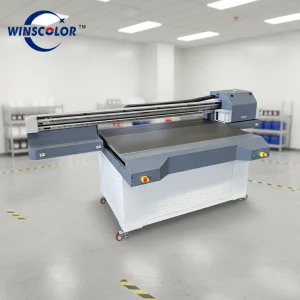
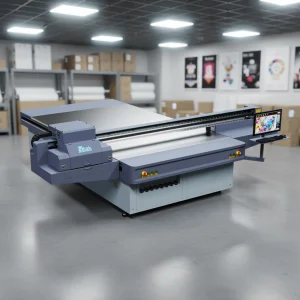
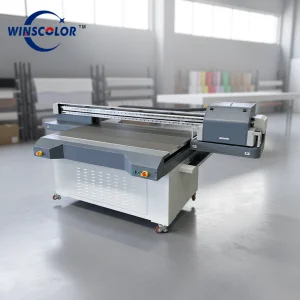
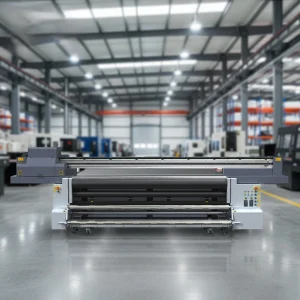
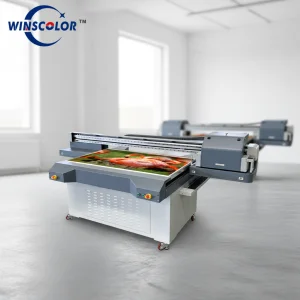
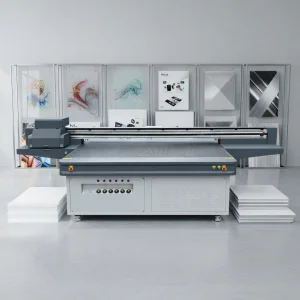
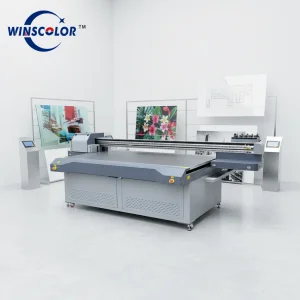
Transitioning from toxic acid etching, silk screen labor bottlenecks, and thermal curing cycles toward instantaneous, green UV-LED photon curing on conductive and reflective metal substrates.
Eliminate die setup, rotary screen preparation, and chemical waste pools. Digital direct-to-metal UV technology makes short-run prototypes and variable serial data runs immediately profitable from unit one.
Specially formulated industrial UV curable inks offer superior cross-linking density, achieving Class 5B cross-hatch adhesion and resisting thermal cycling from -40°C to +150°C without micro-delamination.
High-viscosity UV varnish depositions allow multi-layer stacking at up to 2.5mm heights, producing tactile ADA-compliant braille, simulated brushed metal finishes, and rugged embossed safety warnings on metal panels.
Direct printing on non-porous, highly thermal-conductive metals presents unique surface tension challenges. Here is how our mechanical and chemical engineering architecture ensures unconditional bonding.
Metals like raw aluminum and stainless steel typically exhibit low surface wetness (dyne levels below 34). Our dual-channel inline piezo primer delivers atomized organosilane primer exactly where ink droplets fall, elevating surface tension above 48 dynes/cm for flawless droplet spread.
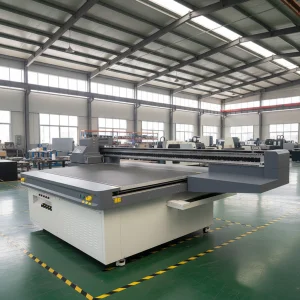
Processing 50mm thick carbon steel plates requires extreme gantry rigidity. Our welded, tempered chassis with multi-zone partitioned vacuum blowers supports up to 100 kg/m², maintaining table flatness within ±0.05mm across the entire 2500 × 1300 mm workspace.
Unlike metal halide lamps that overheat thin aluminum foils and cause warp, our dual liquid-chilled UV-LED curing engines emit a narrow 395nm spectrum. Inks cure instantly without conducting residual heat into the metal chassis, safeguarding dimensional integrity.
Evaluating the mechanical boundaries across standard industrial sheet configurations and specialty fabrication demands.
| Platform Series | Effective Bed Size | Printhead Options | Max Substrate Depth | Target Metal Application |
|---|---|---|---|---|
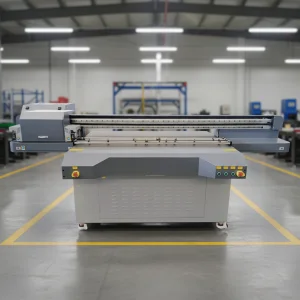
| YC1610H Platform | 1600 × 1000 mm | Ricoh G5 / G6 (2-4 Heads) | Up to 100 mm | Electrical enclosures, control dials, custom metal hardware |
| YC2030 / YC2513 Series | 2500 × 1300 / 2000 × 3000 mm | Ricoh Gen6 (Up to 8 Heads) | Up to 100 mm | Architectural facade panels, elevator interiors, aluminum sheets |
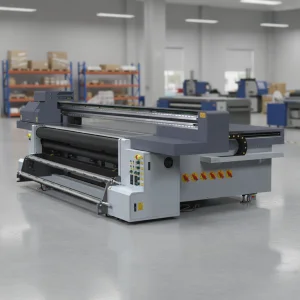
| YC3200HR / Hybrid Series | 3200 mm Roll / Sheet | Industrial Drop-on-Demand | Flexible / 30 mm Rigid | Continuous thin-gauge metal coils, flexible sheet wraps |
From cleanroom medical device labeling in Central Europe to heavy-duty mining machinery identification plates in Australia, our UV systems deliver mission-critical resilience.
Compliance plates require micro-text clarity down to 2-point fonts, high-density 2D Data Matrix codes, and VIN engraving simulation on brushed stainless steel, fully compliant with automotive salt-spray rub tests (ASTM B117).
Perforated aluminum cassettes, anodized exterior panels, and Dibond facade cladding printed with hyper-realistic stone and wood grain textures, offering 5-year anti-UV weathering and fading resistance under direct solar exposure.
Printing front fascias for white goods, HVAC controls, and industrial PLC control stations on brushed aluminum with high chemical resistance against alcohol, machine lubricants, and alkaline cleaning solvents.
Operating out of our specialized 20,000 m² Jinan manufacturing facility, we unite world-class core components with domestic supply chain speed to lower total cost of ownership without sacrificing precision.
Imported Japanese dual quiet linear guide rails ensure rock-solid carriage transit with deviation held within ±0.01mm across high-speed bi-directional sweeps.
Every frame undergoes thermal annealing stress relief to avoid micro-deformation over years of heavy plate loading, preventing printhead banding.
Industrial secondary sub-tank systems featuring dual negative pressure sensors avoid ink starvation and nozzle dropping during sustained industrial runs.
With 92% localized Tier-1 component sourcing within Shandong's high-tech manufacturing corridor, critical components ship overseas in 48-72 hours.
Industrial machinery deployed across the European Union, North America, and the Asia-Pacific region must comply with strict mechanical, optical, and emissions directives.
Fully compliant with 2006/42/EC and Low Voltage Directive 2014/35/EU. Integrated optical safety curtains immediately halt carriage movement if the workspace boundary is broken during high-speed production.
Winscolor original UV curable inks are tested free of hazardous VOCs, halogenated solvents, and heavy metals, enabling food-grade metal canister and appliance bezel production without regulatory friction.
Supported by 24/7 multilingual remote video telemetry diagnostics and dispatched field maintenance partners across North America, Germany, Turkey, and Southeast Asia to minimize factory downtime.
Anticipating the next decade of metal factory automation: robotic handling, AI vision correction, and nanosilica functional coatings.
Replacing manual mechanical pins with 4K industrial CCD camera matrices that automatically detect sheet metal orientation, edge deformities, and sheet skew within 0.02 seconds, compensating in RIP software on the fly.
Our ongoing material science research focuses on laying down conductive silver and graphene traces directly onto metal-backed substrates, opening up printed sensor and integrated circuitry applications without etching.
Complete integration with 6-axis robotic arms for automated loading, plasma surface conditioning, printing, and laser-guided sorting to run uninterrupted 24-hour lights-out production shifts.
Key technical considerations compiled by our application specialists to assist factory managers and line engineers in system selection.
Smooth, non-porous metals require specialized preparation. We utilize our automated inline primer channel or hand-wiped silane coupling agents that chemically bond to both the metal oxides and the acrylate monomers, achieving a persistent ASTM 5B adhesion rating.
Standard UV lamps can cause mirrored UV light to reflect straight into printhead nozzle plates, curing ink inside the orifices. Winscolor units feature physical stray-light baffles and angled UV-LED modules specifically designed to shield printhead arrays on mirror-finish substrates.
Depending on the printhead array (such as 4 to 8 Ricoh Gen6 heads), output runs from 25 m²/h in photographic signage modes up to 55 m²/h in industrial draft production, allowing fast turnaround on volume runs.
Yes. We supply specialized thermoforming and flexible industrial UV ink formulations that offer exceptional elongation properties up to 200%, withstanding mild post-print brake pressing, folding, and edge rolling without cracking.
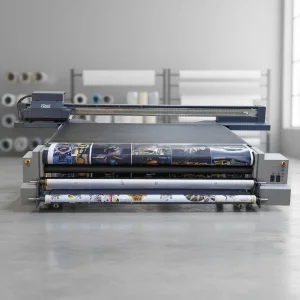
Versatile equipment tailored for diverse rigid materials, oversized banners, fine packaging, and continuous manufacturing shifts.
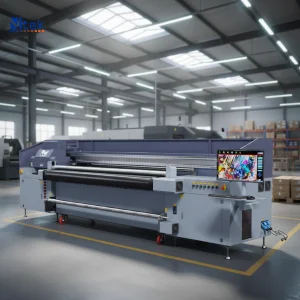
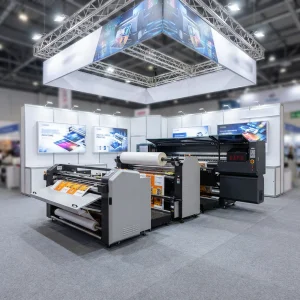
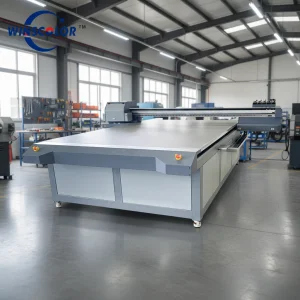
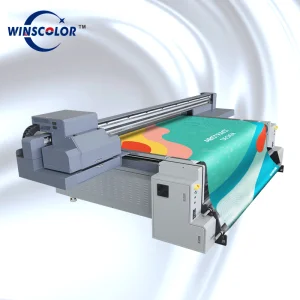
Request an on-site sample print assessment using your specific metal alloys and coatings. Our engineers will configure drop sizes, primer chemistry, and output parameters suited directly to your production facility.