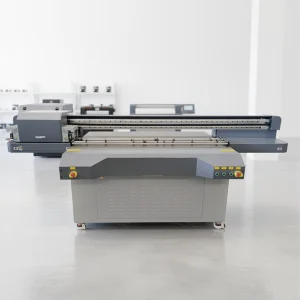
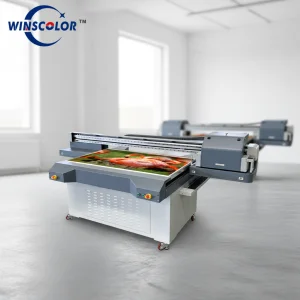
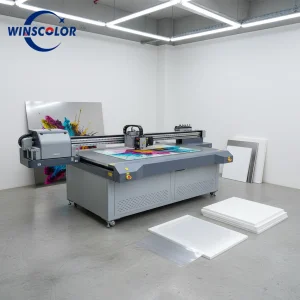
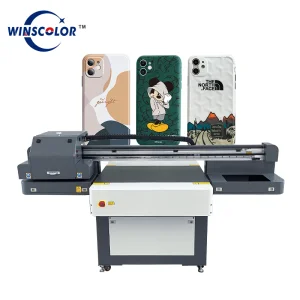
Engineered for scratch-resistant direct substrate imaging, industrial vacuum stabilization, and 3D haptic tactile textures on non-porous sintered surfaces.
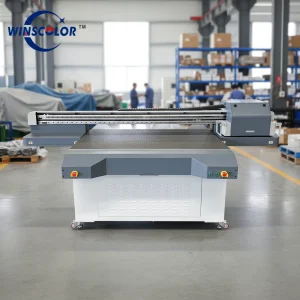

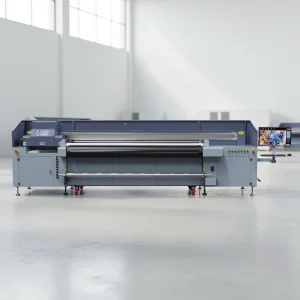

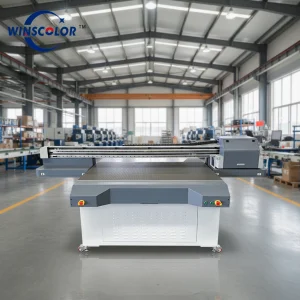
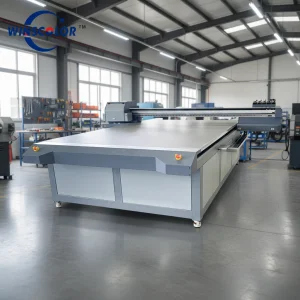
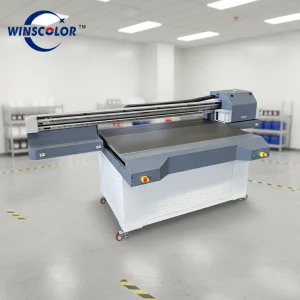
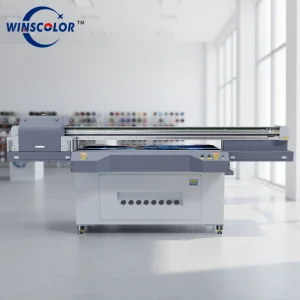
An authoritative analysis of traditional rotary screen printing transitions toward contactless drop-on-demand piezo UV architectures.
In modern architectural surfaces, decorative slabs, and porcelain floor tiles, the global digital printing sector is witnessing an aggressive paradigm shift. Previously reliant on analogue screen printing, hydraulic press coloration, and rotary cylinder applications, production ecosystems were encumbered by high mold costs, rigid setup latencies, and poor batch adaptability. Today, the deployment of high-performance Ceramic Tile UV Flatbed Printers has revolutionized the supply chain.
The contemporary UV flatbed apparatus operates at the intersection of micro-fluidic chemistry and precision mechanical engineering. Unlike kiln-fired ceramic inks that rely on subsequent thermal melting, UV-curable cationic and radical photopolymer inks permit rapid on-demand polymerization directly over glazed, unglazed, microcrystalline, and sintered stone slabs. By delivering instantaneous cold curing via UV-LED arrays (365nm to 395nm wavelength spectra), industrial flatbeds preserve dimensional integrity while eliminating the micro-cracking common under high thermal strain.
Equipped with state-of-the-art Ricoh Gen6 and industrial-grade piezo printheads, our hardware produces variable grayscale droplets from 5pL to 15pL, mitigating the moiré effect and yielding photorealistic marble veining on ultra-dense ceramic surfaces.
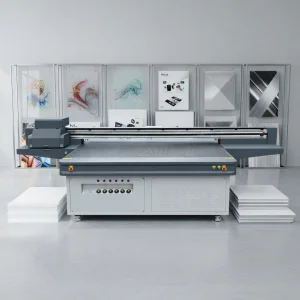
Sintered ceramic slabs and heavy porcelain tiles exhibit substantial mass per unit area. Our multi-chambered heavy-duty vacuum platform maintains zero-deflection flatness across spans exceeding 2500 × 1300 mm, preventing carriage strikes.
By pairing specialized silane-based adhesion promoters (primers) with dual UV-LED curing engines, ink cross-linking density attains 5B cross-hatch tape adhesion metrics, resisting domestic abrasion, alkalis, and humidity.
How hyper-customization, architectural reproduction, and sustainable production lines are redefining downstream commercial value.
Interior design in premium hospitality and luxury residential projects requires custom monolithic artwork. Digital UV printing bypasses minimum batch thresholds, empowering custom design bureaus to produce individual 1200×2400 mm mural tiles with edge-to-edge alignment.
Utilizing high-viscosity UV varnish alongside opaque white barrier ink channels, the machine builds physical bas-relief textures up to 2mm in depth. This enables precise replication of weathered slate, hand-chiseled travertine, and wood grains on smooth porcelain.
Metros, airports, and luxury retail facades require skid-resistant, wear-tested surfacing. UV cured ceramic substrates receiving high-density topcoats pass rigorous abrasion benchmarks, ensuring long-term color fidelity under heavy pedestrian traffic.
A systematic framework detailing hardware architecture evolution, ink rheology improvements, and inline industrial automation.
Dual-guide linear motion platforms ensure spatial dot placement accuracy within ±0.01mm across high-density operations. Automated inline liquid priming pre-treats vitrified tile glazes, elevating surface dynes from 32 to over 48 mN/m.
Eliminating micro-sedimentation of high-weight titanium dioxide (White) and effect particles. Direct-to-nozzle recirculation loops guarantee that sub-micron particulate matters do not cause head blockage during uninterrupted 24/7 manufacturing cycles.
Integrated laser profilers scan warping and planar irregularities on large sintered tiles in real-time. Dynamic Z-axis height adjustment recalculates nozzle firing angles instantaneously, safeguarding printheads from uneven kiln-fired curvature.
Clear, engineering-focused insights addressing durability, chemical adhesion, maintenance, and international procurement standards.
Polished and sintered tiles have low porosity and low surface energy. Permanent adhesion requires a specialized chemical bonding agent (silane-based UV primer). Applied via micro-spray or manual wipe, this primer forms a molecular bridge between the inorganic silicate surface and the organic UV acrylic polymer layer.
No. UV flatbed inks are organic photopolymers that cure under ultraviolet radiation. If subjected to a ceramic kiln at temperatures above 800°C, the organic binders incinerate. For high-temperature post-firing, inorganic solvent ceramic inks must be utilized; UV printers are engineered for post-kiln decorative customization.
High-grade UV inks infused with specialized automotive-grade pigments demonstrate lightfastness metrics reaching Blue Wool Scale 7–8. Coated with an industrial UV-resistant protective topcoat, exterior architectural panels maintain vibrant color integrity without chalking or fading for 5 to 8+ years under intense solar UV exposure.
Routine daily protocols include automated ultrasonic printhead purging, wiper blade sanitization with dedicated cleaning solutions, and carriage cap seal inspection. Monthly checks require lubricating the dual THK linear guides and monitoring UV-LED water-chiller liquid levels to guarantee consistent curing output.
Expand operational flexibility with versatile configurations engineered for varied substrates: woods, metals, polymers, and rotary elements.