

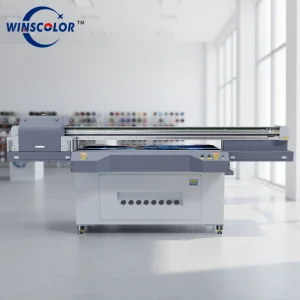
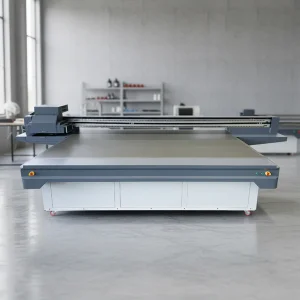
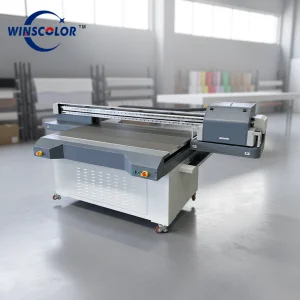
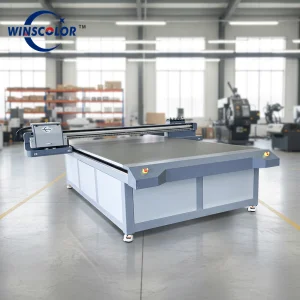
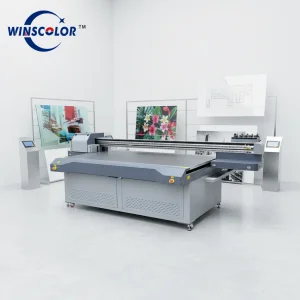
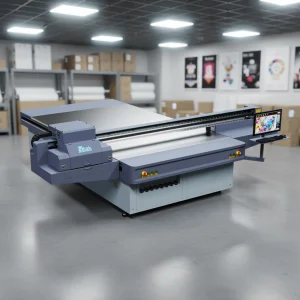
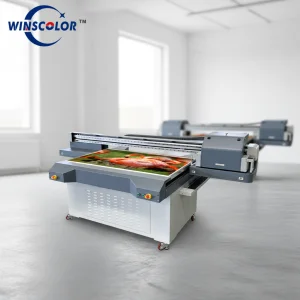
OEM Reliable Supplier Large Format 2513 UV LED Digital Flatbed Printer for Glass, Plastic, Acrylic, Wood Factories, Exporters
View Equipment Specs
Explore heavy-duty UV LED flatbed and hybrid solutions engineered for engineered wood, acoustic panels, cabinet fronts, and solid lumber substrates.
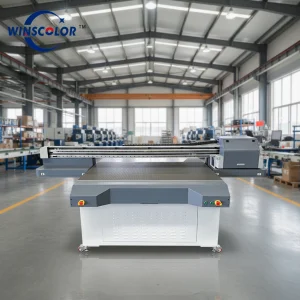
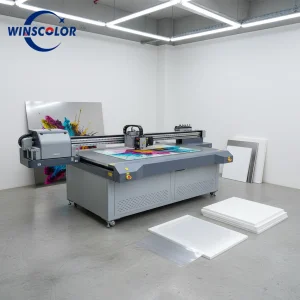
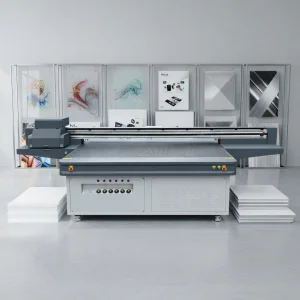
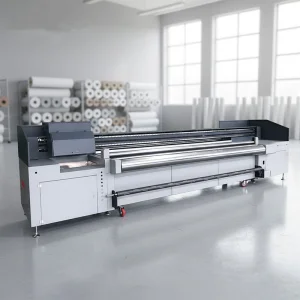
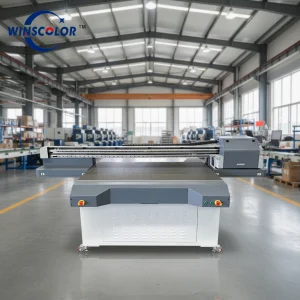
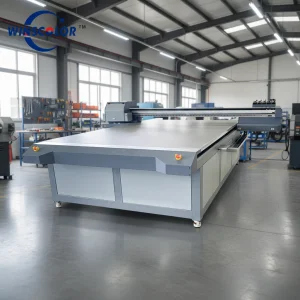
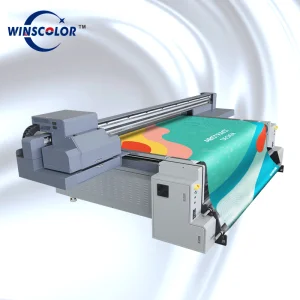
Strategic analysis of industrial-scale direct-to-wood inkjet technologies across architectural millwork, prefabricated construction, bespoke furniture, and decorative panel processing.
Traditional wood finishing relies heavily on rotary screen printing, mechanical embossing, or PVC thermal foil lamination. These legacy methods incur substantial make-ready overhead, inventory carrying costs, and prohibitive setup cycles for customized architectural runs. The transition toward high-throughput UV flatbed printers allows timber factories to achieve true just-in-time (JIT) batch-one production while maintaining micron-level color repeatability and realistic 3D haptic wood grain structures.
Unlike glass or acrylic, natural wood exhibits dynamic mechanical properties: high moisture absorption, porous fiber networks, natural knotting, and warpage under varying relative humidity. Tier-1 wood UV printer factories engineer adaptive multi-zone high-flow vacuum suction beds coupled with non-contact anti-crash printhead carriages. This guarantees uniform jetting distance across medium-density fiberboard (MDF), high-pressure laminates (HPL), solid pine, oak slabs, and birch plywood.
By bypassing flexographic plates, gravure cylinders, and drying tunnels, modern industrial UV printers cut processing cycle times from days to minutes. UV LED photochemical curing solidifies inks instantly with zero volatile organic compound (VOC) emissions, significantly reducing workplace exhaust infrastructure and compliance expenses under tightening international environmental scrutiny.
A granular framework addressing technical procurement criteria, mechanical tolerances, and industrial integration standards required by corporate purchasers.
Heavy solid wood slabs require robust mechanical frames. Famous wood UV printer factories utilize cold-drawn steel gantries milled on high-precision CNC multi-axis centers. Dual THK or Hiwin linear mute guides paired with high-torque Yaskawa or Panasonic AC servo systems suppress mechanical resonance at speeds exceeding 1.2 m/s, preventing stepping artifacts, dot distortion, and horizontal banding across massive 2500 × 1300 mm and 2000 × 3000 mm working beds.
Procurement engineers prioritize multi-drop greyscale Ricoh Gen6 (MH5320) or Gen5 industrial printheads. With variable droplet sizes ranging from 5 to 21 picoliters and jetting frequencies reaching up to 50 kHz, these heads maintain continuous droplet trajectory stability. A built-in internal heating element and independent negative pressure system prevent ink starvation during demanding 3-shift factory operation.
Untreated wood can absorb carrier monomers unevenly, causing desaturation, while oily hardwoods like teak and rosewood resist ink adhesion. World-class exporters provide customized chemical delivery systems including inline digital jetting primers or standardized industrial wiping primers. These formulate covalent bonds with natural resins, passing cross-hatch tape testing (ISO 2409 / ASTM D3359 Class 5B).
Engineered manufacturing methodologies designed for high-value architectural timber, custom cabinetry, artistic flooring, and mass-market packaging.
Architects increasingly specify custom-printed acoustic baffles, slotted MDF panels, and natural wood veneers for corporate headquarters and hospitality venues. Winscolor large format UV systems, such as the YC2513L and YC2030H, support high-clearance Z-axis movement (up to 100–150 mm) to print across pre-grooved, sound-dampening architectural timber structures without edge spray or carriage collision.
Using selective UV varnish deposition layered over dense white underbases, Winscolor printers can construct tactile reliefs up to 1.5 mm high. This enables manufacturers of inexpensive engineered plywood or chipboard to replicate the natural knots, weathered pores, and ridges of rare antique timber—substantially upgrading finished product margins for luxury cabinetry and custom tabletop fabrication.
Commercial flooring demands resistance to abrasion and sunlight fading. By pairing specialized flexible or hard UV curable inks with high-energy LED curing modules, prints cure throughout the entire ink film. When finished with commercial polyurethane clear coats, the prints pass strict Taber abrasion testing, enabling long-lasting artistic designs on hardwood flooring and entrance doors.
Direct from our Jinan R&D center: emerging digital printing architectures engineered to meet changing sustainability, speed, and precision demands.
Natural wood is rarely completely flat. Next-generation Winscolor UV engines integrate continuous laser profilometers and AI computer-vision systems on the carriage assembly. By pre-scanning the timber topology in fractions of a second, the system dynamically modulates printhead fire delays and micro-adjusts vertical carriage clearance, eliminating overspray and maintaining uniform drop placement across uneven wood slabs.
To comply with stringent indoor air quality benchmarks (such as French VOC Class A+ and Greenguard Gold), Winscolor engineers are refining water-based UV hybrid formulations. These eliminate hazardous photoinitiator remnants while reducing curing temperatures, preventing resin bleeding and heat-induced warping across delicate wood veneers and thin decorative timber sheets.
Shifting from manual loading to automated manufacturing lines. The roadmap incorporates robotic vacuum de-stackers, automated double-sided surface cleaning with anti-static ionizing blowers, roller-driven hybrid continuous feeding, and automated vertical buffer racks. All connected via standardized OPC-UA and MQTT industrial communication protocols for centralized SCADA tracking.
A dependable infrastructure delivering pre-shipment qualification, international safety compliance, and factory-level field engineering worldwide.
Operating from our 20,000 m² factory in Jinan, China, every flatbed and hybrid unit undergoes a standardized 72-hour continuous mechanical burn-in and printhead jetting endurance test before packing. Bed flatness is verified using micrometer dial gauges across the entire vacuum table to ensure tolerances within ±0.05 mm.
All Winscolor export models are built with components that meet CE Machinery Directives (2006/42/EC), Low Voltage Directives, and EMC compatibility standards. Pneumatics, emergency stop circuits, shielded drag chains, and high-frequency cabling are selected from reputable global brands to ensure seamless electrical certification across EU, US, and regional markets.
We back our international distributor networks and direct end-users with live video diagnostics, remote software updates, and reliable parts distribution. Spare parts, including sub-tanks, solenoid valves, encoder strips, and UV lamps, are stocked for rapid global dispatch to keep critical production lines running.
Explore our wide-format flatbed and hybrid digital roll-to-roll printing systems built for 24/7 continuous industrial production.
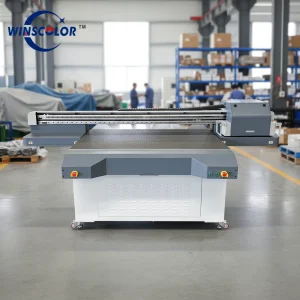
Detailed engineering explanations answering common operational questions for timber fabricators and production managers.
Natural timber fibers absorb liquids dynamically based on local porosity and moisture content. If raw wood is printed without specialized controls, standard low-viscosity UV inks can sink deep into the vascular bundles, leading to dull colors, feathered edges, and uneven gloss levels.
Winscolor addresses this challenge with two core solutions: First, our systems support high-viscosity digital UV primer channels applied inline ahead of color drop placement, which seals the surface cells. Second, high-frequency UV LED pinning lamps instantly freeze droplets upon contact before they can wick into the wood fibers. This ensures crisp detail on difficult surfaces like MDF, coarse pine, and porous birch plywood.
Solid wood panels and timber slabs often exhibit surface bow or twist, creating height variations across the print bed. A head strike on an industrial carriage can damage costly Ricoh Gen6 nozzles and disrupt production schedules.
To eliminate this risk, our YC2513L and YC2030 series feature high-precision non-contact infrared safety sensors and dual mechanical crash triggers on both flanks of the carriage. If height variations exceed the configured safety margin (typically 1.5–2.0 mm), the motion controller halts carriage movement in milliseconds without losing print coordinate data. In addition, an independent, high-pressure zoned vacuum table pulls warped sheets firmly flat against the aluminum bed.
Yes. When configured with industrial flexible or semi-rigid UV curable ink formulations, cured polymers maintain enough structural flexibility to undergo CNC cutting, v-grooving, edge-banding, and trimming without chipping or flaking along the cut lines.
For outdoor use (such as architectural cladding, exterior doors, or directional timber signage), our UV LED formulations use lightfast pigments rated up to Grade 7–8 on the Blue Wool Scale. Adding a protective UV-blocking polyurethane or acrylic topcoat provides multi-year protection against solar radiation, moisture cycles, and temperature swings.
Tactile textures are created digitally through synchronized multi-layer ink stacking in the RIP software (such as Onyx or Photoprint). The printer lays down multiple passes of high-density White or clear Gloss Varnish under high-energy curing, building up a tangible physical relief up to 1.5–2.0 mm thick.
A final CMYK color pass is then printed directly on top of the cured structural foundation. This allows shops to accurately replicate authentic wood knots, rustic brush marks, or bespoke geometric patterns—completely bypassing the tooling costs and minimum order quantities associated with traditional embossing plates.
During heavy manufacturing runs, wood dust is the primary concern for printhead health. Winscolor units are equipped with fully enclosed drag chains, high-power anti-static ionizing bars, and positive-pressure clean air filtration around the carriage to repel airborne particulates.
Routine maintenance includes a quick automated printhead capping and cleaning sequence at the start and end of each shift, automated timed purging cycles during idle periods, and weekly checks of the peristaltic ink pumps and sub-tank negative pressure sensors. This routine keeps nozzle health optimal and ensures reliable, continuous production.