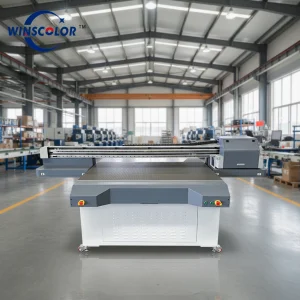
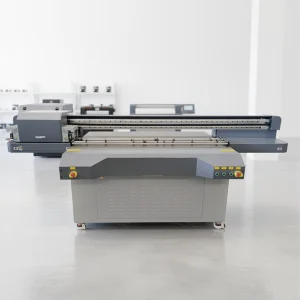
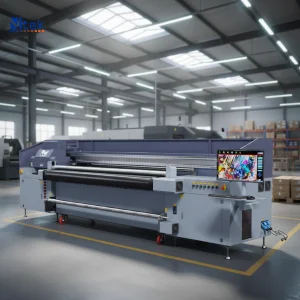
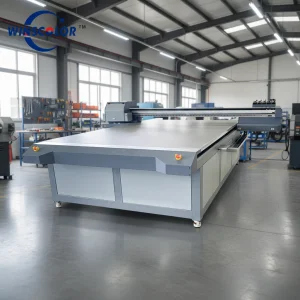
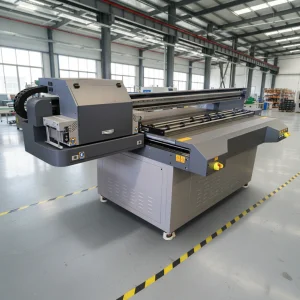
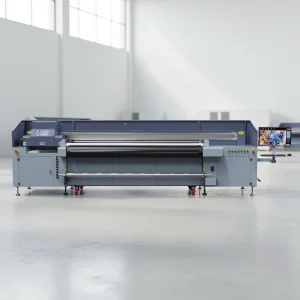
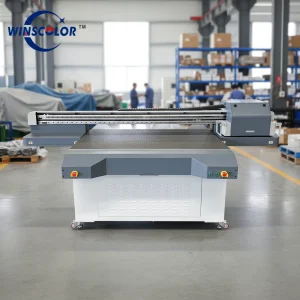
Explore our tier-one industrial UV flatbed, hybrid, and continuous roll-to-roll digital platforms designed for high throughput, micrometer-level dot placement, and 24/7 industrial production.
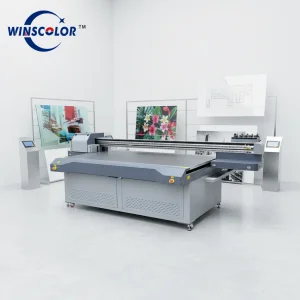
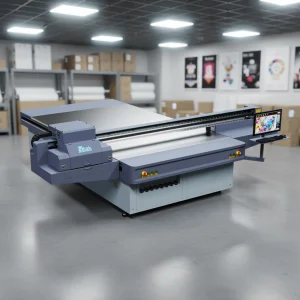
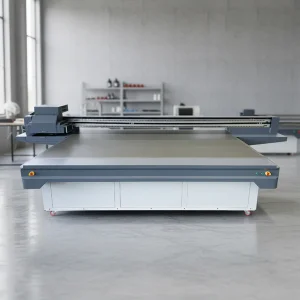
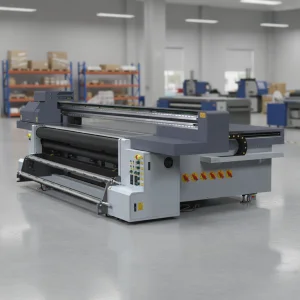
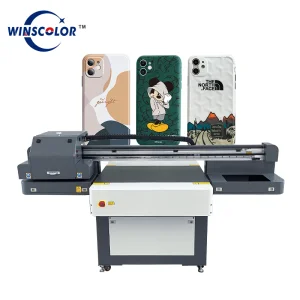
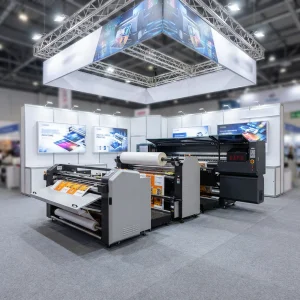
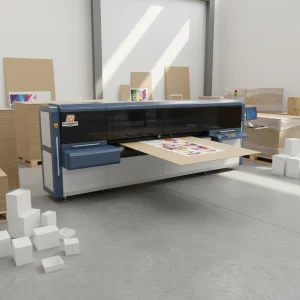
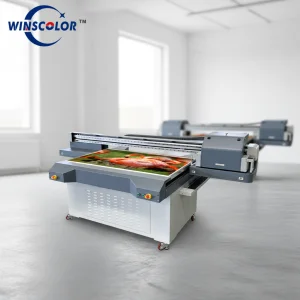
Analyzing the global industrial transition from volatile organic compound (VOC) heavy solvent infrastructures toward energy-efficient, cold-curing LED-UV technology across large-scale manufacturing environments.
Traditional eco-solvent and solvent-based wide-format production pipelines impose prohibitive operating expenses due to high-temperature thermal drying requirements, solvent outgassing periods, and stringent environmental ventilation mandates. Modern UV roll-to-roll printing bypasses these operational bottlenecks through instant photochemical cross-linking initiated by narrow-band 395nm UV-LED diodes. Substrates exit the carriage completely cured, dry-to-touch, and immediately ready for downstream finishing, slitting, or thermal lamination.
Zero Outgassing Instant CuringCommercial print houses face unpredictable order volatility between rigid boards and continuous roll stock. Winscolor's hybrid engineering platforms—exemplified by the YC2513R, YC2500HR, and super-wide YC3200HR—eliminate the capital expense and square-footage footprint of running redundant machinery. Featuring pneumatic pinch-roller transport combined with heavy-duty vacuum flatbed tables, operators switch between 3.2m flexible tensioned PVC flex banners and 50mm rigid aluminium composite panels within minutes without compromising mechanical registration.
Conveyor Drive Rigid + RollOperating from Jinan, Shandong, Winscolor (Jinan Yingcai Digital Technology Co., Ltd) operates an advanced 20,000 square meter ISO9001-certified manufacturing compound. Integrating precision CNC machining gantries, electronic harness assembly, clean-room ink channel calibration bays, and 72-hour pre-shipment continuous stress testing, Winscolor delivers industrial-grade stability. Having deployed machines across more than 100 countries, the organization provides specialized OEM/ODM manufacturing alongside comprehensive lifecycle field services.
ISO9001 Facility Global Field SupportHigh-speed roll-to-roll digital inkjet requires an absolute synchronization of fluid mechanics, micro-piezo electrical pulses, dynamic web tension control, and photon irradiation flux.
The core fluid jetting mechanism utilizes industrial-grade Ricoh Gen6 (MH5320) piezo printheads engineered with high-durability stainless steel nozzle plates. Operating at high firing frequencies up to 50 kHz, these heads deliver multi-level greyscale drop-on-demand (DoD) droplet architectures ranging from 5 pl for photorealistic skin tones and micro-typography to 15 pl for dense solid ink deposits. Independent drive waveform compensation ensures consistent drop velocity and trajectory across wide ambient temperature variations.
Titanium dioxide (TiO2) particles in opaque white UV ink are notorious for sedimentation and premature nozzle dropout. Winscolor printers integrate an automated, electronically governed dual negative pressure ink recirculation system. White ink is constantly cycled within the sub-tank, manifold, and internal printhead cavity. Real-time meniscus pressure sensors automatically modulate pump frequencies to maintain an ultra-stable negative vacuum, preventing both ink weeping and starving during heavy multi-strike production.
Flexible media—such as thin backlit polyester, PVC flex face, and cast vehicle wrap—is prone to mechanical elongation and lateral drift under tension fluctuations. Our roll-to-roll chassis incorporates torque-controlled pneumatic air-expansion shafts, continuous dual rubber pinch rollers, and ultrasonic tracking sensors. This architecture maintains consistent micro-Newton tension across full 3.2m media widths, preventing stepping errors, mechanical banding, and wrinkling across unattended 100-meter continuous runs.
Unlike metal-halide or high-pressure mercury lamps that generate extreme IR radiant heat (often warping heat-sensitive films like PP synthetic paper and thin PVC), Winscolor UV-LED curing engines utilize narrow-spectrum water-cooled LED diode arrays (395nm). Operating at low surface thermal outputs (under 40°C on media), these emitters feature step-less digital power modulation linked dynamically to carriage travel velocity, guaranteeing complete photo-initiator curing with minimal power consumption.
The carriage motion axis relies on Japanese THK/Taiwanese Hiwin dual silent linear guides mounted to an annealed, precision-milled aviation-grade aluminium crossbeam. Paired with high-torque AC servo motors and a steel-reinforced Renishaw metal optical encoder raster strip, positioning repeat accuracy reaches ±0.01mm. This mechanical rigidity eliminates micro-vibrations at scanning speeds exceeding 1.2 m/s, yielding crisp bi-directional dot registration.
High-speed flexible roll unwinding generates substantial triboelectric static charges, which deflect micro-ink droplets in flight and cause ink misting. Winscolor printers integrate dual bidirectional active deionizing static elimination bars alongside mechanical laser safety crash sensors. If media wrinkles or substrate height exceeds calibrated parameters, the safety brake system arrests carriage travel within 5 milliseconds, preserving sensitive nozzle faceplates from physical strikes.
From hyper-elastic automotive vehicle wraps to flame-retardant backlit textiles, modern roll-to-roll UV inks provide specialized chemical adhesion, optical opacity, and structural flexibility across diverse industrial sectors.
Modern retail visual merchandising relies heavily on Silicone Edge Graphics (SEG) mounted within frameless LED lightboxes. Unlike dye-sublimation which requires calendar heat presses and transfer papers, Winscolor UV roll printers deposit high-pigment-density CMYK + Light Cyan + Light Magenta directly onto non-woven backlit polyester fabrics. With custom 3-layer backlighting print modes (Color + White + Color), images retain vibrant saturation and deep shadow detail when illuminated, without pinholes or ink cracking during silicone welt sewing and transport folding.
SEG Backlit Color-White-ColorVehicle fleet branding requires inks capable of conforming to deep 3D rivets, compound curves, and recessed channels. Utilizing Winscolor proprietary flexible UV ink sets, cured prints achieve elongation stretch metrics exceeding 200–300% without flaking, delamination, or edge whitening. The integrated LED curing configuration minimizes plasticizer migration within cast PVC films, ensuring superior adhesive bonding and 5+ year outdoor UV weatherability against solar degradation and road chemicals.
Cast Vinyl 200-300% StretchBeyond traditional visual marketing, roll-to-roll UV systems function as additive manufacturing tools for membrane switch overlays, appliance touchpads, and industrial instrumentation panels. Printing directly on textured polycarbonate, treated polyester (PET), and acrylic films, the machine deposits opaque white backing layers, sub-surface indicator legends, and selective tactile 3D varnish textures. These layers substitute for mechanical embossing dies, slashing prototyping cycles from weeks to minutes.
PET / PC Films Tactile EmbossingCommercial interior spaces demand custom murals, embossed wallpaper, textured faux leather, and window privacy films. Our multi-layer spot varnish engines apply glossy and matte relief passes directly onto canvas, non-woven wallpaper, and vinyl rolls. This variable-layer structure builds genuine tactile textures that emulate oil paintings, wood grains, or stone finishes. All outputs are Greenguard Gold compliant, ensuring zero harmful emissions for sensitive environments like hospitals, schools, and boutique hotels.
Greenguard Gold Wall MuralsEvaluating the capital expenditure against long-term lifecycle metrics: ink yield efficiencies, electrical draw reductions, waste reduction, and production automation.
Traditional eco-solvent inks rely on carrier solvents evaporating into the ambient air, effectively wasting 50% to 60% of liquid volume purchased. In contrast, 100% solid-content UV curable inks convert entirely into the cured polymer layer. Thanks to the dynamic multi-drop greyscale waveform of Ricoh Gen6 heads (5pl, 10pl, 15pl), Winscolor UV roll printers consume an average of only 5.5 to 7.2 mL per square meter (depending on substrate absorption and color coverage). This represents a 35% reduction in consumable fluid costs compared to conventional legacy platforms.
Legacy drying ovens, quartz heaters, and mercury-arc curing systems consume enormous amounts of continuous power (often 8kW to 15kW per hour) and dump excessive waste heat into the shop floor, necessitating high-capacity industrial air conditioning. Winscolor cold UV-LED systems use targeted solid-state diodes drawing less than 1.5kW, while switching on/off instantaneously only during active carriage passes. Print facilities experience a 60% to 75% drop in machine-related power consumption, slashing the total carbon footprint and operating overhead.
Traditional rotary screen or offset printing lines require costly plate preparation, film stripping, ink fountain calibration, and significant linear material waste before the first acceptable print is produced. Winscolor digital roll-to-roll printers function with zero make-ready overhead: print jobs run directly from high-performance RIP software (such as Photoprint, Onyx, or Caldera) straight to the web. One-off samples and customized short-runs become just as profitable as mass-production orders, mitigating raw substrate waste down to near zero.
Where industrial inkjet is heading: single-pass array integration, closed-loop inline spectrophotometry, AI-driven nozzle compensation, and circular bio-based monomers.
While scanning-carriage architectures dominate the custom graphic space, the market for packaging paper, wallpaper, and carton production is moving rapidly toward single-pass fixed-array heads (such as our RS1900-E16 series). With stationary head arrays spanning the entire roll width, printing speeds surge from 50–100 m²/hr up to 150 linear meters per minute, bridging the gap between digital customization and flexographic mass production.
Upcoming controller generations integrate high-resolution inline CMOS line-scan cameras positioned directly behind the trailing UV LED array. The vision system reads dedicated micro-registration test marks and nozzle checks in real time. If a nozzle experiences physical deflection or clogs during continuous unattended overnight runs, machine-learning algorithms dynamically remap the firing patterns of adjacent nozzles, completely neutralizing banding defects without stopping the web.
The chemical frontier of UV-LED chemistry is transitioning from petroleum-based acrylates to bio-renewable, plant-derived monomer compounds (derived from soy, rosin, and lignin). Combined with water-based UV hybrid formulations, these next-generation ink sets ensure easier de-inking during paper and plastic recycling processes while fulfilling increasingly strict global circular economy regulations and chemical safety standards.
Engineered answers to the most critical operational and procurement questions faced by industrial print shop owners, print production managers, and machinery distributors.
Speak directly with our senior application engineers to calculate precise ink consumption forecasts, media compatibility matrices, and customized OEM/ODM equipment configurations.
Explore our versatile small-to-large-format flatbed, hybrid roller, and cylindrical rotary systems optimized for signage, décor, packaging, and industrial marking applications.