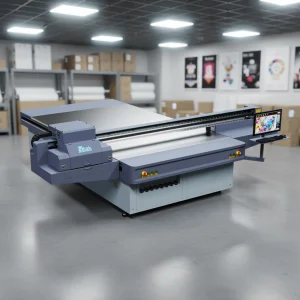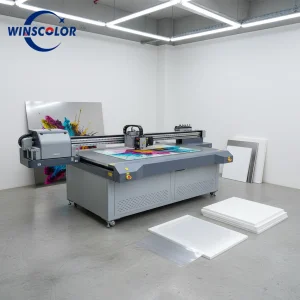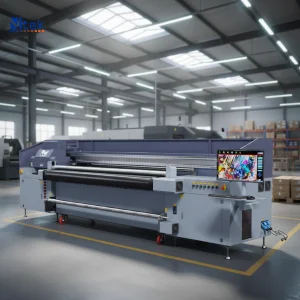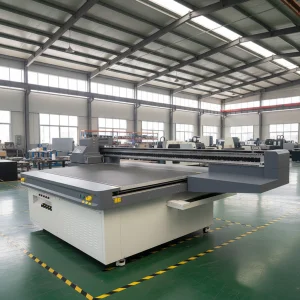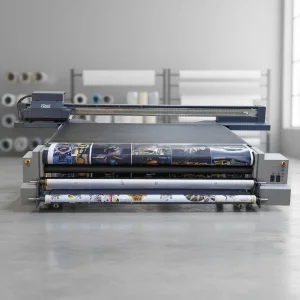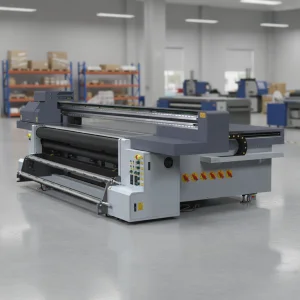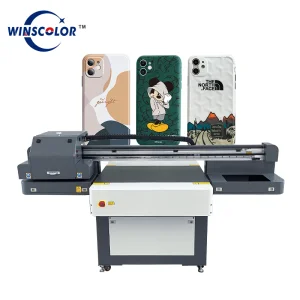
Field-engineered UV systems configured with variable grayscale piezo technology, industrial gantry stability, and low-heat UV-LED curing engines.
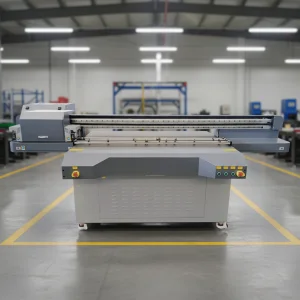
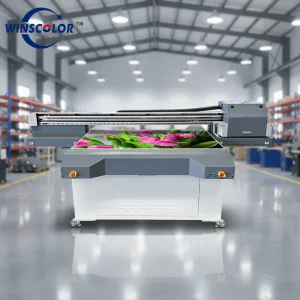
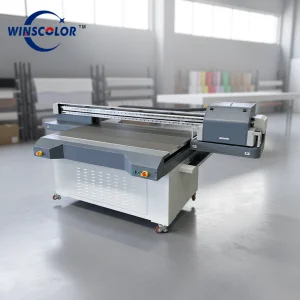
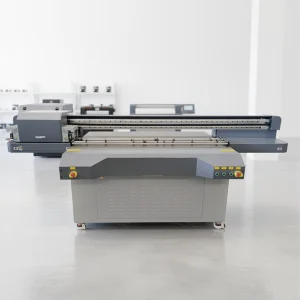
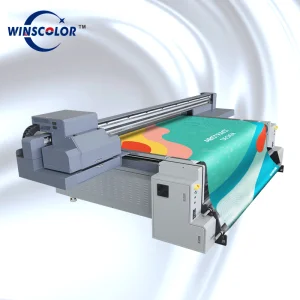
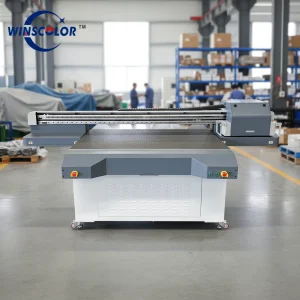
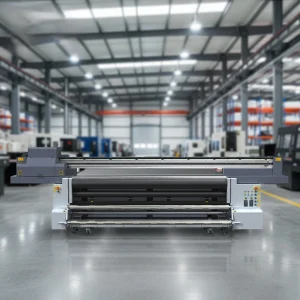
The macro transition from rotary screen and solvent evaporation lines to on-demand UV photo-polymerization printing across international supply chains.
Rising regulatory pressure on solvent air pollutants and prohibitive pre-press plate setup costs have pushed medium-to-high volume producers toward industrial UV drop-on-demand printing. Modern configurations reduce setup overhead to near-zero, enabling profitable single-sheet prototypes or 10,000-unit contract packaging runs on identical hardware.
The global commercial market increasingly specifies complex ink layouts including CMYK, Light Cyan, Light Magenta, High-Opacity White, and Spot High-Gloss Varnish. This allows production lines to reproduce Delta-E brand standards on uncoated corrugated stock, dark acrylics, and brushed non-ferrous metals without secondary lamination.
E-commerce decentralized fulfillment models mandate regional manufacturing nodes capable of immediate customization. UV flatbed and hybrid printers serve as pivotal production units, handling irregular shapes, architectural elements, retail store fixtures, and tactile Braille sign systems within rapid production cycles.
Engineered mechanical precision and calibrated droplet deposition tuned for specific material substrates and environmental exposures.
High-vacuum multi-zone tables secure heavy float glass, ceramics, and porcelain panels. Paired with chemical adhesion promoters and inline pyrosil pretreatment, UV pigment deposition achieves wet-room scratch and moisture resistance for interior backsplashes and building facades.
Small-format platforms such as the UV 6090 deliver high-precision dot placement for electronic enclosures, phone shells, and custom interface panels. Specialized varnish channel pulsing enables 3D embossed reliefs and tactile buttons resistant to skin oils.
Plate-free digital inkjet printing directly onto virgin or recycled corrugated board, eliminating die-plate tooling delays. High-speed multi-pass gantry tracking handles varied caliper corrugated paperboard without edge-curling head strikes.
Equipped with synchronized servo rotary attachments, mid-format flatbeds print seamless 360-degree graphics directly onto stainless steel drinkware, perfume flasks, glass wine bottles, and tapered cosmetic tubes without registration seams.
A fully integrated manufacturing ecosystem based in Jinan delivering high-grade structural assembly, cost efficiency, and export-grade hardware validation.
Unlike lightweight bolted aluminum extrusions, our industrial chassis utilize all-steel welded frames that undergo full five-axis portal gantry milling and high-temperature stress-relief annealing. This prevents frame micro-torsion over millions of high-speed print passes.
Jinan's advanced manufacturing cluster affords direct integration of Japanese Ricoh/Epson piezo printheads, dual Taiwan Hiwin linear silent guide rails, German IGUS drag chains, and Japanese Panasonic AC servo motor drives, reducing assembly lead times to under 15 calendar days.
Prior to seaworthy anti-corrosion barrier packing, every machine undergoes continuous 72-hour stress-testing. This includes negative-pressure ink supply stability tests, carriage sweep precision checks under high-G loads, and high-coverage color test grids to verify zero nozzle drop-out.
Advancements in industrial inkjet technology focusing on drop velocity, energy reduction, and automated visual registration.
Integrating industrial CCD camera arrays with edge machine vision processors to automatically detect skewed substrate placement on the vacuum bed. The system computes real-time coordinate offsets in milliseconds, eliminating manual alignment jigs for rapid batch loading.
Next-generation directional 395nm water-cooled LED lamps reduce electrical draw by up to 45% compared to legacy mercury lamps. Narrow spectral emission targets photoinitiators directly, preventing heat build-up on thin heat-sensitive polystyrene (PS) and PVC films.
Advanced sub-tank and nozzle-plate continuous ink recirculation systems eliminate titanium dioxide (white pigment) sedimentation. This maintains consistent fluid viscosity, prevents printhead micro-clogs, and significantly reduces daily purging waste.
Rigorous regulatory certifications, remote telemetry troubleshooting, and comprehensive international warranty coverage.
Every exported platform complies with EU Machinery Directive standards (CE), RoHS non-toxic limits, and UL-certified low-voltage electrical cabinet configurations. Built with segregated high/low voltage channels to prevent electromagnetic interference.
Factory-trained field application engineers provide multi-lingual technical support via secure VPN remote assistance. Diagnostics cover RIP color curve optimization, waveform calibrations, and servo encoder feedback resolution without dispatch delays.
Critical maintenance consumables—including negative pressure sensors, peristaltic pumps, solenoid valves, encoder strips, and UV-LED driver modules—are stocked for priority dispatch through DHL/FedEx hubs, ensuring minimal operating downtime.
Clear technical insights to help operational managers evaluate ink systems, curing specifications, and print bed configurations.
High-capacity flatbeds and heavy roll-fed hybrid platforms designed for architectural decoration, packaging, and commercial advertising.