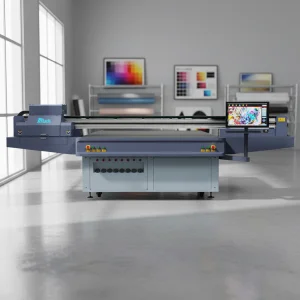
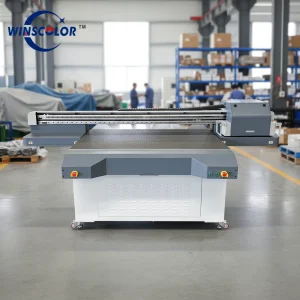
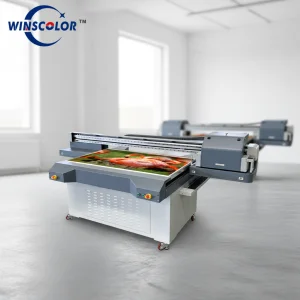
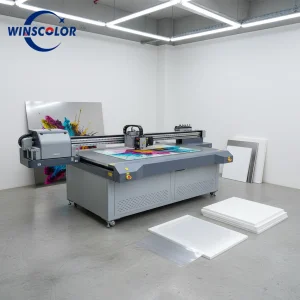
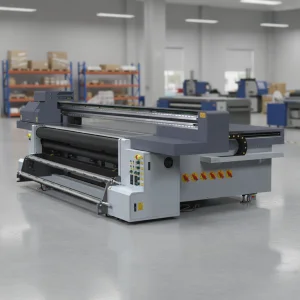
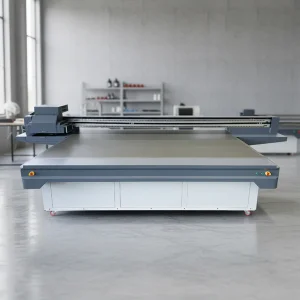
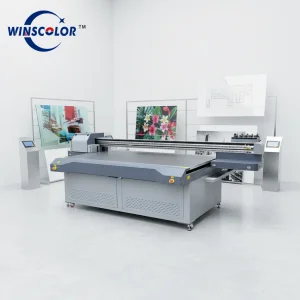
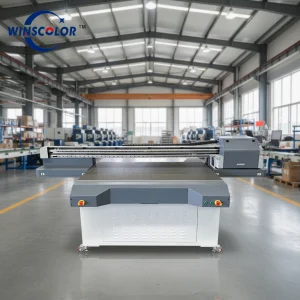
Engineered for extreme duty cycles, multi-layer drop-on-demand piezo micro-accuracy, and broad-spectrum substrate compatibility.
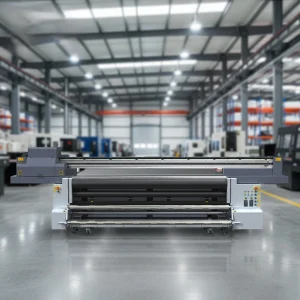
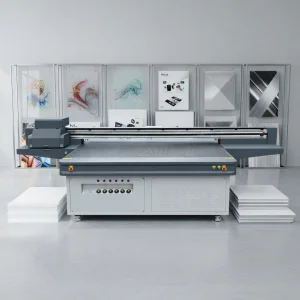
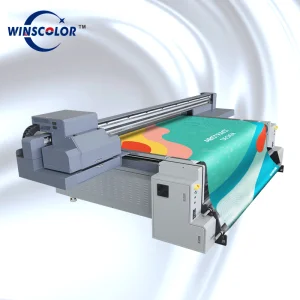
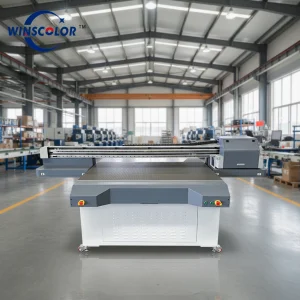

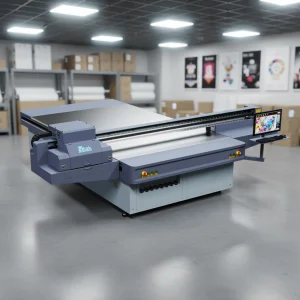
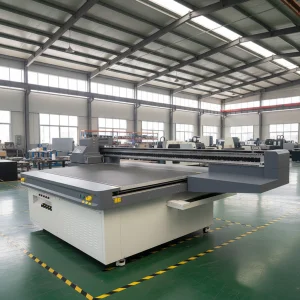
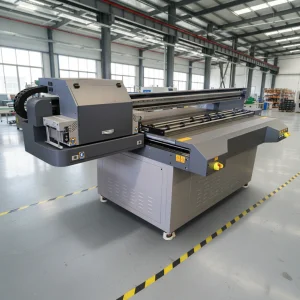
Understanding why the 600×900mm (24×36 in) bed footprint represents the strategic sweet spot in agile manufacturing and low-run customization.
Global procurement teams in North America, Western Europe, and Southeast Asia are increasingly standardizing on the 6090 UV Flatbed form factor. Unlike monumental 2513 or 3200 frames that demand high floor load limits, three-phase continuous power, and high baseline utility expenses, the 6090 class fits comfortably within modular pilot labs, cleanroom workshops, and boutique promotional factories without sacrificing industrial rigidity.
The 6090 digital printing machine delivers a radically compressed payback window. With an initial capex barrier under one-third of a full-scale architectural flatbed, operating units break even on short custom runs of promotional gifts, industrial nameplates, cylindrical drinkware, and acrylic awards within 90 to 120 operational days under typical two-shift utilization.
The modern 6090 platform accommodates glass trophies, thermoformed ABS, structural aluminum sheets, top-grain leather, acrylic displays, and wood plaques. Coupled with rotary indexing modules, it prints seamlessly around seamless tumblers and taper-necked bottles with synchronized peripheral surface speeds.
Beyond the exterior sheet metal lies the mechanical precision engineering that differentiates light-duty assembly kits from true 24/7 continuous industrial workstations.
Top-tier manufacturing facilities utilize five-axis CNC gantry mills to finish the underlying frame and high-rigidity structural aluminum beam. Precision THK or Hiwin linear dual-rail systems combined with lead-screw drive eliminate microscopic carriage yawing, preventing high-speed micro-banding.
Industrial Ricoh G5i/G6 and Epson i3200 systems utilize independent closed-loop negative pressure controls for white and color channels. This design prevents white pigment sedimentation and maintains a stable meniscus across varying environmental temperatures and ambient humidity levels.
A precision-planed, high-vacuum hard-anodized aluminum platform with divided air sections allows operators to isolate suction across quadrant panels. This prevents edge-lifting on lightweight acrylic sheets and warped styrene panels, preserving head clearance without strikes.
Systematic engineering evaluation across different printhead ecosystems commonly integrated into 6090 digital flatbeds.
| Evaluation Parameter | Epson i3200-U1 Setup | Ricoh G5i (TH5241) High-Drop | Industrial Ricoh Gen6 Hybrid |
|---|---|---|---|
| Target Manufacturing Class | Short-run custom, studio commercial | High-drop, textured, curved relief | Continuous multi-shift factory floors |
| Native Drop Size | Variable 3.8 pl – 9.4 pl | Variable 3.0 pl – 12.0 pl | 5.0 pl – 15.0 pl Variable Drop |
| Effective Throw Distance | 1.5 mm – 3.0 mm Max | Up to 14.0 mm High-Drop Clearance | 2.0 mm – 4.0 mm Industrial Target |
| Curing Subsystem | Dual Air-Cooled UV-LED Units | Dual Water-Cooled Variable UV-LED | High-Intensity Water-Cooled Multi-Zone |
| Recommended Duty Cycle | 8 to 12 Hours / Daily | 16 to 24 Hours / Daily | 24/7 Heavy Continuous Production |
The convergence of computer vision, generative texture mapping, and green chemistry reshaping the flatbed manufacturing landscape.
Next-generation 6090 models feature high-resolution overhead CCD camera matrices powered by edge-AI inference. These systems automatically detect the position and rotation of scattered substrates across the vacuum bed, eliminating jig alignment while delivering 100% automated registration across random batch layouts.
Advancements in UV varnish formulations and multi-pass jetting algorithms allow operators to create micro-embossed oil textures, braille typography, and authentic wood/stone grain recreations with micron-level height accuracy directly inside RIP software environments.
Global environmental mandates are driving the development of bio-renewable photoinitiators and low-odor VOC-compliant inks. These curing profiles operate efficiently at low UV-LED wattages (under 395nm), lowering workplace exposure and energy consumption.
Procurement frameworks require transparent OEM audit trails, verified CE/UL compliance, and standardized quality testing before equipment leaves the factory floor.
Industrial machinery must conform to European Machinery Directive 2006/42/EC and Electromagnetic Compatibility (EMC) standards. Factory assembly protocols demand filtered high-voltage enclosures, shielded ground loops, and emergency safety cutoffs to guarantee plant safety.
Tier-1 manufacturing operations subject every flatbed to continuous 72-hour burn-in stress cycles. Testing includes coordinate laser interferometry verification, carriage vibration analysis, and high-coverage color test grids to verify droplet trajectory consistency.
Long-term operational uptime relies on responsive technical support. Reputable manufacturers deliver comprehensive English-language schematics, remote diagnostics, modular sub-assemblies, and localized spare part hubs for dampers, pumps, belts, and control boards.
Clear, engineering-backed answers to the most common questions raised by plant managers, operators, and procurement specialists.
High-throughput flatbed, hybrid roll-to-roll, and board systems for medium to large-scale print production.