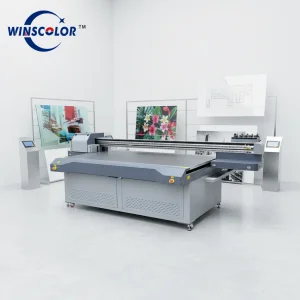
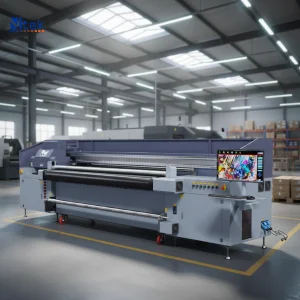
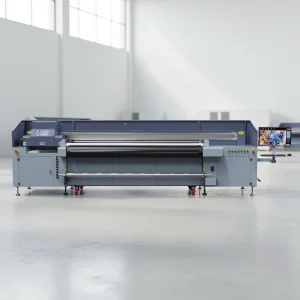
Direct Industrial Manufacturing & Global Export

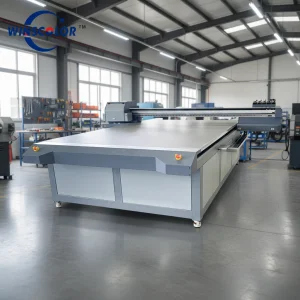
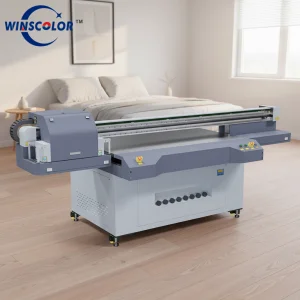
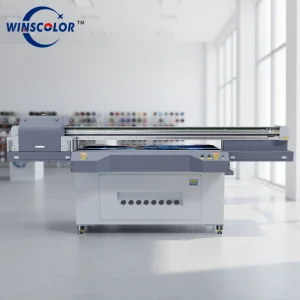
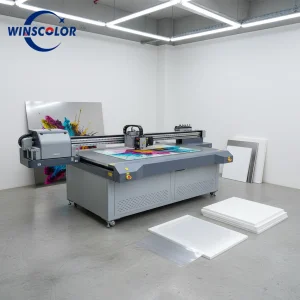
Wholesale UV Led Flatbed Printer Manufacturer & Exporter

Precision-engineered digital inkjet solutions for high-yield industrial substrates. Built by Jinan Yingcai Digital Technology Co., Ltd (Winscolor) with state-of-the-art Ricoh Gen6 piezo technology, sub-micron gantry engineering, and global field reliability across 100+ nations.

Top-Tier Fleet Deployment

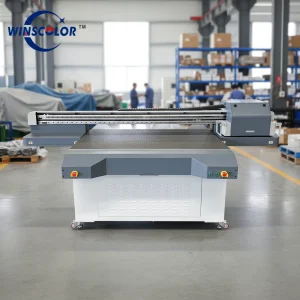
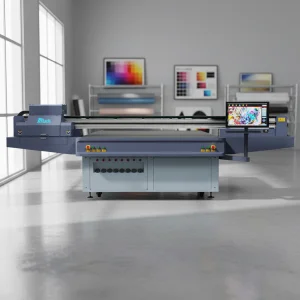
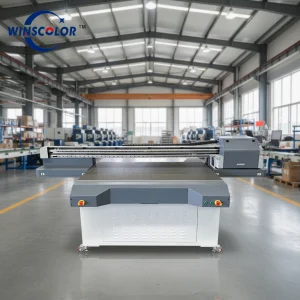
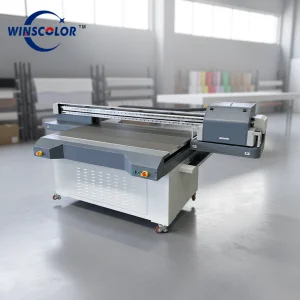
Featured Industrial Flatbed & Precision Series (Batch A)

Engineered for 24/7 sustained production. These certified UV-LED systems deliver high-density white layering, ultra-tactile 3D embossing, and uncompromised optical alignment on wood, glass, aluminum, acrylic, and ceramic.
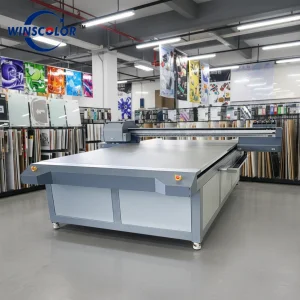
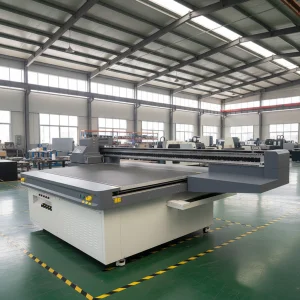
OEM Customized High Speed High Precision Cup Stickers Box Aluminum Printing Machine UV Flatbed Printer
Explore Specifications
OEM Reliable Supplier Large Format 2513 UV LED Digital Flatbed Printer
OEM Reliable Supplier Large Format 2513 UV LED Digital Flatbed Printer for Glass, Plastic, Acrylic, Wood Factories
Explore Specifications
NTEK China Wholesale Digital UV Printing Machine Ceramic Glass
NTEK China Wholesale Digital UV Printing Machine NTEK Ceramic Glass UV Printer Manufacturer, Companies
Explore Specifications
Famous Hot Sale Aluminum Acrylic Ceramic Dibond 2030 UV Flatbed Printer
Famous Hot Sale Aluminum Acrylic Ceramic Dibond 2030 UV Flatbed Printer Suppliers, Exporter
Explore Specifications
OEM YC1610 UV Flatbed Printer Road Sign Printing Machine
OEM YC1610 UV Flatbed Printer Manufacture Road Sign Printing Machine Supplier, Suppliers
Explore Specifications
Famous Discount Wood Glass UV Flatbed Printer 1610 Digital
Famous Ordinary Discount Wood Glass UV Flatbed Printer High Resolution 1610 Digital UV Printing Machine
Explore Specifications
Famous Best Quality UV Wood Printing Machine 2030 UV LED Flatbed
Famous Best quality UV Wood Printing Machine 2030 UV LED Flatbed Printer Price Suppliers, Company
Explore Specifications
Factory Wholesale Professional Pen Acrylic Glass UV Printer
Famous China Factory Wholesale Professional Pen Acrylic Glass UV Printer Laminator Bottle Printing Machine
Explore Specifications
Global Industrial Synthesis

The Industrial Shift: Commercial Landscape & Semantic Transition

The global wide-format and industrial decorative printing sectors are navigating a rapid technological paradigm shift. Analogue screen printing and volatile-organic-compound (VOC) intensive eco-solvent technologies are being aggressively superseded by instantaneous cold-cure UV LED digital flatbed and hybrid architectures.

20,000m²
Smart Factory Facility
60kHz
Ricoh G6 Firing Frequency
100+
Export Export Destinations
0.02mm
Mechanical Gantry Repeatability

Microeconomic Decoupling

Traditional manufacturing mandates heavy upfront screen engraving, photochemical film development, plate setup, and excessive wastewater treatment. UV LED digital flatbeds operate on zero-plate demand, slashing setup labor by 94% and unlocking profitable unit economics for single-piece customizations as well as 10,000-piece industrial runs.

Instant Curing Photopolymerization

Utilizing high-power ultraviolet light-emitting diodes emitting strictly at calibrated 395nm wavelengths, liquid photoinitiators inside UV inks instantly cross-link monomers into tough solid polymers. Printed rigid substrates exit the bed completely cured, scratch-resistant, and chemically stable for immediate downstream packaging or CNC routing.

Substrate Versatility Horizon

Unlike thermal aqueous or solvent systems that rely on open-cell porosity or chemical coating absorption, UV photopolymerization bonds tenaciously to completely non-porous, highly dense materials including electroplated sheet metals, architectural float glass, industrial ceramics, cast acrylics, Dibond, and natural lumber.

Hardware Engineering Excellence

Engineering Architecture: Motion Control, Micro-Piezo & Ink Fluidics

Every Winscolor machine manufactured by Jinan Yingcai Digital Technology integrates structural steel stress-relieved gantry beds, Japanese drop-on-demand micro-piezo printheads, dual Taiwan HIWIN silent linear guideways, and closed-loop magnetic linear optical encoders.

Ricoh Gen6 Industrial Piezoelectric Printhead Array

Our flagship platforms (YC2513L, YC2030H, YC3200HR) are engineered around Ricoh Gen6 (MH5320) stainless steel printheads. Featuring 1,280 micro-nozzles spanning 4 independent channels and an isolated physical chamber architecture, each head fires variable droplets from 5pl to 15pl with a drive frequency reaching up to 60kHz.

  • Variable Drop Greyscale: Creates imperceptible micro-gradient transitions in skin tones, pastels, and metallic metallics.
  • Sub-Pixel Jetting Accuracy: Ensures crisp micro-typography down to 2pt text for medical compliance labels and aircraft nameplates.
  • Industrial Longevity: Built from corrosion-proof isolated metal chambers offering an extended service life exceeding 36 months of continuous operation.

Dual Negative Pressure & Agitation Fluidics

Viscosity instability and titanium dioxide pigment precipitation are the primary failure points in lower-tier UV hardware. Winscolor implements an independent micro-computerized dual negative pressure system separating color channels from high-viscosity opaque white and gloss varnish circuits.

  • Automated White Recirculation: Constant closed-loop peristaltic stirring keeps heavy white inks from settling and nozzle clogging.
  • Digital Meniscus Stability: Precision pressure transducers respond within milliseconds to carriage velocity changes, preventing ink drop weeping.
  • Heated Sub-Tanks: Temperature-controlled manifolds stabilize ink dynamic viscosity across varying shop-floor ambient ranges (18°C–32°C).
Platform Tier Bed Dimension (X/Y) Printhead Configurations Drop Volume Max Print Speed (Draft) Target Substrate Thickness
YC6090 Desktop Pro 600 mm × 900 mm 2–3 × Ricoh G5i / Epson i3200-U1 3.5 pl – 9 pl 6–10 m²/h 0.1 mm – 150 mm (Rotary optional)
YC1610H Mid-Format 1600 mm × 1000 mm 2–4 × Ricoh Gen6 / G5i 5.0 pl – 15 pl 18–28 m²/h 0.1 mm – 100 mm
YC2513L Industrial Flagship 2500 mm × 1300 mm 3–8 × Ricoh Gen6 (CMYK+W+V) 5.0 pl – 15 pl 35–55 m²/h 0.1 mm – 100 mm (Up to 400mm custom)
YC2030H Heavy Architectural 2000 mm × 3000 mm 4–8 × Ricoh Gen6 5.0 pl – 15 pl 45–65 m²/h 0.1 mm – 100 mm (100 kg/m² load)
YC3200HR Hybrid Continuous 3200 mm Roll / Rigid Conveyor 4–10 × Ricoh Gen6 5.0 pl – 15 pl 60–90 m²/h Rigid up to 50mm / Flexible unlimited roll
Manufacturing Rigor & Supply Chain Mastery

Source Factory Resilience: The Jinan Heavy-Machinery Advantage

Jinan, Shandong stands as China's epicenter for precision CNC machining, laser optical systems, and heavy industrial automation. Operating our modern 20,000 square-meter production complex and 6 dedicated assembly lines, Winscolor leverages unparalleled vertical supply chain integration to deliver uncompromising mechanical stability at high competitive value.

Integrated Annealing & Milling

Every welded chassis undergoes high-temperature furnace stress-relief annealing to permanently eradicate internal residual structural tensions. The entire bed and dual gantry beams are precision-milled in a single setup on a 12-meter five-sided CNC machining center, guaranteeing a flatness tolerance of less than 0.03mm across a 3.2-meter span.

Direct Component Ecosystem

We source structural cast alloys, dynamic vacuum blowers, electronic control units, and specialized UV curing chips directly from tier-one localized suppliers within a 50km radius. This hyper-dense industrial cluster insulates Winscolor from global logistics volatility, cuts raw material transit timelines to zero, and allows rapid prototyping of customized OEM specifications.

72-Hour Continuous Burn-In

Prior to oceanic crating, every machine runs a mandatory 72-hour stress test. This protocol subjects motion servos, UV curing chillers, printhead firing boards, and RIP color profile decoders to prolonged stress-load cycling, validating droplet placement precision using microscopic collimators before export signoff.

Substrate Science & Regional Deployment

Localized Substrate Dynamics: Adapting to Global Markets

Printing environments, environmental humidity levels, and substrate chemistries vary widely across global markets. Winscolor formulates tailored printing strategies and specialized ink sets to address specific geographical standards.

North America & Western Europe

Strict Tactile & ADA Braille Signage: Commercial building codes in the US (ADA Title III) and European building directives demand raised tactile lettering and Grade 2 Braille dots. Winscolor's multi-layer UV varnish build-up reaches required heights (0.6mm–0.9mm) in a single unified print queue, skipping manual bead insertion.

  • Acoustic Felt (PET): Sound-dampening interior panels printed without clogging fiber textures.
  • Architectural Tempered Glass: Digital ceramic fritting alternative with optical transparency control.

Middle East & Latin America

Extreme UV & Heat-Resistant Signage: High ambient temperatures in Gulf Corporation Council (GCC) territories and Central America degrade inferior inks within months. Our high-pigment industrial UV inks utilize automotive-grade organic pigments rated Blue Wool Scale 7-8, delivering up to 3 years of outdoor lightfastness without lamination.

  • Heavy Aluminum Dibond: Structural composite exterior cladding for retail facades.
  • Glazed Ceramic & Porcelain: High-adhesion primer systems resilient to moisture cycles.

Southeast Asia & Eastern Europe

Short-Run Packaging & Industrial Membrane Switch Panels: Rapid consumer goods packaging and electronics prototyping demand high flexibility without ink flaking. Winscolor flexible UV formulations stretch up to 200% without cracking, enabling sharp creasing and score-line bending on heavy corrugated flute and polycarbonate overlays.

  • E-Flute & Honeycomb Board: Direct-to-carton printing without costly photopolymer plates.
  • Apparel Leather & PVC Sheeting: Deep grain penetration for consumer goods and fashion items.
Next-Generation R&D Horizons

Technology Roadmap: Advancing Flatbed Printing Beyond 2026

Digital inkjet technology is moving from standard manual flatbeds toward connected, automated, and environmentally sustainable production lines. Here is Winscolor's engineering progression across key hardware and software fronts.

AI Optical Surface Mapping

Integrating structured-light laser distance sensors right on the print carriage. Before jetting, the system constructs a dense 3D topological height map of warped boards or rough stone, dynamically adjusting carriage clearance down to 0.1mm micro-steps to eliminate head strikes while maintaining nozzle sharpness.

Narrowband Dual-Wavelength LED

Transitioning from pure 395nm chips to hybrid 365nm + 395nm multi-die arrays. The deep-penetrating 395nm wavelength secures complete interface adhesion at the base substrate, while the fast surface-acting 365nm peak locks in gloss finish and prevents surface air oxidation, consuming 35% less power overall.

Automated Digital In-Line Primer

Replacing manual chemical wipe-down on tricky surfaces like float glass, polished stainless steel, and untreated polypropylene. Winscolor's micro-piezo digital primer channel applies microscopic sub-nanoliter drops strictly where color pixels will land, cutting chemical usage by 88% and eliminating peripheral haze.

IoT Telemetry & Predictive Service

Onboard edge controllers stream live printhead waveform efficiency, pump duty cycles, ink line temperatures, and negative pressure levels directly to our central diagnostic cloud. Plant operators receive proactive warnings on damper degradation or filter replacement before banding affects live customer runs.

Global Compliance & Ecosystem Assurance

Localized Support, Certification & International Compliance

Exporting to more than 100 countries requires comprehensive electrical, mechanical, and chemical certifications. Winscolor ensures each unit aligns with destination-market occupational safety and trade criteria.

Global Electrical & Safety Certifications

Winscolor flatbed architectures carry European CE compliance across the Machinery Directive (2006/42/EC), Low Voltage Directive (2014/35/EU), and Electromagnetic Compatibility Directive (2014/30/EU). Critical power relays and servo loops use UL-recognized and CSA-certified parts for seamless grid tie-in across North America.

Environmental & Chemical Safe Testing

Our UV-curable inks comply strictly with European REACH Regulation (EC No 1907/2006) and RoHS Directives. Fully cured prints emit zero detectable volatile organic compounds (VOCs), making them suitable for indoor architectural spaces, daycare installations, and food-grade outer secondary packaging.

SLA Spare Parts Support Hubs

To back up overseas distributors and minimize machine downtime, we maintain fast-dispatch hubs stocking printheads, peristaltic pumps, UV-LED modules, optical encodings, and motherboard sets. Technical teams offer rapid 2-hour online response windows and remote calibration guidance worldwide.

Engineer-Level Knowledge Exchange

Authoritative Technical Q&A: In-Depth Engineering Queries

Detailed answers straight from our R&D test benches and after-sales engineering teams, addressing common technical questions raised by distributor engineers and facility managers.

1. What is the precise chemical mechanism behind UV-LED curing, and why is 395nm preferred over traditional mercury vapor lamps?
Traditional UV curing relies on medium-pressure mercury arc lamps that emit a broad, uncontrolled spectrum (200nm to 450nm) alongside high infrared (heat) radiation. This excessive heat regularly warps heat-sensitive substrates like thin PVC sheets, flute polypropylene, and heat-shrinkable acrylics, while drawing 4,000 to 8,000 Watts of electricity and generating toxic ozone gas that demands specialized exhaust ducting.

In contrast, Winscolor UV-LED curing engines utilize solid-state GaN (Gallium Nitride) semiconductor diodes that project a narrow, targeted spectrum strictly concentrated at 395nm (±5nm). This matches the absorption peak of specialized photoinitiators inside the ink formulation. The photon energy splits photoinitiator molecules into highly reactive free radicals, which initiate instantaneous polymerization of monomer double bonds into cross-linked oligomer matrices within 0.05 seconds. The process generates virtually no infrared heat, consumes 75% less electrical power, produces zero ozone, and delivers consistent diode output over an operational life exceeding 20,000 hours.
2. How does the negative pressure ink delivery system prevent nozzle drop-out during high-velocity carriage acceleration?
When a 45kg print carriage gantry accelerates at 1.2G across a 2.5-meter bed, the liquid ink inside the printhead manifolds experiences significant inertial hydraulic forces. Without active counter-pressure control, this inertia causes ink weeping (droplet dripping) during sudden reversals or creates fluid starvation in the nozzle micro-chambers, resulting in severe directional banding.

Winscolor utilizes a closed-loop dual digital negative pressure system. High-precision piezoresistive pressure sensors continually monitor internal vacuum levels (calibrated tightly between -3.5kPa and -4.8kPa). An intelligent micro-pneumatic solenoid instantly modulates negative air pressure to counter inertial G-forces during carriage deceleration and acceleration. This maintains a stable, concave ink meniscus at all 1,280 micro-nozzle orifices, guaranteeing consistent drop detachment even at sweep speeds up to 1.8 m/s.
3. Why do inorganic substrates like float glass and mirror-polished stainless steel require chemical priming, and how does the bonding chemistry work?
Float glass and non-ferrous metals exhibit very high surface energies coupled with non-porous, chemically inert top layers. Direct-jetted UV organic resins can achieve initial physical wetting; however, without a molecular intermediate bridge, cured ink layers remain susceptible to water ingress, delamination under temperature fluctuations, or failure in cross-hatch adhesion tests (ASTM D3359 Class 0B).

Our specialized glass/metal primer utilizes organofunctional silane coupling agents. One end of the silane molecule hydrolyzes to form stable siloxane bonds (-Si-O-Si-) that chemically fuse with the inorganic silicate lattice of the glass or the passivated oxide surface layer of the metal. The other end features organic functional groups (epoxy or methacrylate) that co-polymerize into the UV ink matrix during 395nm irradiation. This creates an unyielding covalent chemical bond, raising adhesion test scores to Class 5B and withstanding immersion and scratch testing.
4. What is the fundamental operational difference between UV Flatbed, UV Hybrid, and Flatbed with Roll-to-Roll printers?
The fundamental distinction lies in media transport physics, positional accuracy, and primary substrate geometry:
• Pure UV Flatbeds (e.g., YC2513L, YC2030H): The substrate remains completely stationary on a high-suction, multi-zoned vacuum table while the overhead gantry moves along the X/Y axes. This design guarantees ultimate registration accuracy (±0.02mm) for thick, irregular, or heavy media (up to 100mm–400mm thick) like solid stone, acoustic doors, and precision sheet metals.
• UV Flatbed with Roll-to-Roll (e.g., YC2513R): A stationary flatbed table outfitted with bolt-on unwind and take-up tension bars. It gives sign shops the agility to print rigid boards during one shift and soft flex banners or vinyl rolls during the next, all within a single machine footprint.
• UV Hybrid Continuous Rollers (e.g., YC3200HR, YC2500HR): Uses an industrial continuous vacuum conveyor belt or pinch-roller drum drive. The print carriage sweeps across the X-axis while the media advances along the Y-axis. This architecture prints flexible media continuously from roll to roll, and can handle rigid sheets fed onto fold-out loading tables, making it the preferred high-volume setup for signage operations producing thousands of square meters each week.
5. How does Winscolor address white ink sedimentation and nozzle clogging over extended downtimes?
Opaque white UV ink owes its high coverage to suspended titanium dioxide (TiO2) particles, which have a specific gravity nearly four times higher than surrounding carrier resins. In stagnant lines, gravity inevitably causes settling, forming dense sediment at valve corners and clogging micro-nozzles.

Winscolor prevents this through a multi-tiered fluid circulation strategy: First, an internal magnetic impeller stirrer in the main white bulk tank runs continuously. Second, an automated peristaltic circuit circulates white ink continuously from the main tank up through the sub-tank, intermediate manifold, and printhead damper, moving the fluid even while the machine is powered off in standby mode. Third, automated programmable micro-purge and flash jetting routines fire every few minutes to keep nozzle faces wet and clear of partial clogs.
6. What are the key variables governing Total Cost of Ownership (TCO) in industrial UV printing?
A reliable TCO analysis covers four key operational cost pillars:
1. Direct Ink Consumption: High-density Ricoh Gen6 variable drop firing consumes roughly 8ml to 12ml of ink per square meter at 100% CMYK coverage, keeping raw ink cost around $0.35 to $0.60 per square meter.
2. Electrical Draw: Solid-state UV-LED systems consume roughly 2.5kW to 4.5kW total, compared to 10kW to 18kW for older mercury lamp installations, translating to significant annual utility savings in high-energy-cost regions.
3. Printhead Life Expectancy: Stainless-steel Ricoh Gen6 heads operated under our negative pressure system routinely reach 3 to 5 years of daily service, spreading capital replacement costs over higher total square meter output compared to lower-cost disposable heads.
4. Reduced Scrap Rates: Solid structural gantry engineering, automated anti-crash height detection, and reliable zoned vacuum tables eliminate head strikes and media damage, saving expensive acrylic, Dibond, and glass sheets from being scrapped during production runs.
Complete Factory Export Matrix

Wholesale Digital Platforms & Specialized Hybrid Systems (Batch B)

Direct access to our heavy-chassis manufacturing range. Built with customizable carriage widths, multi-drop head arrays, and export packaging for commercial converters and international wholesale distributors.
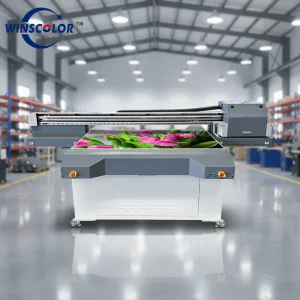
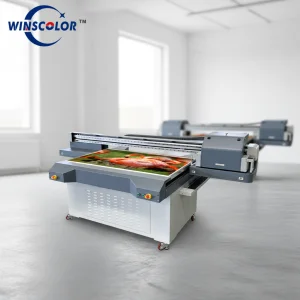
Wholesale Best Price Small Digital UV LED Flatbed Printer for Ceramic Tiles Wood
Wholesale Good Wholesale Best Price Small Digital UV LED Flatbed Printer for Ceramic Tiles Wood Manufacturer
Explore Specifications
Famous Best Price CMYK+W Large Format Flatbed UV Printing Machine Automatic
Famous Best Price CMYK+W Large Format Flatbed UV Printing Machine Automatic UV Flatbed Printer Companies
Explore Specifications
NTEK ODM Factory Small PVC Board UV Flatbed Digital Printer
NTEK ODM Factory Small PVC Board UV Flatbed Digital Printer Printing Machine for Aluminium Sheet Supplier
Explore Specifications
High-Quality Manufacturer of Acrylic Metal Wood PVC Board Glass LED UV Flatbed Printer
High-Quality Manufacturer of Acrylic Metal Wood PVC Board Glass LED UV Flatbed Printer Suppliers, Factories
Explore Specifications
Wholesale Factory High Quality Fast Drying Flat UV LED Digital Printing Machine
Wholesale Factory High Quality Fast Drying Flat UV LED Digital Printing Machine PVC Board UV Printer
Explore Specifications
High-Quality Quality Inspection New Model YC2500HR Banner Roll to Roll UV Printer
High-Quality Quality Inspection New Model YC2500HR Banner Roll to Roll UV Printer Supplier, Products
Explore Specifications
High-Quality Large format UV Inkjet Hybrid Flatbed Printer Roller Printing Machine
High-Quality Large format UV Inkjet Hybrid Flatbed Printer Roller Printing Machine Company, Companies
Explore Specifications
Famous Large Format Digital Multifunction UV Hybrid Roller Printing Machine
Famous Large Format Digital Multifunction UV Hybrid Roller Printing Machine Manufacturer, Factory
Explore Specifications