Explore our wholesale-engineered digital LED-UV flatbed, rotary, and roll-to-roll continuous hybrid platforms built for maximum industrial uptime and rigorous commercial duty cycles.
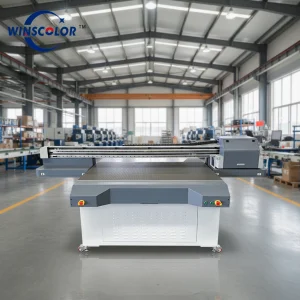
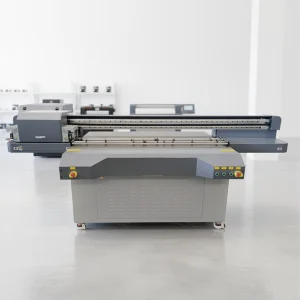
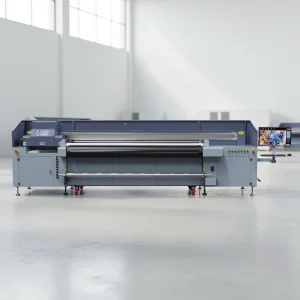
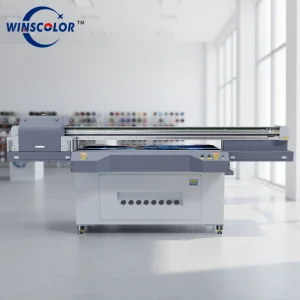
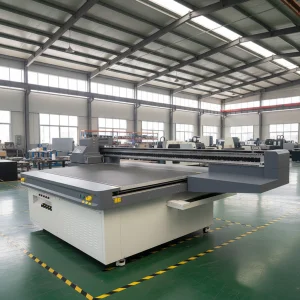
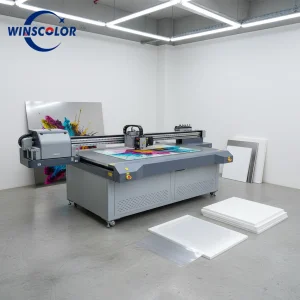
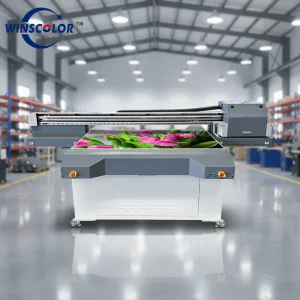
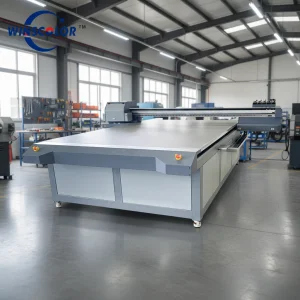
The global digital production landscape has crossed a critical threshold. Industrial print service providers (PSPs), packaging converters, and commercial manufacturers are progressively phasing out high-waste analog flexography and solvent systems in favor of high-throughput Roll to Roll (R2R) Industrial Printing Machines and integrated continuous hybrid platforms. In wholesale manufacturing scenarios, modern production mandates not merely exceptional aesthetic clarity, but operational resilience, web handling precision, energy-efficient photon curing, and adaptable fluid chemistry.
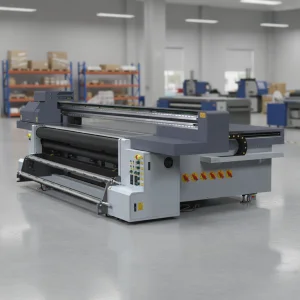
Historically, flexible media handling presented fundamental mechanical hurdles: media deformation induced by curing lamp thermal radiation, lateral tracking drift across extended runs, and drop placement deviations caused by unstable aerodynamic vortices around high-speed print carriages. Today's industrial-grade roll-to-roll and conveyor-driven hybrid systems overcome these barriers by marrying high-rigidity chassis design with advanced drop-on-demand (DoD) piezo printheads, dynamic ultrasonic web guiding, and calibrated closed-loop servo feeding tension systems.
The modern roll-to-roll industrial paradigm is driven by three technological pillars:
Replacing high-temperature metal halide and mercury vapor bulbs with 385–395 nm directional UV-LED diodes. This minimizes substrate thermal expansion, enabling flawless continuous printing on heat-sensitive soft films, PVC, and ultra-thin PET foils without warping.
Implementation of Ricoh Gen5/Gen6 and Kyocera industrial printheads featuring stainless steel nozzle plates, internal ink recirculation directly through the nozzle chamber, and variable droplet jetting down to 3.5 picoliters for smooth photographic tonality.
Dual-roller continuous pneumatically controlled dancing arms coupled with magnetic particle braking systems and optical edge-position sensors. Eliminates lateral tracking skew across rolls exceeding 100 kg and hundreds of linear meters.
A structured engineering breakdown enabling corporate buyers, OEM distributors, and printing plant directors to evaluate equipment beyond surface pricing.
| Evaluation Parameter | Industrial Roll-to-Roll Platform | Hybrid Belt/Roller System | Commercial Impact & ROI Benchmark |
|---|---|---|---|
| Target Substrates | Banner, soft PVC film, TPU, backlit fabrics, textile canvas, synthetic leather | Corrugated board, acrylic sheets, foam PVC, wood, glass, plus roll media | High Flexibility Hybrid reduces dual machine footprint by 45%. |
| Web Feeding Mechanism | Air-shaft inflation, multi-stage floating dancer bars, servo rewind motors | Reinforced high-friction vacuum conveyor belt with automatic anti-drift sensor | Eliminates stepping errors, media stretching, and uneven tension cockling. |
| Printhead Duty Rating | Ricoh Gen6 / Kyocera KJ4A (continuous 24/7 industrial duty) | Ricoh Gen5 / Gen6 with heated sub-tanks and continuous degassing | Over 100 billion drop cycles per nozzle; minimal nozzle outage rates. |
| Curing System Efficiency | Air-cooled or water-chilled dual LED-UV (8–14 W/cm² adjustable power) | Segmented multi-zone LED-UV curing synchronized with carriage pass width | Saves 60% electricity vs mercury lamps; enables instant dry stackability. |
| Ink Circulation Circuit | Dual-stage negative pressure; White ink automatic stirring & circulation | Independent sub-tank recirculation with micro-filtration filters (5μm + 1μm) | Prevents titanium dioxide settling; reduces purge ink waste by up to 75%. |
| Total Cost of Ownership (3 Yrs) | Low mechanical wear; consumable cost driven primarily by ink volume | Slightly higher belt maintenance; offset by massive rigid & roll order intake | Typical payback period achieved within 7 to 11 months under full shift utilization. |
Corporate procurement decisions in the industrial printing sector frequently falter when focusing exclusively on initial capital expenditure (CapEx). A rigorous procurement model considers the complete three-to-five-year Total Cost of Ownership (TCO). Critical financial variables include:
1. Ink Fluid Deposition Efficiency: Premium industrial engines supporting variable drop grayscale (such as 5, 10, 15 pL configurations) consume 25% to 35% less ink per square meter compared to fixed-droplet binary architectures, while generating superior perceived resolution and smooth shadow-to-highlight transitions.
2. Head Longevity and Nozzle Health: Printheads operating with continuous internal ink recirculation exhibit significantly lower failure rates from ink drying in the nozzle orifice during operational pauses. This substantially reduces replacement expenses and scrap material costs.
3. Power Consumption & Facility Overhead: Water-chilled UV-LED curing assemblies consume a fraction of the power required by conventional arc-lamp systems, eliminating the need for high-capacity industrial thermal ventilation ducts and air filtration exhaust units.
Deploying roll-to-roll and hybrid printing hardware across demanding production environments.
Continuous production of multi-meter seamless PVC banners, mesh wraps, and backlit soft signage. High-density white ink deposition enables striking day/night optical density transitions without ink pinholing.
Direct printing onto non-woven wallpapers, acoustic wall panels, engineered wood veneers, and faux-leather upholsteries. UV inks exhibit zero volatile organic compounds (VOCs), meeting indoor air safety requirements.
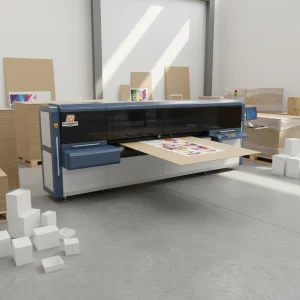
Seamlessly bridging corrugated cardboard cartons, honeycomb displays, and folding boxboard prototypes. Delivers plate-free rapid turnaround for on-demand e-commerce packaging cycles with zero setup waste.
For international wholesale buyers and overseas distributors, hardware capabilities represent only half of the capital equation. Global industrial deployment requires strict adherence to international electrical, electromagnetic, and environmental standards. Our export manufacturing facilities operate under stringent quality management protocols:
Full compliance with Machinery Directive 2006/42/EC and Low Voltage Directive 2014/35/EU.
Electromagnetic compatibility certified under EN 61000-6-2/4 for heavy industrial environments.
Strict limitation of hazardous substances across all electrical components and certified ink sets.
Audited assembly tolerances, dynamic balancing tests, and 72-hour burn-in print validation.
Comprehensive Overseas Engineering Support: Every wholesale procurement tier includes localized technical enablement. We support international distributor ecosystems through modular sub-assembly provisioning, direct factory remote diagnostic access via secure IoT gateways, and standardized multi-lingual calibration manuals. Our engineering teams assist with ICC color profiling across diverse media, mechanical gantry alignment verification, and on-site commissioning to guarantee peak operational readiness from day one.
Anticipating next-generation manufacturing demands across the roll-to-roll and industrial printing horizon.
In-depth technical answers addressing critical production, engineering, and maintenance inquiries.
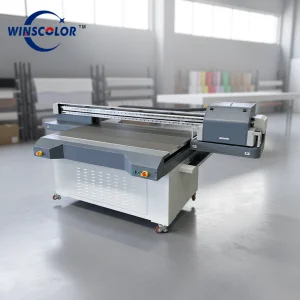
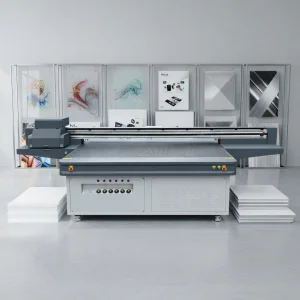
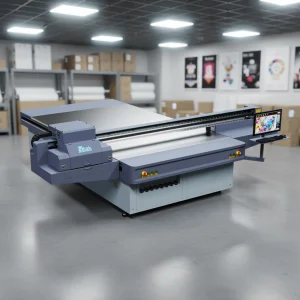
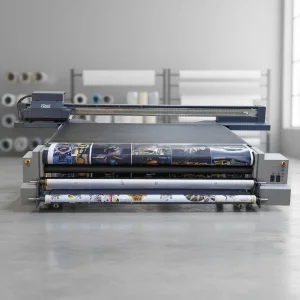
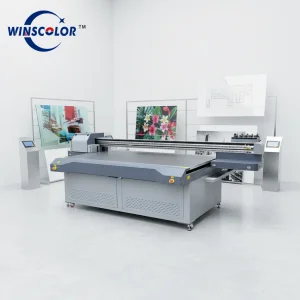
Heavy-duty large-format flatbed, corrugated carton single-pass, and multi-roller hybrid engines designed for demanding 24/7 contract manufacturing schedules.

Connect with our senior mechanical and fluid application engineers to analyze media samples, evaluate waveform compatibility, or obtain wholesale factory pricing for containerized deliveries.
