
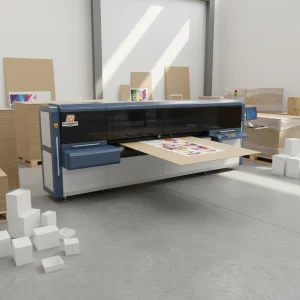
Explore high-yield flatbed and hybrid digital systems tailored for precision PVC sticker printing, rigid substrates, and high-speed packaging applications.
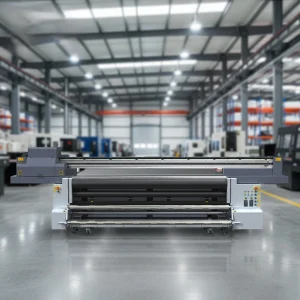
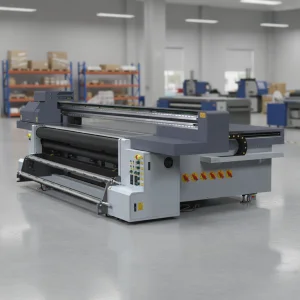
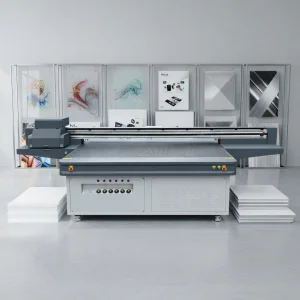
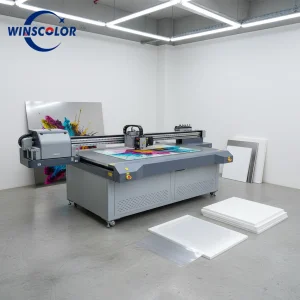
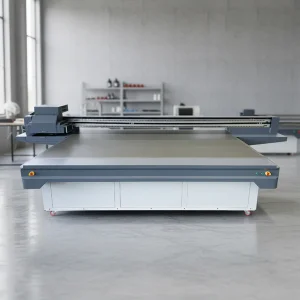
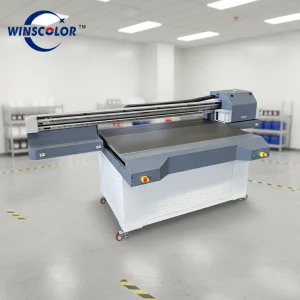
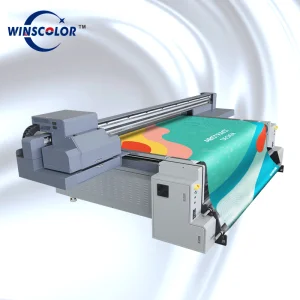
The manufacturing landscape of adhesive polyvinyl chloride (PVC) film conversion is undergoing an irreversible pivot from rotary screen and solvent printing to smart LED-curable piezoelectric digital inkjet platforms.
Global consumer product packaging, vehicle livery branding, and regulatory labeling require on-demand runs with variable data serialization. Wholesale manufacturers are deploying high-speed Ricoh Gen6 and industrial variable droplet print engines that eliminate prepress plate amortizations, reducing production lead times from days to under 4 hours.
Strict regional mandates like the EU RoHS, REACH, and California Proposition 65 have curbed the viability of heavy-solvent and eco-solvent printing setups. Industrial UV LED photopolymerization achieves instant curing without off-gassing hazardous air pollutants (HAPs), making cold-curing configurations the primary choice for cleanroom medical and electronics labels.
High-volume label converters are shifting from standalone roll-to-roll units to hybrid and continuous conveyor platforms. These configurations can process polymeric cast vinyl, monomeric calendered PVC, and static cling films interchangeably, lowering unit costs per square meter while maximizing shop floor operational equipment effectiveness (OEE).
A technical examination of next-generation wave-shaping printheads, closed-loop ink stabilization, and dynamic curing topologies engineered for polymeric substrates.
Modern print architectures utilize high-frequency multi-level grayscale drop-on-demand actuators (e.g., Ricoh Gen6, Kyocera KJ4A). By adjusting ink ejection pulses between 2.5 and 18 pL, systems achieve photo-realistic gradient micro-text down to 2-point font sizes without graininess, essential for anti-counterfeit labels and chemical compliance warning tags.
Titanium dioxide pigments used in opaque white inks are naturally prone to sedimentation and nozzle clogging. Modern machines integrate dual-cavity active negative pressure degassing with continuous nozzle-face fluid recirculation, maintaining viscosity balance across fluctuating ambient temperatures and eliminating micro-void banding during uninterrupted shifts.
Standard PVC roll media undergoes dimensional distortion and tensile plasticization under excessive heat. Narrow-spectrum (395nm) water-cooled LED arrays emit minimal infrared radiation, allowing sensitive 50-micron calendered vinyl to lay flat without edge curling, ensuring register accuracy during inline contour die-cutting.
Beyond color reproduction, optical UV tactile varnishes add raised tactile textures, matte-gloss contrasts, and 3D haptic embossing directly to PVC stickers. Controlled micro-droplet pinning preserves sharp relief edges without run-off prior to cross-linking, providing tactile braille and high-margin luxury finishes without customized embossing cylinders.
Specific field implementations demonstrating how digital UV sticker printing platforms tackle diverse commercial environments and exacting physical performance requirements.
Vehicle wraps and commercial fleet graphics demand exceptional elasticity without pigment fracturing or adhesive delamination. Utilizing flexible UV-curable ink formulas, printed PVC stickers can stretch across deep vehicle rivets and compound contours up to 150% elongation, resisting gasoline, grease, and UV degradation for up to 5-7 years outdoors.
Heavy machinery and chemical packaging require compliance with the BS5609 Section 3 marine immersion standard. Directly printed synthetic vinyl stickers resist aggressive solvents (including acetone, isopropyl alcohol, and diesel fuel) and harsh coastal saline conditions while maintaining scannable barcode contrast and hazard pictograms.
Optical-grade ultra-clear PVC vinyl installations rely on synchronized White-CMYK-White or CMYK-White-CMYK "sandwich" printing cycles. This single-pass method delivers consistent color density and total opacity under both daylight and internal backlighting, preventing washed-out imagery on double-sided commercial retail storefronts.
A comprehensive blueprint for converting standalone PVC sticker digital printing machines into automated, networked high-throughput conversion centers.
Digital PVC manufacturing across multi-site production facilities requires repeatable chromatic accuracy. Integrating enterprise RIP processors (Caldera, Onyx) with onboard closed-loop spectrophotometers guarantees cross-platform color matching within Delta-E < 1.5, securing brand compliance across global retail campaigns.
Eliminate human registration errors through optical camera-assisted contour alignment. CCD sensors detect micro-fiducial marks on printed PVC rolls or sheets in real time, automatically adjusting for substrate skew or tension stretching before transferring toolpath vector coordinates to digital CNC flatbed cutters.
Cloud-connected PLC controllers continuously monitor critical metrics such as negative pressure levels, ink reservoir temperatures, linear magnetic encoder health, and LED ultraviolet flux decay. This predictive monitoring flags anomalies before printhead deflections or head strikes occur, minimizing unscheduled line stoppages.
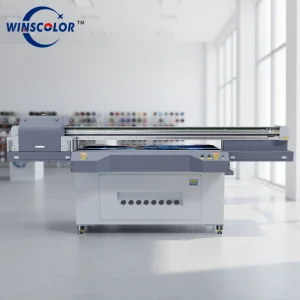
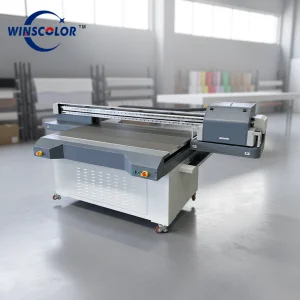
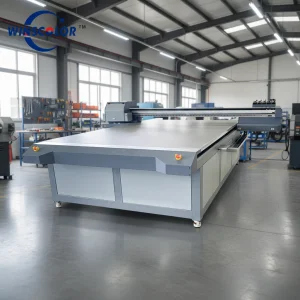
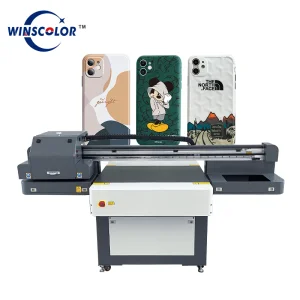
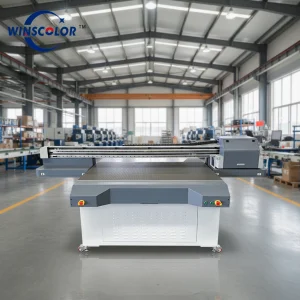
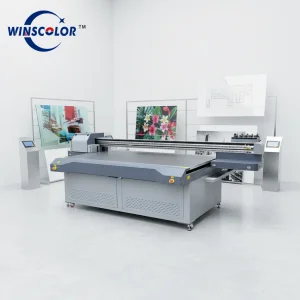
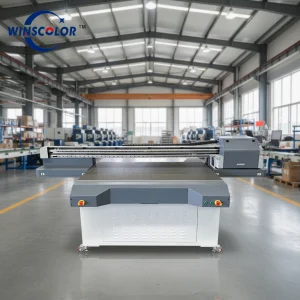
Explore specialized flatbed and small-to-mid format digital UV printing machinery engineered for rigid plastic plates, sheet-fed PVC labels, and precision industrial graphics.

Key technical, mechanical, and operational inquiries answered by Winscolor engineers for industrial digital sticker printing systems.