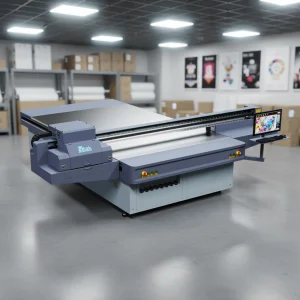
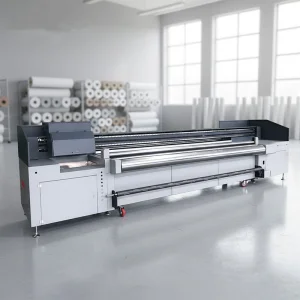
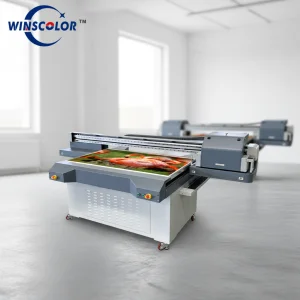
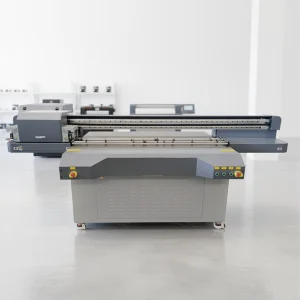
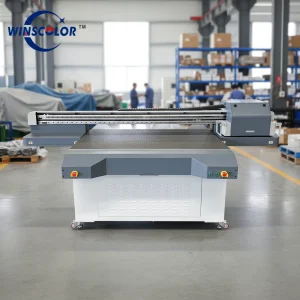
Engineered for multi-shift high throughput, zero-setup versatility, and extreme dimensional tolerances across rigid boards and continuous roll media.
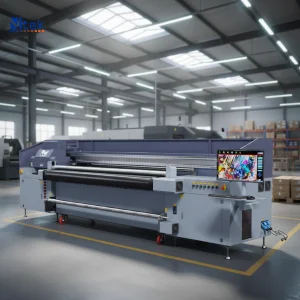
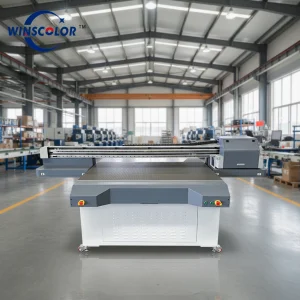
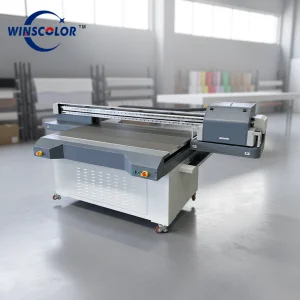
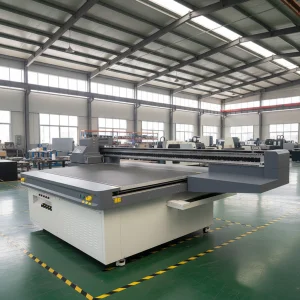
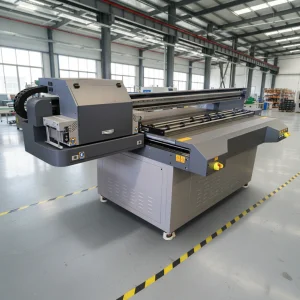


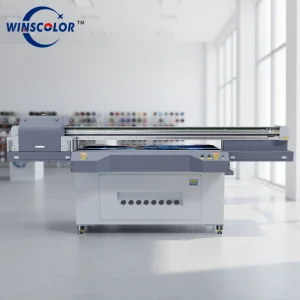
Analyzing structural market transitions: How high-speed industrial UV drop-on-demand printing is displacing analog screen, offset, and flexographic setups across international supply chains.
The international manufacturing sector has arrived at an irreversible inflection point. The traditional paradigm of high-volume analog printing—defined by chemical plate etching, excessive ink wastage, lengthy make-ready cycles, and substantial warehousing overheads—is experiencing structural contraction. Driven by supply chain agile manufacturing mandates, personalized SKU proliferation, and rapid-response logistics, the global commercial printer landscape is consolidating around high-speed industrial digital printing machinery. According to global industrial packaging and decorative imaging market analyses, industrial digital printing output across wide-format rigid and flexible substrates is projected to maintain a compound annual growth rate (CAGR) exceeding 8.4% through 2032, expanding beyond a $35 billion global valuation.
At the epicenter of this industrial evolution is China's advanced machinery manufacturing sector. Headquartered in Jinan, Shandong, Jinan Yingcai Digital Technology Co., Ltd (Winscolor / NTEK) operates across a modern 20,000-square-meter precision assembly complex. By vertically integrating structural chassis annealing, computerized numerical control (CNC) gantry milling, fluid-dynamic ink supply engineering, and firmware-level waveform calibration, Winscolor has systematically dismantled the historical monopoly once held by legacy Western machine builders. Commercial print houses across North America, the European Union, Latin America, Southeast Asia, and the Middle East now deploy wholesale high-speed digital printers that deliver identical or superior nozzle firing frequencies, drop volume modulation, and registration tolerances at an amortized capital expenditure (CapEx) profile 40% to 60% lower than traditional European alternatives.
A granular technical teardown of the physical, electronic, and fluid systems enabling high firing frequencies and sub-millimeter drop positioning.
Utilizing high-end metal-supported piezo printheads capable of a 50 kHz firing frequency, the carriage ejects variable picoliter drops (5pl to 15pl) across multi-level grayscale arrays. This guarantees photographic color density while retaining high carriage travel velocity.
Engineered with water-cooled, high-intensity UV-LED curing modules emitting at 395nm wavelength. Instantaneous photoinitiator radical polymerization allows cold substrate processing without thermal distortion on heat-sensitive acrylic, PVC, and thin films.
Reinforced steel-truss platform with hard-anodized honeycomb vacuum partitions. Independent suction turbine control allows rigid sheets and warped boards to be flattened securely, eliminating carriage collision hazards and aerodynamic turbulence.
Carriage kinematics are stabilized through dual THK quiet linear guide rails and Panasonic AC brushless digital servo drives. Closed-loop optical linear raster feedback guarantees micron-grade step accuracy across 3.3-meter spans during intensive production cycles.
Features an isolated constant-pressure sub-tank circulation system for titanium dioxide white ink pigments. By continuously agitating the secondary tank and internal nozzle channels, ink sedimentation, nozzle clogging, and starvation are eliminated.
Precision multi-channel jetting allows spot varnish gloss finishes alongside physical high-relief 3D textures. Ideal for Braille signage, simulated oil painting textures, and luxury haptic packaging finishes that generate premium commercial margins.
From architectural glazing to corrugated converters: How specialized ink chemistries interact with diverse substrate surface energies.
High-speed digital printing across industrial workflows requires an empirical understanding of surface energy (measured in dynes/cm), ink wetting dynamics, and chemical cross-linking. Unlike porous paper printing, industrial UV inkjet interfaces with non-porous, chemically inert substrates such as borosilicate glass, anodized aluminum sheets, extruded acrylic, and polypropylene. Winscolor digital printing platforms incorporate proprietary waveform profiles and specialized silane-based priming protocols to achieve optimal ink adhesion, exceeding ISO 2409 Cross-Cut Tape Test Class 0 standards.
| Substrate Material | Surface Energy (Dynes/cm) | Recommended Machine Model | Ink Set & Priming Strategy | Commercial End-Use Market |
|---|---|---|---|---|
| Architectural & Float Glass | ~30–35 (Inert, smooth) | Winscolor YC2513L / YC2030H | Nano-molecular wipe primer + CMYK + White + Varnish | Interior partitions, kitchen splashbacks, bespoke art glass |
| Cast / Extruded Acrylic (PMMA) | ~38 (Static prone) | Winscolor YC1610H / YC2513H | Direct UV-LED curing, anti-static bar ionized discharge | Backlit signage, POS visual merchandising, luxury displays |
| Aluminium Composite (Dibond) | ~42–46 (Coated coil) | Winscolor YC2030L / YC2513L | Hard UV ink profile with high scratch/weather resistance | Exterior architectural facades, petrol station cladding |
| Corrugated & Honeycomb Board | High (Porous cellulose) | Plate-Free Corrugated Printer | High-velocity single-pass or fast scan CMYK pigmented UV | On-demand e-commerce packaging, point-of-sale dump bins |
| Cylindrical Drinkware & Metal | Variable metallic surface | YC1610H with Rotary Kit | Synchronized rotary 360° jetting + selective primer jetting | Personalized drinkware, thermos flasks, cosmetic bottles |
| Flexible Vinyl & Backlit Film | ~36–40 (Pliable polymer) | YC3200HR / YC3321R Hybrid | High-elasticity flexible UV ink (elongation up to 200%) | Mega-format building wraps, tension fabric lightbox graphics |
Bespoke digital printing integrations engineered for international machinery distributors, brand owners, and automated line builders.
We provide global machinery distributors with tailored sheet metal housings, custom industrial colorways, proprietary RIP firmware integrations (ONYX, Caldera, Photoprint), and localized electrical safety certifications (CE, UL, RoHS).
Engineered for high-volume factories requiring unmanned operation. Our YC series hybrid and flatbed platforms interface directly with SCARA and six-axis robotic loading arms, pneumatic alignment pins, and automated optical inspection (AOI) cameras.
Real-time telematics log nozzle firing counts, ink consumption volumes, UV-LED thermal stability, and carriage motor torque. Our technical engineers provide proactive troubleshooting and firmware patches directly via encrypted cloud channels.
In-depth responses compiled by senior Winscolor application engineers regarding ink dynamics, mechanical calibration, and total cost of ownership.
Ricoh Gen6 printheads are engineered with all-metal construction and isolated piezo chambers. When operated with factory-certified degassed UV inks and standard daily capping/flushing protocols, printheads maintain a standard operational life of 3 to 5 years under industrial multi-shift schedules before noticeable droplet deviation occurs.
A dedicated flatbed clamps rigid materials onto a static vacuum table while the overhead gantry moves along the Y-axis, delivering maximum registration precision on heavy substrates like glass and stone. A hybrid printer uses a synchronized high-friction conveyor vacuum belt with feed/take-up rolls, allowing continuous roll printing as well as rigid board transport through a smaller machine footprint.
White UV inks rely on dense titanium dioxide (TiO2) particles to achieve opacity. In stagnant lines, gravity causes pigment settlement, leading to channel clogging and uneven color density. Winscolor printers utilize continuous closed-loop secondary tank circulation and active head purging to keep pigment nanoparticles uniformly suspended.
For optimum piezoelectric jetting viscosity and meniscus stability, the print room should maintain a controlled temperature between 20°C and 28°C (68°F to 82°F) and relative humidity between 40% and 60%. Excessive dryness induces static electricity buildup, which can cause ink misting on non-conductive plastics like acrylic.
Yes. By configuring dedicated varnish channels and running multi-pass UV-LED semi-cure passes followed by high-build spot gloss coats, our printers deposit structured relief up to 2.0mm high. This process meets international ADA Braille signage specifications and tactile packaging standards.
Winscolor provides comprehensive export support including seaworthy vacuum-sealed crating, comprehensive English video calibration guides, factory-direct engineer dispatch for on-site commissioning, and continuous remote video diagnosis backed by guaranteed ex-stock international spare parts dispatch.
Explore our wide-bed, super-wide hybrid, and high-resolution specialty digital printing platforms engineered for dedicated industrial output.