Direct-to-substrate digital systems optimized for architectural porcelain, polished vitrified tiles, composite claddings, and engineered panels.

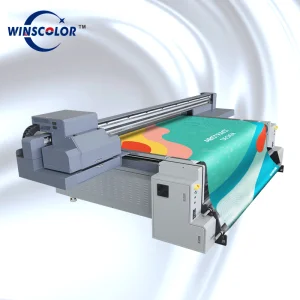
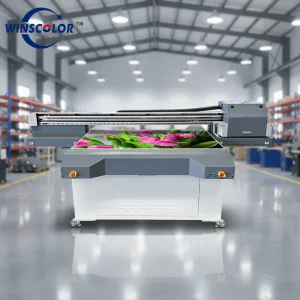
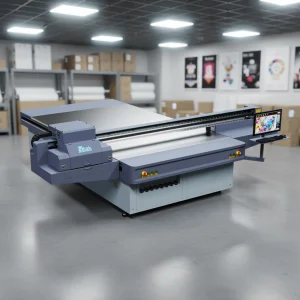
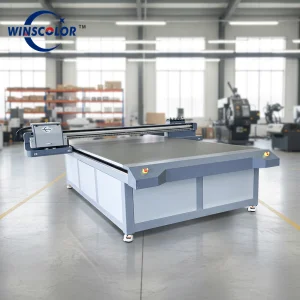
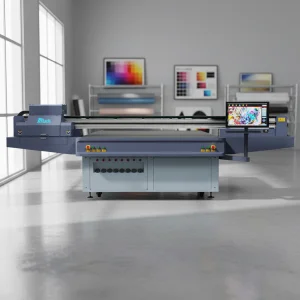
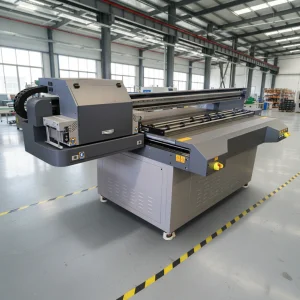
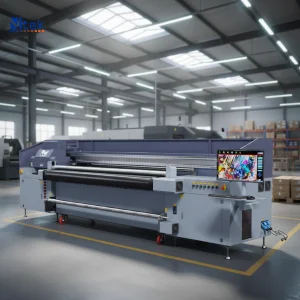
The paradigm shift in modern architectural surfaces: How high-performance UV curable inkjet technology is rewriting the economics of ceramic finishing.
Traditional ceramic tile manufacturing relies on high-temperature kiln firing where mineral glaze compounds limit color gamut and tactile versatility. Industrial OEM UV Flatbed printing bypasses thermal degradation entirely, enabling photo-realistic CMYK+Lc+Lm+White+Varnish applications directly onto pre-fired porcelain, terracotta, and sintered slabs.
This Cold Process methodology guarantees absolute chromatic fidelity, eliminating thermal color shifting and cutting energy overhead across production plants globally.
Mass production roller-screen presses require massive runs—frequently exceeding 5,000 m² per design—to absorb rotary screen engraving, setup alignments, and slurry tuning costs. Modern architecture and commercial interiors now demand hyper-customized, short-to-medium runs.
OEM digital flatbed systems offer instantaneous job switching via unified RIP workflows. Sintered stone converters and boutique tile manufacturers can print single custom murals or 500-unit project runs at identical marginal costs.
With large-format porcelain slabs (exceeding 3200 × 1600 mm) conquering the interior design sector—replacing mined marble in kitchen countertops, luxury facade panels, and hospitality walls—digital UV printing acts as the critical bridge for bespoke visual and tactile enhancements.
OEM UV printer engineering accommodates bed loads exceeding 50 kg/m² and incorporates precision linear motor gantries to eliminate vibrational stepping across wide continuous swaths.
Strategic advancements shaping the next generation of industrial tile decoration equipment.
Modern decorative tiles must transcend visual flatness. The future centers on Synchronized Haptic Deposition—building genuine relief textures (slate clefts, honed wood grains, honed limestone pits) by layering high-viscosity UV clear varnish.
Ceramic tiles present non-porous, chemically inert vitreous surfaces that resist typical ink mechanical bonding. Next-generation equipment integrates inline nano-scale chemical priming systems and corona pre-treatment.
Real-world tiles display minor dimensional variances, camber, and surface warping. OEM platforms are increasingly pairing high-speed CMOS linescan cameras with digital height-mapping sensors.
Engineered adaptations addressing distinct regional compliance, media requirements, and commercial markets.
Focused on Sassuolo (Italy) and Castellón (Spain) design aesthetics. Applications focus on ultra-matte stone re-creation, continuous veining across slab sets, and strictly non-toxic, REACH-compliant VOC-free formulations suitable for LEED-certified interiors.
High demand for rapid production of custom shower walls, wet-room backsplashes, and commercial pool liners. Requires heavy white opacity to suppress dark clay substrates and exceptional abrasion resistance passing Taber testing protocols.
Demands for high-gloss, gold-accented, and intricate Islamic geometric mosaic reproductions. OEM setups feature specialized metallic underlays, heavy tactile gold/gloss varnish stacking, and high thermal stability to withstand intense desert sun installations.
Prioritizing throughput efficiency, zero plate turnaround, and integration into existing modular construction supply chains. Systems are optimized for multi-shift continuous duty cycles printing 600×600 and 800×800 mm standardized floor and wall modules.
A systematic framework for tile companies deploying automated digital printing cells.
Consistent adhesion requires absolute surface neutrality. Raw fired ceramics frequently carry refractory dust, pressing oil, or residual moisture from warehouse storage.
Carriage kinematics represent the core of industrial color consistency. High-mass steel gantries with dual THK silent guide rails preserve droplet trajectory accuracy over high production shifts.
Long-term durability against foot traffic and chemical cleaners demands dual-stage polymer hardening followed by specialized topcoat sealing.
High-volume hybrid roller printers, precision flatbeds, and dedicated multi-pass packaging machinery.
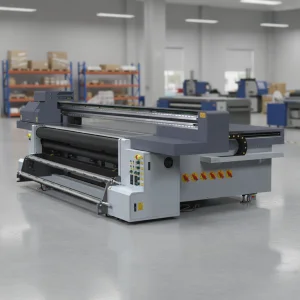
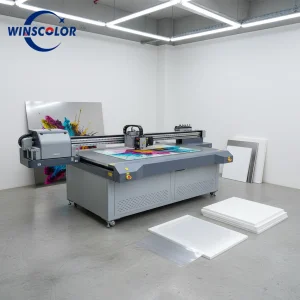
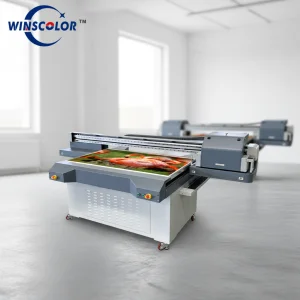
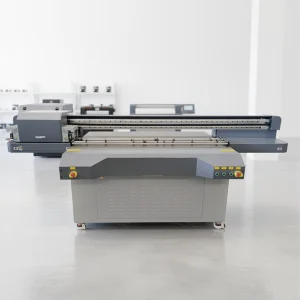
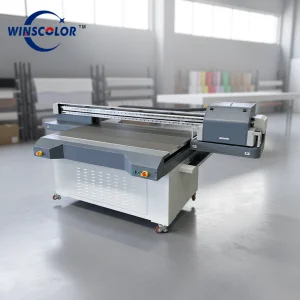
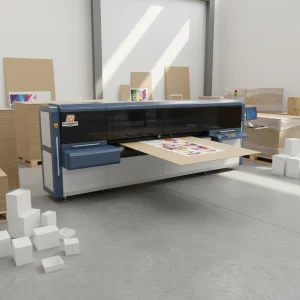
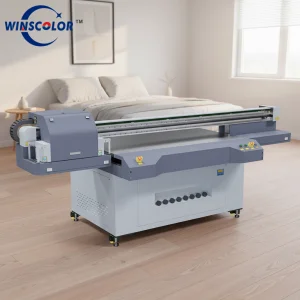
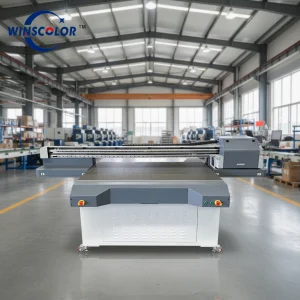
Comprehensive technical and commercial evaluations for procurement teams, factory plant managers, and equipment distributors.
Traditional ceramic tile glazing relies on inorganic mineral pigments fired inside roller kilns at temperatures ranging from 1100°C to 1250°C. While this achieves extreme vitrification, the extreme heat incinerates organic pigments, drastically compressing the achievable color gamut (especially bright cyans, vivid magentas, rich purples, and deep blacks).
Industrial cold UV printing takes place post-kiln on finished, stable ceramic or sintered tiles. Using photo-initiator-activated polymer chemistry, UV inks cross-link instantaneously upon exposure to UV-LED radiation. This retains full-spectrum CMYK+Lc+Lm color fidelity, achieves photographic resolution up to 1440 DPI, and enables tactile relief layers via clear varnish jetting that cannot be achieved with mineral glazes.
Vitrified porcelain and glazed ceramic surfaces feature surface energy levels often below 38 dynes/cm, resisting mechanical keying. To guarantee long-term industrial adhesion passing cross-hatch tape tests (ISO 2409 / ASTM D3359 Class 4B/5B), we employ a multi-tier bonding protocol:
1. Surface Pre-treatment: De-dusting and thermal flash preheating removes microscopic condensation and residual silicates.
2. Silane-Based Chemical Primer: Applied via automated spray or wipe, the primer forms a molecular bridge—bonding covalently with the inorganic silica structure of the tile on one side, and copolymerizing with the acrylic UV monomer on the other.
3. Tuned Wavelength Curing: Utilizing 395nm UV-LED pinning lamps followed by deep-penetration 365nm mercury arcs ensures 100% core polymerization right at the substrate boundary layer.
Direct UV prints without post-sealing are rated primarily for vertical architectural claddings, backsplashes, accent walls, and ceiling features. For high-traffic commercial flooring, industrial wet-rooms, or exterior applications, a specialized post-print protective layer is required.
Our OEM engineering teams provide turnkey secondary coating lines that apply ceramic liquid glazes, 2K aliphatic polyurethane sealers, or UV curable hardcoats. These protective layers elevate scratch resistance up to Mohs 6–7 and deliver complete resistance to household acids, alkalis, and standing water immersion.
As a direct manufacturer with over 20,000 m² of plant space and six assembly lines, we provide comprehensive white-label OEM and ODM customization for global equipment distributors:
• Custom Chassis & Gantry Engineering: Bed formats engineered from 1600 × 1000 mm up to superwide 3300 × 2100 mm platforms with reinforced gantries supporting slabs up to 100 kg/m².
• Print Engine Customization: Integration of Ricoh Gen5, Ricoh Gen6, or industrial Kyocera drop-on-demand piezo heads tailored to client production volume.
• Branded Software & Industrial ID: Custom sheet metal colorways, private-label branding, customized UI interfaces, and custom RIP color profiles (Onyx, Photoprint, Caldera).
Ceramic processing environments inherently carry abrasive airborne micro-dust. Our industrial machines are fortified with negative-pressure sealed ink carriages, dual anti-static ionizer bars, and enclosed linear guide tracks.
Daily maintenance requires less than 15 minutes: automated carriage capping and wiping, checking secondary sub-tank pressures, and inspecting LED-UV water chiller temperatures. Continuous ink agitation systems prevent titanium dioxide pigments in white ink from settling, ensuring consistent density even during standby cycles.
