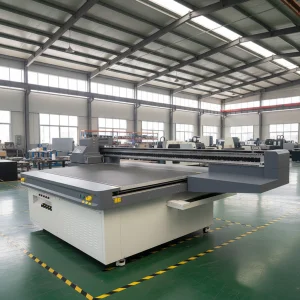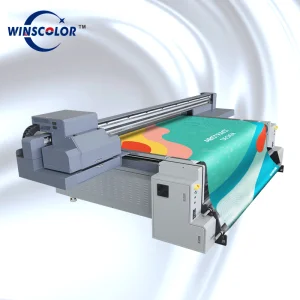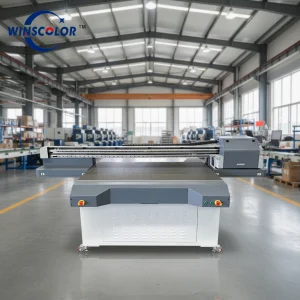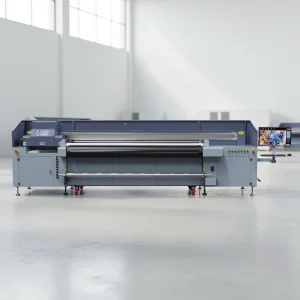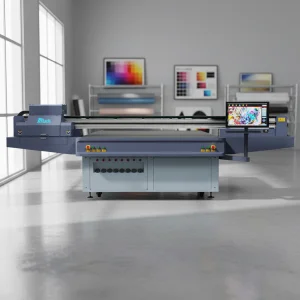
Famous Hot Sale Aluminum Acrylic Ceramic Dibond 2030 UV Flatbed Printer Suppliers, Exporter
View Product Specs
Factory-calibrated digital flatbed and hybrid roll-to-roll machinery optimized for precision printing across natural cowhide, nappa leather, split leather, and high-tensile flexible PU/PVC substrates.
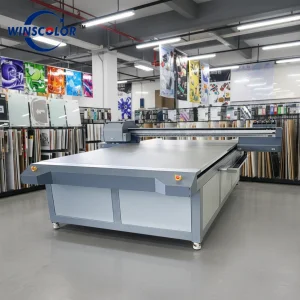

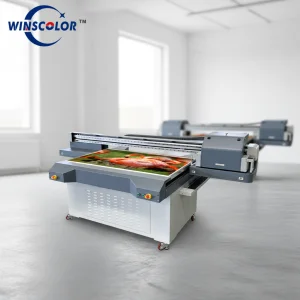
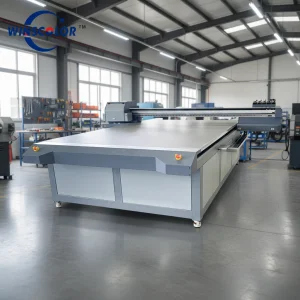
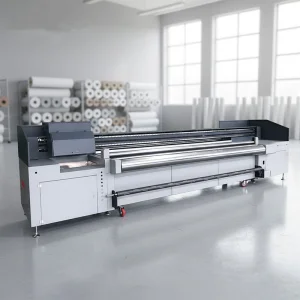
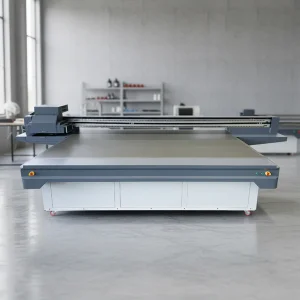
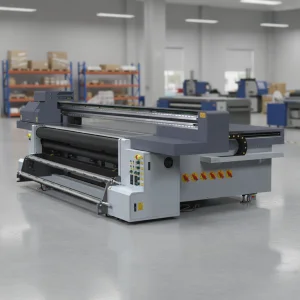
The global leather goods sector—spanning luxury upholstery, performance automotive interiors, footwear, and bespoke fashion—is undergoing a rapid transition from conventional analog screen printing and rotary roller coating toward high-definition digital ultraviolet direct-to-substrate decoration.
Conventional analog methods incur substantial mechanical tooling expenses—requiring rotary screen cylinders, photopolymer printing plates, or bespoke metal embossing dies ranging from $400 to $2,500 per colorway. NTEK digital UV flatbed systems completely eliminate plate-making setup overhead, enabling continuous on-demand personalization, just-in-time micro-batch manufacturing, and instant prototyping without inventory obsolescence.
Traditional solvent-borne leather lacquers release high concentrations of Volatile Organic Compounds (VOCs) and require prolonged thermal tunnel evaporation, straining tannery environmental authorizations under REACH and EPA audits. NTEK UV-curable formulations polymerize instantaneously via cold LED energy, providing 100% solids conversion with zero fugitive atmospheric emissions and lower overall kilowatt expenditure.
From tier-1 bespoke automotive steering wraps to personalized luxury monogramming, consumers increasingly reject uniform mass production. Modern brand custodians require localized manufacturing capable of variable data serialization, multi-layered tactile haptic gloss textures, and exact Pantone replication across complex leather lots without minimum order volume restrictions.
Printing onto leather presents unique rheological challenges: genuine collagen hides possess anisotropic stretch characteristics, irregular cellular porosity, natural grain variations, and variable surface chemical treatments. Successful high-adhesion printing requires precise synchronization across ink chemistry, surface wetting tension, and photopolymerization thermodynamics.
Standard UV flatbed inks rely on monofunctional and polyfunctional acrylates that form highly cross-linked, rigid polymeric structures upon irradiation. When applied to supple upholstery or footwear leather, rigid inks crack during stretching and flexure. NTEK utilizes specialized aliphatic urethane acrylates and monofunctional monomers that engineer high flexibility, delivering over 200% mechanical elongation without film delamination or surface shear rupture.
Leather surfaces coated with polyurethane topcoats, silicone finishes, or fluorocarbon stain-repellent agents often display low critical surface tension (below 32 dynes/cm), causing ink droplet reticulation and poor physical anchorage. NTEK equips its systems with calibrated micro-mist primers and precise surface cleaning workflows, elevating substrate surface energy to 38–44 dynes/cm for optimum droplet spreading and mechanical interlock into fibrous pores.
Natural leather collagen fibres denature and undergo irreversible thermal embrittlement when exposed to sustained temperatures exceeding 55°C (131°F), causing warpage, shrinkage, and loss of hand-feel. NTEK employs water-cooled 395 nm narrow-band LED UV modules. These emit minimal infrared radiation, maintaining platen bed temperatures within 32°C to 38°C, preserving leather softness, natural suppleness, and grain structural integrity.
Precision execution on uneven, flexible leather hides requires high-rigidity structural frameworks, automated droplet velocity control, and specialized vacuum transport mechanics engineered to eliminate registration drift and edge curl.
Industrial stainless-steel piezo printheads delivering variable droplet firing from 5 pl to 15 pl. The high firing frequency (up to 50 kHz) ensures razor-sharp micro-text, photorealistic skin tones, and dense solid color coverage even at carriage traverse velocities of 1.2 m/s.
Multi-chamber independent vacuum zones equipped with high-differential air turbofans firmly secure curled or stretch-prone leather blanks. An integrated reverse-air flotation mechanism allows seamless positioning and rapid unloader transfer of heavy bovine hides.
Independent meniscus negative pressure systems for CMYK and White/Varnish channels ensure consistent hydrostatic pressure within the printhead nozzles, preventing ink weeping, micro-foaming, or starvation during high-speed production cycles.
Twin high-precision optical laser triangulators continuously scan substrate thickness variations across natural leather hide contours up to 100 mm in height, executing sub-millisecond carriage elevation to safeguard nozzles from mechanical strikes.
Direct digital UV decoration allows fabricators to create custom goods across diversified high-margin commercial and industrial sectors, from individual artisan accessories to high-speed tier-1 OEM automotive assembly lines.
Custom seat bolsters, perforated door armrests, dashboard inserts, and gear shift gaiters. NTEK UV inks meet automotive heat-aging (DIN EN ISO 105-B06) and taber abrasion thresholds, preventing delamination caused by passenger ingress friction or sustained solar thermal exposure.
Full-color patterned sneaker quarters, customized fashion tote bags, belt embellishments, and embossed leather wallets. Micro-droplet registration preserves the natural grain appearance, while tactile spot varnish builds tactile monogram relief without expensive hot stamping dies.
Bespoke acoustic leather wall tiles, hospitality headboard panels, luxury boardroom table inlays, and elevator car wall lining. Large-format flatbed architectures (such as the YC2513L and YC2030H) accommodate oversized full hides with seamless multi-panel pattern continuity.
Genuine leather smartphone cases, iPad folios, laptop sleeves, notebook covers, and luggage tags. Precise vacuum suction zones allow mixed batch runs of small finished items mounted in dedicated jig templates with high-efficiency throughput.
Custom baseball gloves, boxing gloves, soccer ball panels, saddles, and bridle straps. Specially formulated elastic UV inks withstand high-impact deformation, perspiration exposure, and wet-dry cycles without micro-fissuring or pigment leaching.
Next-generation sustainable substrates including mushroom mycelium leather, apple waste skin, cactus leather, and recycled bonded hide fibers. Low-temperature curing prevents fiber degradation, allowing green brands to scale direct custom output.
Empirical testing data collected across standard leather classifications utilizing NTEK industrial elastomeric UV ink series paired with Ricoh Gen6 piezo printheads.
| Substrate Classification | Pre-Treatment Protocol | Optimal Ink Configuration | UV Curing Dosage (mJ/cm²) | Bally Flexometer Test (Cycles) | Crockmeter Rub Fastness (ISO 105-X12) |
|---|---|---|---|---|---|
| Full Grain Bovine Cowhide | Isopropanol wipe / Anti-Static de-ionize | CMYK + High-Elastic White | 220–250 mJ/cm² (LED 395nm) | > 150,000 (No Cracking) | Grade 4.5 Dry / Grade 4.0 Wet |
| Top Grain Nappa Leather | Micro-atomized Adhesion Promoter | CMYK + Flexible White + Varnish | 200–230 mJ/cm² (LED 395nm) | > 120,000 (No Fissures) | Grade 4.5 Dry / Grade 4.0 Wet |
| Split Suede / Nubuck | Fiber-setting vacuum grooming | Direct CMYK (Penetrating formulation) | 180–210 mJ/cm² (LED 395nm) | > 100,000 (Soft Touch) | Grade 4.0 Dry / Grade 3.5 Wet |
| Polyurethane (PU) Synthetic | Corona discharge or Direct print | CMYK + White + Gloss Varnish | 240–280 mJ/cm² (LED 395nm) | > 200,000 (Full Elasticity) | Grade 5.0 Dry / Grade 4.5 Wet |
| Polyvinyl Chloride (PVC) Leather | Plasticizer-blocking topcoat wipe | CMYK + High-Tack White | 250–300 mJ/cm² (LED 395nm) | > 180,000 (High Flex) | Grade 4.5 Dry / Grade 4.0 Wet |
| Bonded / Reconstituted Leather | Pore-sealing light primer | CMYK + White + Matte Finish | 210–240 mJ/cm² (LED 395nm) | > 90,000 (Stable Anchor) | Grade 4.0 Dry / Grade 3.5 Wet |
Winscolor (Jinan Yingcai Digital Technology Co., Ltd) manufactures in Jinan, Shandong—an established global epicenter of industrial laser, CNC tooling, and digital inkjet equipment engineering.
All NTEK heavy-duty welded steel chassis undergo 600°C high-temperature heat treatment annealing to relieve internal mechanical stress, followed by one-time precision processing via 5-face giant CNC gantry milling machines, guaranteeing long-term platen flatness within 0.05 mm across the entire 3-meter bed span.
Operating within the Jinan digital equipment industrial cluster provides immediate localized sourcing for precision linear guides (Taiwan Hiwin), German Igus drag chains, Japanese Panasonic AC servo motors, and Italian Megadyne timing belts, eliminating overseas component bottlenecks and minimizing assembly cycles.
Across 20,000 square meters and 6 standardized production lines, every machine undergoes a strict 72-hour continuous test-printing protocol, optical carriage alignment verification, dynamic vacuum balancing, and high-voltage circuit insulation screening before international crate sealing.
Direct source factory delivery delivers 35% to 50% capital expense savings compared to rebranded European or American machinery, coupled with rapid air-freight spare-part dispatches and modular plug-and-play boards that minimize unplanned manufacturing downtime.
Strategic research initiatives designed to merge artificial intelligence machine vision, bio-based photopolymerization, and multi-dimensional tactile micro-deposition into industrial leather manufacturing workflows.
Integrating high-resolution line-scan CCD cameras above the flatbed gantry. AI algorithms identify natural hide flaws, bug bites, scar tissue, and grain density deviations in real-time, automatically calculating optimal pattern nesting and warping artwork geometry to conceal hide defects and improve yield by up to 22%.
Formulating next-generation UV-curable monomers derived from plant starches and bio-succinic acid, replacing petroleum-based acrylates. This transition preserves the mechanical elasticity and Crockmeter rub ratings of synthetic inks while reducing carbon footprints for eco-certified luxury leather suppliers.
Layered high-viscosity clear UV varnish jetting at heights up to 2.5 mm, creating realistic exotic leather textures (such as crocodile, ostrich, or python scale reliefs) on standard smooth bovine leather or microfiber bases, eliminating the need for hydraulic press embossing plates.
Industrial equipment investments require stringent statutory electrical certification, verified environmental health compliance, and reliable overseas after-sales support networks.
All NTEK machines comply with the European Machinery Directive 2006/42/EC, Low Voltage Directive 2014/35/EU, and Electromagnetic Compatibility Directive 2014/30/EU. Inks and cured prints pass RoHS 3 (EU 2015/863) and REACH SVHC evaluations for restricted phthalates and heavy metals.
Winscolor provides comprehensive remote diagnostic telemetry. Dedicated field application engineers deliver live video onboarding, waveform calibration, color ICC profiling for specific tanneries, and door-to-door engineer dispatch across Europe, North America, Southeast Asia, and the Middle East.
Factory-backed digital operational manuals, high-definition training modules, and maintenance certification curricula ensure factory technical personnel master RIP spot-color generation, media preparation, nozzle recovery procedures, and mechanical daily preventive maintenance.
Real technical inquiries answered by Winscolor chemical formulation chemists and digital printing application engineers.
Versatile small-format, mid-format, and large-format digital UV flatbed and hybrid solutions engineered to scale with your production demands.