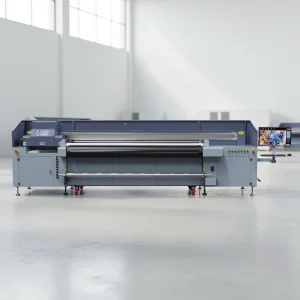
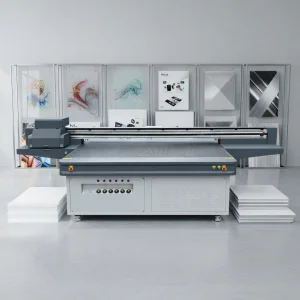
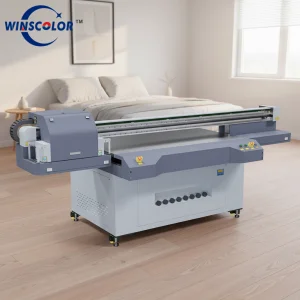
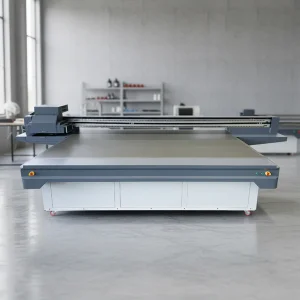
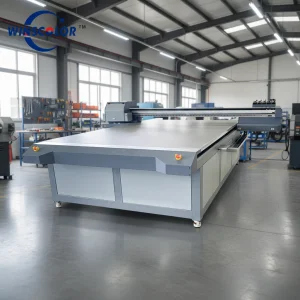
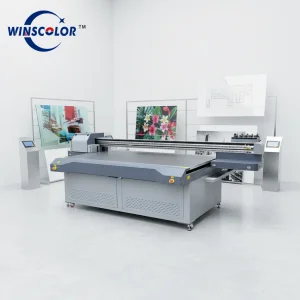
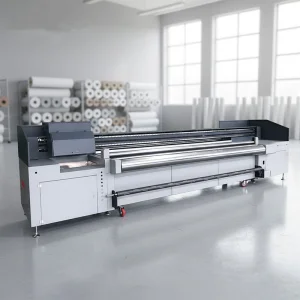
Engineered for high-throughput continuous manufacturing across rigid substrates, multi-layer varnish embossing, cylindrical packaging, and packaging prototype conversions.
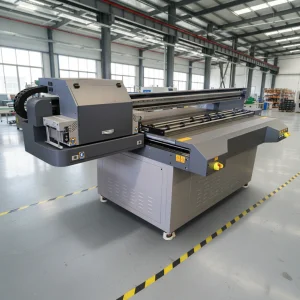
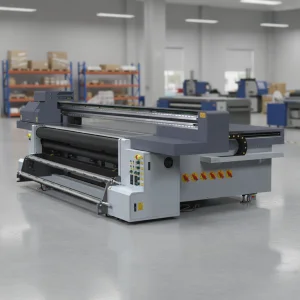
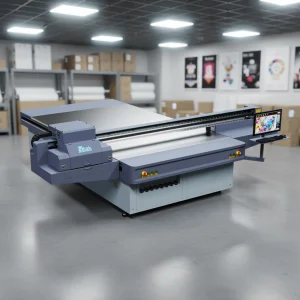
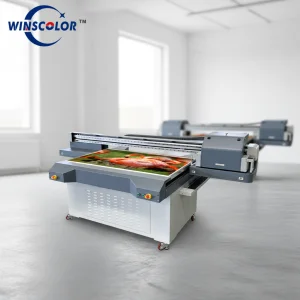
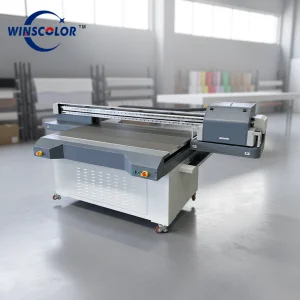
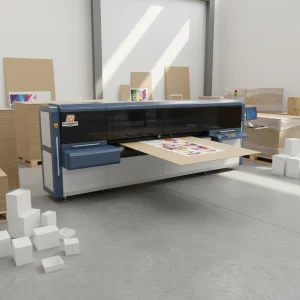
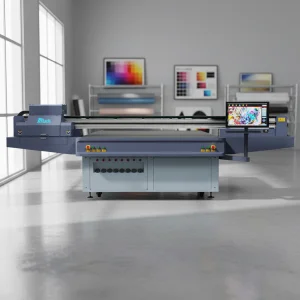
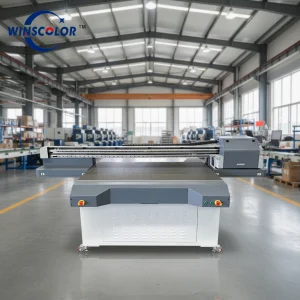
Why the 2.5m × 1.3m (8.2ft × 4.26ft) printable architecture represents over 64% of total industrial flatbed installations globally.
The global manufacturing and architectural sectors are fundamentally standardized around the 1220 × 2440 mm (4 × 8 foot) sheet format. The NTEK 2513 engineering layout provides 2500 × 1300 mm of net vacuum table traverse, enabling edge-to-edge bleed printing on full sheets of MDF, acrylic, extruded PVC foam, Dibond, and corrugated boards without physical media trimming prior to print execution.
Unlike massive 3.2-meter architectural giants or cumbersome continuous rotary units, the 2513 footprint fits within standard ISO sea shipping containers without structural disassembly. Floor space consumption allows mid-sized sign facilities and enterprise prototyping labs to deploy parallel multi-machine cells, mitigating complete production halts during scheduled maintenance cycles.
Modern revisions like the YC2513R incorporate uncoiling and re-spooling tensioned roller devices along the anterior vacuum gantry. This allows immediate transition from 100mm-thick slab stone or fluted wood down to flexible backlit fabrics, self-adhesive polymeric calendered vinyls, and leatherettes, maintaining an average factory equipment utilization rate of 91.4%.
A deep mechanical and electrical breakdown of the micro-piezo jetting, dual negative pressure stabilization, and frame dynamics.
Configured with up to 8 industrial Ricoh Gen6 drop-on-demand piezoelectric printheads, the system achieves a minimum drop volume of 5 picoliters (pl) scaled through grey-level jetting (5pl, 10pl, 15pl). Operating at a jetting frequency of up to 50 kHz, droplet velocity reaches 7 m/s, preventing aerodynamic turbulence and drop satellite deflection even under high carriage traverse speeds up to 1.5 m/s.
Dynamic carriage oscillations are eliminated through a fully stress-relieved, high-temperature heat-treated structural tube steel beam. Mounted with twin Japanese THK 20mm ultra-silent linear guideways and Panasonic dual AC brushless digital servo drives, lateral deviation across the entire 2500 mm span is maintained strictly under 0.015 mm, eliminating micro-banding along high-contrast gradients.
White ink utilizes titanium dioxide (TiO2) nanoparticles, which exhibit significantly higher specific gravity than organic CMYK pigments. The NTEK fluid manifold employs a segregated dual negative pressure control system equipped with digital SMC micro-sensors. Independent pressure loops decouple White/Varnish channels from CMYK, preventing nozzle weepage or ink starvation during sustained multi-pass passes.
Replacing traditional ozone-generating mercury vapor lamps, the 2513 integrates dual directional water-chilled UV-LED curing assemblies emitting a narrow spectral peak at 395 nm. This ensures instantaneous photo-initiator radical polymerization without generating radiant heat above 38°C on the bed, preventing thermal warping on sensitive thin polystyrene or cast acrylic sheets.
The 2500 × 1300 mm bed surface is milled from a 45mm-thick aircraft-grade honeycomb aluminum plate, segmented into 6 or 8 independent electronic vacuum zones. High-flow side-channel vacuum blowers generate dynamic hold-down pressure across warped plywood or lightweight corrugated substrates without requiring extensive physical masking tape over open zones.
Dual pneumatic mechanical crash-stop sensors flanked by optical infrared height detectors flank the carriage perimeter. If media surface irregularities exceed the safe 1.5–2.0 mm head gap during carriage traversal, the magnetic-brake interlock triggers within <12 milliseconds, safeguarding the Ricoh Gen6 nozzle plates from physical impact and costly replacement.
Strategic directions reshaping wide-format digital inkjet: micro-drop control, AI nozzle redundancy, eco-friendly monomer synthesis, and magnetic levitation drives.
Optical high-speed linear CCD sensors positioned adjacent to the carriage capping station scan automated nozzle test patterns in under 8 seconds. Machine learning algorithms inside the RIP pipeline detect missing, deflected, or partially blocked nozzles and dynamically recalculate adjacent droplet volumes across multi-pass masks, completely eliminating production rejects caused by sudden mid-run nozzle dropouts.
Transitioning away from conventional Kevlar timing belts and rotary servo pulleys, next-generation 2513 gantries adopt frictionless magnetic linear motor drives. This upgrade elevates carriage scanning velocities up to 2.2 m/s while extending mechanical lifespan beyond 100,000 continuous hours, virtually eliminating maintenance downtime associated with belt stretch and pulley wear.
Regulatory scrutiny around photo-initiators like TPO has accelerated the development of non-migrating, bio-derived vegetable oil acrylate monomers. Modern low-VOC ink sets achieve zero hazardous air pollutants (HAPs), meet GREENGUARD Gold indoor emission criteria, and deliver exceptional elastic elongation over 220% on vacuum-forming thermoplastics.
Empirical methodologies for attaining high peel adhesion, UV outdoor weathering resistance, and tactile 3D relief across challenging materials.
Glass surfaces possess high surface tension (>72 dynes/cm) and non-porous silica structures prone to moisture delamination. Winscolor UV configurations deploy automated silane coupling primers applied inline or wiped manually. Coupled with multi-layer spot white underbase and gloss varnish, printed splashbacks, shower partitions, and elevator panels surpass the ASTM D3359 cross-hatch adhesion Class 5B benchmark.
Electronics manufacturers leverage the NTEK 2513 for instrument panels, control overlays, and etched aluminum identification plates. Utilizing specialized flexible UV inks that resist post-process CNC punching, milling, and embossing, markings endure harsh environments, exhibiting resistance to industrial ethanol, methyl ethyl ketone (MEK), and automotive engine oils.
In luxury e-commerce and retail seasonal packaging, the 2513 eliminates the six-figure upfront tooling and plate-making fees inherent to flexographic or offset litho laminating. Printing directly onto B, C, and E-flute corrugated board or honeycomb panels, digital high-opacity white base layers allow unbleached brown Kraft substrates to display true-to-life Pantone spot colors.
Custom interior furniture demands scratch resistance and organic tactile feel. By applying selective white channels, the underlying natural grain of pine, oak, or walnut remains prominently exposed. Subsequent passes of high-viscosity UV clear varnish construct realistic 3D tactile relief simulating deep hand-scraped woodwork and authentic stone textures.
Large-format ceramic décor panels benefit from high-density multi-drop laydowns. By pairing high-temperature polyurethane primers with high-energy UV-LED pin curing, printed tiles withstand foot traffic wear tests when coated with industrial clear sealants, offering bespoke flooring solutions for high-end hospitality venues.
For double-sided illumination on transparent cast polymethyl methacrylate (PMMA), the 2513 executes Color + White + Color (Day & Night) three-layer synchronous jetting in a single pass. This ensures backlit signs present saturated, vivid imagery during illuminated nighttime hours without washing out under daytime ambient illumination.
Architecting an enterprise digital printing floor with automated RIP queues, inline colorimetry, and automated vacuum sequencing.
Modern production facilities run high volumes of disparate short-run SKUs. Through integrated Job Definition Format (JDF) connectors, RIP software platforms such as Caldera, Onyx, or Photoprint automatically import order vectors directly from the factory ERP. Nesting algorithms arrange cut marks, substrate thickness profiles, and zoned suction parameters automatically, reducing manual prepress overhead by up to 78%.
Color consistency between proofing machines and long-run production cells is governed through custom 16-bit ICC profiles generated via X-Rite i1Pro3 spectrophotometers. NTEK’s linear ink curves linearize dot-gain across all substrate densities, ensuring that metallic sheets, yellowish plywood, and optical-brightened PVC yield identical corporate brand delta-E (ΔE) values below 1.5.
For continuous mass production lines, the 2513 integrates with pneumatically actuated mechanical registration pins and external robotic vacuum arm load/unload cells. Sensors recognize workpiece positioning within 0.05 mm, enabling uninterrupted 24/7 autonomous production shifts in automotive, promotional gift, and industrial component marking operations.
Direct mechanical and operational comparison between standard industrial configurations on the 2513 flatbed chassis.
| Technical Parameter | YC2513L Production | YC2513R Flatbed + Roll | YC2513M Precision Lab |
|---|---|---|---|
| Target Printhead Config | 2–8× Ricoh Gen6 (MH5320) | 3–6× Ricoh Gen5/Gen6 | 2–4× Ricoh Gen6 + Micro-droplet |
| Effective Printable Bed Area | 2500 mm × 1300 mm | 2500 mm × 1300 mm + 2.5m Roll | 2500 mm × 1300 mm |
| Jetting Droplet Range | 5 pl – 15 pl (3-level Greyscale) | 7 pl – 21 pl (Greyscale) | 5 pl Native Micro-Jetting |
| Peak Production Velocity | Up to 48 m²/hr (4-pass mode) | Up to 38 m²/hr (Flatbed mode) | Up to 24 m²/hr (Photo Fine) |
| Color Channel Flexibility | CMYK + Lc + Lm + White + Varnish | CMYK + White + Varnish | CMYK + W + Varnish + Primer |
| Curing System Technology | Twin Water-Chilled 395nm UV-LED | Dual Adjustable LED Arrays | Dual High-Irradiance LED Lamps |
| Maximum Substrate Thickness | 100 mm (Option for 350 mm) | 100 mm Flat / 50 kg Roll Media | 100 mm Standard |
| Repeatability Tolerances | ±0.02 mm Full Traverse | ±0.03 mm Dual Traverse | ±0.015 mm Linear Guided |
| Vacuum Zonation Control | 6 Independent Electronic Zones | 4 Zoned Flatbed Chambers | 8 Micro-Zoned Honeycomb Sections |
Essential checklist criteria established by factory engineers to maximize MTBF (Mean Time Between Failures) and minimize overall Total Cost of Ownership (TCO).
Piezo drop flight behavior is sensitive to air viscosity and static accumulation. The production space must maintain a consistent temperature envelope of 20°C–28°C and relative humidity between 40% and 65%. Static electricity build-up on plastic sheets (like Coroplast or acrylic) can cause electrostatic spray deviation; an optional integrated ion-wind bar mounted on the carriage neutralizes surface static before jetting.
To avoid manual wiping that risks abrading delicate microscopic nozzle coatings, the NTEK system integrates automated one-touch positive pressure purging. Ink is pushed through all nozzles simultaneously into an isolated drain spittoon, while automated motor-driven solvent-resistant wipers eliminate excess liquid without mechanical head scratching.
Over a standard 5-year operating lifecycle, the initial hardware procurement accounts for less than 35% of total capital expenditure. Key operating factors include UV-LED electrical consumption (slashing power draw by up to 70% compared to legacy mercury lamps), printhead replacement intervals (Ricoh Gen6 typically exceeds 3–5 years under proper filtration), and ink yield (averaging 100–120 m² per liter under typical CMYK ink coverage).
Practical technical answers addressing common operational, chemical, and mechanical questions from global industrial buyers.
While the Epson i3200 is an effective entry-level head, its plastic-bonded manifold and shorter operational lifespan under high duty cycles make it less suitable for continuous factory operation. Ricoh Gen6 features an all-steel industrial construction with internal fluid heating, supporting higher ink viscosities (10–12 mPa·s). It delivers high drop velocities (up to 7 m/s) with an extended operational lifespan of 3 to 5 years, handling aggressive UV formulations with minimal maintenance.
White ink uses heavy titanium dioxide (TiO2) particles that naturally sediment over time if left stagnant. The NTEK system incorporates a multi-stage continuous recirculation architecture: an active stirring motor inside the primary ink tank prevents stratification, while continuous micro-circulation cycles ink through the sub-tank, filters, and printhead manifold 24 hours a day, preventing nozzle clogs even during extended equipment idle periods.
The 395 nm wavelength delivers high energy penetration through deep, opaque pigment layers—essential for curing heavy white underbases and dense blacks down to the substrate interface. In contrast, 385 nm light reacts primarily with surface photo-initiators, eliminating surface oxygen inhibition to cure top-coat varnishes without tackiness. Many NTEK systems use dual or adjustable wavelength LED lamps to balance depth curing with a clean surface finish.
Non-polar, low-surface-energy substrates (such as untreated polypropylene) and ultra-smooth, moisture-sensitive surfaces (such as raw float glass, glazed ceramics, and polished stainless steel) require chemical priming. Liquid silane or polyurethane primers create molecular bridges between the substrate's inorganic oxides and the organic acrylate polymers of the UV ink, ensuring durable scratch resistance and long-term wash fastness.
The standard NTEK 2513 configuration supports media thicknesses from 1 mm up to 100 mm (with factory options extending vertical Z-axis clearance up to 350 mm). The internal structural honeycomb aluminum vacuum bed supports distributed substrate loads up to 100 kg per square meter, easily accommodating heavy natural stone slabs, architectural double-glazed glass panels, and solid hardwood slabs.
Tactile relief is created through precise multi-pass print registration. The system lays down multiple layers of high-viscosity UV white ink or transparent gloss varnish over designated vector coordinates. Instantaneous UV pinning between passes builds up physical ink height in controlled 0.1 mm increments, easily achieving the 0.5–0.8 mm raised profile required for ADA-compliant Braille signage and tactile textures.
Discover our full machinery lineup: high-volume hybrid roll systems, corrugated single-pass converters, and specialized promotional printers.