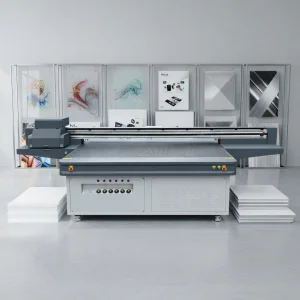
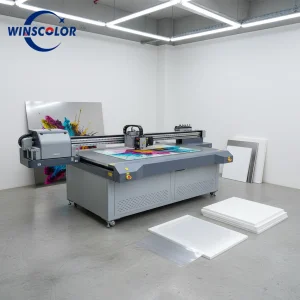
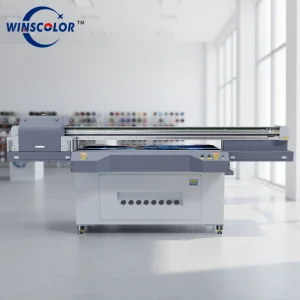
Engineered for architectural glass, technical ceramics, sheet metal, and industrial rigid substrates with advanced micron-level drop deposition.
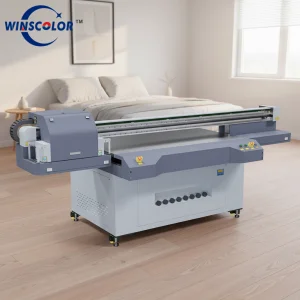
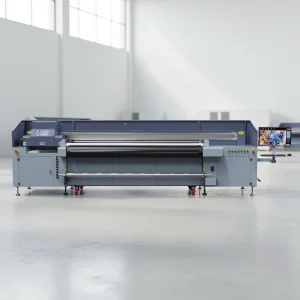
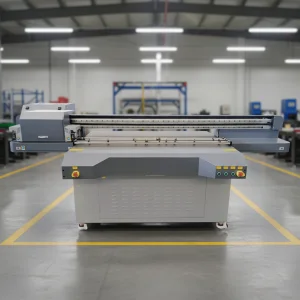


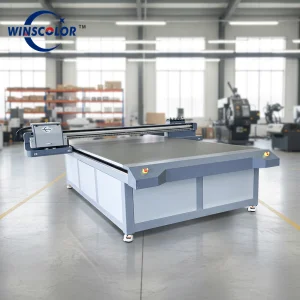
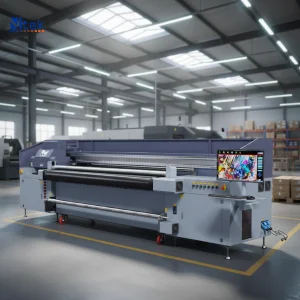

Transforming float, tempered, and laminated glass from static construction elements into dynamic, value-added architectural and industrial surfaces.
The global commercial architectural sector has pivoted heavily from traditional ceramic screen printing toward digital UV inkjet. High-volume curtain walls, custom structural balustrades, spandrel panels, and interior acoustic glass dividers demand photographic resolutions without costly physical screens. NTEK UV flatbed platforms allow architects to specify variable transparency, graded privacy vignettes, and photorealistic motifs with zero plate setup charges.
Appliance original equipment manufacturers (OEMs) for refrigerators, induction stovetop backings, microwave fascias, and commercial display screens require exceptional ink scratch-resistance and chemical inertia. Digital flatbed UV printers engineered by NTEK provide drop-on-demand piezo precision that registers capacitive touch button backlighting icons down to 0.1 mm tolerances directly on high-tempered borosilicate and soda-lime glass.
Boutique hospitality projects, high-end residential kitchen splashbacks, bespoke shower glass, and museum-grade backlit glass murals demand continuous tonal fidelity and tactile 3D finishes. UV-LED flatbeds achieve heavy embossed textures, stained-glass recreations, and oil painting reproductions by systematically layering multiple micro-droplet passes of UV curable white ink and high-gloss protective varnish.
Glass is an inorganic, non-porous hydrophilic substrate with an inert, low-energy silica (SiO₂) surface matrix. Standard organic polymer inks experience catastrophic delamination without rigorous surface preparation. NTEK glass printing solutions deploy industrial silane coupling primers and inline corona/pyrosil surface pre-treatment that elevate surface energy above 52 mN/m (dynes/cm). Silane molecules chemically crosslink between the inorganic silicon atoms on the glass surface and the organic acrylate oligomers in the UV ink, achieving a 5B rating in cross-hatch tape adhesion tests (ASTM D3359) and surpassing rigorous 100-hour boiling water immersion evaluations.
From single-wavelength solid-state curing to inline automated robotic handling and nano-hybrid inorganic ink chemistry.
Replacing mercury arc lamps with variable-intensity 395nm UV-LED pinning and curing units prevents thermal substrate expansion, ensuring sub-micron droplet registration on cold glass tables.
Heavy titanium dioxide (TiO₂) particles in white inks tend to sediment quickly. Isolated sub-tank recirculation prevents nozzle starvation, head clogging, and density unevenness across 3.3m large formats.
Utilizing Ricoh Gen6 and Gen5 industrial printheads capable of firing 5pl, 10pl, and 15pl multi-drop volumes, NTEK machines render ultra-smooth color transitions without noticeable pixel grain.
Emerging glass applications increasingly combine UV photopolymerization for instant positioning with high-temperature firing where frit-infused nano inks fuse permanently into the glass lattice at 680°C.
A complete industrial blueprint for high-yield glass manufacturing plants seeking predictable ROI, zero delamination, and rapid batch turnaround.
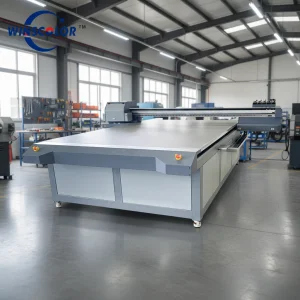
Heavy-duty suction tilt tables safely position oversized glass up to 3300 × 2100 mm without micro-scratches.
High-voltage static neutralizing bars blow ionized clean dry air (CDA) to eliminate electrostatic attraction of dust.
Automated wipe or atomized spray applying organofunctional silane to establish a covalent molecular bonding base.
Multi-channel CMYK + Lc + Lm + White + Varnish jetting with Ricoh Gen6 heads over a heavy cast-iron vacuum bed.
Zoned LED irradiation locks droplet diameter instantly, followed by high-energy crosslinking passes.
Automated topcoat varnish or inter-layer EVA/PVB lamination for heavy-traffic architectural safety compliance.
Retail facades and luxury cosmetic vitrines in Germany and Italy utilize NTEK flatbed printers for backlit opalescent glass. By printing micro-gradations of dense white ink behind vibrant translucent graphics, light is diffracted evenly across the pane without hotspots, replicating the visual depth of acid-etched crystal.
Facing intense solar radiation and high ambient temperatures in GCC countries, exterior solar-control glass requires inorganic pigment stability. The NTEK YC3321 series applies UV-cured ceramic-infused pigments that resist solar fading, thermal cycling, and abrasive sandstorm scrub tests, adhering strictly to EN 1096 standards.
Elevator cab walls and fire-rated transit station dividers demand non-combustible finishes. Digital UV glass flatbed technology eliminates adhesive vinyl films that pose flame propagation risks, delivering Class A fire performance rating through direct substrate printing backed by safety backing interlayers.
Where industrial inkjet engineering converges with real-time optical AI and eco-sustainable green photochemistry.
Future NTEK flagships integrate multi-camera telecentric vision systems that scan glass pane contours in real time. The motion control engine dynamically recalibrates toolpaths for irregular, bevelled, or CNC-cut shapes, entirely eliminating manual jig fixtures and operator setup delays.
Environmental regulations across Europe (REACH) and California (Proposition 65) drive the synthesis of bio-based acrylate oligomers derived from renewable plant resins. These inks achieve 100% cure conversion with non-detectable VOC emissions, enabling unventilated interior healthcare and school installations.
Transitioning from reciprocating gantry architectures to fixed single-pass print bar arrays delivering up to 60 linear meters per minute. This industrial capability bridges the gap between mass-produced commodity building materials and flexible on-demand digital customization.
Detailed insights straight from NTEK lead design engineers addressing mechanical stability, ink curing, and long-term chemical durability.
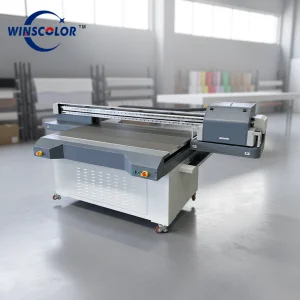
From compact desktop personalization systems to heavy-capacity 3.3m super-wide industrial flatbeds for high-throughput architectural and sign production.