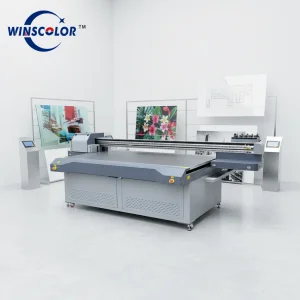
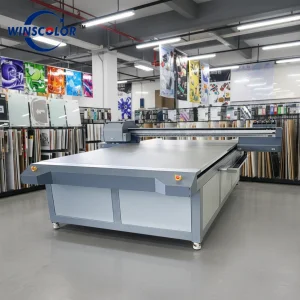
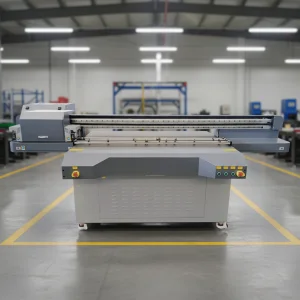
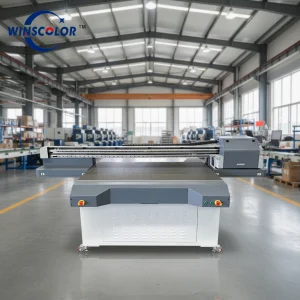
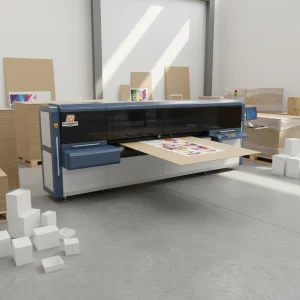
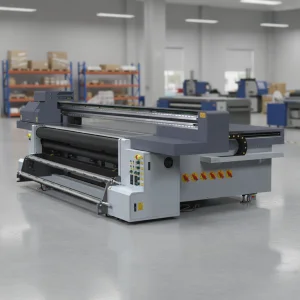
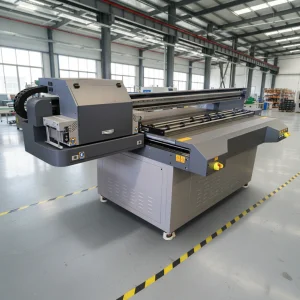
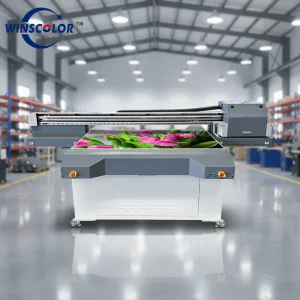
Engineered for rigid and flexible substrate versatility. Inspect our flagship 2500 × 1300 mm production platforms configured with state-of-the-art piezo drop-on-demand firing systems.
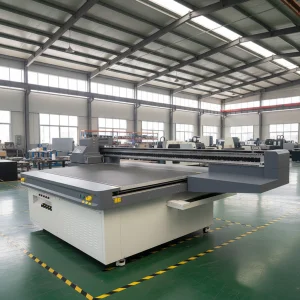
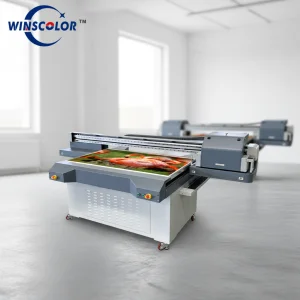
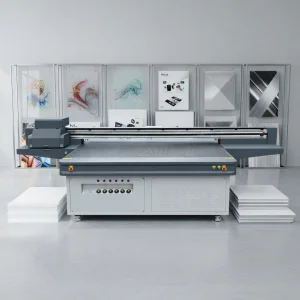
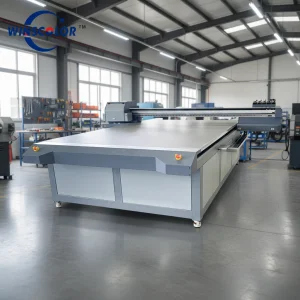
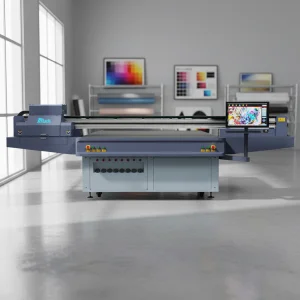
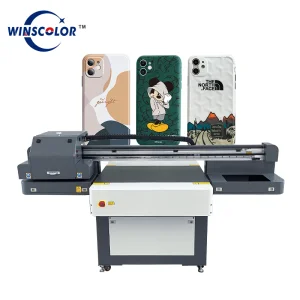
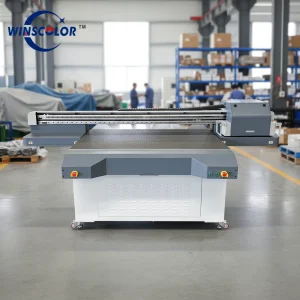
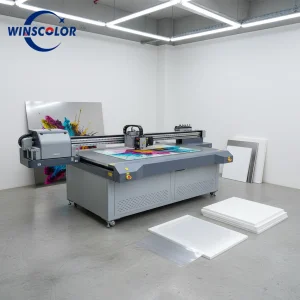
How the 2.500 mm × 1.300 mm bed size transformed into the de facto standard for global graphic converters, signage titans, and specialized component manufacturers.
The 2513 format directly aligns with the worldwide architectural and building standard sheet dimension of 4 × 8 feet (1220 × 2440 mm). By offering a 2500 × 1300 mm active printing envelope, the machine eliminates border margin constraints, allowing full bleed coverage across foam PVC, cast acrylic, aluminum composite (Dibond), and timber slabs without trimming.
Legacy mercury discharge tubes generated excessive infrared thermal loads exceeding 85°C, causing deformation on heat-sensitive materials such as thin polystyrenes and light fluted boards. Contemporary 2513 printers deploy liquid-chilled UV-LED arrays (395nm wavelength) emitting less than 35°C substrate temperature, cutting power draw by 72% while activating photoinitiators instantly.
Modern Gen6 piezoelectric assemblies achieve high firing frequencies up to 50 kHz with variable droplet sizing down to 5 picoliters. By tailoring the electrical pulse curve to ink viscosity, the system eliminates satellite overspray, maintains razor-sharp typographic legibility at 2-point micro fonts, and creates photorealistic smooth gradients without tonal banding.
Rigorous capital expenditure (CapEx) vs. operational expenditure (OpEx) analysis. Quantifying throughput, ink yield, energy overhead, and mechanical depreciation.
Enterprise procurement evaluations assess cost per square meter across five-year amortization cycles. Our UV LED platforms lower ink consumption down to 7.8 ml/m² under 100% CMYK color coverage through intelligent dot-placement dithering algorithms. Integrated negative pressure secondary ink chambers drastically mitigate head purging losses during non-productive cycles.
Unlike fabricated sheet-metal chassis that flex under high carriage acceleration, our 2513 bodies are cast from heavy-duty tempered steel frames with whole-body annealing at 600°C. Coupled with dual THK dual-mute linear rails and an industrial magnetic linear encoder, bidirectional placement repeatability stays strictly below ±0.015 mm across continuous 24/7 run schedules.
Micro-air bubbles in UV curable ink cause nozzle dropouts during high-frequency jetting. Winscolor UV engines integrate hollow-fiber membrane degassing units along with constant-temperature heating channels in the carriage manifold, guaranteeing stable viscosity at 45°C ± 1.5°C regardless of ambient factory temperature shifts.
| Evaluation Parameter | Winscolor Industrial 2513 Series | Standard Commercial Converters | Legacy Solvent / Screen Printers |
|---|---|---|---|
| Target Bed Dimension | 2,500 mm × 1,300 mm (True 4×8 ft sheet bleed) | 2,440 mm × 1,220 mm (Zero edge tolerance) | Non-standard / High mechanical trim waste |
| Curing Technology | Dual Water-Cooled UV-LED (395nm, 16W/cm²) | Air-Cooled Single LED / Mercury Bulb | Thermal Oven / Evaporative Solvent Dryers |
| Ink Consumption Average | 7.5 – 9.0 ml / m² (Multi-drop variable dot) | 12.0 – 16.0 ml / m² | 18.0 – 25.0 ml / m² (High binder evaporation) |
| Gantry Propulsion | Precision Magnetic Linear Drive / Dual Panasonic Servos | Standard Belt Drive with basic Steppers | Chain / Mechanical Gearbox |
| Substrate Compatibility | Glass, Acrylic, Wood, Metal, Foam Board, Leather, Slate | Limited to rigid PVC & treated plastics | Uncoated paper, banners, porous boards only |
| VOC Emissions | 0.00% Zero-VOC (Instant photopolymerization) | Low-VOC with residual odor | Hazardous Air Pollutants (HAPs) requiring scrubbers |
How our high-yield flatbed architecture integrates into enterprise supply chains, from architectural glass finishing to plate-free packaging and electronic enclosures.
Handling non-porous silica and glazed tiles demands rigorous cross-hatch adhesion. Winscolor pairs custom silane-based inline primers with high-opacity titanium white underlays. The resulting print withstands 4B/5B cross-hatch tape testing, boiling water immersion, and extended UV weathering without pigment delamination or yellowing.
Eliminate traditional flexographic plate preparation times and die setup fees. In short-to-medium carton production runs, our vacuum-zoned bed holds warped corrugated sheets and honeycomb boards flat through high-pressure turbofan suction, outputting photo-quality retail displays and gift packaging at minimal setup turnaround.
Leverage dedicated spot-varnish channels running synchronized with white and CMYK ink banks. By controlling UV curing delay (gloss flash vs. matte cure), the 2513 prints Braille signage compliant with ADA regulations, tactile leather grain textures, and localized spot-gloss highlights up to 2.5 mm thickness in a single automated session.
Seamless cross-border deployment backed by strict CE machinery directives, UL/CSA electrical standards, zero-VOC certification, and distributed technical support hubs.
Every 2513 system is engineered to pass EU Machinery Directive 2006/42/EC and Electromagnetic Compatibility (EMC) 2014/30/EU standards. Features include integrated optical safety light curtains, emergency stop circuit interlocks, and shielded low-voltage DC drive enclosures ensuring electromagnetic isolation from factory power transients.
Our proprietary IoT gateway module streams real-time operational telemetry—such as printhead nozzle health, vacuum pressure curves, and ink tank reservoir statuses—to factory support centers. Overseas clients receive immediate remote diagnostics, custom ICC profile calibrations, and expedited air-freight spare parts distribution within 48 hours.
Supplied photo-curable formulations adhere strictly to RoHS 2.0 (2011/65/EU) and REACH (EC 1907/2006) regulations. Free from heavy metals, phthalates, and aromatic solvents, our cured prints are fully certified for indoor public display, medical institution wall cladding, retail food display perimeters, and children's room furnishings.
How artificial intelligence, closed-loop color spectrophotometry, and micro-nozzle auto-compensation are redefining the future of wide-format digital production.
Integrating inline high-resolution optical cameras directly adjacent to the carriage head allows machine vision neural networks to detect clogged nozzles, substrate surface dust, or registration drift in real time. The printer automatically reallocates nearby nozzles or triggers a sub-second flash purge cycle before visible banding occurs.
Future architectures feature integrated scanning spectrophotometers directly embedded on the gantry beam. When printing multi-panel murals spanning hundreds of square meters across disparate batches, the system continuously compares CIELAB color values against target delta-E tolerances, automatically adjusting dynamic droplet volumes to preserve tone uniformity.
Research into plant-derived hyperbranched polyurethane acrylate oligomers is driving next-generation sustainable UV printing. These bio-based resins reduce the carbon footprint of digital inks by 40% while preserving rapid LED curing response and delivering unmatched elasticity across flexible soft vinyl and synthetic leathers.
Comprehensive engineering guidance to assist procurement officers, production directors, and workshop managers in making calculated digital print investments.
The 2500 × 1300 mm usable vacuum dimension directly envelopes the universal 1220 × 2440 mm (4 × 8 foot) building sheet format used across timber, acrylic, metal, and PVC board industries. The additional margin allows for register pin jigs, material clamps, and complete full-bleed printing without wasting expensive sheet trims.
Ricoh Gen6 printheads feature higher jetting frequencies up to 50 kHz (vs 30 kHz on Gen5), supporting smaller 5 pl minimum drop sizes (vs 7 pl on Gen5) and higher resolution. In industrial production environments, this delivers an approximate 35% gain in linear print speed at equivalent or superior photographic clarity.
Non-porous inorganic substrates with high surface energies require pre-treatment. We offer integrated chemical wipe primers or automated carriage-mounted jetting primers that deposit a micrometer-thin adhesion promoter. This ensures cross-hatch adhesion scores of 5B (ASTM D3359) under extreme scratch and moisture tests.
Our closed-loop water-cooled industrial UV-LED arrays provide an operational service life exceeding 50,000 continuous hours. Unlike metal halide or mercury arc lamps that require replacement every 1,000–1,500 hours, LED units maintain stable irradiance output across years with zero warm-up and cool-down cycles.
Yes. Through synchronized multi-layer RIP workflow processing, the system lays down concentrated opaque white ink bases followed by CMYK graphic data and progressive top-coat varnish passes. This builds up physical relief layers up to 2.5 mm in thickness with absolute dome roundness conforming to international ADA Braille specifications.
The solid aluminum vacuum bed is segmented into independently controlled vacuum chambers powered by dual high-capacity regenerative blowers. Operators can localize maximum downforce directly underneath specific workpiece dimensions, completely eliminating localized buckling, curl-up edge collisions, and carriage head strikes.
Explore our full industrial portfolio—including hybrid roll-to-roll dual mechanisms, single-pass corrugated packaging machines, and multi-axis rotary attachments.