Engineered for continuous production, ultra-dense white ink recirculation, and rigid architectural media handling.
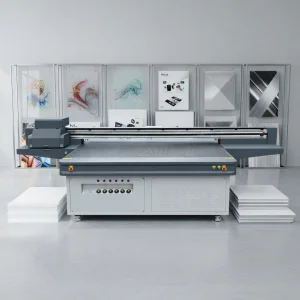
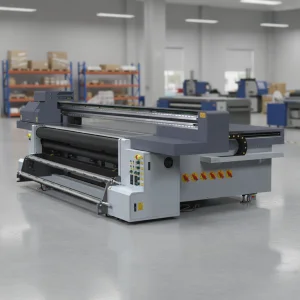
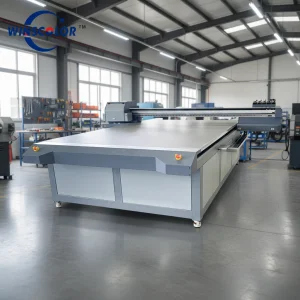
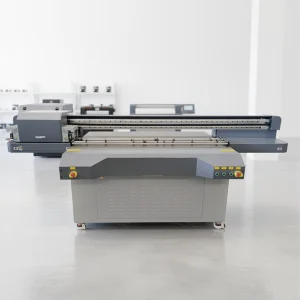
A data-informed analysis of enterprise capital equipment allocation across regional signage, packaging, and manufacturing sectors.
Global packaging converters and commercial printers face intense pressure toward micro-segmentation. Traditional analog litho-laminate or screen processes demand prohibitive setup times, zinc plates, and wash cycles. Digital UV flatbeds eliminate up to 90% of job preparation overhead, offering immediate ROI on runs under 2,000 units.
Procurement directors weigh equipment cost against lifecycle operating expenses. Key procurement indices focus heavily on ink cost per square meter, duty-cycle stability of industrial piezoelectric printheads (such as Ricoh Gen6 and Kyocera KJ4A), and mean-time-between-failures (MTBF) under three-shift continuous usage.
Modern production facilities demand hardware that can transition between 40mm thick structural honeycomb cardboard, dense acrylic sheets, tempered architectural glass, and anodized aluminum. Dual-negative pressure fluidics and high-gap carriage clearances ensure multi-substrate versatility without head crashes.
Pre-engineered color management and material processing workflows tailored to demanding global manufacturing plants.
Overcoming low surface-energy barriers on vitrified ceramic tiles and float glass requires automated, in-line silane chemical priming. Combined with calibrated high-output LED-UV pinned curing, our system prevents droplet reticulation, providing durable scratch and peel resistance that meets ISO 2409 cross-hatch specifications.
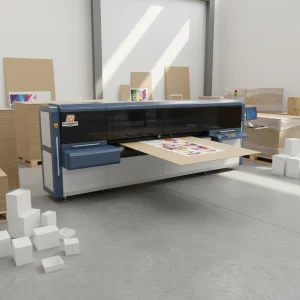
Single-pass and flatbed architectures transform corrugated box and POP retail display production. Combining variable-drop grayscale waveforms (5pl to 15pl) with heavy-vacuum hold-down zones prevents substrate warpage, producing sharp barcodes and clean brand spot colors directly onto unbleached Kraft liners.
For custom drinkware, cosmetics, and electronics enclosures, our continuous synchronized rotary attachments eliminate step-banding on tapered and cylindrical surfaces. Synchronized drop-placement algorithms allow uniform coverage, tactile structural embossing, and spot varnish finishes on a single platform.
Advancing print engine efficiency through linear magnetic drives, closed-loop droplet verification, and AI workflow integration.
To eliminate mechanical backlash and micro-chatter caused by traditional timing belts, future industrial platforms use magnetic levitation linear motors on the X-axis carriage. Achieving travel speeds above 1.8 m/s with sub-micron positional feedback, this design ensures precise dot placement at native 1200 dpi resolutions.
Integrating high-speed line-scan CCD optical sensors directly onto the printhead carriage allows real-time inspection of nozzle performance, color density drifts, and media registration targets. The system dynamically compensates for deflected or missing nozzles in real time, virtually eliminating wasted media.
Next-generation water-based UV resins and plant-derived photoinitiators reduce reliance on petrochemically sourced acrylic monomers. Matched with variable wavelength LED curing diodes (365nm to 395nm), heat dissipation drops by up to 60%, allowing distortion-free printing on heat-sensitive media like thin PVC and styrenics.
Combining heavy-industry precision machining with streamlined export logistics across North America, Europe, the Middle East, and APAC.
Long-term industrial stability begins at the metallurgical foundation. Every gantry beam undergoes high-temperature annealing and cryogenic stress relief before undergoing five-axis CNC bridge milling. This manufacturing step preserves planarity within 0.03mm over the entire service life of the machine, even during high-acceleration cycles.
Operating a 20,000 m² facility with six dedicated assembly lines lets us deliver consistent OEM and ODM configurations without mid-tier broker margins. Every printer undergoes a 72-hour continuous thermal, pneumatic, and print diagnostic run before crating in seaworthy, vacuum-sealed packaging for international freight.
We work with trusted global component manufacturers, including THK linear silent rails, Panasonic digital AC servo loops, Igus energy chains, and Omron safety interlocks. This ensures ready component availability and dependable field service across international markets.
Engineered to meet international electrical, occupational, and environmental standards, backed by multilingual field service.
Our full equipment lineup complies with EU Machinery Directive 2006/42/EC, Low Voltage Directive 2014/35/EU, and electromagnetic compatibility (EMC) regulations. Electrical enclosures carry UL-standard wiring layout, multi-point E-stop circuits, and dual-interlock light curtain sensors for operator safety.
Winscolor UV formulations undergo stringent independent testing to verify compliance with RoHS, REACH (SVHC), and GREENGUARD Gold low-emission standards. Finished prints emit no volatile organic compounds after full curing, making them suitable for indoor retail, educational, and healthcare displays.
We provide localized engineering support through regional distribution partners, supported by secure cloud-based remote diagnostics. Industrial teams can access real-time firmware updates, wave-pattern calibration, and sub-assembly troubleshooting worldwide, minimizing downtime.
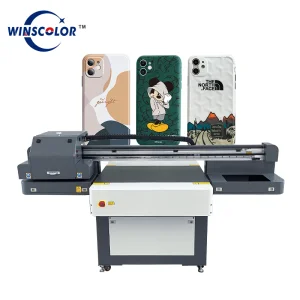
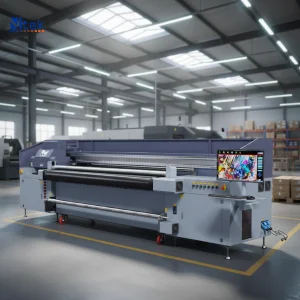
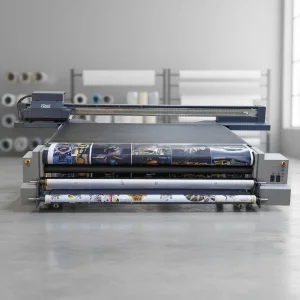
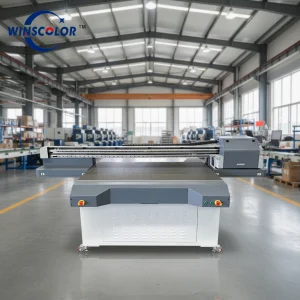
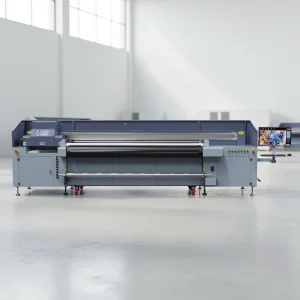
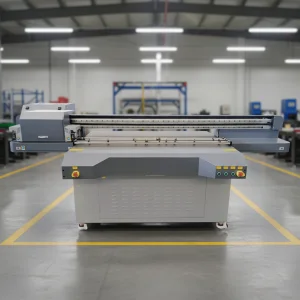
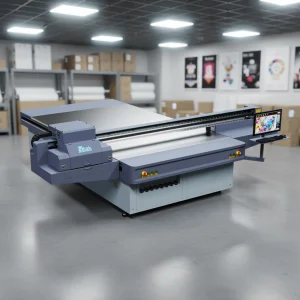
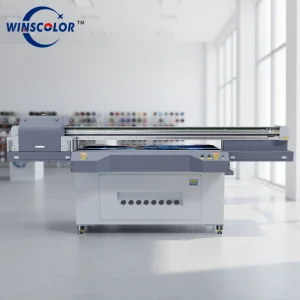
Versatile industrial engines handling corrugated carton prototypes, wide-format roll media, and architectural rigid sheets.
Clear, direct answers to common questions about industrial flatbed deployment, maintenance schedules, and printhead selection.
