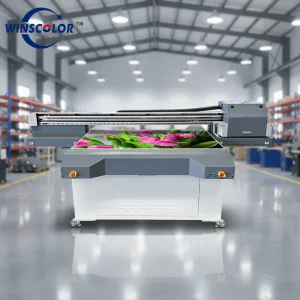
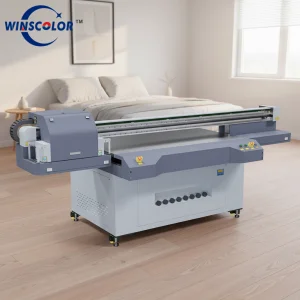
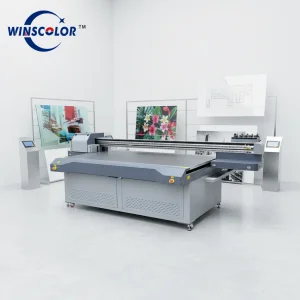
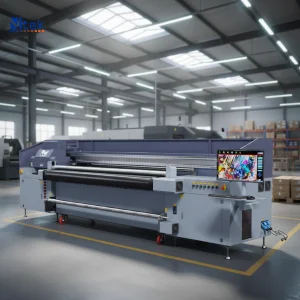
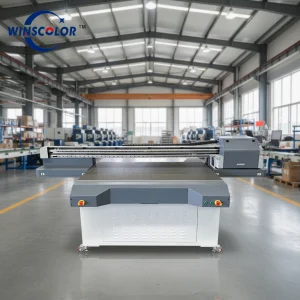
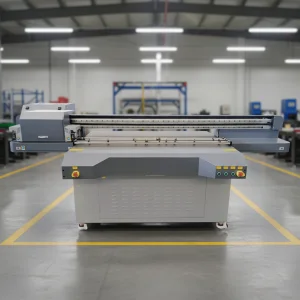
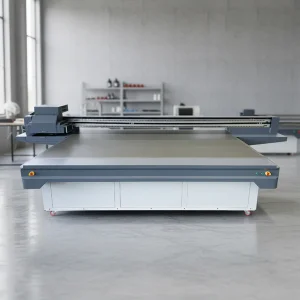
Explore our top-tier industrial UV printers optimized for adhesive vinyl, cast vehicle wraps, ultra-clear PET window graphics, and rigid automotive display signage.
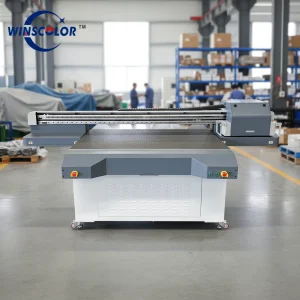
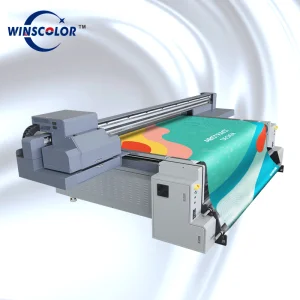
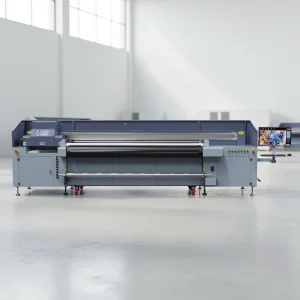

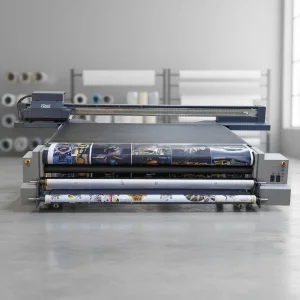
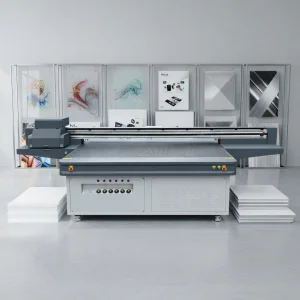
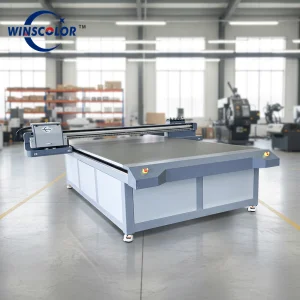
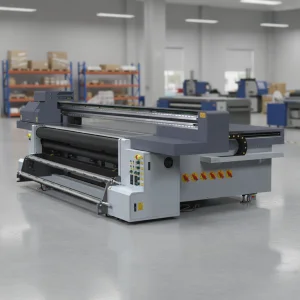
In modern visual communications and automotive engineering, vehicle livery, advertising wraps, and regulatory stickers require microscopic precision, extreme chemical resilience, and zero VOC curing protocols.
Automotive livery is subjected to deep 3D rivets, compound convex curves, and recessed channels. Print operations require flexible UV-LED formulations that match the elongation index of cast polyurethane (PU) and polymeric calendered vinyls without micro-fissuring or color degradation.
Fleet vehicles operate in aggressive climate zones ranging from sub-zero salt-treated highways to high-UV equatorial desert exposures. Industrial buyers mandate pigment encapsulation technologies capable of resisting accelerated xenon arc testing.
Thermal expansion variations between PVC face stock and polyethylene-coated craft release paper frequently induce cockling and skew. Our closed-loop magnetic tension feedback prevents media wander across 50-meter uninterrupted printing runs.
From digital raster image processing (RIP) color calibration to multi-layer ink curing, contour die-cutting, and lamination, discover the industrial architecture powering modern vehicle wrap factories.
Industrial RIP servers (Caldera / Onyx) generate custom ICC profiles based on vehicle wrap substrates. Embedded spectrophotometers verify G7 and Fogra51 standardizations, preventing metamerism under streetlighting versus daylight.
Simultaneous multi-layer synchronous jetting (Color + White + Blackout + White + Color) facilitates day-and-night perforated two-way window film graphics in a single pass without media realignment or registration error.
Wavelength-matched 395nm water-cooled LED-UV arrays freeze droplet dot-gain instantly (pinning) before entering the post-cure stage. This preserves high-definition vector typography down to 2-point font sizes without ink bleeding.
High-speed optical camera tracking reads registration bar-codes and printed crosshairs, relaying vector paths directly to flatbed CNC routers or roll drag-knife cutters for distortion-free kiss-cutting and die-cutting.
Explore our continuous engineering advances across micro-piezo nozzle architecture, intelligent inline closed-loop defect inspection, bio-based monomer chemistry, and dynamic temperature compensation.
| Core System | Current Generation Baseline | Next-Gen Industrial Architecture | Operational ROI Benefit | Readiness Level |
|---|---|---|---|---|
| Printhead Actuation | Bulk PZT 7-14 pL Piezo Heptapass | Thin-Film PZT MEMS 2.5-5 pL High Freq (50 kHz) | +42% edge sharpness on metallic chrome vinyl | Commercialized |
| Defect Detection | Manual periodic nozzle test pattern check | Inline Line-Scan CCD Camera with AI Vision Analysis | Automated compensation of clogged nozzles on-the-fly | Phase 2 Factory Deployment |
| Curing Photopolymers | Petroleum acrylate oligomer monomers | Bio-Renewable plant-derived acrylates (Zero VOCs) | RoHS / REACH compliance & lower odor output | Standardized |
| Gantry Motion Drive | Closed-loop AC Servo + Timing Belt | Magnetic Linear Levitation Motor + Metal Optical Grating | Zero backlash, 0.005mm mechanical repeat positioning | Flagship Standard |
| Thermal Regulation | Dual-zone passive platen heater | Intelligent 6-Zone PID Thermal Micro-Management | Prevents vinyl thermal expansion distortion during wide passes | Standardized |
Strategic supply chain analysis across North America, the European Union, the Middle East, and Asia-Pacific markets driving commercial decal and vehicle customization equipment investments.
Over 14 million commercial fleet vehicles in North America rely on rapid livery turnarounds. Fleet managers demand centralized digital print assets with precise batch-to-batch repeatability for emergency replacement panels, demanding printers that can hold strict color profiles over multi-year contracts.
Stricter European Green Deal mandates restrict traditional solvent emissions and phthalate-heavy calendered PVC films. Printers must operate certified non-VOC UV-LED curable platforms compatible with emerging non-PVC polypropylene and polyurethane wraps.
Regional climates with ambient summer temperatures exceeding 48°C require specialized printer configurations featuring dual liquid chiller loops, positive pressure carriage hoods to exclude dust, and heavy-pigment formulations that do not bleach under severe solar index.
Every machine manufactured in our 20,000 m² high-tech facility undergoes rigorous testing and is backed by worldwide field engineering support.
Machines feature global safety architecture including emergency stopping interlocks, optical safety light curtains, CE machinery directives, UL electrical panel standards, and RoHS compliant lead-free electronics.
Before ocean freight packaging, every unit completes a continuous 72-hour burn-in print trial. Customers receive high-resolution micro-alignment scans, laser interferometer bed-flatness certifications (tolerance within ±0.03mm), and electrical load graphs.
We provide overseas on-site installation, operational engineer certifications, cloud-based telemetry monitoring, and rapid spare-part replenishment dispatched from regional distributor depots.
Get straightforward answers from our senior printing engineers regarding ink chemistry, printhead longevity, media compatibility, and production profitability.
UV-LED curing polymerization occurs instantaneously, eliminating the traditional 24-48 hour outgassing window required by eco-solvent inks prior to lamination. Furthermore, UV-LED systems avoid the extreme 110°C thermal heating required by Latex engines, preventing dimensional shrinkage and edge-curling of thin cast wrap films.
Our systems integrate dual optical collision sensors with micron-grade responsiveness on both sides of the carriage. Combined with an intelligent segmented vacuum table that pulls thin adhesive films taut, the machine automatically pauses carriage motion if a substrate ripple or curl is detected, saving expensive printhead arrays from physical impact.
Utilizing our specialized industrial UV-curable automotive inks combined with UV-filtering cast overlaminate films, graphics typically achieve an outdoor durability rating of 5 to 7 years against fading, cracking, or peeling under normal vertical vehicle exposure in temperate and subtropical climates.
Yes. Our YC series hybrid roller printers and flatbed-with-roll units are specifically designed with interchangeable vacuum-table guide mechanisms and heavy-duty synchronized roller feeds. Operators can transition from printing rigid acrylic or ACM license plate boards to flexible cast vinyl rolls in less than five minutes.
Our commercial wrap platforms primarily deploy industrial Ricoh Gen6 (MH5320) stainless steel printheads. Featuring isolated ink paths and robust piezoelectric actuators, these heads offer an operational service life exceeding 3 to 5 years under standard preventative maintenance routines, operating at high fire frequencies up to 50 kHz.
Titanium dioxide white pigments have higher specific gravity. Our printers incorporate a continuous negative-pressure sub-tank circulation system alongside main-tank motorized stirring paddles. White ink is constantly circulated directly through the printhead manifold, preventing clogging and nozzle starvation during standby modes.
Versatile UV printing machines configured for diverse industrial applications including promotional stickers, direct-to-object personalization, and heavy-duty commercial graphic substrates.