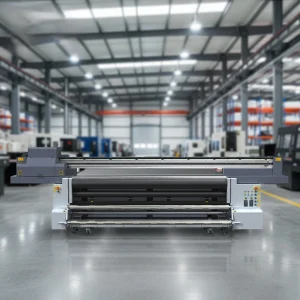
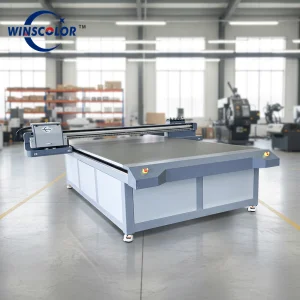
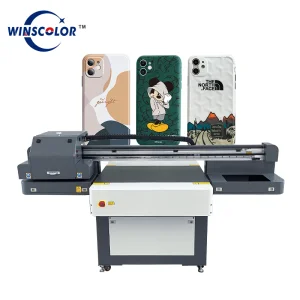
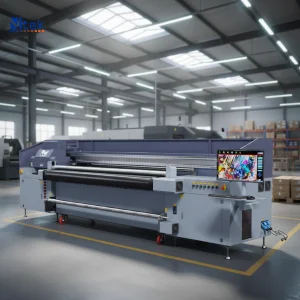
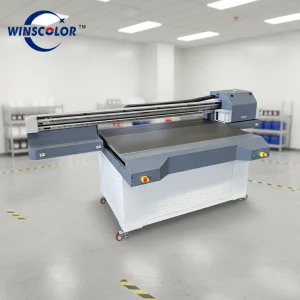
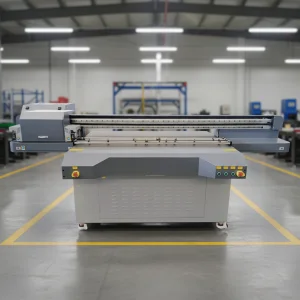
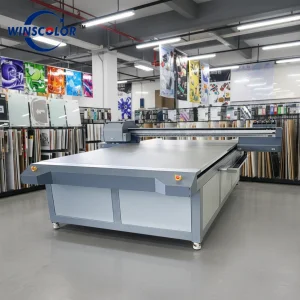
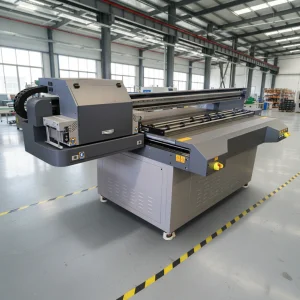
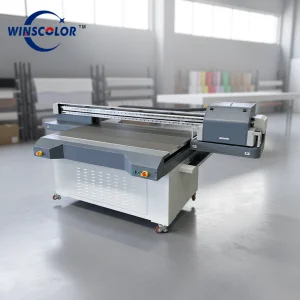
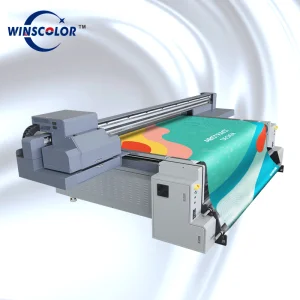
Explore our primary industrial production platforms configured with multi-zone vacuum beds, LED photochemical cross-linking cure arrays, and high-precision linear encoder drive units.
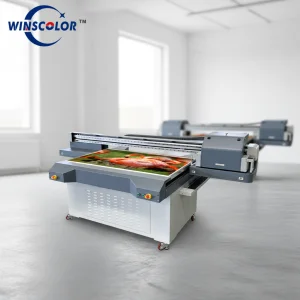
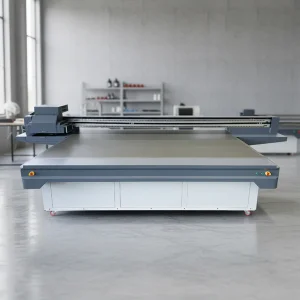
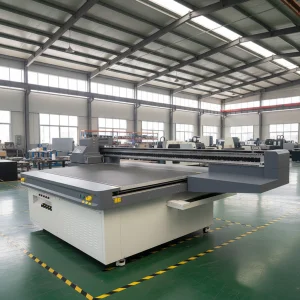
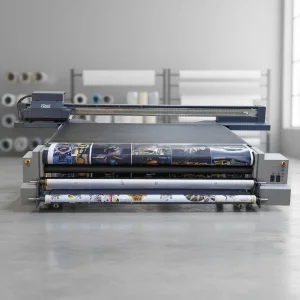
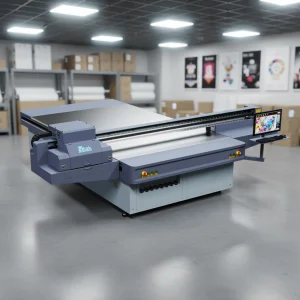
Evaluating commercial macro-dynamics, the phase-out of eco-solvent platforms, and the rise of high-speed LED-UV direct-to-substrate digital architectures.
The global commercial and industrial printing sector is undergoing a profound paradigm shift. Legacy solvent, eco-solvent, and water-based thermal inkjet technologies are rapidly being decommissioned in favor of energy-efficient, volatile organic compound (VOC)-free UV-curable inkjet systems. According to extensive global trade evaluations and market data, the wide-format UV printing machinery sector is experiencing an accelerating Compound Annual Growth Rate (CAGR) surpassing 6.8%, driven by structural transformations across packaging, architectural embellishment, personalized retail displays, and electronic device component printing.
At the center of this wholesale supply network is Jinan, Shandong—an international industrial epicenter housing engineering clusters such as Winscolor (Jinan Yingcai Digital Technology Co., Ltd). Operating an independent manufacturing footprint extending over 20,000 m² with six specialized production lines, Chinese OEM and ODM manufacturers have disrupted the traditional Western and Japanese duopolies. By integrating world-class Japanese piezo printheads—notably Ricoh Gen5/Gen6, Konica Minolta KM1024i, and Kyocera KJ4A—into precision-machined heavy-duty gantry frameworks, wholesale suppliers now deliver industrial-grade stability, sub-5-micron droplet registration, and continuous 24/7 reliability at substantially lower initial capital expenditures.
An engineering breakdown of industrial piezo printhead firing, continuous fluid recirculation loops, dynamic vacuum table zoning, and cold-cure LED cross-linking.
Industrial Ricoh Gen6 and Kyocera print engines utilize isolated piezoelectric actuators capable of high firing frequencies up to 50 kHz. Multi-level grayscale droplet modulation (ranging from 5 pl micro-droplets for skin tones to 12-18 pl heavy drops for solid densities) ensures flawless photorealistic gradients without micro-banding.
Equipped with dual-stage independent negative pressure control systems calibrated down to 0.01 kPa. Continuous closed-loop micro-circulation within the sub-tank and printhead manifold prevents titanium dioxide (TiO₂) heavy pigment precipitation in white ink channels, eliminating nozzle clogging and purging waste.
Replacing power-hungry medium-pressure mercury arc lamps, high-irradiance LED-UV arrays (395 nm wavelength) deliver instantaneous photochemical radical polymerization. Zero heat generation prevents warping on thermosensitive substrates such as thin PVC film, fluted polypropylene, and expanded polystyrene foam.
A critical engineering indicator separating industrial wholesale units from light-duty conversions is the mechanical foundation. True production platforms utilize annealed steel truss gantries combined with dual Japanese THK or Hiwin silent linear guide rails and dual Panasonic AC servo motors. Driven by metallic Renishaw optical raster scales with 1-micron feedback precision, the print carriage maintains absolute positional stability even at transit speeds exceeding 1.5 m/s.
| Component Module | Industrial Tier Specification (Winscolor Wholesale) | Entry-Level Commercial Standard | Operational Advantage |
|---|---|---|---|
| Printhead Architecture | Ricoh Gen6 MH5320 (Isolated PZT, 1,280 nozzles) | Epson i3200-U1 / TX800 / XP600 | 3-5x Longevity Industrial jetting velocity |
| Curing Engine | Water-Cooled Dual LED-UV (12-16 W/cm², 395nm) | Air-Cooled Single LED or Mercury Lamp | Zero Substrate Distortion 30,000h lamp life |
| Gantry & Bed Base | Milled Heavy Truss Frame, 8-12 Zone Vacuum Chambers | Light Aluminum Profile, 2-Zone Passive Bed | No Bed Sagging Flatness within 0.05mm |
| Motion Control | Magnetic Linear Encoder + Dual Panasonic AC Servos | Optical Strip + Stepper or Single DC Motor | Zero Step Loss High-speed bi-directional sync |
Direct-to-substrate operational protocols for non-porous rigid media, flexible continuous roll stock, and specialized tactile embellishment workflows.
Direct printing on float glass, mirrors, and vitreous ceramic tiles requires molecular bonding modification due to extremely low surface tension (dyne levels below 30 dyn/cm). Industrial UV configurations employ heated bed controls paired with in-line or automated wipe-on silane coupling primers. UV cross-linking anchors ink polymers permanently, achieving 4H-5H pencil hardness and zero peeling under high-humidity cross-hatch adhesion tests (ASTM D3359).
Converting traditional flexographic workflows into short-run digital carton packaging eliminates expensive tooling, photopolymer plates, and lengthy make-ready setups. Flatbed and hybrid systems like the YC2500HR handle Kraft corrugated sheets, E/B-flute boxes, and honeycomb exhibition boards, providing rapid turnaround for e-commerce on-demand packaging with water-resistant, scuff-proof CMYK + White graphics.
By synchronizing printhead multi-pass firmware, wholesale UV systems build dimensional resin structures using selective clear gloss varnish. Depositing up to 1-2 mm of raised tactile reliefs allows ADA-compliant Braille signage production, faux oil-painting canvas brush strokes, realistic wood-grain textures on synthetic MFC boards, and high-value localized spot-gloss finishes on cosmetics packaging.
Utilizing synchronized multi-row printhead layouts, systems execute triple-layer simultaneous printing: Color + White + Color or White + Color + Varnish in a single pass. When illuminated from behind on clear acrylic or PET backlit film, the white core barrier layer blocks luminance washout, maintaining 100% color gamut fidelity whether backlit light boxes are switched on or off.
Deconstructing Total Cost of Ownership: ink consumption models, power savings from solid-state LEDs, and plant integration requirements.
Procurement directors assessing wholesale UV flatbed and hybrid printers must evaluate beyond the FOB equipment price tag. The Total Cost of Ownership (TCO) over a standard 5-year operating lifecycle is determined by three variables: consumable ink yield efficiency, electricity/cooling overhead, and printhead replacement intervals.
Because UV ink contains 100% solids with zero evaporative solvent carriers, every milliliter jetted directly forms the cured ink layer. On standard CMYK graphics at 600×900 dpi, high-quality UV ink yields between 110 to 140 square meters per liter (averaging 7 to 9 ml/m²). Compared to solvent printing requiring hot air drying tunnels (drawing 8-15 kW/h), solid-state LED-UV units consume less than 2.5 kW/h total system power, slashing factory electrical overhead by more than 70%.
| Evaluation Parameter | Flatbed Platform (e.g., YC2513L) | Flatbed + Roll Hybrid (e.g., YC2513R) | High-Volume Roller Hybrid (e.g., YC3200HR) |
|---|---|---|---|
| Primary Target Media | Rigid sheets: Acrylic, PVC, Glass, Wood, Metal | Mixed orders: Rigid boards + Soft vinyl/banner rolls | Continuous web: High-speed banners, vinyl, lightweight corrugated |
| Nominal Bed/Width Size | 2,500 mm × 1,300 mm fixed bed | 2,500 mm bed + 2.5m integrated roll feeder | 3,200 mm continuous roller conveyor feed |
| Typical Daily Throughput | 250 – 450 m² / shift (multi-head Ricoh G6) | 200 – 400 m² / shift (mixed substrate) | 500 – 900 m² / shift (continuous roll/sheet) |
| Estimated TCO Break-Even | 4 to 6 months at 40% production capacity | 5 to 7 months at 40% production capacity | 3 to 5 months in 2-shift high-volume operation |
| Recommended Business Scale | Sign shops, custom furniture, industrial components | Full-service advertising agencies, trade printers | Commercial print factories, industrial packaging plants |
Anticipating the convergence of artificial intelligence, high-speed single-pass arrays, and sustainable low-migration photoinitiators.
Emerging wholesale machines are integrating embedded high-speed machine vision sensors directly onto the print carriage. Utilizing neural inference models, real-time cameras detect missing or deviated nozzles on-the-fly, automatically commanding neighboring nozzles to modulate drop size and mask potential micro-banding before human eyes perceive defects.
While multi-pass scanning gantries remain the gold standard for high-mix low-volume flexibility, high-throughput packaging lines are transitioning toward stationery single-pass print bar systems. Single-pass architectures enable line speeds exceeding 50 to 100 linear meters per minute, making digital UV directly competitive with conventional offset and flexo runs over 10,000 units.
Tightening regulatory standards, such as European Nestlé Guidance and Swiss Ordinance on food packaging, are accelerating the rollout of low-odor, low-migration UV photoinitiators. Simultaneously, chemical suppliers are engineering monomer bases derived from up to 30-40% renewable vegetable feedstocks without sacrificing cross-link polymer tensile strength.
Engineered responses addressing technical inquiries from commercial print providers, plant engineers, and international procurement managers.
Direct wholesale access to our precision flatbed, hybrid roll-to-roll, and compact digital UV printing platforms manufactured to international CE and ISO9001 standards.