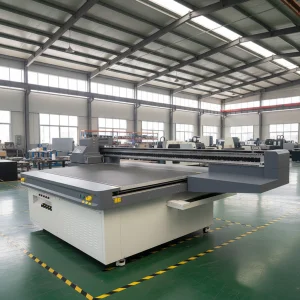
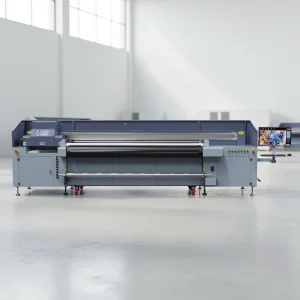
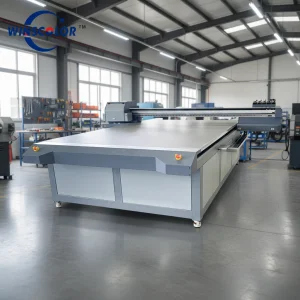
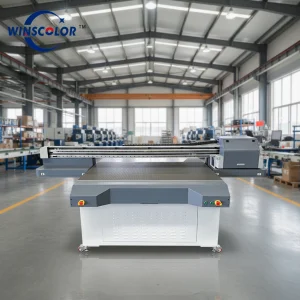
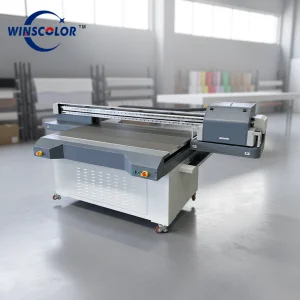
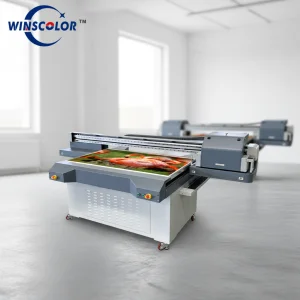
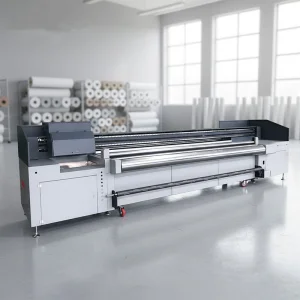
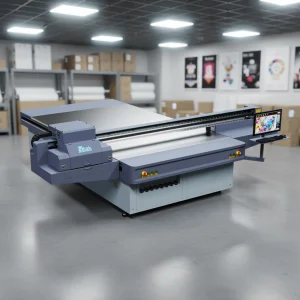
Explore precision-engineered OEM/ODM UV systems equipped with piezoelectric grayscale drop-on-demand printheads, negative pressure circulation, and dual UV-LED variable cure engines.





An exhaustive analysis of the structural transition from conventional screen printing and eco-solvent technologies to heavy-duty UV-curable industrial hardware.
The global manufacturing, display advertising, and surface decoration sectors are experiencing a decisive, irreversible transformation. For decades, conventional analog print methodologies—specifically analog screen printing and solvent-based chemical roll systems—dominated the conversion of rigid and flexible substrates. However, rising environmental mandates, aggressive demand for customized short-run executions, and stringent supply chain lead times have exposed the structural inefficiencies of plate-making, intensive chemical washing, and volatile organic compound (VOC) emissions. Industrial flatbed UV printing machinery has consequently emerged from a peripheral prototyping convenience into the foundational production engine of advanced printing facilities worldwide.
In mature commercial centers across North America and Western Europe, the industrial UV flatbed print ecosystem is governed by total cost of ownership (TCO) calculations, mechanical repeatability, and compliance with stringent environmental directives such as RoHS, REACH, and UL GREENGUARD Gold certifications. Print service providers (PSPs) and industrial original equipment manufacturers (OEMs) are transitioning from low-speed, high-overhead machinery to high-output, continuous-duty flatbed and hybrid platforms. Concurrently, across dynamic emerging industrial nodes in Southeast Asia, Latin America, and the Middle East, the transition is accelerated by rapid infrastructure expansions, architectural interior upgrades, and localized product packaging requirements that demand high-yield, flexible print technology capable of immediate drying and multi-substrate versatility.
Direct deposition of photo-initiated inks onto untreated acrylics, silicate glass, anodized aluminum, architectural wood veneers, engineered composites, and corrugates without screen burning or solvent degassing delays.
Complete elimination of fixed pre-press tooling, color separations, and physical stencil archiving. Variable-data single-unit prototypes execute at identical marginal cost profiles to high-volume 5,000-sheet industrial runs.
Ultra-violet curing locks pigment matrices in a cross-linked oligomer resin lattice, achieving class-leading UV resistance (up to 5 years outdoor stability) and superior abrasive, chemical, and temperature resistance.
Inside industrial-grade UV flatbed systems: printhead thermodynamics, linear motor stabilization, negative pressure fluidics, and precision UV-LED curing engines.
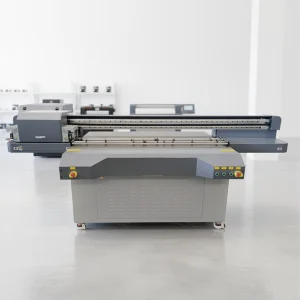
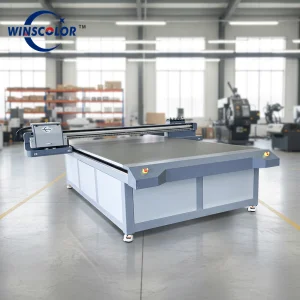
The modern industrial wholesale UV flatbed printer is fundamentally a precision mechatronic instrument designed to withstand continuous 24/7 industrial fabrication. Unlike light-duty conversion printers repurposed from graphic desktop engines, heavy-duty production models such as the YC2513L, YC2030, and YC3200HR are architected around an all-steel, stress-relieved gantry frame milled via heavy computer numerical control (CNC) five-axis gantries. This rigid mechanical core prevents micro-deflections across spans exceeding 3,000 millimeters, ensuring the printhead carriage maintains a constant aerodynamic altitude above varying substrate surfaces.
Critical to this precision is the dynamic interplay between the linear encoder, magnetic drive assemblies, and industrial piezoelectric printheads. Systems leveraging industrial Ricoh Gen6 (MH5320/MH5340) or Kyocera KJ4A printheads fire droplet volumes down to 5 picoliters at firing frequencies reaching 50 kHz. At these velocities, a microscopic trajectory deviation of just 0.005 mm translates to noticeable print artifacts, color banding, and structural text blurring. Below is an engineering comparison matrix defining subsystem benchmarks across machine performance classes:
| Subsystem Metric | Light Commercial Grade | Heavy Production Flatbed (YC2513L) | High-Volume Hybrid (YC3200HR) |
|---|---|---|---|
| Printhead Technology | Epson i3200-U1 (Mems Piezo) | Industrial Ricoh Gen6 (Piezo Grey) | Kyocera KJ4A / Ricoh Gen6 High-Cap |
| Native Drop Velocity & Size | 3.8 – 12 pl (Multi-drop) | 5.0 – 15 pl (Variable Greyscale) | 3.5 – 12 pl (High Frequency Firing) |
| Curing Engine System | Single Air-Cooled UV-LED (8-10 W/cm²) | Dual Water-Cooled UV-LED (14-18 W/cm²) | Hybrid Variable Dual-Zone Water UV-LED (20 W/cm²) |
| Vacuum Bed Zonation | Manual 2-Zone Control | Auto Multi-Chamber (4 to 8 Electronic Zones) | Continuous High-CFM Dynamic Vacuum Conveyor |
| Motion Axis Architecture | Belt-driven stepper assembly | Dual THK Silent Linear Guides + Double Leadscrew | Magnetic Linear Motor + Metal Optical Grating Encoder |
| Ink Delivery Recirculation | Sub-tank static gravity feed | Independent White & Color Negative Pressure | Dual Negative Pressure Fluidic Recirculation Loop |
Microcomputer-controlled negative pressure vacuum tanks continuously calibrate meniscus tension at the nozzle plate, preventing ink drop dripping during high-g carriage accelerations and eliminating head starvation.
Narrowband 395nm water-chilled semiconductor UV-LED emitters supply up to 18 W/cm² of targeted irradiance with zero infrared thermal projection, enabling stable printing across heat-sensitive PVC, thin PET, and fluted plastics.
Integrated optical and mechanical height sensors map the substrate perimeter and surface elevation across micron tolerances, dynamically adjusting carriage head clearance to eliminate catastrophic mechanical head strikes.
How the industrial manufacturing cluster in Jinan, Shandong integrates metallurgy, electronic integration, and software customization into global price-performance dominance.
The global dominance of Chinese flatbed UV printing machinery manufacturers—most notably anchored within the advanced machinery hub of Jinan, Shandong—stems not merely from baseline labor cost arbitrage, but from comprehensive vertical integration and clustered supply chain resilience. Over the past fifteen years, Jinan has matured into the world’s premier center of excellence for digital inkjet, laser manufacturing, and CNC machinery. Within a 30-kilometer radius of our manufacturing plants, our engineering team sources raw heavy ductile iron castings, precision extruded aircraft-grade aluminum crossbeams, high-vacuum turbines, industrial cryogenic fluid manifolds, and advanced PCB surface-mount electronic assemblies.
This geographic concentration creates an agile manufacturing loop that compresses R&D cycles, streamlines prototyping, and ensures dependable component availability during global supply bottlenecks. While European and North American brand names frequently face multi-month component lead times and high sub-assembly tariffs, our factory-direct model integrates full-cycle manufacturing: in-house CNC chassis fabrication, electrostatic powder coating, multi-stage gantry aging, optical rail laser interferometry alignment, and exhaustive 72-hour burn-in print trials prior to international crating.
Direct factory-level partnerships with Tier-1 component innovators—including THK (Japan), Megadyne (Italy), Igus (Germany), and Ricoh (Japan)—guarantee authentic components integrated into custom-milled chassis structures.
Modular hardware designs enable distributors to tailor bed dimensions, vacuum configurations, carriage drop height (up to 400 mm for deep casework), custom branded shells, and proprietary RIP profiles tailored to localized market targets.
By bypassing multi-tiered trading intermediaries and distributor markups, wholesale purchasers secure industrial machines at 40% to 60% lower capital expense, accelerating total capital ROI to under 8 months in continuous production settings.
Actionable production protocols across architecture, industrial packaging, electronics manufacturing, thermoforming, and tactile braille production.
A true commercial advantage in UV flatbed machine deployment lies in mastering the interfacial chemistry between ink polymer matrices and diverse substrate surfaces. Physical curing alone is insufficient; true adhesion requires tailored surface energy matching, substrate cleaning protocols, silane coupling agents (primers), and precise ink deposition profiles. Below are the verified localized engineering protocols deployed across our primary global application verticals:
Protocol: Wipe down with isopropyl alcohol followed by nano-silane wiping primer. Deploy a "Sandwich" CMYK + White + CMYK deposition at 1200 DPI with bi-directional curing at 16 W/cm². Achieves cross-hatch tape adhesion ASTM D3359 Class 5B with lasting moisture barrier stability.
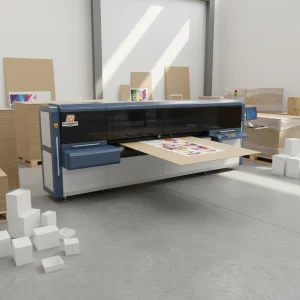
Protocol: Utilizing single-pass digital corrugated or multi-pass flatbed setups on unbleached kraft and honeycomb fluted board. Employs low-odor, highly flexible inks that permit non-cracking 90-degree die-creasing and high-speed box folding without surface flaking.
Protocol: Multi-layer concentrated white ink stacking followed by high-gloss clear varnish dome capping. Achieves true 0.7mm tactile relief compliance with ADA standards (Americans with Disabilities Act) and European Accessibility Act norms in single-sequence automated operations.
Protocol: Precision registration on polycarbonate (PC), PET, and treated PMMA overlays. High-opacity blockout white ink layers eliminate backlighting bleed-through on LED-illuminated instrumentation panels for industrial and automotive dashboards.
Protocol: Direct-to-metal printing utilizing customized polyolefin bonding primers for harsh exterior environment signage. Chemical resistance resists exposure to road salts, cleaning detergents, and intense solar UV weathering across transport corridors.
Protocol: Seamless 360-degree rotary fixture synchronization for thermal drinkware, vacuum flasks, and cosmetic glass jars. Employs dynamic angle drop compensation to ensure razor-sharp alignment along curved perimeters without seams or overlap lines.
Pioneering advancements in AI vision registration, single-pass high-frequency arrays, circular bio-curable monomers, and cloud telemetry IoT.
The UV flatbed printing sector is entering a new era of cyber-physical industrial automation. The historic paradigm of an operator manually placing boards against registration pins and visually monitoring for nozzle dropouts is being systematically replaced by integrated hardware-software loops. Modern flatbed engineering teams are integrating machine vision, edge-AI computing, and intelligent fluid dynamics to transform flatbeds into automated manufacturing nodes capable of continuous unattended operation.
Overhead ultra-high-resolution CCD cameras scan randomly placed, unaligned substrates on the vacuum bed. Edge processors automatically identify perimeter boundaries, calculate rotational angle deviations (skew), and reorient the raster print file in real time.
Laser optoelectronic droplet deflection arrays monitor printhead firing in real-time. If a single nozzle failure or deflection is detected, the RIP firmware instantly compensates by modifying drop sizes from neighboring nozzles, eliminating production banding on long runs.
Direct industrial bus integration streams operational parameters—piezo temperature, vacuum bed balance, UV-LED lumen degradation, and milliliter ink consumption per square meter—to secure cloud platforms for proactive maintenance scheduling.
Ensuring seamless operational integration through international conformity certifications, factory training programs, and regional spare parts hubs.
Purchasing an industrial UV printing platform is a major capital investment whose profitability relies directly on equipment availability, fast access to critical spare parts, and adherence to international electrical and operator safety standards. Our manufacturing protocols operate under rigorous ISO 9001:2015 quality assurance frameworks. Every machine exported to international markets carries fully verified CE declarations under the Machinery Directive 2006/42/EC and Electromagnetic Compatibility Directive 2014/30/EU, alongside UL 775 compliance options for North American industrial facilities.
Compliance with European CE, electrical UL standards, and hazardous material restrictions (RoHS). UV ink formulations are supplied with comprehensive MSDS and comply with GREENGUARD Gold criteria for safe indoor architectural display applications.
We support authorized distributor spare parts hubs throughout Europe, North America, and the Middle East, stocking mission-critical spares: printheads, sub-tank vacuum valves, optical encoder sensors, and mainboards for rapid dispatch.
Factory certified field service engineers provide bilingual (English/Chinese/Spanish) diagnostics via encrypted remote IP protocols, guided high-definition video setup sessions, and onsite commissioning for enterprise production lines.
Answers to key technical, operational, and commercial questions from plant directors, procurement managers, and print shop operators.
Explore additional wholesale production platforms designed for specialized applications, from heavy-duty composite sheet decoration to ultra-fast promotional printing.