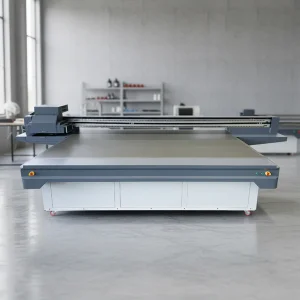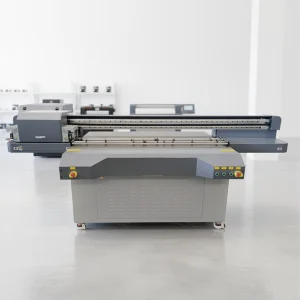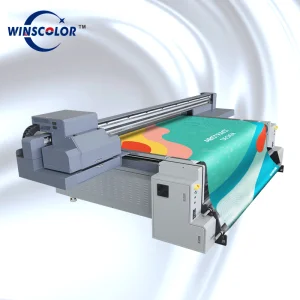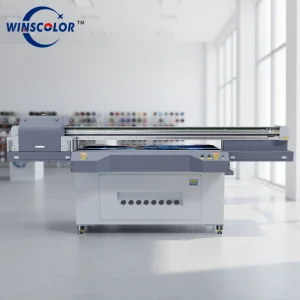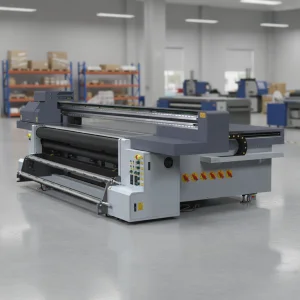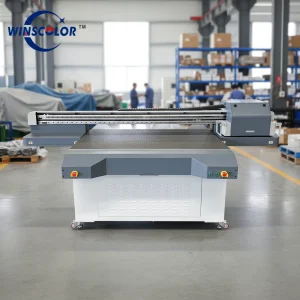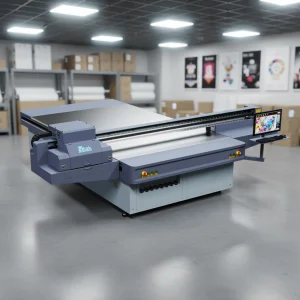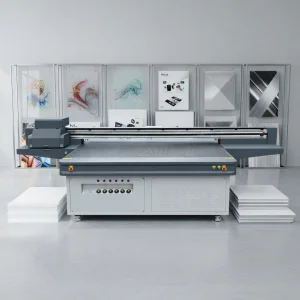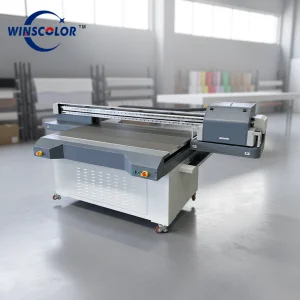
Explore factory-configured industrial digital printing systems engineered for optical-grade polymers, architectural signage, and tactile acrylic manufacturing.
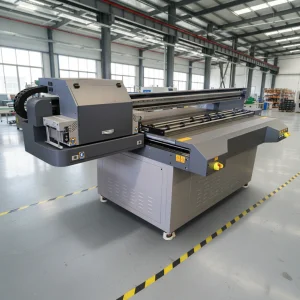
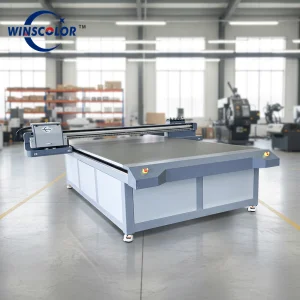
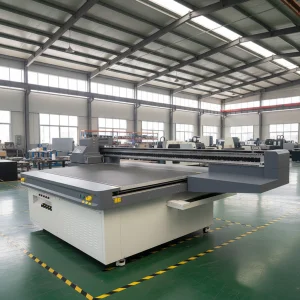
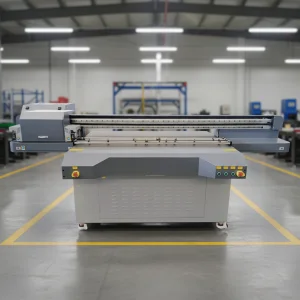
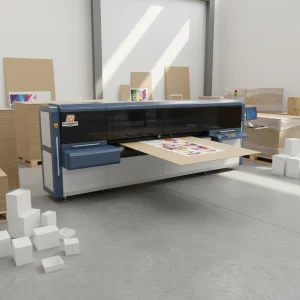
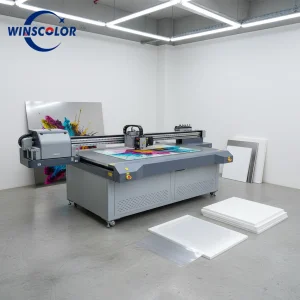

PMMA (Polymethyl Methacrylate) printing has evolved from basic signage to structural, optical, and high-durability luxury retail components.
Global brand guidelines mandate strict adherence to ASTM D3359 cross-hatch tape testing (Class 5B rating). Without calibrated polymer-specific primers or corona surface pretreatments, photo-initiators fail to penetrate cast acrylic surfaces, causing delamination during CNC cutting and thermoforming.
Backlit commercial displays require exact Delta-E color consistency between day and night illumination states. OEM systems utilize triple-layer "sandwich" firing (Color + White + Color) in a single carriage pass to prevent phase misalignment and ensure light diffusion values reach >92% transmission without banding.
Packaging and luxury interior applications demand functional braille and textured micro-reliefs. Piezoelectric drop-on-demand Gen6 printheads deliver variable droplets (5–15 pl), stacking clear UV varnishes up to 2.5 mm in controlled thickness without thermal distortion of thin acrylic panels.
Addressing mechanical stability, electrostatic interference, and UV curing kinetics across high-throughput production lines.
Acrylic sheets carry substantial electrostatic charges (up to 20kV) that deflect micro-ink droplets, causing satellite ink mist. Integrated dual-rod ionizers neutralize static fields immediately ahead of the print carriage.
Conventional mercury lamps emit severe infrared radiation that warps PMMA sheets thinner than 3mm. Tunable 395nm LED cold arrays cure monomer matrices rapidly while maintaining platen temperatures below 38°C.
Heavy extruded acrylic boards often feature slight camber. Our multi-chamber high-flow regenerative vacuum platens exert continuous localized suction, ensuring a level plane accurate to within ±0.03 mm across the bed.
Sub-micron air pockets inside UV ink channels cause intermittent nozzle dropouts during high-frequency firing. Active negative pressure systems coupled with peristaltic degassing ensure microbubble-free white ink agitation.
Formulation parameters and system configurations calibrated specifically for industrial PMMA substrate handling.
| Performance Parameter | Cast Acrylic (GS) Specifications | Extruded Acrylic (XT) Specifications | OEM Machine Integration Mechanism |
|---|---|---|---|
| Surface Energy (Dyne/cm) | 38–42 Dyne/cm (Requires Chemical Primer) | 42–46 Dyne/cm (Direct In-line Cure) | Integrated inline jetting primer or dual corona system |
| Thermal Deflection Temp | 100°C – 105°C | 85°C – 90°C | Dynamic water-chilled UV-LED curing shutters (395nm) |
| Ink Elasticity / Elongation | Semi-Rigid / Rigid Matrix (20-40%) | Thermoforming Flexible Matrix (150-220%) | Customized photoinitiator recipes matched to substrate strain |
| Layer Registration Accuracy | ± 0.02 mm across 2500 mm axis | ± 0.03 mm across 2500 mm axis | Dual Renishaw optical metal encoders & linear magnetic drive |
| Chemical / Solvent Resistance | Class A (Resistant to Isopropyl, Alcohols) | Class B (Sensitive to hydrocarbon cracking) | High cross-link density topcoat varnish sealing pass |
Strategic trajectories driving digital flatbed manufacturing through 2026–2030.
Real-time optical laser triangulation scanners map substrate surface imperfections on irregular acrylic panels, adjusting printhead carriage Z-height in real time to prevent collisions while preserving drop trajectory accuracy.
Accelerating global decarbonization requires printing fluids derived from sustainable plant-based resins. Next-gen UV curing channels optimize deep polymerization at low wattage without hazardous monomer off-gassing.
Transitioning from multi-pass gantry movements to high-speed single-pass industrial printing arrays for acrylic sheet extruders, boosting output speeds to over 60 linear meters per minute for architectural wall panels.
Providing overseas production sites with technical reliability, certified safety parameters, and verified industrial supply lines.
All Winscolor industrial printing engines fully meet CE Machinery Directive 2006/42/EC, Low Voltage Directive 2014/35/EU, and RoHS/REACH environmental standards. Ink systems comply with UL GREENGUARD Gold standards for sensitive indoor environments.
Critical mechanical and electrical assemblies feature worldwide-supported components: Ricoh Gen5/Gen6 industrial printheads, Panasonic AC servo drive systems, Hiwin double quiet linear guideways, and German IGUS drag chains for maximum reliability.
Enterprise buyers benefit from IoT remote diagnostic modules allowing real-time firmware synchronization, waveform calibration, and telemetry analysis, backed by dispatched field engineer networks covering key industrial markets.
Essential answers for machine buyers, production directors, and purchasing managers evaluating industrial UV acrylic printing equipment.
Select from our verified export catalog of multi-substrate flatbed, hybrid, and roll-to-roll production hardware.