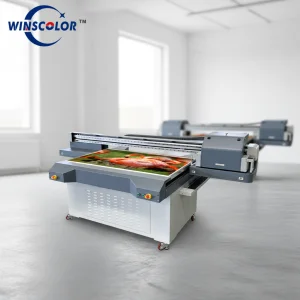
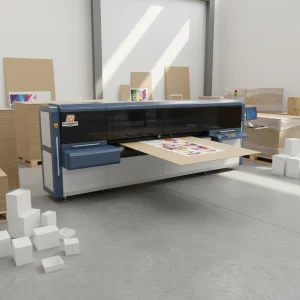
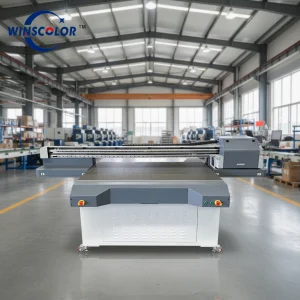
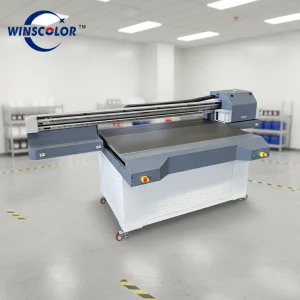
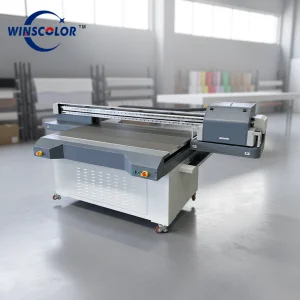
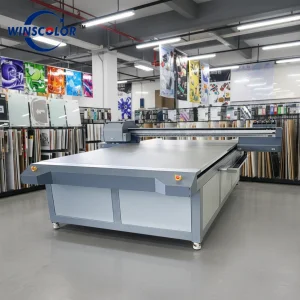
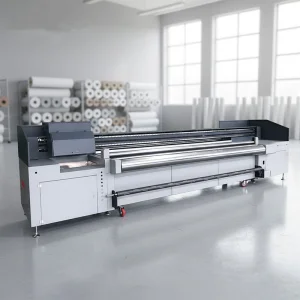
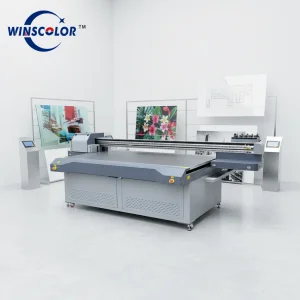
Explore our precision-engineered UV flatbed, hybrid roller, and integrated packaging production systems manufactured under ISO9001 and CE compliance for continuous production environments.
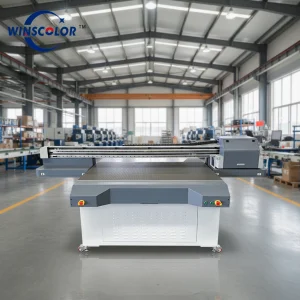
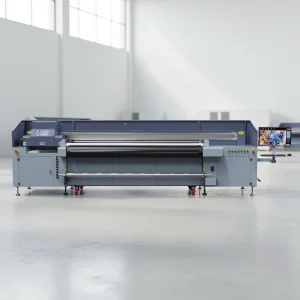
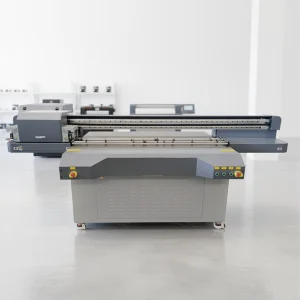
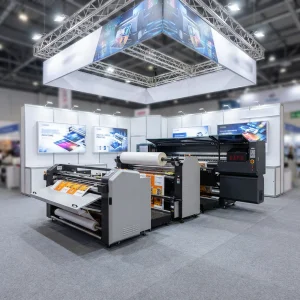
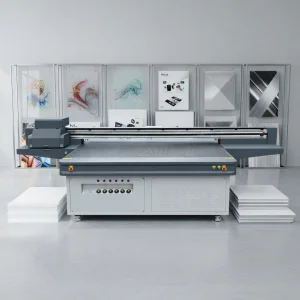
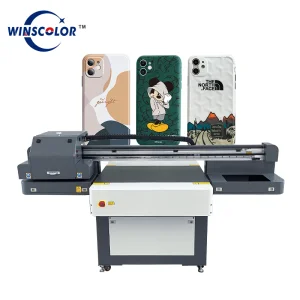
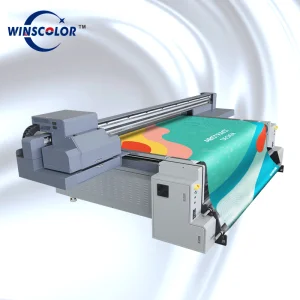

Accelerated digitalization, zero-VOC workplace mandates, and just-in-time micro-manufacturing are revolutionizing the global commercial print sector.
Traditional screen printing and solvent-based roll systems struggle with astronomical prepress make-ready costs, hazardous volatile organic compound (VOC) emissions, and multi-day setup lags. Digital piezo UV technology bypasses screens, stereos, and drying tunnels completely, enabling immediate print-to-pack operations with sub-0.5% waste thresholds.
The contemporary retail, sign, and promotional packaging ecosystem demands localized short runs, extreme customization, and variable data serialization. With instant cold UV-LED curing, printers achieve high margins on run sizes ranging from single prototypes up to 10,000 units without incurring setup or color separation penalties.
Unlike aqueous or solvent chemistries reliant on receptive polymer coatings, UV-curable inks cure through instant photopolymerization upon exposure to high-intensity UV-A light (395nm). This yields instant chemical adhesion across untreated polymers, natural wood, ferrous and non-ferrous metals, architectural glass, and corrugated fiberboards.
Why Tier-1 global print equipment distributors and brand OEMs rely on our 20,000 m² Jinan manufacturing facility for industrial machine stability and competitive margin protection.
Jinan sits at the epicenter of China's heavy precision CNC tool industry. Our machine frames are built with fully annealed, five-axis stress-relieved tubular steel beams and aerospace-grade dual aluminum gantries, preventing micro-torsional flexing during multi-year double-shift duty cycles.
From servo motors (Panasonic, Delta) and linear guideways (Taiwan Hiwin / THK) to German IGUS silent energy chains and Italian Megadyne belts, 92% of mission-critical motion and fluidics components are sourced within a tight regional radius, safeguarding our factory lead times from global supply crunches.
Located immediately adjacent to the Jinan Logistics Hub and within swift haulage distance of Qingdao Port, our factory ships directly containerized, moisture-sealed, nitrogen-cushioned platforms internationally, drastically reducing demurrage overhead and overland shipping latency.
Our dedicated R&D engineering bullpen can adapt vacuum bed zoning, table height clearances (up to 400mm for industrial packaging), printhead carriage plates, and automated registration pin layouts in weeks rather than the multi-quarter cycles common among Western equipment integrators.
A granular technical deconstruction of printhead actuation, constant negative pressure recirculating ink loops, and precision UV-LED radiometry.
Deploying genuine Ricoh Gen6 (MH5320) and Gen5 stainless steel heads featuring multi-level grayscale drop control (5pl to 15pl). High firing frequencies (up to 50 kHz) ensure ink drop placement accuracy at 1200×1200 dpi without satellite splattering, even at gantry travel velocities exceeding 1.2 m/s.
Equipped with dual isolated secondary ink sub-tanks governed by independent digital negative pressure valves. Constant recirculating white ink channels prevent titanium dioxide (TiO2) particle settling, eliminate nozzle clogging, and maintain meniscal tension across extreme thermal shifts.
Our dynamic dual water-chilled UV-LED lamps deliver peak irradiance of 12–16 W/cm² precisely centered at the 395nm spectral band. This triggers instantaneous photoinitiator polymerization while keeping substrate surface temperatures below 38°C, preventing thermal warp on thin PVC, PET, and fluted plastics.
| Parameter / Architecture | Standard Entry UV | Winscolor Industrial OEM Platform | Next-Gen Single Pass Packaging |
|---|---|---|---|
| Printhead System | Epson XP600 / DX5 (Consumer Piezo) | Ricoh Gen6 / Gen5 Stainless Steel | Kyocera KJ4A High-Speed Array |
| Drop Volume & Grayscale | Fixed 3.5pl – 7pl (No true multi-drop) | Variable 5, 10, 15pl Grayscale | Variable 3, 6, 9pl Ultra-High Freq |
| Ink Recirculation | Gravity feed with basic white timer | Continuous Active Negative Pressure Loop | Direct Flow Internal Nozzle Micro-Circulation |
| Gantry Beam & Guide | Extruded aluminum single rail | Annealed Heavy Steel + Dual Hiwin Silent Guides | Cast Iron Bridge + Magnetic Maglev Drive |
| Max Surface Clearance | 50 mm – 80 mm | 100 mm Standard (Custom to 400 mm) | Fixed 5 mm – 25 mm Sheet Distance |
| Color Channels | CMYK + W | CMYK + Lc + Lm + White + Gloss Varnish | Double CMYK + High Opacity White |
Engineered for uncompromising mechanical abrasion resistance, ASTM cross-hatch tape adhesion, and exterior weatherability across tough materials.
Utilizing nano-molecular silane adhesion promoters, our platforms print backsplash splashbacks, bespoke shower dividers, and decorative glazing that resist humidity and thermal shock without delaminating.
Direct-to-corrugated flute, kraft, and white-top liners eliminate the mounting step of litho-lamination. Ideal for high-impact e-commerce unboxing cartons, shelf-ready trays, and POP cardboard counter displays.
Equipped with motorized rotary chuck synchronizers, models like the 1610 effortlessly print 360-degree seamless graphics, sensory embossing, and spot varnish directly on insulated stainless steel tumblers, wine bottles, and cosmetics glass tubes.
Through layered multi-strike UV varnish deposition, operators achieve genuine tactile haptics: simulated oil-painting impasto, wood grain textures, leather finishes, and ADA-compliant Braille signage at industrial speeds.
We engineer equipment for overseas distributors and institutional plants who cannot afford downtime or regulatory snags.
Every Winscolor machine leaves the plant accompanied by certified CE declarations for both Machinery (2006/42/EC) and Low Voltage (2014/35/EU) directives, accompanied by FCC Class A emission certification, UL-standard electrical wiring, and RoHS-compliant components.
Our quality control protocol subjects every assembled chassis to a continuous 72-hour multi-speed bidirectional dry run, gantry laser interferometer calibration, and multi-substrate test-pattern certification before seaworthy crating.
We supply localized master distributors with rapid-dispatch spare part kits (sub-boards, driver ICs, valves, linear encoders) along with direct real-time remote engineering diagnostics via TeamViewer / AnyDesk direct PLC connection.
Direct, unvarnished insights into printhead longevity, adhesion science, color profiling, and power infrastructure requirements.
Industrial printheads like the Ricoh Gen6 (MH5320) are manufactured from all-metal, stainless steel cavity blocks designed specifically to withstand the aggressive chemical solvency and thermal heating (up to 45°C) characteristic of UV photopolymer inks. In contrast, modified desktop or entry-level heads utilize glued plastic housings and delicate epoxy nozzle plates that degrade under continuous exposure to UV ink monomers, leading to internal diaphragm leakage, jet deviation, and head failure within 6 to 12 months. Furthermore, industrial Ricoh heads achieve jetting frequencies up to 50 kHz with isolated ink channels, allowing simultaneous dual-color jetting per head and a operational lifespan exceeding 3 to 5 years under standard maintenance protocols.
Our dual negative pressure system employs high-precision digital vacuum transducers to isolate white ink and color channels. By dynamically maintaining a precise back-pressure (typically set between -3.8 and -4.5 kPa) directly behind the nozzle meniscus, the system prevents gravitational ink weeping when stationary, while preventing air ingress during high-gantry acceleration (up to 1.5G). The secondary ink tank incorporates automated heating manifolds to maintain fluid viscosity between 8 and 12 mPa·s, ensuring reliable droplet ejection at high carriage speeds.
Smooth, non-porous, high-surface-energy inorganic substrates like architectural float glass and polished stainless steel lack polar bonding sites for standard UV acrylate monomers. For these materials, Winscolor provides dedicated silane coupling primers. The silane molecules form covalent siloxane bonds with the silica substrate while providing an organofunctional organic group that copolymerizes directly with our UV ink under 395nm LED radiation. When wiped or sprayed prior to printing, this achieves Class 0 (ASTM D3359 cross-hatch rating) adhesion, fully withstanding boiling water immersion, mechanical scraping, and outdoor freeze-thaw cycles without chipping.
Our 2513 flatbed and 3200 hybrid systems require a clean, grounded single-phase or three-phase power supply: AC 220V ±10%, 50/60Hz, with a dedicated 30A circuit breaker and true earth grounding (resistance < 4 Ohms) to discharge static build-up on plastic sheets. Total power consumption runs between 4.5 kW and 7.5 kW with the dual vacuum blowers and water chiller engaged. The production floor must have reinforced concrete (minimum 150 mm slab depth) with a leveling flatness tolerance within ±3 mm across a 4-meter radius to guarantee the machine's dual linear guides remain in absolute coplanar alignment.
Yes. Unlike legacy mercury-arc curing systems that emit substantial infrared (IR) heat and heat up media past 75°C, Winscolor systems utilize cold-cure UV-LED lamps with closed-loop water chillers. The substrate surface temperature remains below 38°C throughout production. Coupled with air-shaft media tensioning unwinders and pneumatic pinch rollers on our YC3200HR hybrid platform, this prevents heat-induced stretching, puckering, or skewing on ultra-thin 0.15mm backlit films, PVC soft membranes, and heat-sensitive self-adhesive cast vinyls.
Titanium dioxide (TiO2) provides high white opacity, but its heavy specific gravity makes it prone to rapid sedimentation in fluid lines. Our machines mitigate this via a three-tier defense system: 1) A continuous low-RPM magnetic impeller in the primary 3-liter white bulk tank; 2) Continuous peristaltic circulation between the main tank and the secondary carriage sub-tank; and 3) An automated micro-purge and head-recirculation cycle that runs even when the printer is in idle standby mode. This keeps pigment nanoparticles in permanent suspension, eliminating nozzle blockages and density striations across wide-format prints.
Winscolor platforms ship standard with professional RIP software packages including Onyx RIPCenter / ProductionHouse, SAI PhotoPrint, or UltraPrint. We furnish factory-calibrated linearizations and ICC color profiles for common industrial substrates (acrylic, corrugated board, Dibond, PVC foam, backlit film, clear PET). The software fully supports multiple white layer modes (spot white, flood white, under-base, sandwich C+W+C), tactile gloss varnish relief height control, and G7 certified color matching.
Every unit undergoes strict ocean transit preparation: printhead lines are flushed and sealed with dedicated shipping preservation fluid; all moving gantries and carriages are mechanically pinned with high-tensile steel transit brackets; the complete chassis is coated with anti-corrosive VCI vapor corrosion inhibitor barrier film, heat-sealed in heavy moisture-proof vacuum foil with industrial desiccant packs, and bolted to a heavy welded steel-channel base inside a custom ISPM-15 fumigated timber export crate designed for forklift balance and overhead crane offloading.
Engineered for packaging converters, high-volume sign makers, industrial decorators, and custom product manufacturers worldwide.