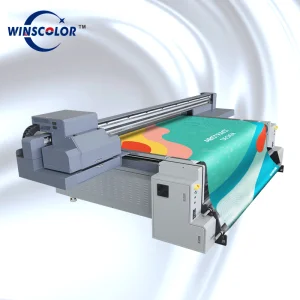
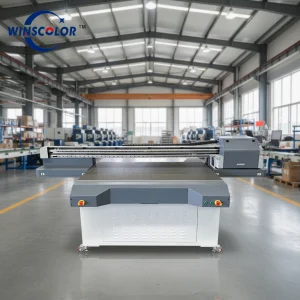
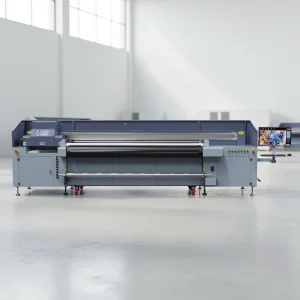
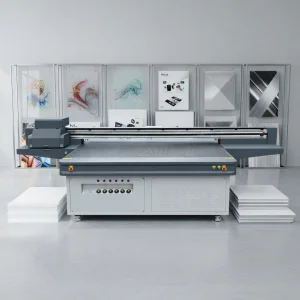
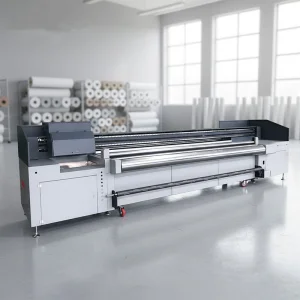
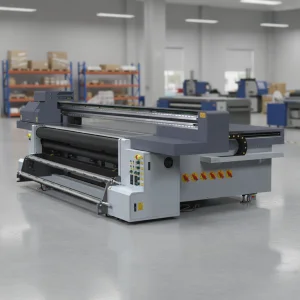
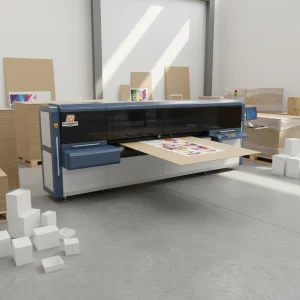
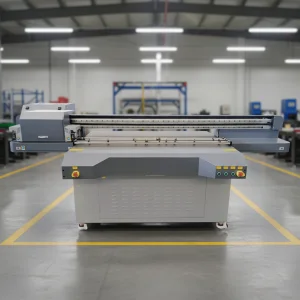
Enterprise-grade digital inkjet hardware configured for dense vitrified bodies, composite sheets, and heavy-duty industrial architectural workflows.
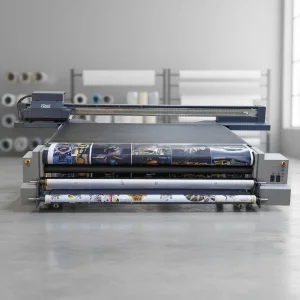
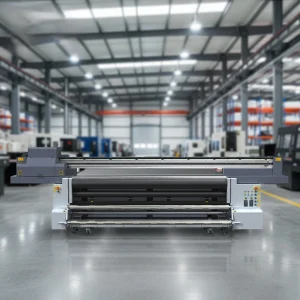
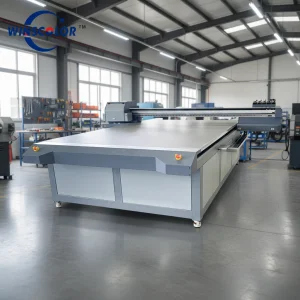
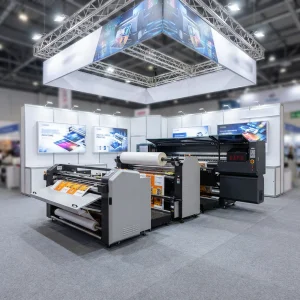
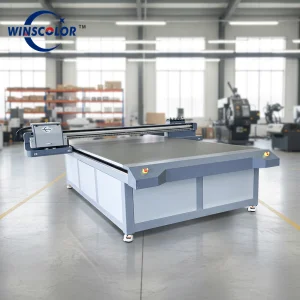
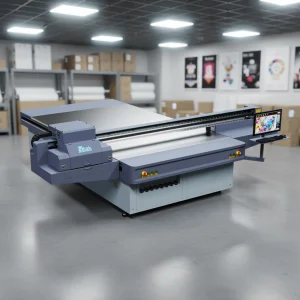
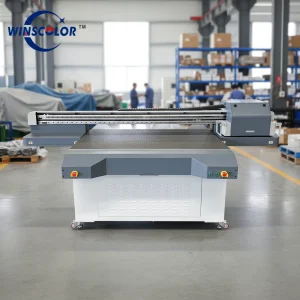
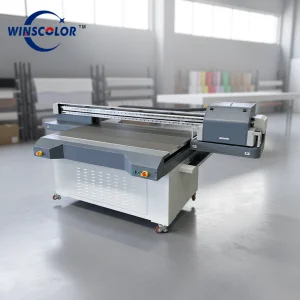
Strategic shifting from rotary screen printing to agile, non-contact drop-on-demand digital inkjet fabrication in luxury interior cladding and large-format porcelain slabs.
The worldwide building materials sector is undergoing an unprecedented structural metamorphosis. Driven by consumer demand for ultra-large format sintered stone slabs (Lapitec, Neolith, Dekton styles), hyper-realistic continuous Italian marble veining, and bespoke geometric tactile wall finishes, traditional production modalities are struggling. Conventional roller-screen printing and analog rotogravure presses demand prohibitive capital costs for physical screen cylinders, extensive setup times, and massive baseline batch volumes that make personalized architectural fulfillment financially unviable.
As a seasoned OEM UV ceramic printer manufacturer, Winscolor (Jinan Yingcai Digital Technology Co., Ltd) engineers industrial digital inkjet systems that solve this friction point completely. Operating across an independent 20,000-square-meter precision assembly facility with 6 automated production lines, our platforms bypass physical contact entirely. Utilizing piezoelectric drop-on-demand (DOD) jetting from Ricoh Gen6 and industrial Kyocera printheads, our systems deposit nano-scale UV ink formulations directly onto glazed porcelain tiles, unpolished terracotta, sintered stone, and polished vitrified ceramic slabs with zero plate making and zero material make-ready waste.
Direct printing across oversized 2000 × 3000 mm and 3300 × 2100 mm tables. High-strength steel frames withstand up to 450 kg distributed slabs without table deformation or optical micro-banding.
Rapid run-of-one production replaces static analog screens. Architectural designers can iterate variable patterns, book-matched marble textures, and multi-panel mural designs directly from high-resolution TIFF or PDF assets.
Controlled multi-layer spot varnish deposition creates synchronised haptic relief. Simulate natural cleft slate, split-faced limestone, and crystalline quartzite veins with precise height variations up to 1.5 mm.
Quantifying the migration from traditional firing glaze printing to cold UV LED digital inkjet systems across Europe, the Americas, and the Asia-Pacific region.
The international tile and sanitaryware market exceeds 16 billion square meters annually. While high-temperature ceramic pigment firing (900°C–1200°C roller hearth kilns) continues to handle mass commodity tiling, the highest profit margins have migrated into post-calcination customization, decorative feature walls, commercial elevator surrounds, kitchen splashbacks, and hospitality cladding. In these premium segments, UV LED flatbed printing is rapidly replacing kiln firing due to drastic reductions in natural gas consumption, electrical overhead, and thermal scrap rates.
| Geographic Region | Primary Industrial Application | Dominant Production Format | Regulatory Drivers | OEM Adoption Status |
|---|---|---|---|---|
| Western & Southern Europe (Italy, Spain, Germany) |
Ultra-thin porcelain wall cladding, luxury boutique ceramic tiles, museum displays | YC2513L / YC2030H Flatbeds with Ricoh Gen6 variable greyscale (5–15 pl) | Strict EU ETS emissions caps, RoHS III compliance, REACH chemical registration | Mature Integration |
| North America (USA, Canada, Mexico) |
Residential backsplash customization, exterior stone signboards, ADA tactile ceramic tiles | YC2513R Hybrid & YC2030L Heavy-duty vacuum tables | OSHA workplace airborne VOC limits, UL safety certification, EPA zero-discharge | Rapidly Expanding |
| Middle East & GCC (UAE, Saudi Arabia, Qatar) |
Palace decorative murals, gold-leaf simulated relief, heat-resistant outdoor facade panels | YC3321L Super-Wide Format (3.3 × 2.1 m) with Dual UV-LED lamps | SASO quality standards, high UV durability against intense solar degradation | High Growth Tier |
| Asia-Pacific & ASEAN (China, Vietnam, India, Indonesia) |
High-throughput tile decoration, export packaging, floor inserts, ceramic giftware | YC1610H Rotary units & Single-pass automated production lines | Green factory subsidies, transition away from coal-fired analog kiln facilities | Volume Leader |
Industrial tile converters running Winscolor OEM printing equipment report an average payback period of 7.2 to 11.4 months. This rapid amortization is propelled by the ability to offer short-run custom batches at a 300% to 500% premium per square meter compared to generic commodity floor tiles, with zero pre-press tooling charges.
A deep engineering perspective into the structural gantry, vacuum chambers, and fluidics delivering micrometer-level drop placement on ultra-hard mineral surfaces.
Constructed with tempered, annealed high-tensile steel beams and dual THK dual-mute linear guide rails. Guarantees zero mechanical deflection across spans up to 3300 mm.
Independently addressable vacuum segments clamp heavy ceramic pieces flat. Eliminates substrate chatter, curling, and edge strike hazards during high-speed carriage sweeps.
High-precision digital negative pressure sub-ink tank system stabilizes the meniscus across all jetting nozzles, preventing ink drool or starvation under continuous multi-shift production.
Dual directional variable-intensity UV LED arrays provide instantaneous photo-polymerization without radiating thermal stress to sensitive glazed coatings or composite backings.
In the domain of dense mineral ceramic printing, selecting the ideal micro-piezo drop generator determines both operational longevity and micro-detail clarity. Winscolor supplies our OEM partners with factory-calibrated carriage blocks supporting:
Resolving the non-porous vitreous challenge: How tailored silane primers, white sandwich modes, and top-coat varnishes ensure permanent mechanical adhesion.
A primary failure point in non-industrial UV printing on ceramics is film delamination. Glazed porcelain and polished vitrified ceramic slabs exhibit ultra-high surface energy and zero pore absorbency (water absorption rate < 0.1%). Without scientific surface modification, UV-curable monomers cannot form mechanical interlocks with the substrate. Winscolor equips industrial clients with our comprehensive 3-Stage Ceramic Adhesion Protocol:
Our organo-functional silane coupling agents wipe or auto-spray onto the tile surface, bonding covalently with silica groups in the ceramic glaze while presenting active methacrylate groups to the oncoming UV ink droplet.
High-density Titanium Dioxide (TiO₂) white ink lays down a solid 100% reflective layer. Eliminates dark terracotta or tinted ceramic undertones, ensuring accurate delta-E color consistency across varying batch clays.
Deposited either as a full flood coat or selective spot texture. Cross-linked oligomers deliver 5H pencil hardness, 100% boiling water immersion resistance, and high-traffic abrasion durability (ISO 10545-7 PEI Grade IV compliant).
How Winscolor safeguards your production continuity through stringent factory testing protocols, regulatory conformance, and global field engineering.
Every Winscolor OEM unit ships certified under CE Machinery Directive 2006/42/EC, Low Voltage Directive 2014/35/EU, and EMC Directive 2014/30/EU. All electrical assemblies utilize UL-listed Schneider and Omron components.
Prior to crating, every machine runs a relentless 72-hour mechanical dry-run and 12-hour continuous full-coverage ceramic print testing to verify gantry alignment, droplet circularity, and ink thermoregulation.
Equipped with smart industrial IoT edge routers for remote factory firmware diagnostics, predictive printhead maintenance alerts, and localized spare part depot hubs across 100+ countries.
Winscolor's environmental compliance is unmatched in the OEM realm. Our curated UV ink systems comply strictly with REACH (EC 1907/2006) regarding Substances of Very High Concern (SVHC) and contain zero halogenated hydrocarbons or volatile organic solvents. In cured state, our prints produce zero outgassing, ensuring interior tiles achieve French VOC A+ and US Greenguard Gold criteria for educational and healthcare environments.
Anticipating the technological convergence of artificial intelligence, high-frequency inline single-pass arrays, and hybrid inorganic nanoparticle jetting.
Deploying multi-camera structured-light sensors to build real-time 3D topographic point clouds of ceramic slabs as they hit the vacuum bed. The print engine dynamically adjusts per-nozzle firing timing and carriage Z-height on the fly, eliminating focal blurring across warped or naturally convex rustic terracotta tiles.
Transitioning from reciprocating scanning flatbeds to fixed stationary-gantry inline single-pass architectures running at 50 to 80 meters per minute. Designed to mount directly over continuous roller conveyor lines directly downstream of polishing and squaring lines.
R&D breakthroughs in jetting true inorganic metal-oxide nanoparticles in low-viscosity UV-carrier liquids. After initial LED pinning for tactile definition, the tile can be re-fired into a kiln to fuse the pattern permanently into the vitreous silicate layer, combining cold digital flexibility with molten glass permanence.
Essential operational, chemical, and mechanical insights addressing real production questions encountered on the factory floor.
Explore our complete engineering lineup spanning hybrid roll-to-roll units, mid-format rotary setups, and ultra-wide production printers.