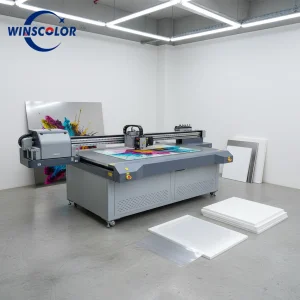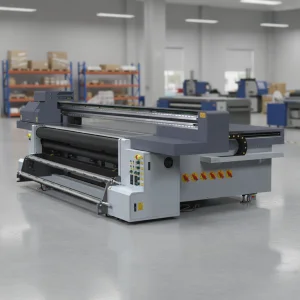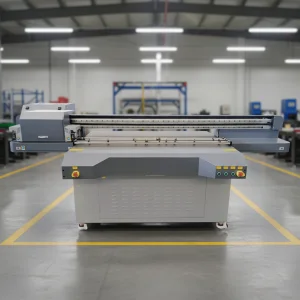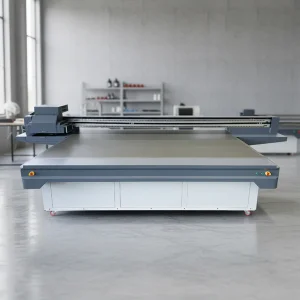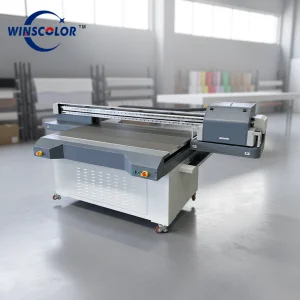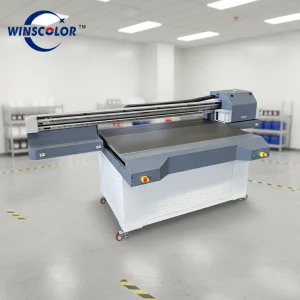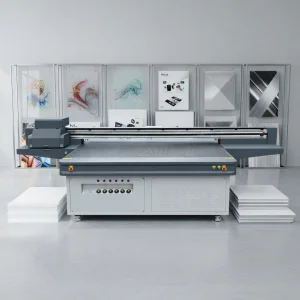
Direct-to-substrate digital UV systems engineered specifically for optical-grade PMMA acrylic, micro-relief texturing, and multi-layer ink adhesion.
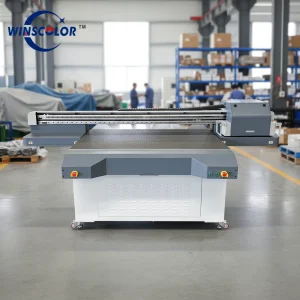
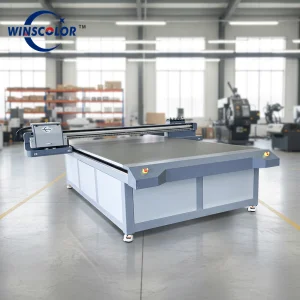
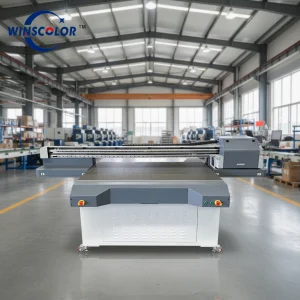
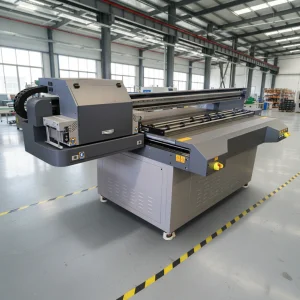
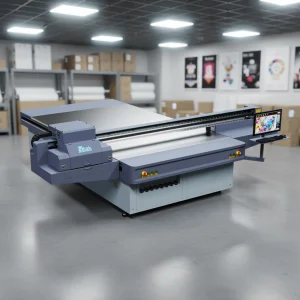
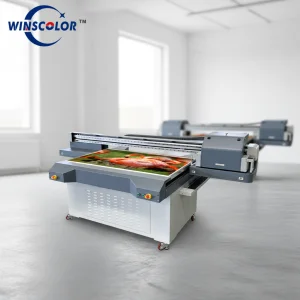
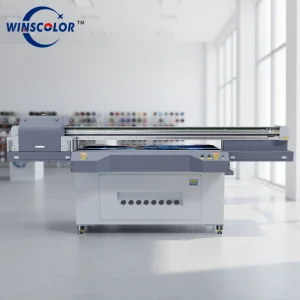
Analyzing the engineering evolution from traditional screen printing to automated digital inkjet technology across global supply chains.
Traditional silkscreen workflows demand significant capital overhead for stencil preparation, screen exposure, and chemical washout. Digital LED UV flatbed printers eradicate screen-making costs entirely, making single-unit bespoke prototypes as cost-effective as 10,000-unit continuous manufacturing runs.
Acrylic substrates demand meticulous thermal regulation to avoid warped polymers. Our integrated UV-LED arrays operate at cool wavelength bands (395nm), allowing sandwich mode (White + Color + Varnish) in a synchronized single-pass gantry stroke, reducing surface energy friction.
Industrial Ricoh Gen6 drop-on-demand piezo printheads utilize variable droplet scales from 5pl to 15pl. This multi-level greyscale spitting ensures that fine architectural rendering, backlit cosmetics vitrines, and museum displays exhibit seamless gradations without banding or chromatic aberration.
| Evaluation Parameter | Legacy Screen Printing | Winscolor Digital Acrylic Systems | Manufacturing Impact |
|---|---|---|---|
| Pre-Press Setup Cycle | 4 - 8 Hours (Film/Exposure) | Instant RIP Configuration (< 3 min) | 95% Reduction in Time-to-Market |
| Ink Polymerization Rate | Thermal Oven (20 - 45 min) | Instant Cold LED UV Photopolymerization | Immediate downstream cutting/routing |
| Volatile Organic Compounds (VOC) | High Solvent Evaporation | Zero-VOC UV Curable Eco-Inks | Strict EU RoHS / REACH Compliance |
| Textural Haptic Finishes | Secondary Mechanical Coating | Multi-Layered Inline Spot Varnish Embossing | Up to 1.5mm Braille / 3D Relief Textures |
Empowering Tier-1 converters and international brand networks across North America, Europe, East Asia, and the Middle East with proven factory direct reliability.
Global cosmetic and electronics retail installations increasingly demand transparent acrylic merchandising stands with high-adhesion opaque white backing layers.
Architectural design houses utilize our wide-format systems (2000x3000mm and 3300x2100mm) to produce decorative PMMA partitions, backlit ceiling baffles, and privacy louvers.
Instrumentation overlays, automotive instrument clusters, and medical display covers rely on our micronic droplet placement to preserve electrical insulation and scratch endurance.
Municipal public facilities and medical campuses utilize high-density varnish jetting for tactile accessibility compliance, including Braille dot matrixes without chemical milling.
Engineering reliability backed by global safety certifications, localized dispatch centers, and end-to-end hardware validation.
Every flatbed and hybrid unit undergoes rigorous chassis stress tests, harmonic laser vibration scans, and electrical EMC shielding analysis. Our assemblies comply strictly with European Machinery Directives 2006/42/EC and low-voltage standards.
We provide comprehensive on-site installation, ICC color profiling, operator training, and workflow calibration across North America, the EU, Southeast Asia, and Latin America via direct factory engineers and licensed regional technical agents.
To eliminate operational downtime, our modular inventory system provides express dispatch for vital consumables and mechanical parts—including negative pressure sub-tanks, Panasonic servo drives, and HIWIN silent dual-linear guide rails.
Precision multi-layer chemistry for diverse rigid and flexible media matrices.
Precision surface energy matching prevents flaking. Reverse-printing on crystal cast acrylic yields depth effects for luxury cosmetics showcases and gallery displays.
Specially engineered primer chemistries bridge organic UV inks with inorganic silicates, providing water-resistant bonding for shower panels and decorative tiles.
Static elimination bars and anti-crash carriage sensors enable high-speed runs on brushed metal surfaces, industrial serial plates, and architectural cladding.
Dynamic gap sensing adjusts for up to 100mm substrate thickness, rendering vivid designs over natural grain while leaving organic tactile reliefs intact.
Our Jinan R&D Center roadmap for intelligent, connected, and sustainable production lines.
Integrating high-speed line-scan CCD optical cameras directly on the carriage to automatically detect, align, and offset irregularly placed acrylic components down to ±0.02mm accuracy.
Partnering with premium industrial ink formulators to synthesize plant-derived monomer UV inks, lowering carbon footprints while improving elongation rates on flexible acrylic grades.
Enabling automated remote diagnostics, predictive maintenance on vacuum pump pressures, ink consumption telemetry, and end-to-end ERP integration via secure OPC-UA protocols.
Clear answers to critical technical, production, and logistical questions from our industrial printing engineers.
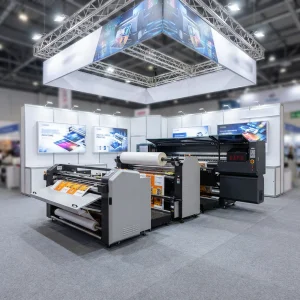
Explore our full line of industrial UV flatbed, hybrid conveyor, and roll-to-roll printers engineered for heavy substrates and diverse manufacturing applications.