Explore heavy-duty UV flatbed, hybrid roll-to-roll, and digital single-pass printing machinery configured with piezoelectric printheads, cold LED curing arrays, and intelligent micro-tensioning feed mechanisms.




A comprehensive examination of how UV-LED curing technology has disrupted traditional aqueous giclée and solvent printing across commercial decor, hospitality interiors, and fine art reproduction.
For decades, art reproduction relied on water-based aqueous inkjet printers. While offering acceptable color gamuts, aqueous systems require expensive pre-coated canvas substrates, dry exceedingly slowly, and are prone to water damage without separate post-lamination. Modern UV-LED curing instantly polymerizes photo-initiators, fixing high-density pigments atop raw, uncoated, or semi-coated cotton canvas without dot bleeding.
The global personalized wall art and commercial canvas decor sector has expanded at a compound annual growth rate exceeding 8.4%. High-tier hotels, commercial retail chains, corporate headquarters, and residential staging agencies demand short lead times and zero minimum order quantities. NTEK industrial UV canvas printers bridge this requirement, moving from CAD raster files to fully cured, ready-to-stretch canvas panels in minutes.
Solvent and eco-solvent printing technologies emit hazardous volatile organic compounds (VOCs), making them unsuitable for indoor architectural spaces like healthcare facilities, luxury hotels, and children's nurseries. NTEK UV canvas printing utilizes low-odor, Greenguard-certified UV curable inks. The cross-linked polymer matrix delivers superior scratch resistance, UV fade stability over 10+ years indoors, and moisture impermeability.
Headquartered in Jinan, Shandong, NTEK (Jinan Yingcai Digital Technology Co., Ltd) operates an end-to-end heavy industrial printer fabrication facility combining structural steel tempering, CNC gantry milling, and optical alignment.
Unlike light sheet-metal desktop units, NTEK frames undergo dual-frequency thermal tempering and five-sided gantry milling. This eliminates internal mechanical stresses, guaranteeing that the 2.5m, 3.2m, or 3.3m printing platform remains true within ±0.02mm over a decade of continuous multi-shift production.
CNC Annealed SteelTo eliminate stepping micro-banding across expansive textured canvas rolls, NTEK employs Japanese Panasonic/Yaskawa AC servo systems coupled with dual THK silent dual-rail linear guides. The digital encoder feedback maintains nanosecond-level synchronization between the carriage sweep and substrate feed.
Dual THK Linear GuidesIndustrial canvas textures release airborne micro-lint and fiber dust. NTEK's independently developed dual negative-pressure ink delivery system maintains pristine ink meniscus pressure at the nozzle plate, preventing ink starvation, drop deflection, and nozzle dropouts during high-speed runs.
Independent White & Color LoopsBy clustering critical core sub-assemblies—aluminum vacuum honeycomb beds, industrial chiller units, UV-LED cure arrays, and modular electronic mainboards—within the Shandong industrial cluster, NTEK provides overseas partners with exceptional ROI, lower spare parts cost, and direct OEM customization.
Direct Exporter ValueTextured fabrics and canvas weaves present unique surface tension, ink absorption, and mechanical stretch dynamics. NTEK UV engines adapt dynamically to diverse organic and synthetic media.
Pure cotton features natural seed specks, heavy tooth texture, and variable moisture equilibrium. NTEK's variable drop size control (from 5pl micro-drops for skin tones to 15pl macro-drops for shadow saturation) prevents ink strike-through while preserving the authentic tactile feel of raw woven cotton for classical museum giclée reproductions.
Fine Art Reproductions Zero Strike-ThroughPoly-cotton combines the organic texture of cotton with the dimensional stability and tear resistance of synthetic polyester. Widely utilized in high-volume framing operations, NTEK's flexible UV ink formulation ensures that when canvas wraps around sharp 90-degree stretcher bars, the cured ink layer flexes without white cracking or micro-fissuring.
Gallery Wrap Framing Anti-Crack Elastic InkIn high-end architectural renovations, single-piece continuous mural canvases up to 3.2 meters wide replace tiled wallpaper seams. NTEK's YC3200HR hybrid system handles 50kg roll feeds with constant tension torque control, delivering flawless vertical alignment across tens of running meters for hotel corridors, boardrooms, and luxury residences.
Seamless Architectural Murals Continuous Roll TransportRetail flagships and airport duty-free corridors increasingly replace plastic film lightboxes with soft textured fabric and canvas face sheets. Utilizing multi-layer white-plus-color printing routines (Color + White + Color), NTEK UV systems maintain radiant contrast and saturation whether the illumination is active or turned off.
Day/Night Dual Viewing High Optical Density WhiteCorporate conference rooms, recording studios, and upscale restaurants require sound-absorbing acoustic cotton wrapped panels. Direct printing with standard ink often seals fabric acoustic pores, diminishing NRC ratings. NTEK's drop-on-demand piezo micro-dot firing maintains breathable open pore structures across sound-absorptive canvas weave.
Acoustic Breathability Sound Studio InstallationBy superimposing multiple micro-registered passes of high-viscosity UV white ink prior to applying the process CMYK and clear gloss varnish, NTEK printers replicate authentic oil painting impasto relief. Art collectors and galleries can run their fingers across raised brushwork that duplicates the masterwork's actual topographic depth.
3D Oil Impasto Emulation Haptic Texture SynthesisCompare NTEK's flagship flatbed, hybrid roll-to-roll, and dedicated super-wide production lines configured for high-demand digital print facilities.
| Model Series | Platform Type | Effective Canvas Width | Printhead Array | Max Resolution | Throughput (Production Mode) | Key Strengths on Canvas |
|---|---|---|---|---|---|---|
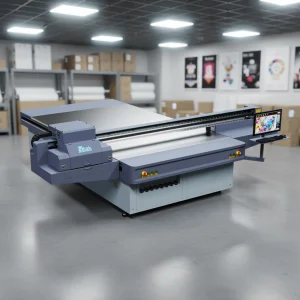
| NTEK YC2513L | Precision Flatbed | 2500 × 1300 mm | Ricoh Gen6 / Gen5 (2–8 Heads) | 1200 × 1200 dpi | Up to 42 m²/hr | Stretched canvas board, rigid acoustic canvas panels, high-relief 3D oil impasto build-up. |
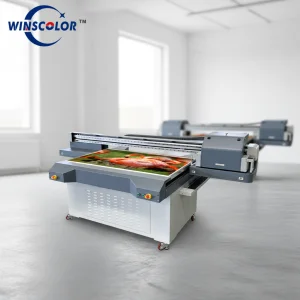
| NTEK YC2513R | Flatbed + Roll Dual | 2500 mm / Infinite Roll | Ricoh Gen6 (CMYK+W+V) | 1200 × 900 dpi | Up to 38 m²/hr | True versatile powerhouse: instant switch between rolled cotton canvas and framed wooden panels. |
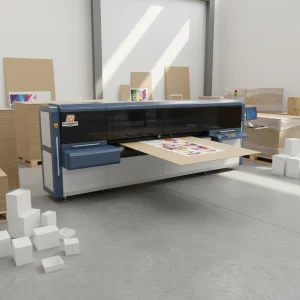
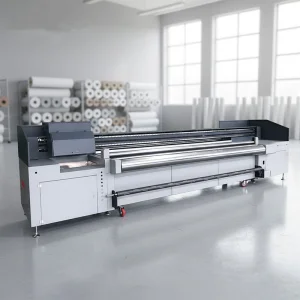
| NTEK YC3200HR | Heavy Hybrid Roller | 3200 mm Continuous | Ricoh Gen6 / Kyocera Industrial | 1800 × 1200 dpi | Up to 65 m²/hr | Heavy-duty 50kg roll feeder, seamless continuous hotel murals, high-speed giclée manufacturing. |
| NTEK YC2030H | Oversize Flatbed | 2000 × 3000 mm | Ricoh Gen6 (Staggered Layout) | 1200 × 1200 dpi | Up to 48 m²/hr | Large multi-panel art sets (triptychs/diptychs) printed in a single zero-registration setup. |
| NTEK YC6090 | Compact Studio Flatbed | 600 × 900 mm | Epson i3200-U1 / Ricoh GH2220 | 2400 × 1200 dpi | Up to 12 m²/hr | Boutique art studios, limited-edition numbered gallery miniatures, luxury merchandise canvas boxes. |
Enterprise procurement managers, regional distributors, and art publishing houses require rigorous validation before deployment. NTEK enforces strict factory acceptance testing.
Prospective buyers may send their domestic canvas rolls (cotton, linen, polyester) to our Jinan application lab. Our color engineers generate bespoke ICC profiles utilizing X-Rite spectrophotometers to achieve absolute Delta E < 1.5 color matching.
Prior to crating, every NTEK UV canvas printer undergoes a non-stop 72-hour mechanical dry-run and high-density ink firing sequence. Servo temperature curves, UV-LED lumen output stability, and negative pressure levels are logged via digital telemetry.
Printed canvas samples undergo 180-degree repeated folding and mechanical corner tension tests across 2-inch wood stretcher frames to guarantee zero delamination, chalking, or flaking of the cured polymer ink skin.
Export equipment is treated with anti-corrosion VCI coatings, vacuum-foil sealed to prevent salt-fog moisture degradation during container transit, and secured within heavy reinforced solid-timber export crates certified to ISPM-15 standards.
From AI-driven algorithmic surface reconstruction to next-generation bio-based photo-curable oligomers, explore the technological evolution driving the next decade of digital canvas reproduction.
Advanced optical scanner files can now be decoded by RIP software equipped with AI depth mapping. Instead of manual height-map creation in graphic design suites, intelligent algorithms compute the precise micro-layering of white ink required to recreate Vincent van Gogh or Claude Monet impasto elevations autonomously, saving hours of prepress work.
Automated Depth Mapping Prepress AutomationOrganic flax, thin silk canvas, and delicate heat-sensitive synthetic media are vulnerable to thermal shrinkage and edge curling under intense heat. NTEK's next-gen narrow-band 395nm water-cooled LED arrays focus optical radiation directly on photo-initiators while keeping surface substrate temperatures below 32°C.
Sub-32°C Substrate Bed Zero Edge CurlingBy recirculating pigmented white ink directly through the nozzle chamber at 15ml/min, settlement of dense titanium dioxide particles is fundamentally eliminated. This technological leap enables continuous unattended night shifts on 100-meter canvas master rolls without purge interruptions or nozzle dropouts.
Zero Pigment Settlement Unattended Overnight ShiftsDirect technical answers from NTEK's chief application engineers and export directors regarding canvas media processing, ink adhesion, and workflow integration.
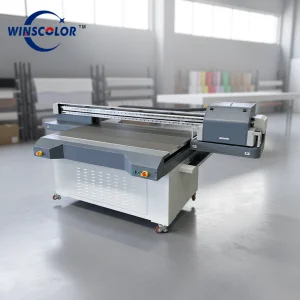
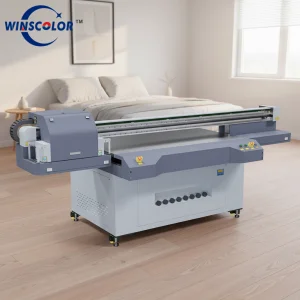
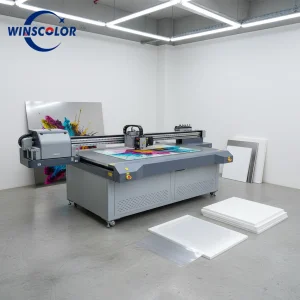
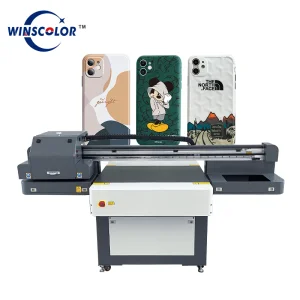
Discover our extended portfolio of multi-functional roll-to-roll, hybrid continuous transport, and versatile flatbed units engineered for diverse high-volume print applications.



Send our Jinan engineering center your specific canvas substrate samples (cotton duck, linen, poly-cotton, or seamless wall fabric). We will calibrate custom color profiles, execute high-relief impasto test prints, and return video inspection telemetry within 48 hours.
