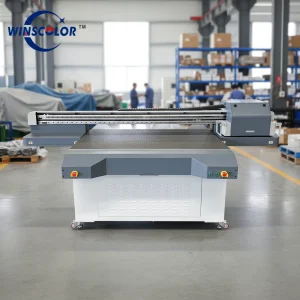
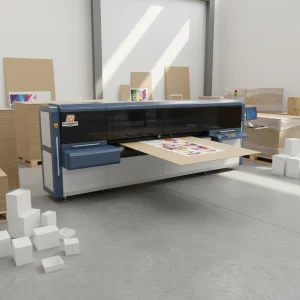
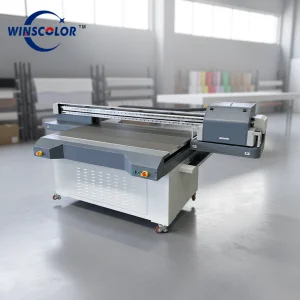
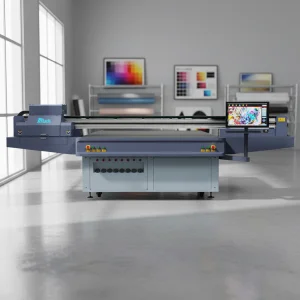
Engineered for high-duty cycles, heavy media loads, and continuous multi-pass industrial execution across diverse industrial substrates.

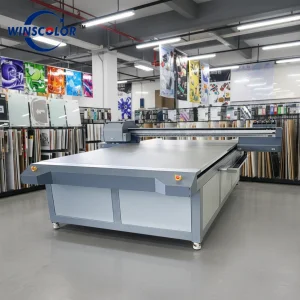

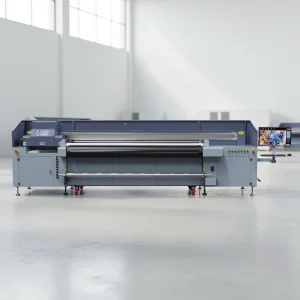
The global transition from volatile solvent and low-efficiency eco-solvent printing toward digital ultraviolet photopolymerization is redefining visual communication, technical textiles, architectural skins, and functional vehicle wraps.
Strict EPA and EU REACH volatile organic compound (VOC) limitations are phasing out traditional solvent evaporation systems. NTEK UV-LED architectures cure instantly via photoinitiators, releasing zero harmful air pollutants and eliminating heat drying tunnels.
Traditional metal-halide arc lamps warp thin polyolefin films, ultra-thin vinyl, and non-woven fabrics. Our low-temperature UV-LED pinning allows uninterrupted tension control across heat-sensitive substrates down to 40 microns.
Eliminating multi-day gas-out periods fundamentally accelerates supply chains. Finished prints exit the carriage chemically inert, abrasion-resistant, and ready for immediate CNC routing, automated slitting, or exterior installation.
Industrial uptime hinges on sub-micron chassis alignment, active meniscus pressure management, and uniform variable drop-on-demand piezo ejection.
Equipped with isolated piezo actuators delivering droplet volumes from 5pl to 15pl. Operating at trigger frequencies up to 50kHz, the printhead achieves ultra-crisp typographic resolution, photorealistic tone curves, and smooth tonal gradients.
Microprocessor-controlled dual negative pressure loops isolate color and white ink streams. Prevents nozzle droop during ultra-high velocity carriage reversals and halts white titanium-dioxide pigment sedimentation via auto-recirculation.
Torque-sensing feed and take-up air shafts ensure constant media flat-plane stability. Eliminates step banding, media skew, and cockling across flexible banners, backlit fabrics, soft leather, and synthetic polymer rolls up to 3.2m.
| Architecture Feature | Legacy Solvent Systems | Standard Commercial UV | NTEK Industrial UV Series |
|---|---|---|---|
| Curing Technology | Thermal Heat Evaporation (High kWh) | Mercury Vapor UV (High Thermal Output) | Dual Water-Cooled Cold UV-LED Arrays |
| Printhead Platform | Consumer-grade DX5 / XP600 | Generic Piezo Heads | Ricoh Gen6 (MH5320) Industrial Stainless Steel |
| Linear Drive Mechanism | Basic Stepper Motor with Rubber Belt | Standard AC Servo / Timing Belt | Dual THK Silent Rails + Magnetic Linear Drive |
| VOC Emissions | High (Requires Active Carbon Exhaust) | Moderate (Ozone Generation Risks) | Zero Detectable Ozone / Zero VOC Compliance |
| Ink Curing Chemistry | Penetrating Solvent / Eco-Solvent | Generic UV Radical Formulations | High-Elasticity UV-LED Flexible / Rigid Ink Sets |
Turnkey industrial production methods tuned to specific commercial segments, material challenges, and functional output requirements worldwide.
Seamless 3.2m flex banners, building wraps, and front-lit mesh displays. High-pigment density withstands severe UV radiation, weather exposure, wind shearing, and thermal variations without delaminating.
High-end retail displays require day/night color consistency. Multi-layer inline printing (Color + White + Color) ensures dynamic backlit vibrancy on stretch textiles, acrylic sheets, and PET translucent film.
Direct printing on textured PVC wallpaper, synthetic wallcoverings, and canvas murals. Zero-odor formulations provide instant compliance for hotels, medical centers, and residential installations.
Formulated with high-elasticity UV inks capable of 200% elongation. Films conform seamlessly to compound automotive rivets, recessed curves, and corrugated truck sidewalls without micro-cracking.
Continuous investment in edge automation, inline spectrophotometric self-calibration, and green UV polymer chemistry.
Integrated micro-cameras detect missing nozzles on the fly. Automated auto-masking compensates across surrounding channels to guarantee uninterrupted production runs without operator intervention.
Variable-spectrum LED systems alter nanometer wavelengths according to jetting speed and ink density. Optimizes energy expenditure while achieving pinpoint polymerization on thermal substrates.
Advancing eco-friendly, plant-derived monomer formulations with ultra-low viscosity. Delivers robust substrate adhesion alongside closed-loop circular recyclability for synthetic media.
Eliminate production bottlenecks by unifying software, hardware, and chemistry into a high-output manufacturing ecosystem.
Fully compatible with industry-standard raster image processors (Caldera, Onyx, ColorGATE). Automated job nesting, hot folder synchronization, and real-time ink volume estimation trim prepress costs.
Dual active ion-bar arrays neutralize electrostatic charges across non-conductive plastics, textiles, and acrylic sheets. Prevents stray ink misting and ensures pinpoint droplet placement.
Sensors track motor thermal thresholds, carriage vibration signatures, ink temperatures, and UV lamp degradation. Predictive diagnostics alert operators prior to mechanical wear to avert unexpected downtime.
In-depth engineering answers addressing system architecture, substrate capability, and daily maintenance workflows.
A dedicated roll-to-roll printer utilizes integrated air shafts, dancer rollers, and tension bars configured exclusively for continuous flexible rolls. A hybrid printer incorporates an industrial vacuum conveyor table alongside detachable alignment extension tables, enabling a single platform to print both rigid sheets (acrylic, Dibond, PVC) and flexible media via dual-mode transport.
Titanium dioxide (TiO2) particles in white inks settle naturally over time. NTEK addresses this via an automated continuous secondary tank stirring mechanism, high-frequency inline peristaltic fluid recirculation, and scheduled auto-purging cycles that keep white pigments permanently suspended without manual intervention.
The Ricoh Gen6 (MH5320) platform features isolated ink pathways, reduced minimal drop sizes down to 5 picoliters, and higher firing frequencies up to 50 kHz. This yields tighter dot placement accuracy, speeds up square-meter output per hour, and improves physical wear resistance against aggressive industrial chemistries.
Yes. Our industrial-grade flexible UV formulations deliver elongation ratios exceeding 200%. Once cured, the polymer lattice flexes smoothly around complex curves, compound angles, and automotive seams without chalking, micro-fissuring, or edge-lifting.
Sites require an isolated ground-line power connection (220V/380V depending on model), stable ambient temperatures between 20°C and 28°C, relative non-condensing humidity between 40% and 60%, and an oil-free dry compressed air line supply (0.6 to 0.8 MPa) to drive the vacuum valves and pneumatic tension arms.
LED-UV systems emit a narrow, targeted spectrum (typically 395nm) without high infrared heat, avoiding substrate warping. They draw approximately 70% less power, turn on and off instantly without warm-up delays, generate zero harmful ozone, and last beyond 20,000 to 50,000 operational hours.
Explore heavy-duty configurations for single-pass corrugated packaging, thick architectural glass, fine woods, and industrial sheet fabrication.