
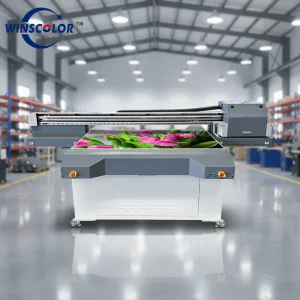
Precision-engineered digital UV LED flatbeds, dedicated cylindrical systems, and heavy-duty hybrid configurations designed for 24/7 industrial duty cycles.
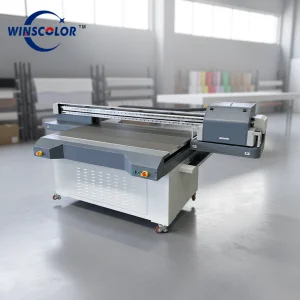
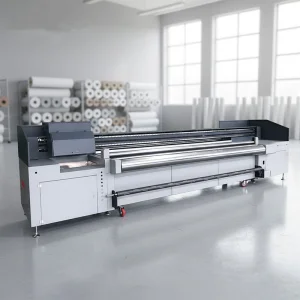
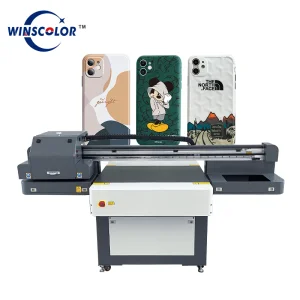
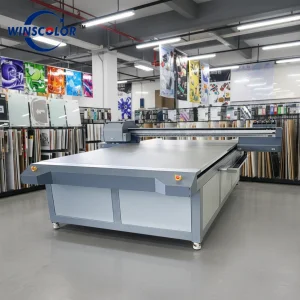
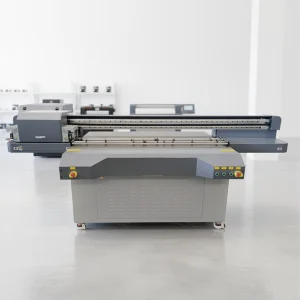
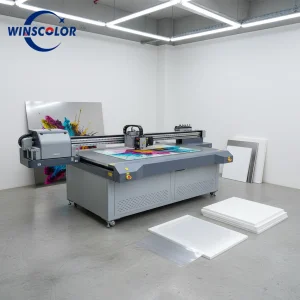
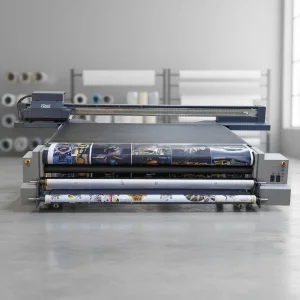
Evaluating the seismic shift from conventional screen and flexographic systems to on-demand UV LED inkjet engineering across high-yield manufacturing supply chains.
Traditional screen printing requires photochemical stencil etching, film separation, and lengthy mechanical color alignment. NTEK industrial flatbeds utilize direct raster image processor (RIP) pipelines, allowing production-ready output from digital CAD/vector assets in seconds, slashing inventory overhead.
Variable drop-on-demand (DoD) piezo technology places pico-liter droplets with sub-millimeter precision, consuming ink strictly where visual data exists. Compared with flood-coating screen chemistry, fluid consumption drops up to 65% per square meter, drastically curtailing unit manufacturing costs.
Global environmental mandates—including REACH (EC 1907/2006), RoHS 3, and California Proposition 65—demand the phase-out of volatile organic compounds (VOCs). NTEK UV LED polymerizing inks are 100% solid systems containing zero aromatic hydrocarbons and releasing zero ozone during exposure.
An engineering breakdown of how NTEK builds heavy-duty chassis, multi-zone vacuum dynamics, linear motor drives, and advanced piezo printhead arrays for extreme tolerances.
| Subsystem | Technical Specification & Componentry | Operational Function | Manufacturing Advantage |
|---|---|---|---|
| Piezo Printhead Core | Industrial Ricoh Gen6 (MH5320) / Gen5 / Epson i3200-U1 | Variable grayscale drop ejection from 5 to 15 pl at up to 50 kHz firing frequencies | Extended physical nozzle lifespan exceeding 3–5 years under rigorous preventative maintenance schedules |
| Gantry Beam & Guide | Milled aircraft-grade alloy beam with dual THK / Hiwin silent linear rails | Translates carriage assembly with zero vibration at velocities up to 1.5 m/s | Completely eliminates mechanical banding and satellite deflection across 3200 mm widths |
| Ink Circulation Circuit | Dual independent negative pressure loops with constant heated sub-tanks | Maintains micro-meniscus stability at nozzle plates; prevents white pigment sedimentation | Instantaneous startup without manual syringe purging; eliminates nozzle clogging during production halts |
| Substrate Vacuum Bed | Sectionalized 4 to 8-zone high-flow aluminum honeycomb with reverse air flotation | Secures uneven, warped, or heavy substrates (up to 100 kg/m²) perfectly planar | Prevents head collisions while allowing effortless repositioning of dense 12mm glass and granite slabs |
| Curing Optics | Dual air-cooled or water-chilled UV-LED arrays (395 nm peak wavelength, 14–18 W/cm²) | Initiates radical polymerization of acrylic monomers instantaneously post-droplet landing | Negligible thermal radiation to the substrate bed; eliminates thermal distortion of thin PVC and styrenic films |
Forward engineering trajectory mapping our integration of artificial intelligence, high-density drop deposition, and closed-loop edge computing.
Multi-camera edge tracking systems identifying irregular, pre-cut CNC contours and compensating trajectory angles in under 400 milliseconds.
FPGA-driven voltage pulse shaping adjusting firing waveforms in real-time according to ambient ink viscosity and temperature fluctuations.
Transitioning from petroleum-derived acrylates to 40%+ bio-renewable monomer resins, providing high elongation without sacrificing substrate scratch resistance.
Standardized enterprise MES integration tracking real-time ml/m² consumption, printhead piezoelectric resonance drift, and proactive maintenance cycles.
From micro-electronics housings to structural architectural glass, discover how NTEK platform configurations address rigorous chemical and mechanical surface demands.
Direct printing on non-porous silica glass demands specialized adhesion chemistry. NTEK utilizes nano-silane primers combined with high-density titanium dioxide white underbase to resist humidity, steam, and mechanical delamination.
Replacing traditional litho-lamination in short-to-medium carton production. Single-pass or multi-pass digital inkjet printing eliminates plates and allows customized QR codes, regional SKU barcoding, and variable graphics.
Backlit thermoformed displays require stretchable inks that withstand 200%+ draw elongation during deep-draw mold vacuums without micro-cracking or visual color washouts.
Aluminum anodized fascia plates, instrument panels, and control switchboards demand solvent, alcohol, and abrasion resistance matching military and industrial testing standards.
Operating from our modern 20,000 m² high-precision production hub in Jinan, China, NTEK merges vertically integrated machining with rigorous European-grade validation.
Every industrial gantry beam undergoes high-temperature thermal furnace annealing for 72 continuous hours to relieve internal metallurgical stress before precision 5-axis CNC portal milling, ensuring zero deformation over decades of high-speed translation.
By clustering critical component manufacturing—including vacuum pump systems, servo driver boards, ink degassing units, and CNC brackets—NTEK controls over 85% of its equipment bill of materials (BOM), shielding global clients from third-party supply chain disruptions.
Prior to export packaging, every flatbed and hybrid unit undergoes a Factory Acceptance Test (FAT) comprising 72 hours of uninterrupted printing under maximum carriage speed, continuous electronic circuit load testing, and comprehensive interferometric laser positioning verification.
Heavy-gauge steel vacuum packing with desiccant nitrogen flushing and fumigated moisture-sealed timber crates safeguards optical scales, linear encoders, and electronic logic controllers against sea-freight humidity and multi-modal transport vibrations.
International certification standards combined with our proactive SLA response network ensure seamless factory integration across North America, Europe, the Middle East, and Asia.
All NTEK printing platforms comply with EU Directive 2006/42/EC and Low Voltage Directive 2014/35/EU, featuring dual emergency shut-off interlocks, optical safety curtains, and isolated shielded electrical enclosures.
Our OEM UV formulations undergo third-party laboratory verification, verifying zero presence of phthalates, halogenated flame retardants, lead, or toxic monomers, enabling safe integration in retail and educational displays.
Direct factory engineering teams provide round-the-clock remote diagnostics via high-speed encrypted data bridges. Regional stocking hubs guarantee dispatch of printhead modules and boards within 24 hours.
Comprehensive engineering insights curated to address operational, technological, and chemical inquiries from plant managers and procurement directors.
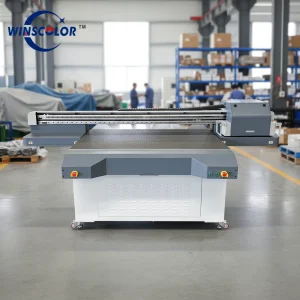
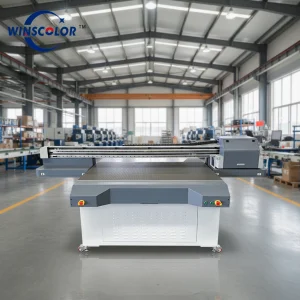
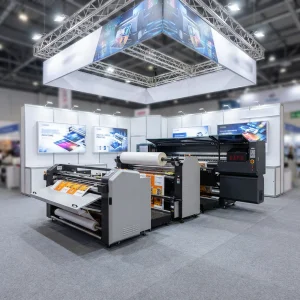
Explore our super-wide format, dual-table configurations, packaging lines, and road-sign certified UV printing machinery.
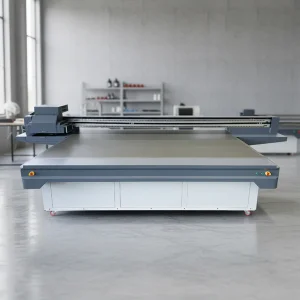
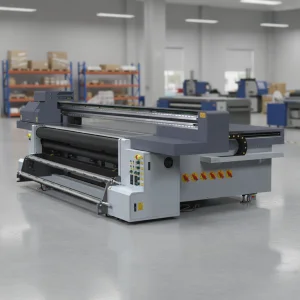
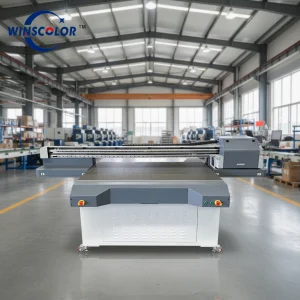
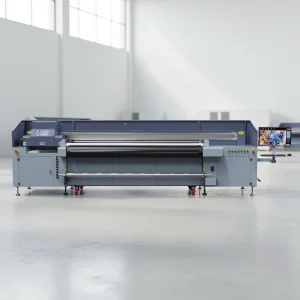
Send your substrate samples to our central Jinan test center. Our application specialists will run microscopic adhesion testing, generate ICC color profiles, and calculate accurate milliliter-per-square-meter ROI sheets for your project.