
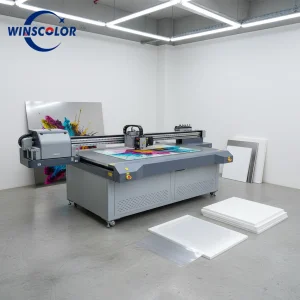
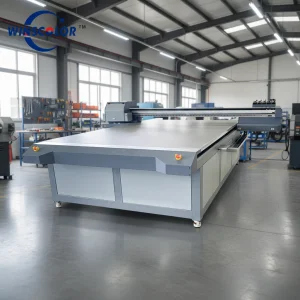
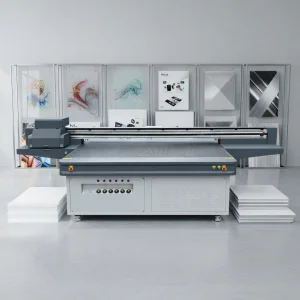
Explore NTEK's flagship multi-substrate UV inkjet systems, engineered specifically for high tensile metals, composite aluminum sheeting, rigid structural panels, and roll-to-roll hybrid workflows.
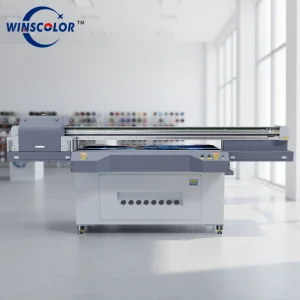
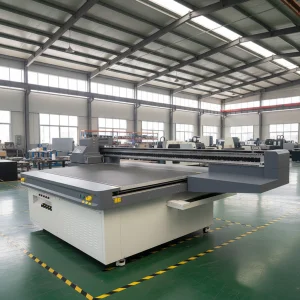

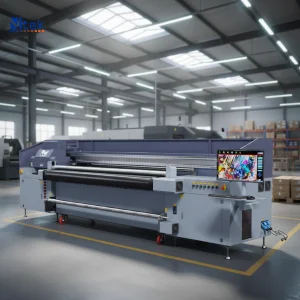
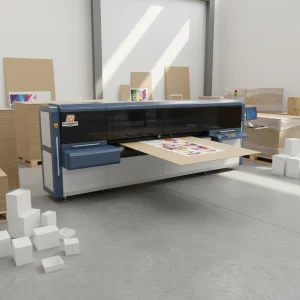


Analyzing the engineering shift from chemical etching, thermal sublimation, and screen printing to high-throughput UV-curable piezo inkjet deposition across precision metallurgy.
Across high-performance manufacturing sectors worldwide, metal fabrication and finishing facilities are undergoing an irreversible modernization phase. Traditionally, printing on metallic substrates—ranging from extruded aluminum, galvanized sheet steel, polished stainless steel, brass, copper, to titanium plates—demanded multi-stage chemical workflows. Silk-screen printing, pad printing, rotary offset lithography, and thermal transfer methods introduced extensive tooling expenditures, toxic chemical waste disposal issues, inflexible minimum order quantities (MOQs), and prohibitive lead times.
NTEK digital metal printing machines break this operational bottleneck by integrating non-contact piezo inkjet deposition with localized cold-temperature LED UV polymerization. By firing variable droplet volumes (ranging from 5pl to 18pl) directly onto pre-treated metal alloys, NTEK systems produce ultra-durable, chemically resilient graphics with micron-level mechanical repeatability. In an era dictated by personalized manufacturing, just-in-time (JIT) assembly, and lean aerospace/automotive component serialization, digital direct-to-metal printing stands as an essential pillar of Industry 4.0 production environments.
Furthermore, the physical dynamics of printing onto non-porous, highly reflective, and thermally conductive metal surfaces require profound engineering considerations. Unlike paper or textile fibers that absorb liquid vehicle carriers, metals exhibit zero absorption and high surface tensions. NTEK integrates automated dual-axis ionizer de-static bars, zoned multi-chamber high-vacuum holding tables, and nanostructured primer chemistries that ensure uncompromising chemical bonding, scratch resistance, and environmental durability.
| Evaluation Parameter | Legacy Screen Printing | Thermal Dye Sublimation | NTEK Digital UV Metal Printing |
|---|---|---|---|
| Prepress Make-Ready | Films, stencils, darkroom exposure (2-8 hours) | Transfer papers, high-heat calenders (1-3 hours) | Instant digital RIP processing (< 2 minutes) |
| Substrate Thickness Range | Limited to flat, light sheets (< 15 mm) | Thin pre-coated aluminum sheets (< 2 mm) | 0.1 mm to 100 mm (Up to 150 mm custom gantry) |
| Chemical & Scratch Adhesion | Moderate; brittle under sheet stamping | Fair; susceptible to heat & UV bleaching | Industrial Grade 5B (ASTM D3359), solvent proof |
| Color Capabilities | Spot colors; expensive 4-color process | CMYK only; no white barrier or clear coat | CMYK + Lc + Lm + High-Density White + Gloss Varnish |
| Variable Data & Serialization | Economically unfeasible | Labor intensive | Full 1D/2D barcodes, sequential alphanumeric UID |
| VOC Emissions & Eco-Profile | High solvent evaporation & wastewater | Paper waste and thermal dissipation | Zero-VOC inks, RoHS & REACH compliant |
How NTEK's digital metal printing systems resolve mission-critical marking, decorative, and functional surface engineering demands across international commerce.
Direct printing of MIL-STD-130 UID data matrix codes, wiring schematics, and service instructions on anodized aluminum chassis, wing access inspection plates, and cockpit instrumentation bezels resistant to hydraulic fluids, jet fuel, and extreme thermocycling.
HMI operator control consoles, brushed stainless steel server racks, DIN-rail terminal labels, and power inverter enclosures. NTEK's high-opacity white ink delivers 100% optical density on dark brushed metals, enabling razor-sharp graphic legends and safety logos.
Custom perforated aluminum composite panels (ACP), elevator interior cabs, stainless steel column wraps, and ceiling baffles. UV-curable exterior inks formulated with hindered amine light stabilizers (HALS) ensure 10+ years of colorfastness under intense solar UV exposure.
Under-the-hood VIN plates, aluminum door sill treadplates with textured tactile lettering, custom dashboard trim components, and specialized aftermarket heat shields printed directly without peeling stickers or degradation caused by engine bay temperatures.
Short-run luxury confectionery tins, craft spirits bottle caps, specialty promotional metal canisters, and chemical drum lid markings. Instantaneous UV curing eliminates oven baking channels, shrinking manufacturing cycle times from days to seconds.
Retroreflective roadway signplates, hazardous material diamond placards, and structural railway markers. NTEK flatbeds accurately lay down ISO-compliant safety colors directly on galvanized steel with integrated UV gloss overcoats resistant to acid rain and graffiti.
A rigorous review of structural gantry rigidity, dual-rail ball screw drive kinematics, and variable meniscus ink supply systems that set NTEK industrial exporters apart.
Heavy-duty structural aircraft-grade aluminum gantry mounted onto a stress-relieved welded steel frame ensures zero vibrational deflection during high-velocity 1.5 m/s carriage shuttles.
Equipped with wear-resistant metallic nozzle plates capable of firing high-viscosity specialty metal inks with up to 50 kHz driving frequency and 4-level grayscale droplet modulation.
Dual independent negative pressure loops with closed-loop computerized barometric sensing keep white and color ink fluidities stable, completely preventing sedimentation in white titanium inks.
Infrared obstacle scanners continuously monitor substrate flatbed clearances down to 0.05 mm, shutting down gantry traverse instantaneously if uneven metal plate edges threaten printhead damage.
A frequent challenge reported by metal fabricators transitioning to digital printing is surface static accumulation. Ferrous and non-ferrous plates gather intense electrostatic charges during shear-cutting and deburring processes. When passed beneath a micro-inkjet head, static fields divert ink drop trajectories, resulting in overspray misting, fuzzy letterforms, and clogged nozzles. NTEK addresses this problem at the machine firmware and hardware level: high-output bidirectional ionizing static neutralizing bars are standard equipment on both sides of the carriage, discharging substrates down to 0V before droplets release from the nozzle apertures.
Attaining 5B adhesion ratings and passed salt-spray corrosion tests involves an exact, engineered sequence from surface deoxidation through photonic UV cure.
Metal surfaces must be freed of rolling oils, cutting lubricants, and native oxides using isopropyl alcohol, automated plasma torches, or corona surface discharge treatment.
Application of silane-based or organophosphate adhesion promoter via automated wipe or the printer's dedicated jetting channel, modifying surface energy above 48 dynes/cm.
Synchronized jetting of sub-micron titanium white underbase, followed by chromatic CMYK+Lc+Lm layers, regulated through advanced Onyx or Caldera RIP color management profiles.
Cold LED UV arrays (395nm wavelength) cure the photopolymers instantly without heating thin sheets, preventing thermal warpage and guaranteeing pristine surface gloss or matte finishes.
Operating as a globally recognized manufacturing partner, NTEK establishes bulletproof compliance frameworks, robust spare-parts supply lines, and field engineering across 100+ countries.
All export-bound metal printing equipment undergoes testing conforming to the European CE Machinery Directive (2006/42/EC), Low Voltage Directive (2014/35/EU), EMC Directive (2014/30/EU), and North American UL/CSA safety electrical standards.
Certified NTEK regional field engineers provide complete turnkey setup, site power grounding validation, and operator training. Machines feature encrypted IoT telemetry modules for immediate real-time remote diagnostics and firmware calibration.
Centralized distribution hubs in North America, Western Europe, and Southeast Asia guarantee shipment of printheads, linear encoders, sub-tanks, ink pump valves, and UV LED modules within 24 to 48 hours, eliminating catastrophic factory downtime.
In accordance with Google Search Quality Rater Guidelines emphasizing Experience, Expertise, Authoritativeness, and Trustworthiness (E-E-A-T), NTEK reinforces its manufacturing integrity with verifiable physical infrastructure: over 20,000 square meters of production space in Jinan, China, complete with optical interferometry gantry leveling, climate-controlled cleanrooms for ink circuit assembly, and 72-hour pre-shipment stress testing under continuous 100% duty cycles.
Anticipating next-generation manufacturing demands: AI-guided optical edge registration, inline primer jetting, and single-pass metal deco pipelines.
High-resolution CCD overhead scanning cameras identify arbitrary sheet orientation, sheet stamping variations, and CNC-milled tooling pin holes in under 3 seconds, algorithmically re-orienting RIP vector coordinates to match every metal blank perfectly without jigs.
Development of hybrid organometallic ink matrices that form covalent chemical bonds directly with aluminum and steel oxide lattices during photonic UV crosslinking, rendering external solvent primers and manual wiping redundant.
Configured with stationary arrays of high-frequency industrial piezo heads, achieving linear feed velocities exceeding 45 meters per minute on continuous metal coils and sheared aluminum blanks for mass packaging and beverage can closures.
Engineered answers addressing production tolerances, adhesion testing, primer formulations, cost per square meter, and environmental regulations.
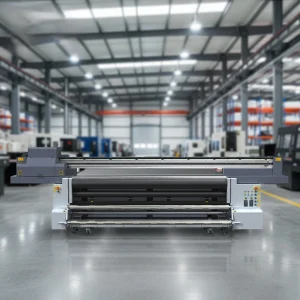
Review additional field-proven industrial solutions, ranging from dedicated cylindrical & 3D tactile varnish flatbeds to wide-format 3.2m hybrid and multi-pass production machines.
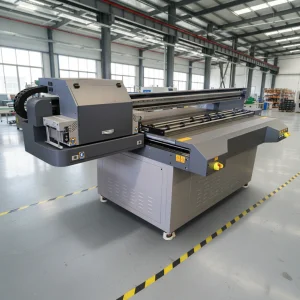
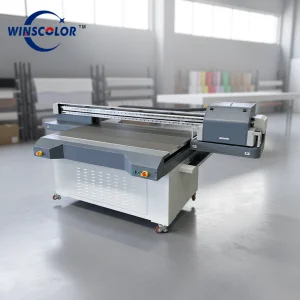
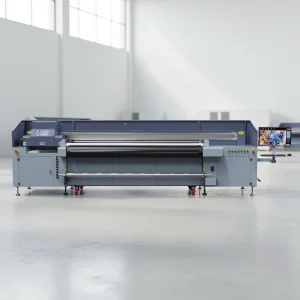


Accelerate your production facility's transition to direct-to-metal UV inkjet printing. Provide your exact substrate metallurgy, plate dimensions, daily square meter targets, and mechanical durability criteria to receive tailored equipment configurations, chemical primer recommendations, and detailed return-on-investment (ROI) models.