Engineered for continuous industrial cycles, multi-layer varnish embossing, and flexible roll-to-rigid media versatility.
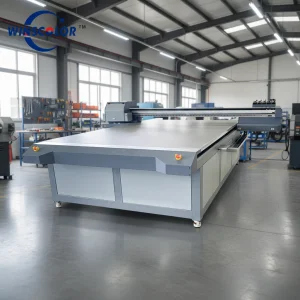
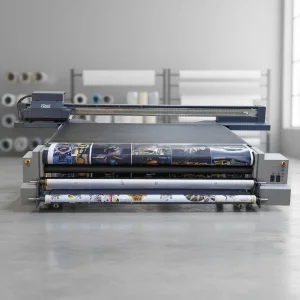
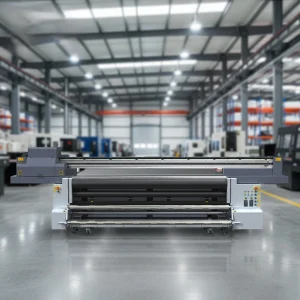
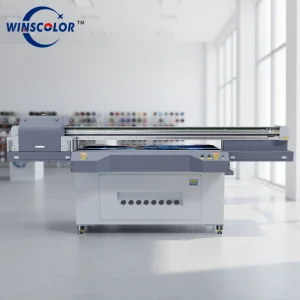
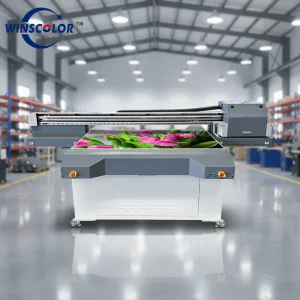
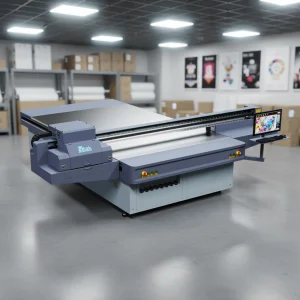
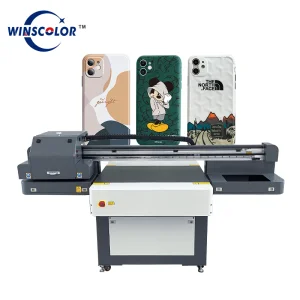
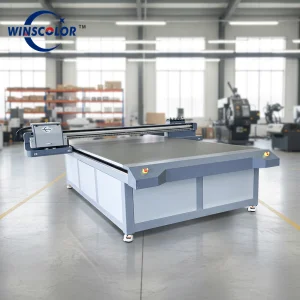
Analyzing macroeconomic transitions from traditional gravure and screen printing to high-throughput UV LED digital conversion lines.
The global commercial and residential wallcovering sector is undergoing a profound structural metamorphosis. For decades, wallcovering manufacturing was dominated by conventional analogue methodologies—chiefly rotary screen printing and gravure cylinder presses. While these legacy techniques offered unparalleled volume economy for massive runs of identical SKUs, they impose crippling friction points in the modern on-demand economy: exorbitant plate and cylinder tooling costs, extensive physical storage requirements for legacy cylinders, hours of downtime between color changeovers, and thousands of linear meters of substrate waste during initial register calibration.
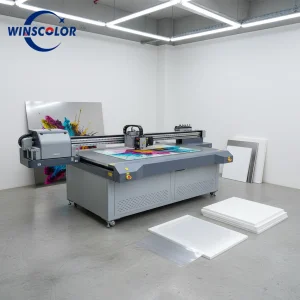
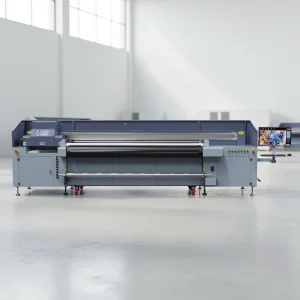
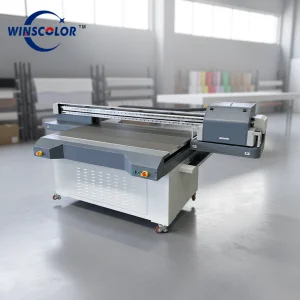
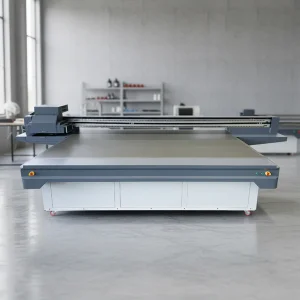
Today, luxury interior design studios, commercial hospitality developers, architectural contract furnishers, and direct-to-consumer digital mural brands demand high-mix, low-volume flexibility, short lead times, and extreme pattern personalization. This structural pivot has catalyzed the rapid integration of high-quality wallpaper printing machines engineered with UV LED and hybrid drop-on-demand inkjet architectures. Industrial manufacturers like Winscolor (Jinan Yingcai Digital Technology Co., Ltd) have engineered cutting-edge printing platforms—such as the YC3321R, YC3200HR, and YC2513 platform variations—that completely eliminate plate prepress cycles while enabling hyper-realistic micro-textures, localized tactile embossments, and seamless continuous roll printing.
When enterprise procurement heads, manufacturing directors, and contract plant managers evaluate industrial wallpaper printing machinery, their capital expenditure decisions hinge on rigorous operational efficiency and total cost of ownership (TCO) analytics. Key performance factors governing technical procurement encompass:
Direct jetting capability across non-woven fabrics, heavy vinyl PVC wallcoverings, fibrous grasscloth, textured mica, metallic leaf foils, and acoustic felt panels without edge curling or surface scuffing.
Advanced digital spot varnishing and multi-layer structural white ink jetting that precisely simulate classical rotary screen puff inks, silkscreen raised inks, and architectural stippling effects.
Heavy-duty structural gantries crafted from milled aviation-grade aluminum beams with dual Japanese THK linear quiet guides, engineered for non-stop 24/7 continuous industrial shifts.
Comprehensive engineering strategies mapping specialized hardware configurations to high-yield commercial niches.
Single-run custom feature walls mapped to exact architectural blueprints. Native RIP color profiling ensures edge-to-edge seam continuity without panel color drift.
High-abrasion commercial Type II vinyl wallcovering production engineered to endure rigorous chemical sanitization cycles in hotels, clinics, and transit terminals.
Hybrid dual-mode conversion allowing print shops to seamlessly switch from flexible rolls to rigid timber planks, acoustic PET felt, acrylic panels, and corrugated displays.
Direct printing across porous sound-dampening acoustic felt and honeycomb ceiling baffles without ink pooling or clogging the open acoustic micropores.
| Architecture Type | Target Substrate Family | Typical Speed Bracket | Primary Ink Chemistry | Key Competitive Strategic Edge |
|---|---|---|---|---|
| Super-Wide Hybrid (3.2m - 3.3m) | Seamless wall fabric, PVC vinyl rolls, acoustic boards | 45 - 85 m²/hr (Production) | Flexible UV LED Curable (CMYK+W+V) | Zero-seam wide mural output plus fast rigid board conversion |
| Industrial Flatbed (2.5m x 1.3m / 2.0m x 3.0m) | MDF wall cladding, acoustic PET felt, glass tiles, wood | 35 - 65 m²/hr (High Precision) | Rigid / Semi-Rigid UV LED Curable | Extreme micro-registration, tactile 3D relief embossing up to 2mm |
| Dedicated Roll-to-Roll UV LED | Non-woven base, pre-pasted paper, adhesive textiles | 60 - 120 m²/hr (Express Mode) | Ultra-elastic UV LED Curable | Tension-controlled continuous coil feed, minimal running scrap |
| Compact Architectural Desktop | Custom tile samples, switch plates, decor accents | 12 - 25 m²/hr (Fine Art) | Universal UV LED CMYK + White + Gloss | Rapid interior prototype generation, zero prepress expense |
A granular technical overview of piezoelectric firing, curing thermomechanics, and automated Closed-Loop production.
Achieving photographic quality on textured, irregular wallpaper stock requires precise synergy between printhead fluidics, carriage dynamics, and ultraviolet photopolymerization kinetics. Modern high-tier wallpaper printing machinery utilizes industrial piezoelectric drop-on-demand (DoD) printheads, such as the Ricoh Gen6 (MH5320) series. Featuring isolated silicon MEMS actuators, these heads fire droplet volumes ranging from a miniscule 5 picoliters for smooth flesh tones and fine line vector graphics up to 15 picoliters for saturated, high-opacity background flood coats.
Mechanical instability during carriage traversing is the primary cause of bi-directional banding, drop placement distortion, and horizontal seam artifacts. To eliminate these issues, Winscolor integrates heavy, stress-relieved all-steel welded frames that are heat-annealed at 600°C to eliminate residual internal metal stresses before precision five-axis CNC gantry milling. Carriages travel along double Japanese THK silent linear guide rails, driven by high-resolution magnetic linear encoders and Panasonic AC brushless servomotors. This mechanical platform achieves linear repeatability within ±0.01 mm across a full 3300 mm span.
Unlike legacy high-pressure mercury arc lamps that emit excessive infrared heat (frequently warping heat-sensitive wallpaper substrates such as non-woven paper and thin PVC foils), contemporary UV LED curing units incorporate water-cooled arrays operating at dual wavelengths (395 nm for deep substrate cure through opaque white ink layers, and 365 nm for rapid surface flash cure). The cold curing environment prevents thermal shrinkage, eliminates residual chemical odor, and slashes electrical power draw by up to 65% compared to conventional thermal drying ovens.
The next horizon of industrial wallpaper equipment lies in automated optical inspection (AOI) and closed-loop process control. Integrating high-speed CMOS linescan cameras directly on the printhead carriage allows real-time monitoring of drop placement, jet deflection, and media skew during continuous 100-meter production rolls. Firmware algorithms dynamically apply localized compensation masks to counteract nozzle trajectory deviations, preventing banding before it becomes visible to the human eye. Furthermore, full compliance with OPC-UA and RESTful API architectures enables seamless bidirectional connectivity with enterprise Resource Planning (ERP) and Manufacturing Execution Systems (MES) for lights-out automated micro-factory installations.
Navigating strict international VOC thresholds, electrical certifications, and overseas SLA guarantees.
Modern commercial wallcoverings must adhere to strict low-emission criteria for occupied interior spaces. Winscolor UV formulations are certified to exceed global benchmarks:
Every industrial unit exiting our 20,000 m² Jinan manufacturing plant undergoes electrical and mechanical inspection to guarantee factory floor operator safety:
Global continuity is sustained through comprehensive international warranty structures and rapid technical field deployment strategies across 100+ countries:
Deciphering divergent geographic requirements across Western markets, emerging economies, and industrial centers.
The wallpaper conversion sector exhibits distinct geographic characteristics influenced by regional construction activity, architectural preferences, and regulatory legislation:
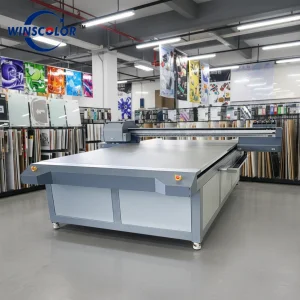
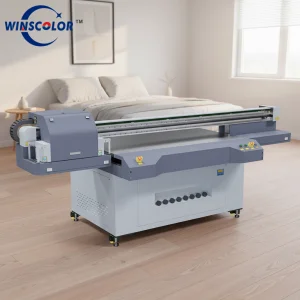
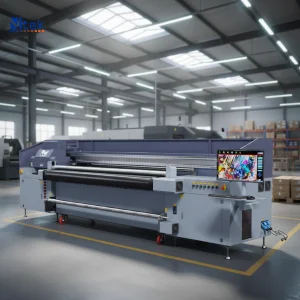
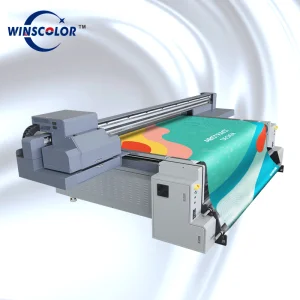
Explore our complete manufacturing spectrum, from custom promotional systems to 3.2m continuous hybrid powerhouses.
In-depth responses resolving engineering, chemical formulation, and workflow integration inquiries.
Traditional mercury curing lamps produce significant radiant infrared thermal energy that can heat substrates above 70°C, causing thin vinyl films, lightweight non-woven fabrics, and thermal-sensitive adhesives to buckle or stretch. Winscolor UV LED wallpaper systems utilize narrow-band semiconductor arrays (emitting at 395nm/365nm) paired with active liquid chilling loops. The effective substrate surface temperature remains below 32°C throughout continuous printing, eliminating dimensional distortion and ensuring millimeter-accurate edge-matching when hanging adjacent mural panels.
Tactile relief is created through multi-layer synchronous or multi-pass software deposition. The RIP software separates structural height maps from chromatic channels. First, high-viscosity opaque white ink layers are jetted in successive micro-passes to establish the physical relief structure. The CMYK chromatic color layer is then printed on top of the cured white scaffold, followed immediately by a localized clear gloss or matte varnish pass. This allows manufacturers to simulate hand-carved wood grain, woven linen cross-threads, or luxury stucco plaster with relief depths up to 2.0 mm.
Titanium dioxide (TiO2), the heavy inorganic pigment responsible for high opacity in white ink, has a natural propensity to settle over time. Winscolor wallpaper machines incorporate a Continuous Positive/Negative Pressure White Ink Circulation System. The white ink is continuously agitated and recirculated along the entire fluid path—from the primary reservoir through the sub-tank, damper, and directly through the internal cavity of the printhead itself. When idle, the machine automatically initiates micro-purging and peristaltic pulse agitation at programmable intervals, preventing nozzle blockages and maintaining uniform viscosity 24/7.
Commercial interior fit-outs in regulated environments mandate two primary compliance certifications: fire safety and chemical emission safety. For fire safety, prints must satisfy ASTM E84 (Class A rating in North America) or EN 13501-1 (B-s1, d0 classification in the European Union). For indoor air quality, the cured ink film must meet GREENGUARD Gold or French VOC A+ standards, ensuring that formaldehyde, heavy metals, and total volatile organic compounds (TVOCs) remain well below permissible thresholds for sensitive institutional and healthcare environments.
Yes. Industrial hybrid systems, like the YC3200HR and YC2500HR, feature heavy-duty dual-drive roller conveyors coupled with detachable front and rear extension tables. In roll mode, the heavy pneumatic air shafts and dynamic tension sensors feed wallpaper coils up to 50 kg smoothly across the vacuum belt. When converting to rigid media—such as acoustic sound-dampening PET felt tiles, MDF architectural boards, or glass wall panels—the operator folds down the extension tables, activates the heavy-suction zone, and sets the carriage gantry to accommodate media thicknesses up to 100 mm via automatic height detection sensors.
