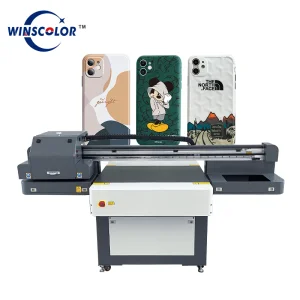
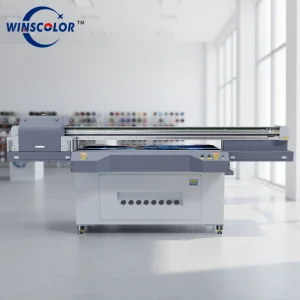
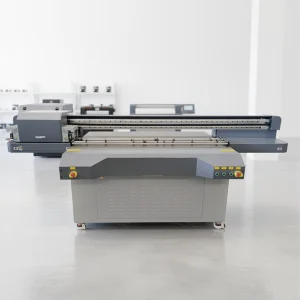
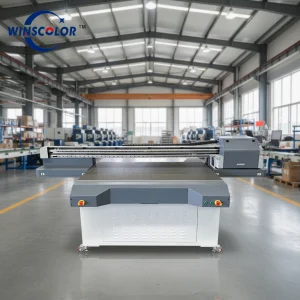
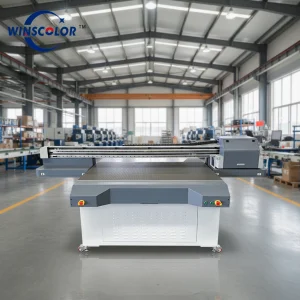
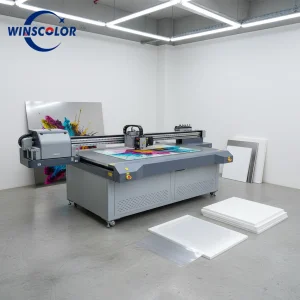
Explore precision-machined industrial UV printing machinery equipped with micro-piezo drop control, negative pressure ink supplies, and ultra-durable curing assemblies.
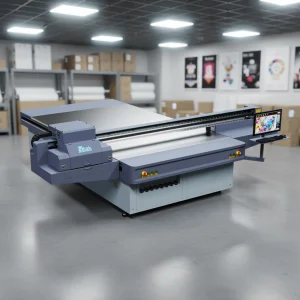
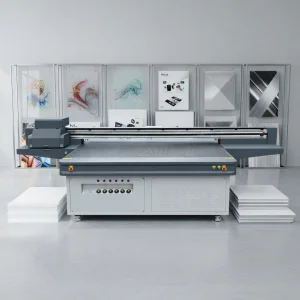
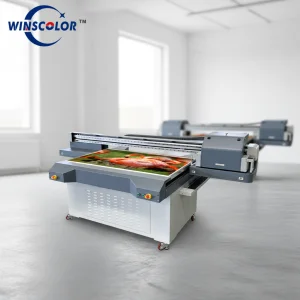
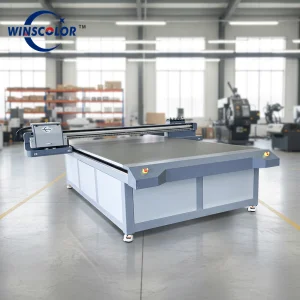
Analyzing market decentralization, global supply chain convergence, and the transition from conventional analog screen printing to agile digital direct-to-object manufacturing.
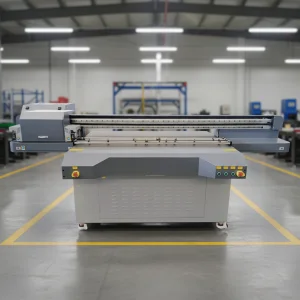
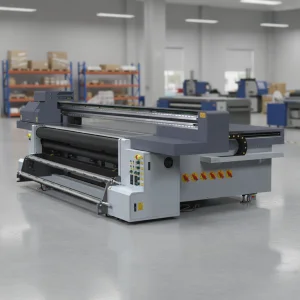
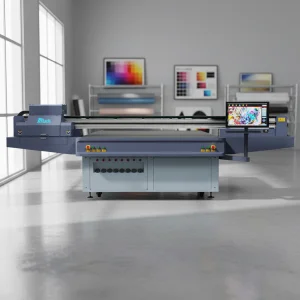
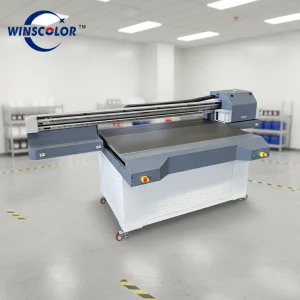
The global commercial printing and industrial surface-finishing ecosystem is undergoing a profound paradigm shift. The historical dominance of conventional offset lithography, pad printing, and rotary screen printing has faced severe friction due to skyrocketing setup overheads, hazardous volatile organic compound (VOC) emissions, costly screen-making labor, and the rapid collapse of consumer product lifecycles. Within this structural realignment, small UV printing machines (typically classified within print dimensions spanning 600 mm × 900 mm up to 1600 mm × 1000 mm, alongside specialized desktop units) have evolved from novelty proofing devices into high-efficiency industrial workhorses.
According to global manufacturing consensus data, the small-format industrial UV flatbed sector is accelerating at an estimated Compound Annual Growth Rate (CAGR) of 8.4% through 2032. This momentum is propelled by macro-level transformations: decentralized micro-factories, on-demand point-of-sale SKU customization, just-in-time (JIT) manufacturing workflows, and the near-universal enterprise mandate to eliminate hazardous industrial chemical discharge. Small-format flatbed architecture provides the mechanical agility required to execute zero-plate, variable-data micro-runs without sacrificing the photographic color fidelity or mechanical abrasion resistance once monopolized by multi-million-dollar analog converting lines.
Industrial small UV printers leverage advanced micro-piezo printheads (e.g., Ricoh Gen5/Gen6, Epson i3200-U1, Kyocera KJ4A). Precision is underpinned by ground linear guideways from Hiwin or THK, ensuring micrometer-accurate carriage stability during high-frequency bidirectional firings.
By eliminating make-ready stages, chemical baths, and screen stretching, setup costs fall to zero. Unit manufacturing cost parity is achieved whether printing an individual customized prototype or a commercial batch of 5,000 units, creating resilient gross margins for contract decorators.
Global suppliers divide into genuine R&D manufacturers utilizing welded, heat-treated steel chassis vs budget assemblers using lightweight sheet metal. Discerning buyers focus on dynamic gantry mass, negative pressure stability, and long-term mechanical repeatability.
Unlike water-based or solvent inks that rely on thermal evaporation, industrial UV curable inks consist of photoinitiators, multi-functional acrylic oligomers, and reactive mono-functional monomers. When subjected to high-energy 385–395 nm ultraviolet spectral radiation emitted by gallium-doped or water-cooled LED arrays, radical polymerization initiates within milliseconds. Radical propagation yields an immediate three-dimensional polymer network, entrapping pigments directly onto synthetic, metallic, or vitreous surfaces without capillary ink bleeding or thermal distortion of heat-sensitive substrates.
Systemic technological advancements reshaping precision droplet placement, fluidic reliability, automated edge registration, and environmental compliance.
Heavier pigment formulations—specifically Titanium Dioxide (TiO₂) utilized in opaque white formulations—suffer from gravitational sedimentation. Contemporary platforms implement positive/negative multi-stage micro-pumping loops directly through the printhead cavity.
Synchronous triple-layer jetting systems enable instantaneous deposition of White base + CMYK chromatic gamut + Gloss/Matte Clear Varnish in a single bidirectional pass. Software-controlled UV curing pulse modulation allows tactile Braille and sculptural 3D textures.
High-resolution charge-coupled device (CCD) cameras integrated directly into the carriage gantry track fiducial marks on arbitrarily oriented parts. The machine automatically compensates for translation and angular rotational skew in real time via digital raster manipulation.
Switching from legacy metal-halide mercury lamps to solid-state UV LED diodes reduces thermal radiation at the substrate plane by over 75%. This preserves dimensional stability on ultra-thin thermo-sensitive plastics, acrylic sheets, and PVC foam boards.
| Architecture Metric | Entry-Level Small Flatbed | Industrial Tier-2 Platform | High-Precision Production Tier (NTEK / OEM) |
|---|---|---|---|
| Primary Printhead Integration | Epson XP600 / TX800 (Modified Desktop) | Epson i3200-U1 (Industrial MEMS) | Ricoh Gen6 (MH5320) / Kyocera KJ4A Industrial Piezo |
| Droplet Size & Modulation | Fixed 3.5 – 5.0 pl | Variable 3.8 – 9.4 pl (3-level greyscale) | Variable 2.5 – 5 – 7 pl (High dynamic multi-drop) |
| Ink Circuit Configuration | Static gravity feed, basic stir stick | Positive pressure bypass, basic white loop | Dual-stage negative pressure chamber + continuous TiO₂ micro-circulation |
| Carriage Gantry Drive Mechanics | Single stepper motor with standard timing belt | Hybrid servo with single linear rail | Dual THK linear guideways + Leadshine/Panasonic AC Servos + Optical Linear Encoder |
| Z-Axis Media Clearance | Up to 50 mm (Manual screw adjust) | Up to 100 mm (Motorized lead screw) | Up to 150 – 200 mm (Auto-height infrared obstacle sensing) |
| Rotary Attachment Versatility | Friction roller, uncalibrated | Standard motorized chuck fixture | Full 360° helical rotary sync, seamless cylindrical bottle printing |
| Mean Time Between Failures (MTBF) | < 1,200 operating hours | ~ 4,500 operating hours | > 12,000 continuous industrial production hours |
Engineered surface energy management, chemical primer formulations, and multi-sector digital decorating capabilities across diverse physical media.
Direct printing of architectural switchboards, anodized aluminum nameplates, polycarbonate membrane overlays, and flame-retardant ABS device enclosures.
Technical Challenge: High chemical resistance to isopropyl alcohol (IPA), industrial cleaning degreasers, and continuous abrasion tests.
Solution: Silane-coupling primers deposited inline with specialized hard-UV acrylic inks achieving 4H pencil hardness rating on unsealed metallic surfaces.
Point-of-sale personalized consumer electronics, bespoke polycarbonate phone cases, cylindrical stainless steel vacuum tumblers, acrylic awards, and leather accessories.
Technical Challenge: Micro-cracking during bending on supple leathers, and severe adhesion failures on cylindrical glass or metal curves.
Solution: Hybrid elastomeric UV inks with 200% mechanical elongation elasticity combined with continuous 360-degree helical rotary chuck systems.
Interior decorative ceramic tiles, back-splashes, tempered splash-guard architectural glass, and fully compliant ADA interior wayfinding tactile signage.
Technical Challenge: Severe low surface energy (<30 dynes/cm) on vitreous glass leading to flaking under humid bathroom/kitchen conditions.
Solution: Thermal-wipe nano-primers forming covalent siloxane bonds, followed by controlled multi-pass high-density UV white dot accumulation for dome-shaped Braille beads.
For industrial UV printing on non-polar substrates such as polypropylene (PP), untreated polyethylene (PE), bare stainless steel, or float glass, achieving an ink-to-substrate surface energy differential of at least 10 dynes/cm is critical. Untreated plastics typically exhibit surface energies below 32 dynes/cm, leading to severe ink beading and surface tension retraction. Industrial facilities utilize atmospheric plasma discharge, corona treatment, or specialized optical primers containing organofunctional silanes to elevate substrate surface energy beyond 44 dynes/cm, establishing complete droplet wet-out, cross-hatch tape adhesion (ASTM D3359 Class 5B), and long-term chemical durability.
Evaluating long-term capitalization, operational consumables, mechanical maintenance overhead, and verifiable factory audit parameters.
When vetting high-quality small UV printing machine suppliers and companies, corporate procurement teams must look past the initial acquisition price (CAPEX). In digital inkjet production, operational expenditure (OPEX) over a standard 5-year equipment depreciation window consistently surpasses capital machine expenditure. Factors such as ink consumption per square meter, printhead purging wastage during daily capping, electrical consumption of chilling systems, and premature piezoelectric failure due to unshielded electrostatic discharge (ESD) define true plant profitability.
| Evaluation Parameter | Analog Screen Printing (Traditional) | Budget Desktop UV (Converted) | Industrial Small UV Flatbed (Winscolor / NTEK) |
|---|---|---|---|
| Pre-Press Tooling Cost | High ($35–$120 per screen color separation) | Zero (Direct digital raster upload) | Zero (Direct digital raster upload) |
| Job Changeover Window | 45 – 90 minutes (Washout, alignment) | 2 – 5 minutes (Software RIP processing) | < 60 seconds (Automated visual preset load) |
| Average Ink Cost / m² | $0.40 – $0.80 (Screen paste) | $1.80 – $3.20 (Unoptimized micro-bottles) | $0.90 – $1.40 (Bulk negative pressure feed) |
| Printhead Replacement Cycle | Not applicable (Squeegee replacement) | Frequent (3 – 6 months under continuous load) | Long-life (24 – 36 months industrial duty) |
| Labor Skill Requirements | High (Artisanal color mixing, screen tensioning) | Medium (Prone to daily manual clogging fixes) | Low (Automated purging, auto-flushing, digital UI) |
| Environmental Safety & VOCs | Hazardous solvents, dedicated ventilation mandatory | Uncertified ozone emissions from cheap lamps | Zero-VOC, ozone-free LED curing, RoHS certified |
Before issuing irrevocable Letters of Credit (L/C) or releasing down payments, plant inspection teams should demand verification of the following manufacturing disciplines:
Authoritative answers curated by printing systems engineers addressing core mechanical, fluidic, and workflow challenges.
Industrial-grade small UV platforms implement continuous, multi-stage recirculation loops coupled with magnetic micro-impeller stirring within the primary ink reservoir. Recirculation does not terminate at the sub-tank; it pumps fluid dynamically through the printhead manifold itself. When the machine enters idle or standby mode, automated timer cycles keep the white ink moving continuously to avoid pigment agglomeration, filter clogging, or nozzle starvation.
The Epson i3200-U1 is a high-density PrecisionCore MEMS printhead delivering exquisite 300 dpi native nozzle pitch and micro 3.8 pl droplet output, making it ideal for micro-text, fine art reproduction, and desktop-to-mid formats. The Ricoh Gen6 (MH5320) is an all-steel, isolated-cavity industrial printhead supporting higher drive frequencies, aggressive heating profiles, and abrasive ink formulations, offering superior long-term mechanical resilience in 24/7 industrial production shifts.
Yes. By integrating synchronized rotary axis fixtures driven by dedicated stepper or servo controllers, the printer translates linear Y-axis movements into micro-step rotary revolutions. Advanced RIP software utilizes specialized cylindrical algorithms to dynamically distort the artwork in the raster pass, compensating for object diameter, taper angles, and conical variations to avoid visual image stretching or overlapping seam lines.
Gravity-fed ink systems fluctuate wildly with ambient temperature, liquid volume, and high-speed carriage momentum shifts, causing ink dripping on the substrate or air suction into the nozzle plate. Electronic dual-stage negative pressure modules maintain an exact, constant vacuum (-1.5 to -3.5 kPa) directly behind the nozzle meniscus. This ensures stable drop ejection at carriage traverse speeds up to 1.2 m/s without weeping or starvation.
Bare glass and polished stainless steel feature non-porous surfaces with high surface tension gradients. Direct UV ink application without pre-treatment results in poor cross-hatch adhesion and chemical delamination over time. An optical-grade silane or polyurethane adhesion promoter (applied via automated wipe, spray, or dedicated piezo primer printhead channel) chemically bridges the inorganic substrate atoms with the organic polymer chains of the cured UV ink.
Industrial piezoelectric printheads are tuned to specific fluid dynamic viscosities (typically 8 to 14 cPoise at operating temperatures). Cleanroom or shop-floor ambient temperatures should be held consistently between 20°C and 28°C (68°F – 82°F) with relative humidity between 40% and 65%. High humidity triggers condensation on chilled sub-assemblies and impairs UV LED cross-linking, while low humidity generates static charge build-up, causing stray droplet misting.
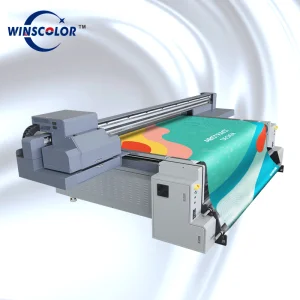
Explore heavy-duty flatbed variants, hybrid roll converters, and automated sheet platforms engineered for high-duty continuous operation across global markets.