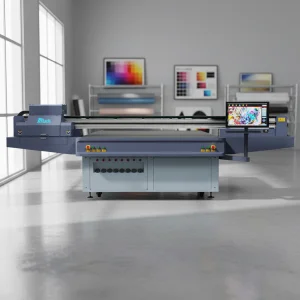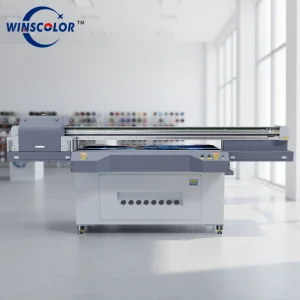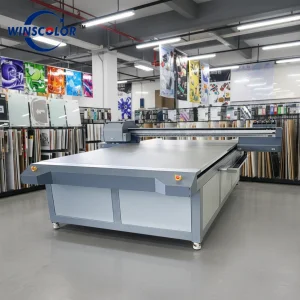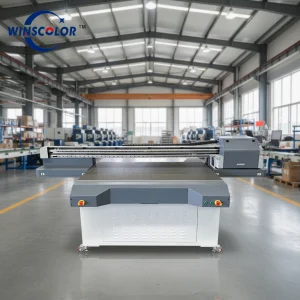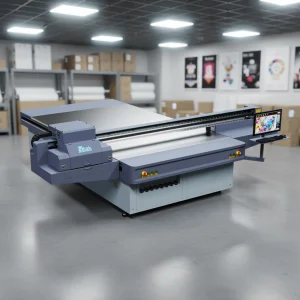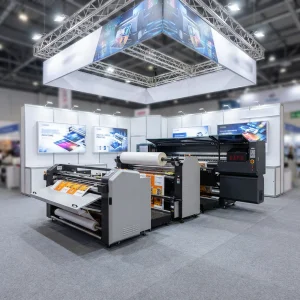
Precision-engineered CNC gantry systems combined with industrial greyscale drop-on-demand piezoelectric printheads for micron-level ink deposition on non-porous glass.
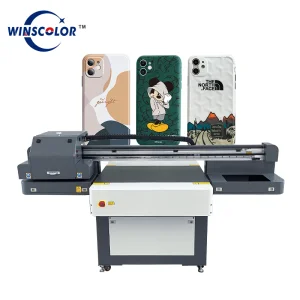
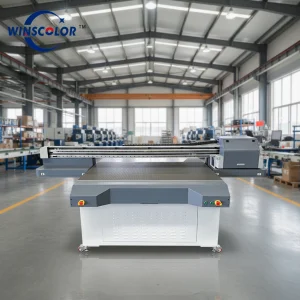
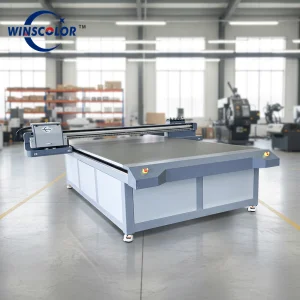
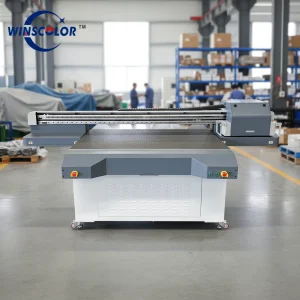
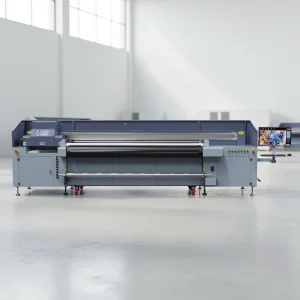

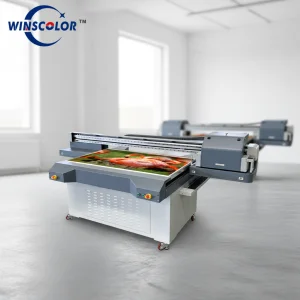
Glass is non-porous, chemically inert, and has exceptionally high surface tension dynamics. Achieving cross-hatch adhesion standard DIN EN ISO 2409 Class 0 requires rigorous hardware-chemistry synchronization.
Direct digital printing on float or tempered glass typically encounters delamination when subjected to humidity or thermal cycling. Modern glass printing machinery incorporates inline or offline silane chemical bridging agents (organic silane primers) that covalently bond to silicon dioxide ($SiO_2$) substrates while polymerizing with UV acrylic monomers.
Our high-spec installations incorporate high-frequency atmospheric plasma pre-treaters to activate surface dyne levels up to >58 dynes/cm, ensuring instant wetting and droplet spread without pooling or pinholing.
Heavy architectural glass panels (up to 500kg per sheet) require absolute planar rigidity without deflection:
Standard UV mercury vapor lamps generate excessive heat, creating thermal expansion discrepancies on cold glass and causing mechanical registration shifts or shattering risks. Our machines employ adjustable-power UV-LED modules (395nm wavelength) operating at sub-45°C ambient media temperatures.
Configurable "pinning" technology partially immobilizes ink droplets immediately after firing, eliminating bleed between process colors and the dense white barrier coat, yielding sharp, high-contrast graphics even on transparent media.
Combining advanced electromechanical supply chains, high-tier component sourcing (Ricoh, THK, Panasonic), and agile engineering to deliver unbeatable total cost of ownership (TCO).
Our Jinan assembly facilities utilize genuine Japanese Ricoh Gen5/Gen6 industrial printheads, imported linear encoders, German IGUS drag chains, and Schneider electrical switchgear, marrying global component reliability with cost-effective Chinese mechanical engineering.
Operating a dedicated 20,000 m² factory with 6 parallel production lines allows Winscolor to fulfill high-volume OEM/ODM orders with rapid lead times (typically 10-15 working days). Complete structural stress testing, dynamic balancing, and continuous 72-hour test-firing minimize onsite commissioning times.
European and US direct-to-glass printers carry significant initial capital expenditure burdens and costly proprietary ink ecosystems. Winscolor delivers up to 60% lower capital entry barriers alongside open, certified UV-curable ink profiles, reducing cost-per-square-meter printing significantly.
Traditional screen printing methods struggle with high setup costs, hazardous solvent emissions, and long lead times. Digital UV flatbeds are capturing massive market share across multiple sectors.
Architectural glass processors now face custom short-run orders where screens are economically non-viable. Digital UV printing eliminates prepress screens, washout tanks, and film plotting, allowing factory operators to change graphics instantaneously between custom oversized panels.
While ceramic inorganic inks require a 650°C tempering furnace, UV-curable organic inks provide a substantially wider color gamut (extended CMYK + LcLm + White), lower energy usage, and superior photographic gradient reproduction for indoor partitions, splashbacks, and commercial display glass.
By repeatedly layering high-viscosity UV clear varnish, printers generate 3D tactile textures (frosted glass emulation, wood-grain texture on glass, and Braille characters). Furthermore, digital glass printers are increasingly used to lay down functional masking layers on smart dimming (PDLC) glass.
Tailored printing workflows designed for specific industrial glass manufacturing use-cases.
Printing oversized tempered glass panels for curtain walls, office glass cubicles, acoustic room dividers, and decorative balustrades with high daylighting stability and frosted patterns.
High-resolution marble-look simulation, full-bleed scenic art, and high-opacity white base coats on 4mm-12mm toughened glass used for heat-resistant kitchen walls and bathroom showers.
Precision black border framing, icon printing, and selective translucent windows on glass tops for induction cookers, smart refrigerator doors, washing machine panels, and vending screens.
Replacing bulky natural stone with lightweight laminated printed glass, replicating intricate granite, mirror mosaics, and metallic finishes while strictly observing fire code regulations.
Custom packaging display cases, branded cosmetics mirrors, and 360-degree cylindrical perfume bottles printed using our rotary tool attachments with micro-detail metallic varnish accents.
Anti-reflective museum display cases featuring micro-lettering documentation, historic imagery replication, and edge-to-edge optical clarity directly printed onto anti-glare laminated glass.
Key mechanical, chemical, and operational criteria international engineering teams must inspect prior to issuing equipment purchase orders.
Ensure the heavy glass vacuum bed is milled via large-scale five-axis CNC centers with tolerances within ±0.05 mm across the entire 2.5m x 1.3m or 2.0m x 3.0m area to prevent printhead crashes on heavy 10-19mm glass.
Glass edges are razor-sharp and frequently possess micro-burrs. Dual infrared thickness sensors and physical mechanical bumper guards must immediately disengage carriage travel to protect expensive Ricoh printheads.
Titanium dioxide ($TiO_2$) particles in white ink are heavy and settle rapidly. Verify that secondary sub-tanks, main reservoirs, and umbilical lines incorporate motorized continuous stirring and periodic auto-purge cycles.
Confirm the exporter guarantees localized installation, detailed ICC color profiling for glass substrates, remote video telemetry diagnostics, and guaranteed dispatched air shipment for replacement boards and components.
Direct insights compiled by our chief systems integration engineers regarding direct glass UV printing.
Adhesion is guaranteed through a tripartite approach: mechanical cleaning with IPA, application of our proprietary nanoparticle silane wipe/spray primer to build chemical covalent bonds, and dual LED-UV curing at 395nm with customized energy dose profiles to secure cross-linking before ink droplet retraction occurs.
Yes. Equipped with independent White and Varnish printhead channels, our systems perform Color + White + Color (sandwich) or White + Color in a single synchronized carriage pass. This prevents backlight washout and provides identical visual fidelity when viewed from either face of transparent architectural glass.
When operating with our filtered inks (filtration ≤ 0.5μm) and maintaining routine auto-capping, wiping, and ultrasonic purge maintenance protocols, Ricoh Gen6 industrial printheads routinely exceed 3 to 5 years of continuous multi-shift production on our glass-bed machines.
For exterior building facades, second-surface printing (printing on the indoor-facing side of the glass panel) is recommended, shielding the printed ink layer from outdoor abrasive dust and direct acid rain. When protected, prints offer >10 years outdoor colorfastness.
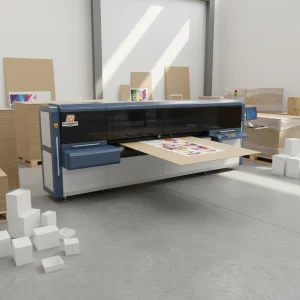
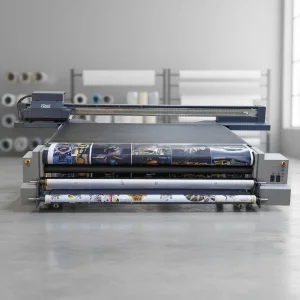
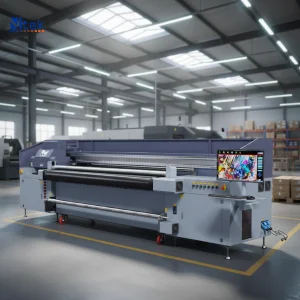
From single-pass high-speed units to large format hybrid roller systems for diverse sheet and roll substrate manufacturing.