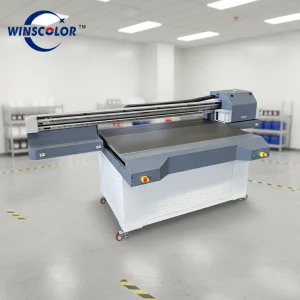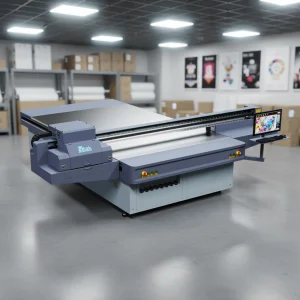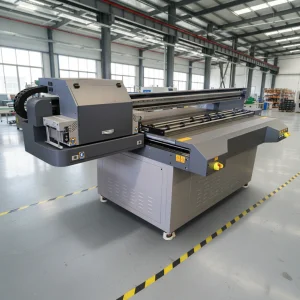
Famous 1610 UV Flatbed Printer Varnish 3D Effect LED Plastic Bottle Phone Case UV Printing Machine Ceramic Tiles Glass Digital Manufacturer, Suppliers
View Product
Direct factory-engineered configurations equipped with industrial drop-on-demand piezoelectric printheads, cold-cure UV-LED platforms, and multi-axis raster motion systems.
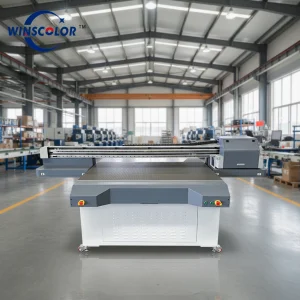
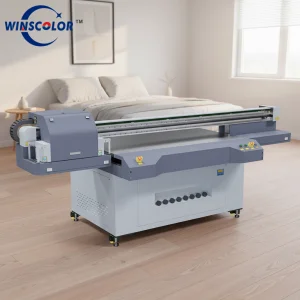
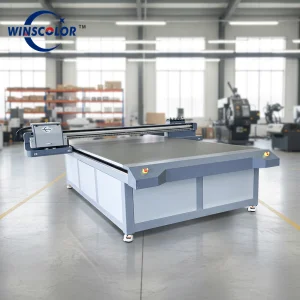


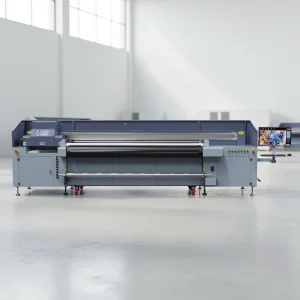

The transition from analog screen and solvent technologies to digital UV-curable flatbed systems represents an irreversible industrial paradigm shift driven by sustainability, on-demand supply chain efficiency, and structural material versatility.
Global packaging, commercial signage, and surface architecture sectors are recalibrating procurement priorities toward cold-curing LED UV equipment. With zero volatile organic compounds (VOCs) and instantaneous polymerization, production facilities achieve compliance with tightening European Reach regulations and North American EPA standards without sacrificing line speeds.
High-duty commercial installations require print engines engineered around industrial piezo transducers like the Ricoh Gen6, Konica Minolta 1024i, and Kyocera KJ4A series. These heads withstand non-stop production cycles, delivering micro-droplet variable firing (down to 3.5 pL) while maintaining structural resistance to aggressive chemical photoinitiators.
Modern print manufacturing facilities evaluate printing capital equipment based on amortized cost-per-square-meter rather than baseline acquisition price. By consolidating variable data workflows, spot primer deposition, high-opacity white base application, and haptic gloss finishes into a single pass, enterprise operators achieve payback velocities within 8 to 14 operational months.
Advanced mechanical engineering clusters, integrated industrial precision supply lines, and strict quality-assurance testing regimens provide verifiable competitive output advantages for international procurement teams.
Unlike light commercial aluminum extrusions, top-tier Chinese industrial bases utilize heavy annealed welded steel gantries. Annealed at 600°C to eliminate internal molecular strain, our chassis guarantee zero structural deflection over decades of high-speed print carriage acceleration.
By centering production within localized high-precision engineering hubs (such as Jinan and the Pearl River Delta), key assemblies—including THK double linear rails, Japanese Panasonic/Delta AC servo systems, and vacuum blowers—are integrated under tight cycle-time constraints, reducing factory lead times to standard windows.
Modern Chinese manufacturing facilities run direct-line OEM/ODM units. Buyers configure specialized carriage drops, multi-row staggered printhead alignments (up to 16 heads), anti-static ion-bars, or high-clearance Z-axis options (up to 400mm) tailored directly to specific production floor demands.
Standardized export inspection processes mandate rigorous multi-stage qualification before transport crating: 72 hours of uninterrupted dry-run motion, laser-interferometer precision positioning calibration, dynamic fluidic pressure leak audits, and photographic edge-feathering test passes.
From fragile decorative glass to heavy structural metal fabrications, modern direct-to-object flatbed UV printers turn everyday substrates into finished, durable, high-margin functional products.
Equipped with specialized silane chemical primers, high-powered UV flatbeds print continuous full-bleed imagery directly onto toughened glass splashbacks, structural balustrades, shower partitions, and ceramic tile flooring, with scratch-resistant surface adhesion.
Eliminate five-figure die-plate setup expenses in small-to-medium carton production. Direct-to-corrugated systems process multi-ply cardboard, honeycomb structural boards, and litho-laminated flutes for point-of-sale displays and luxury bespoke shipping boxes with zero make-ready time.
Print directly onto brushed aluminum, anodized steel nameplates, powder-coated instrument chassis, and acrylic electrical control panels. Sub-millimeter registration ensures crisp 2pt micro-text, electrical schematics, and high-contrast regulatory warnings.
A structured technical evaluation framework for CTOs, manufacturing directors, and commercial print enterprise owners investing in next-generation UV assets.
Advanced laser optical sensors continuously map micro-warping across uneven boards in real-time, dynamically adjusting the carriage ride height on the fly to eliminate strikes without breaking line pace.
Titanium dioxide white pigments naturally settle over time. Modern industrial engines prevent sedimentation and head clogs using automated, continuous micro-circulation systems across sub-tanks and head manifolds.
Consolidating production setups, dual-mode machines balance heavy honeycomb vacuum tables with synchronized pneumatic tension roll-to-roll drums, switching between sheet goods and banner vinyl without realignments.
Institutional buyers should insist on verifying raw gantry weight, linear motor magnetic drive options, independent vacuum zone count, and the exact release level of included RIP post-processing software.
Comprehensive technical guidance compiled by our engineering and after-sales field support teams.
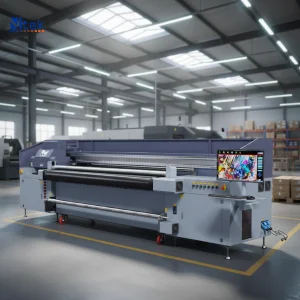
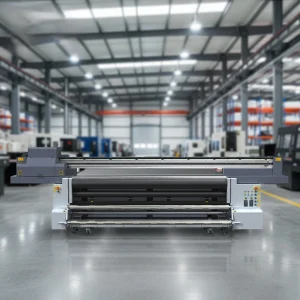
Expanded flatbed platforms, dual hybrid roller engines, and roll-to-roll machines built for continuous high-square-meter commercial production shifts.