Pre-calibrated flatbed, hybrid, and micro-droplet systems operating across tier-one sign hubs, packaging converters, and industrial fabrication lines worldwide.
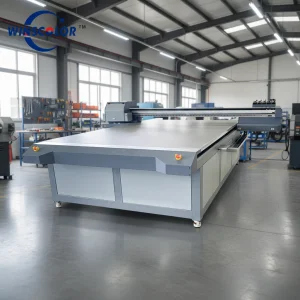

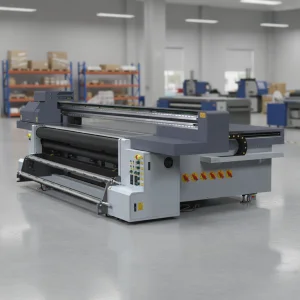

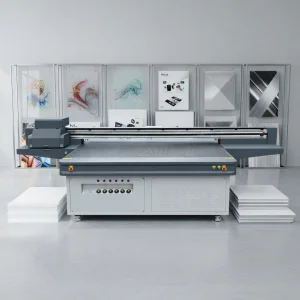
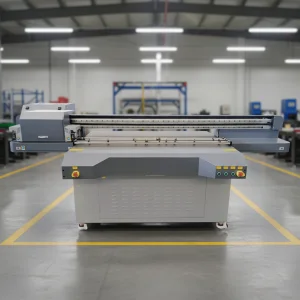
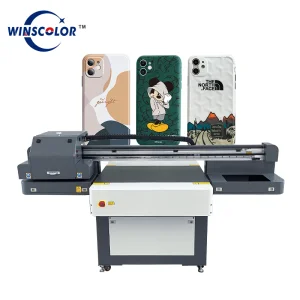
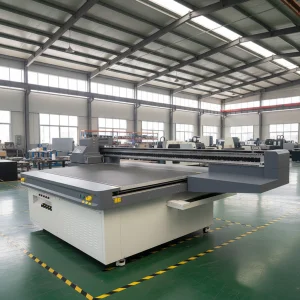
Decoupling factory profitability from mechanical plate tooling through photopolymerization chemistry and scalable multi-axis CNC gantry architecture.
The modern manufacturing landscape demands an unprecedented convergence of agile prototyping, high-throughput batch customization, and microscopic dot precision. Traditional screen printing, offset presses, and eco-solvent technologies face insurmountable challenges: exorbitant prepress plate costs, extended makeready cycles, heavy VOC emissions, and strict substrate limitations. Industrial UV flatbed and hybrid digital printers bridge this critical operational chasm by deploying instant UV-LED photopolymerization directly onto non-porous, rigid, flexible, and chemically inert surfaces.
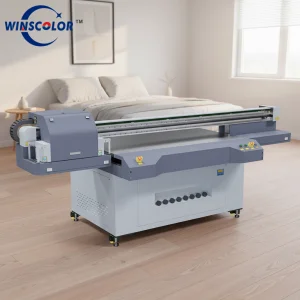
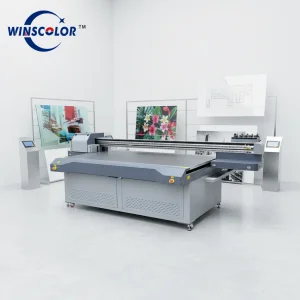
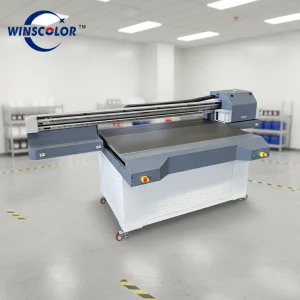
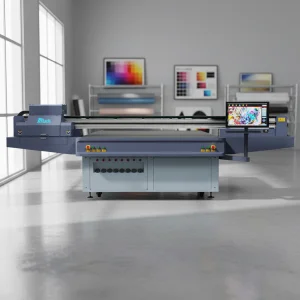
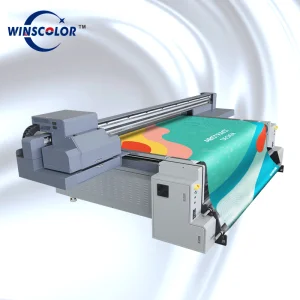
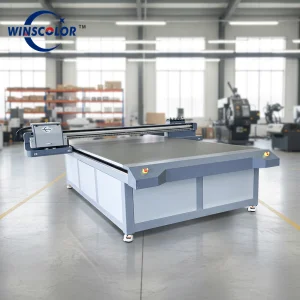
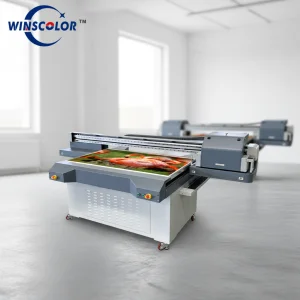
As international supply chains shift toward just-in-time inventory and localized manufacturing micro-hubs, high-speed UV digital printers—such as the YC2513L, YC2030H, and YC3200HR platforms manufactured in Jinan by Winscolor (Jinan Yingcai Digital Technology Co., Ltd)—operate as vital catalysts. These platforms integrate 600×900 mm artisan setups up to expansive 3.3-meter super-wide frames, offering factories universal substrate compatibility across rigid timber, corrugated boards, architectural float glass, anodized aluminum, acrylic sheets, and roll-fed textiles.
Utilizing high-end industrial printheads such as the Ricoh Gen6 (MH5320) and industrial drop-on-demand actuators, our machines fire calibrated droplets ranging from 5 to 15 picoliters at frequencies surpassing 40 kHz. Variable dot grey-scale algorithms ensure continuous photographic color gradients, skin-tone rendering, and razor-sharp 2pt vector typography.
High-speed printing produces dynamic structural resonance. Our chassis utilize heavy-duty, heat-treated dual steel beams combined with dual Japanese THK quiet linear guideways and magnetic linear motor options. This structural integrity guarantees dot-placement tolerances under 0.01 mm across the complete 2500 × 1300 mm and 3200 mm print widths.
By pairing high-density micro-milled pigments with independent negative pressure sub-tanks, systems lay down opaque white backings on dark substrates and glass panels, followed instantly by vibrant color passes and tactile selective gloss varnish (3D Braille, embossed textures, and high-gloss scratch coatings).
Tracking the macroeconomic transition from analog offset/screen setups to automated digital flatbed and roll systems across North America, Europe, Asia-Pacific, and the Middle East.
In mature commercial print ecosystems across Germany, the United States, and Japan, labor costs and substrate waste dictate gross margin survivability. Traditional screen printing requires upwards of 45 minutes for emulsion coating, exposure, color registration, and ink squeegee calibration per run. Consequently, run lengths under 500 units incur punitive unit costs. Industrial UV flatbed systems break this cost barrier: digital files transfer directly via RIP software (such as Onyx, Caldera, or Photoprint) to active carriage flight in under 90 seconds.
Furthermore, total operating costs have shifted decisively in favor of low-temperature LED curing. Mercury-vapor discharge lamps historically required 3000–5000 Watts of continuous electrical load, produced significant heat causing thermal warping of thin styrene and PVC, and demanded routine lamp replacements every 800 hours. Solid-state UV-LED banks operate at cold temperatures, cycle instantly without warm-up standby power, and deliver rated operational life exceeding 20,000 to 30,000 operating hours.
Institutional reliability guaranteed through stringent mechanical harmonized standards, non-toxic consumables, and international field service protocols.
Every Winscolor machine exported adheres strictly to European CE standards (EN ISO 12100 safety of machinery, EN 60204-1 electrical safety, and EMC Directive 2014/30/EU). Carriage gantries feature integrated physical anti-crash safety shutters and optical infrared sensor curtains that halt axes immediately upon detecting physical obstructions, safeguarding high-value Ricoh printhead arrays.
Export formulations strictly eliminate heavy metals (lead, cadmium, hexavalent chromium) and comply with REACH SVHC guidelines. Modern industrial formulations utilize low-odor, TPO-free photoinitiators tailored for indoor residential wallcoverings, bespoke children's toys, institutional hospital signage, and commercial consumer electronics without offensive degassing.
Global continuity is reinforced through an organized remote telemetry network and localized distributor hubs across Europe, Latin America, Southeast Asia, and the Gulf. Engineers conduct real-time IP-based video remote diagnostics, waveform tuning, dynamic motor calibration, and dispatch DHL/FedEx air-express replacement parts within 24–48 hours.
Overcoming low surface energy dynamics across glass, polymers, timber, composites, and high-impact industrial packaging.
Inorganic non-porous glass surfaces present severe surface energy challenges (dyne level < 30). By applying our automated wipe or spray silane-coupling primer, chemical bonding occurs between silica molecules and acrylate oligomers. The result is waterproof, boiling-water-resistant, anti-scratch architectural cladding, splashbacks, and elevator wall murals.
Aluminum composite panels (Dibond) require high shear resistance and dimensional stability under extreme exterior weathering. Our UV LED flexible/semi-rigid ink series retains elastomeric flexibility up to 180%, enabling CNC routing, scoring, and 90-degree metal folding post-print without hairline micro-cracking along bend lines.
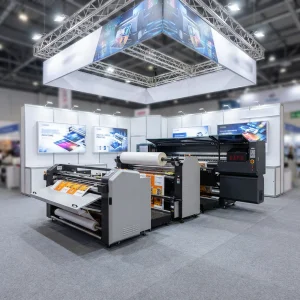
High-volume packaging converters utilize systems like the RS1900-E16 and heavy-duty corrugated board printers for on-demand e-commerce shipping boxes, litho-laminated cartons, and point-of-sale retail displays. Direct single-pass or multi-pass digital curing eliminates costly flexographic tooling, enabling profitable production runs as small as one unit.
Selective white ink printing acts as an opaque physical barrier, allowing natural timber grains to emerge dynamically through photographic art prints or sealing porous grain structures completely to present vivid, unadulterated color saturation for bespoke cabinetry and acoustic baffle arrays.
Specialized deep-draw thermoforming inks can stretch over 200–300% under thermal vacuum mold cycles without delamination or color washing, serving automotive cockpit instrument clusters, illuminated acrylic lightboxes, and high-durability polycarbonate membrane interfaces.
By repeatedly layering high-viscosity clear UV varnish drops with micro-metered UV LED pinning passes, our printers achieve precise tactile Braille compliance (ADA standards) and replicate luxurious textures including leather patterns, carbon fiber weaves, oil-painting impasto, and geometric water-droplets.
Anticipating the technological horizon: Integrating artificial intelligence in carriage trajectory, water-based UV chemistry, and high-speed single-pass packaging systems.
Embedding high-resolution CCD cameras within the printhead carriage to auto-detect skew angles, irregular substrate boundaries, and pre-drilled hardware holes, recalculating raster image coordinates in sub-second cycles.
Developing ultra-thin ink film profiles (under 3 microns) that blend the safety of water-based dispersions with instantaneous UV polymer crosslinking, catering directly to stringent food contact secondary packaging mandates.
Transitioning from scanning shuttle gantries to stationary wide-array printhead bars running continuously at speeds of 50 to 150 meters per minute for inline corrugated carton conversion and high-speed industrial wallboard lines.
Formulating renewable plant-oil-based acrylate monomers that allow seamless chemical de-inking at recycling plants, maintaining cradle-to-cradle circularity for industrial plastic and corrugated substrates.
In-depth responses compiled by senior field application engineers to assist plant managers, procurement directors, and technical operators.
Full engineering configurations engineered for global distribution, high-volume sign factories, and packaging converters.