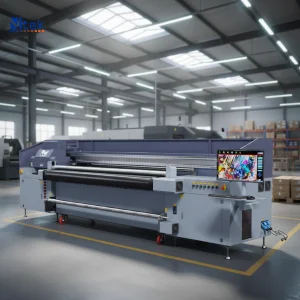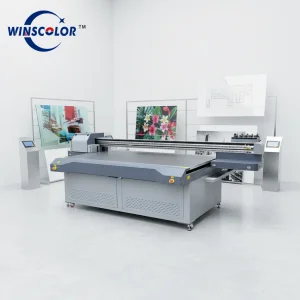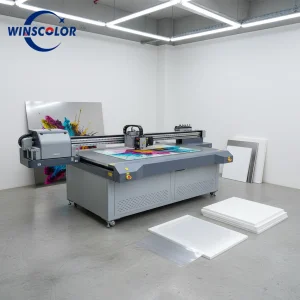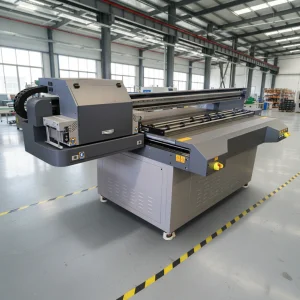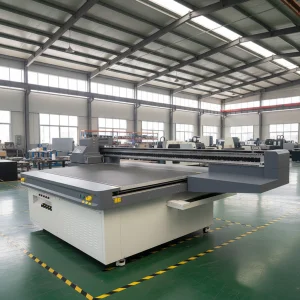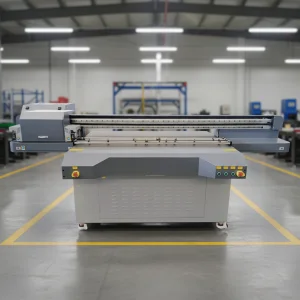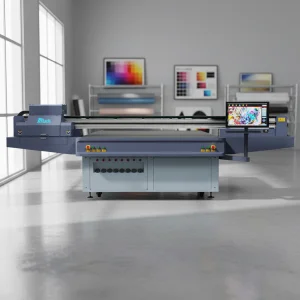
Explore production-grade UV curable inkjet engines built with high-torque servo drives, heavy-duty suction platforms, and multi-drop grayscale piezo technologies.
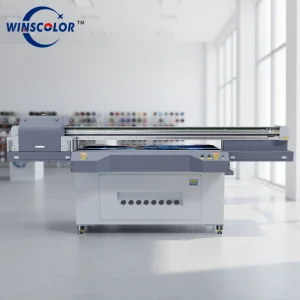
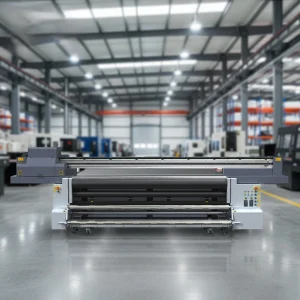
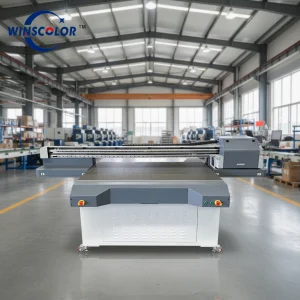
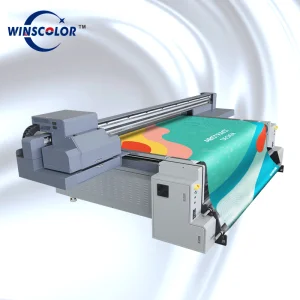
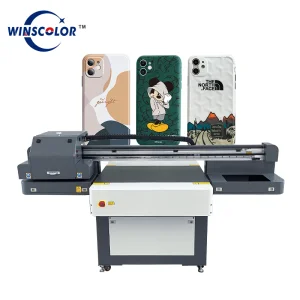
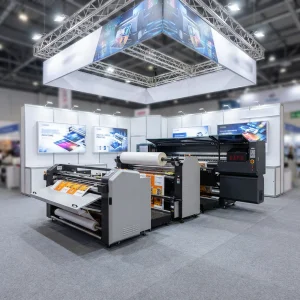
A technical examination of flatbed jetting architecture, mechanical gantry equilibrium, UV-LED cold-light polymerization, and molecular surface adhesion on architectural furniture skins.
Utilizing high-end Ricoh Gen6 and industrial grade printheads, our systems deliver drop-on-demand piezo micro-jetting. This allows ultra-fine micro-texturing, realistic synchronized wood-grain ticking, and tactile embossed finishes on solid wood, MDF, and HPL panels.
Thermal deformation on heat-sensitive materials like PVC skins, hollow core composites, and acrylic laminate doors is mitigated through dual air-cooled or water-chilled UV-LED arrays. Wavelengths are tuned precisely between 385nm and 395nm for complete photochemical curing.
Our turnkey applications integrate inline and offline chemical silane priming solutions, allowing direct jetting on non-porous lacquered finishes, PET-G, ultra-gloss acrylic sheets, tempered glass cabinet fronts, and anodized aluminum frames without peeling.
Addressing OEM/ODM global requirements, fast-turn prototyping, vertical supply-chain integration, and international quality management protocols from the heart of industrial machinery fabrication.
Unlike light commercial assemblers, our manufacturing base deploys five-axis gantry milling centers to machine every steel frame structure from a single weldment. Annealing furnaces eliminate internal steel stresses, preventing chassis twisting over decades of heavy use.
Situated within Jinan’s advanced mechatronics cluster, our direct supply lines integrate high-precision THK/Hiwin linear rails, Panasonic/Yaskawa servo motors, German IGUS drag chains, and Italian Megadyne belts to guarantee sub-assembly reliability without procurement delay.
By leveraging integrated mass production, global cabinet makers obtain heavy industrial-class machinery at a fraction of Western capital cost, accelerating ROI to within 6 to 9 months while dramatically lowering ongoing maintenance and replacement-part operational expenses.
A systematic operational overview detailing surface preparation, ink layer dynamics, and curing behavior across standard residential and commercial cabinetry substrates.
| Cabinet Door Core Material | Surface Preparation Profile | Ink Layer Architecture | Adhesion Metric (ASTM D3359) | Recommended Machine Format |
|---|---|---|---|---|
| Solid Natural Wood / Veneer | Dust extraction + Low-viscosity sealer | CMYK + High-Gloss Tactile Varnish | Class 5B (Zero Detachment) | YC2513L / YC2030H Flatbed |
| Pre-Primed MDF / HDF | Electrostatic blow-off, dry wiping | White Base + CMYK Wood Pattern | Class 5B (Structural Fusion) | YC2513H / YC2513L Flatbed |
| Tempered Glass Panels | Silane nano-primer wipe (UV activated) | Mirror Reverse White Undercoat + Color | Class 4B-5B (Boiling Water Res.) | YC2030L / YC2513L Vacuum Bed |
| Anodized / Coated Aluminum | Degreasing solvent wipe + Metal Primer | Direct CMYK + Matte Topcoat Varnish | Class 5B (Cross-Hatch Pass) | YC2030 UV / YC1610H Flatbed |
| Extruded PVC Foam / Acrylic | Corona / Anti-static bar ionization | Standard Direct High-Elastic UV Ink | Class 5B (Complete Chemical Bond) | YC2513R / Small PVC Board Unit |
From custom bespoke residential kitchens to high-turnover luxury hotel fit-outs, discover how our UV printing equipment replaces traditional, slow decorative techniques.
High-end architectural mills utilize spot varnish and high-relief gloss effects to simulate rare marble slabs, geometric metal inlays, and customized botanical patterns across cabinet facades, eliminating expensive laminates and lengthy hand-finishing operations.
Commercial fit-out fabricators require rapid brand-identity reproduction on executive credenzas, sound-dampening acoustic wall panels, and reception fixtures. Our digital flatbeds print high-fidelity vector company graphics directly onto lacquered melamine or compact laminate.
Large hospitality suppliers rely on high-volume flatbeds like the YC2030 and YC2513 to continuously output identical guestroom wardrobe fronts, bedside cabinetry surfaces, and wet-room decorative vanity doors resistant to high humidity and cleaning chemicals.
Ensuring complete operational safety, regulatory compliance, low-VOC production requirements, and round-the-clock technical lifecycle assistance for global operations.
Every printer leaves the facility conforming strictly to the EU Machinery Directive 2006/42/EC, Low Voltage Directive, and electromagnetic compatibility standards. High-voltage power modules are built with UL-compliant safety interlocks and certified industrial breakers.
With an interconnected industrial IoT gateway, our Jinan senior support engineers provide live telemetry monitoring, remote waveform calibration, firmware updates, and step-by-step video diagnostics, backed by overseas technician deployment capabilities.
Our UV-curable ink chemistries fulfill GREENGUARD Gold and REACH SVHC criteria, verifying low total chemical emissions. Printed cabinetry and wall panel systems can be installed inside residential, healthcare, and educational interiors without hazardous degassing.
The convergence of Industry 4.0 automation, synchronous tactile texturing, and high-speed single-pass manufacturing in next-generation decorative architectural production.
Modern production facilities demand seamless integration between upstream CNC panel processing and downstream finishing. We engineer roller transfer and vacuum loading systems that interface directly with standard automated factory warehouse management systems.
Demand for anti-fingerprint, deep ultra-matte surfaces has accelerated. We are pioneering integrated excimer-curing micro-folding technology, producing velvety soft-touch cabinet surfaces with zero gloss flare and extreme surface micro-hardness.
Embossed-In-Register (EIR) jetting utilizes specialized multi-layer clear varnish channels to lay down tactile micro-grooves precisely synchronized with the printed wood grain pores underneath, duplicating authentic sawn timber feel with complete digital agility.
In-depth responses from our senior research engineers regarding ink chemistry, printhead maintenance, production output calculations, and return on investment.
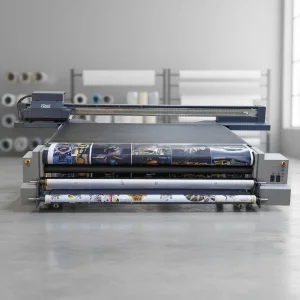
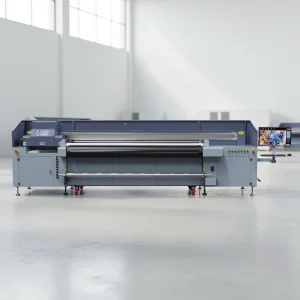
Browse our expanded lineup of large-format roll-to-roll, versatile hybrid conveyor systems, and dedicated high-speed UV digital printing machinery.