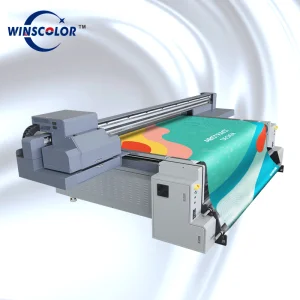
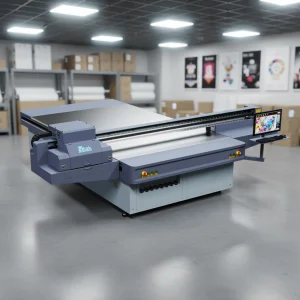
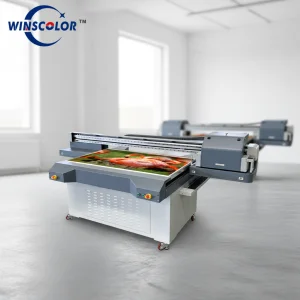
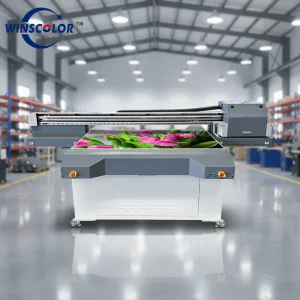
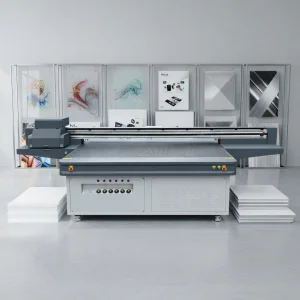
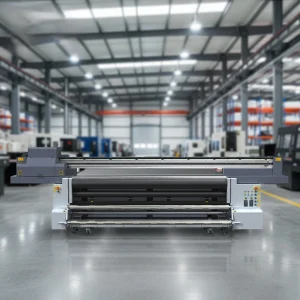
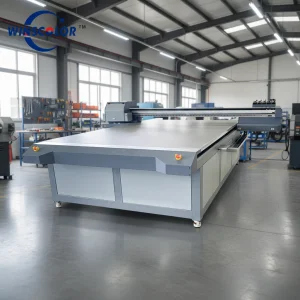
Explore factory-direct industrial platforms configured with high-jetting-frequency piezo printheads, multi-layer white/varnish synchronization, and zoned vacuum retention.
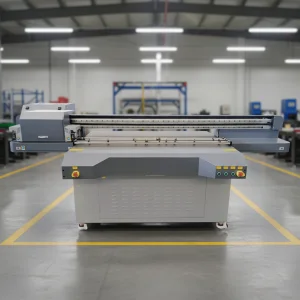
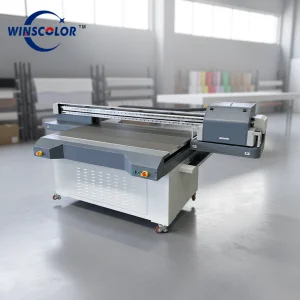
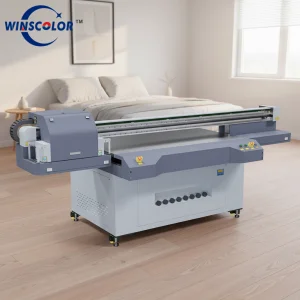
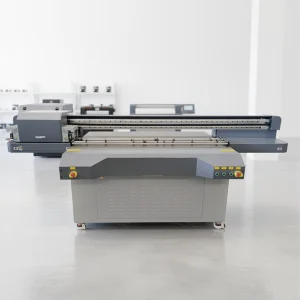
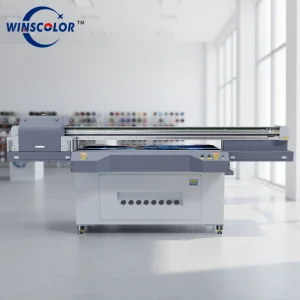
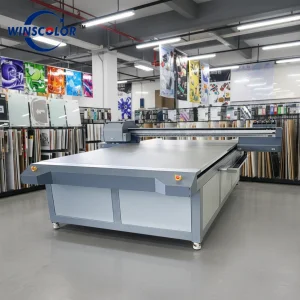
A macroeconomic shift from analog screen printing and ceramic frit baking to high-resolution, on-demand UV-LED photopolymerization across architectural, domestic, and display sectors.
Traditional flat glass ornamentation depended heavily on screen printing meshes, necessitating costly stencil production, massive wash water consumption, and extensive storage racks for screens. Industrial UV inkjet eliminates make-ready overhead, yielding profitable single-sheet prototyping and ultra-short batch fabrication for architectural curtain walls.
The Asia-Pacific region, spearheaded by integrated machinery plants in Jinan and Guangdong, accounts for over 58% of global flatbed export volume. Meanwhile, Western European and North American processors invest in high-payload flatbed gantries configured with multi-drop grayscale heads to service high-margin luxury interior glazing and appliance splashbacks.
Unlike inorganic ceramic inks that require tempering furnace firing at 680°C to fuse glass frits, UV curable systems polymerize cold through high-intensity 395nm UV-LED matrices. This saves up to 82% of line energy expenditure and permits decorated prints on non-tempered float, laminated acoustic, and chemically strengthened thin glass.
Glass is an inorganic, non-porous hydrophilic substrate with exceptionally high surface energy, demanding precise thermodynamic and chemical conditioning to prevent ink film peeling.
Untreated soda-lime silica exhibits microscopic water layers adsorbed from ambient humidity. Industrial glass printers utilize organofunctional silane primers (e.g., gamma-glycidoxypropyltrimethoxysilane). The methoxy groups hydrolyze to form covalent siloxane (Si-O-Si) bonds with the glass, while the organic tail copolymerizes with the acrylic monomers of UV inks.
Standard printing leverages dual-wavelength LED arrays. 395nm or 385nm UV-A photons penetrate deep into dense white undercoats to establish interfacial cross-linking directly against the glass plane, while shortwave 365nm radiant energy rapidly seals the top surface, suppressing oxygen inhibition and providing extreme scratch resistance.
Architectural glass panels can weigh upwards of 300 kg. Flatbed frames must be constructed from stress-relieved, anneal-treated tubular steel gantries machined to <0.02 mm flatness. Powerful turbine vacuum chambers with reversible air flotation enable zero-drag loading of heavy sheets followed by immovable vacuum lock during multi-pass bi-directional printing.
Float glass typically exhibits a surface energy of approximately 30–34 dynes/cm when contaminated by atmospheric oils and carton shipping dust. For effective UV monomer droplet wetting without pooling or pinholing, the substrate must be de-ionized and chemically degreased to reach a critical threshold of ≥48 dynes/cm. Leading glass UV printer manufacturers integrate electrostatic discharge bars directly on the print carriage to neutralize static charges up to 25kV generated during glass panel handling.
From architectural curtain facades engineered for UV weatherability to high-precision consumer electronics touchscreens, glass UV printers deliver sector-specific optical and mechanical performance.
Oversized flatbed platforms (e.g., 2000 × 3000 mm up to 3300 × 2100 mm) deposit durable opaque white gradients and photorealistic graphics on laminated safety glass. Utilizing pigment formulations with a blue wool lightfastness rating of 7–8 ensures exterior durability against solar degradation and thermal shock.
Refrigerators, induction cooktops, range hoods, and microwave oven panels incorporate reverse (second-surface) digital UV printing. High optical density black (optical density > 3.0) and high-opacity white ink prevent LED bleed-through from underlying touch control displays, passing rigorous boiling water peel and tape tests.
Custom sliding doors, shower enclosures, and glass splashbacks demand tactile surface textures. By jetting layered high-build gloss varnish channels, UV flatbeds synthesize frosted acid-etched simulations, reeded/fluted glass optics, and tactile 3D relief structures up to 2.0 mm thickness directly in software.
Equipped with motorized rotary jig modules, compact 1610 and hybrid printers print continuous 360-degree graphics without seam misalignment onto perfume bottles, cosmetic jars, wine flasks, and glassware. Specialized rotary algorithms control droplet timing as peripheral tangent speeds change across tapered diameters.
Used for specialized mass transit windshield borders, sunroof solar rejection gradient dots, and interior panoramic roof lighting accents. High-precision droplet placement (sub-5 picoliter drop sizes) ensures clean visual edge definition that complies with automotive glass safety inspection parameters.
Museum display fabricators utilize multi-layer "sandwich" printing (Color + White + Color or Color + White + Black + White + Color) for double-sided viewing panels. Day-and-night backlit vitrines maintain identical color saturation whether the light source is energized or deactivated.
A rigorous architectural breakdown comparing industrial print engines, piezo jetting frequencies, curing configurations, and payload parameters across standard production formats.
| Platform Category | Bed Dimension (X × Y) | Printhead Array | Native Drop Vol. | Max Glass Thickness | Glass Payload Capacity | Primary Industrial Use |
|---|---|---|---|---|---|---|
| Compact Specialty | 1600 × 1000 mm | Ricoh Gen5 / Gen6 (2-4 pcs) | 5 - 7 pl | 100 mm | 150 kg/m² | Cosmetics / Fluted Jars |
| Standard Production | 2500 × 1300 mm | Ricoh Gen6 / KM1024i (4-8 pcs) | 5 - 12 pl | 100 mm | 350 kg/m² | Splashbacks / Partitions |
| Heavy Architectural | 2000 × 3000 mm | Ricoh Gen6 (6-12 pcs) | 5 - 14 pl | 150 mm | 500 kg/m² | Shower Doors / Cladding |
| Super-Format Industrial | 3300 × 2100 mm | Kyocera KJ4A / G6 (8-16 pcs) | 3.5 - 12 pl | 150 mm | 750 kg/m² | Curtain Walls / Façades |
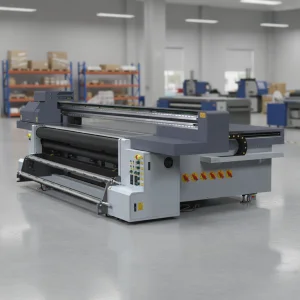
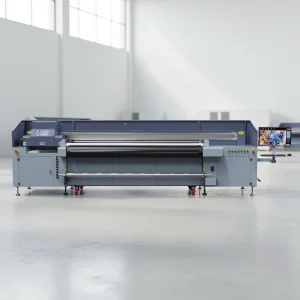
| Hybrid Roll & Flatbed | 2500 / 3200 mm Width | Ricoh Gen6 Industrial | 5 - 15 pl | 50 mm | Conveyor Roller Load | Appliance Glass / Vinyl |
Emergence of hybrid formulations that blend UV photo-initiators with inorganic ceramic sol-gel precursors. The ink cures instantly under LED lamps for scratch-free factory handling and can later withstand tempering furnaces up to 700°C without pigment burnout.
Carriage-mounted high-speed optical vision systems inspect jetting trajectories in real time at 40 kHz. Micro-deflections caused by air eddies around thick glass edges are automatically compensated by dynamic wave-form drive adjustments on adjacent nozzles.
Transition from reciprocating scanning carriages to fixed-array single-pass gantries. Capable of jetting full-width 2.5-meter panels at 1.5 m/second linear speed, bringing digital customization on par with high-speed float glass manufacturing lines.
A modernized industrial glass finishing plant requires closed-loop integration of mechanical loading, surface plasma activation, multi-channel jetting, and inline robotic offloading.
Overhead bridge cranes equipped with suction cups lift raw or seamed glass lites directly from A-frames onto motorized transfer rollers. Optical edge sensors establish zero-datum positioning along mechanical retractable registration pins with ±0.1 mm repeatable alignment.
Prior to printhead passage, a traversing atmospheric plasma nozzle strips organic silicon compounds and carbon residues from the glass surface. For exterior glazing exposed to high humidity, an inline Pyrosil flame treatment deposits a nanometer-thin silicate layer that permanently bonds with UV silanes.
The carriage executes simultaneous printing of primer, dual white underbase, CMYK photo layers, and protective top varnish in a single mechanical pass. Independent UV-LED shuttering modulates exposure timing to eliminate inter-layer bleeding and control gloss level.
Authoritative technical troubleshooting compiled by senior machine designers and surface chemistry specialists for industrial operators and procurement directors.
Explore heavy architectural flatbeds and flexible hybrid systems for seamless high-volume manufacturing across glass, timber, composites, and roll media.