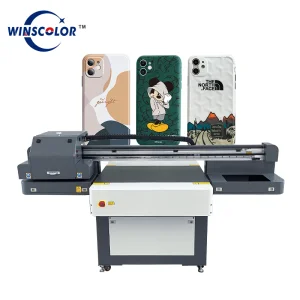
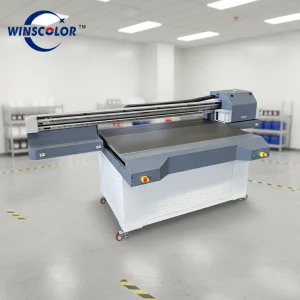
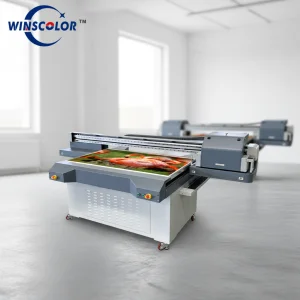
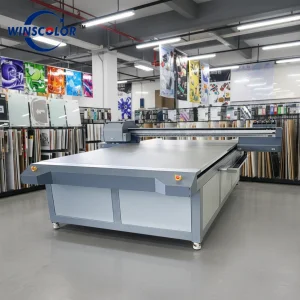
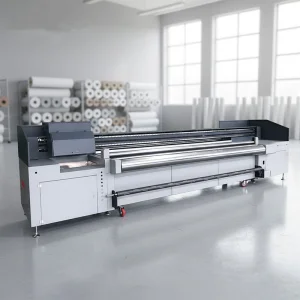
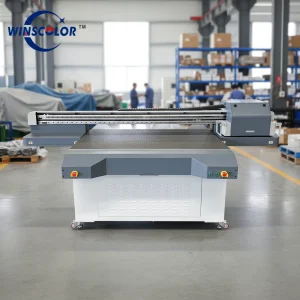
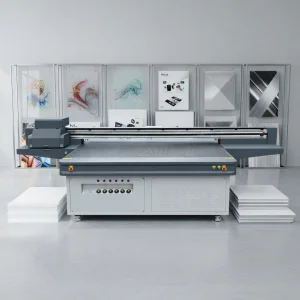
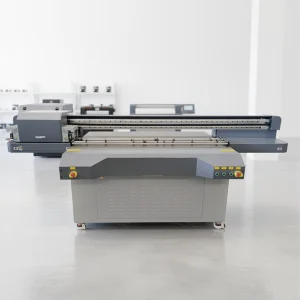
Commercial-grade UV systems tailored for solid timber, plywood, MDF, and particle board surface treatment with dynamic primer deposition.

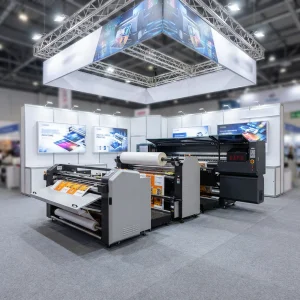
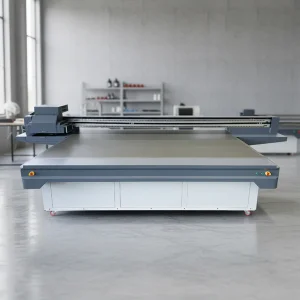
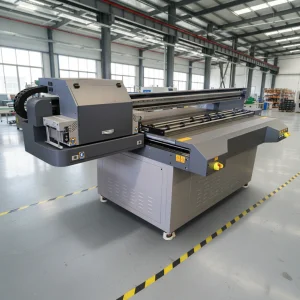

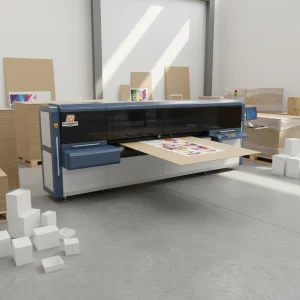
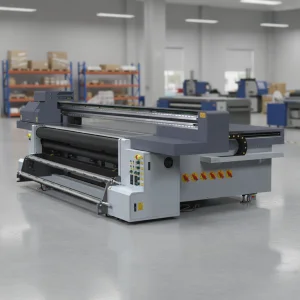
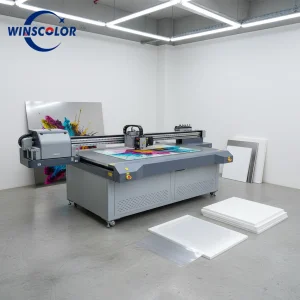
Transitioning from traditional rotogravure cylinder printing and PVC foil laminations to direct-to-object piezoelectric digital inkjet production lines.
Traditional woodgrain printing requires expensive engraved cylinders and minimum runs of 10,000 meters. Digital flatbeds and single-pass systems eliminate setup fees, making 1-sheet custom veneer runs financially viable.
Unlike non-porous plastics, raw MDF, birch plywood, and pine feature varied capillary absorbency. Advanced LED UV inks utilize instant surface pinning (semi-curing) to prevent drop spread before full polymerization.
By depositing variable white and clear varnish ink layers (up to 300 µm build-up), printers generate synchronized pore textures (EIR - Embossed in Register) matching underlying synthetic woodgrain graphics.
Built for continuous operation in dusty, industrial timber environments with dual-rail stabilization and intelligent droplet monitoring.
High-pressure, dual-turbine reverse vacuum chamber holds naturally bowed plywood and warped structural timber flat against the bed, eliminating catastrophic head crashes during raster passes.
Magnetic linear drive encoders provide bidirectional positional repeatability under ±0.01 mm, maintaining photorealistic alignment across multi-board modular wall panels and flooring systems.
Digitally regulated dual negative-pressure reservoirs isolate White and Color channels independently, mitigating particulate settlement in titanium dioxide (TiO2) white inks even during operational pauses.
Custom-engineered workflows addressing distinct timber density, resin content, and top-coat adherence demands.
Digital conversion of plain pine or MDF doors into rare walnut, bleached oak, or reclaimed barnwood finishes with zero lamination peeling risk.
High-abrasion direct printing on high-density fiberboard (HDF) and mineral composite substrates for AC4/AC5 commercial durability ratings.
Personalized kitchen cabinetry panels, retail interior displays, and art installations across solid timber slabs and bamboo ply.
Strategic advancements pushing line speeds to 150m/min and integrating automated real-time defect compensation.
Next-generation systems use line-scan cameras to detect natural timber grain knots and cracks in real time, automatically morphing digital artwork to organically mask natural defects.
Accelerating migration from standard monomer UV curable chemistries toward bio-based water-dispersed pigments meeting zero-VOC environmental building codes (LEED v4/WELL certifications).
Stationary printhead arrays passing up to 75 meters per minute integrated directly behind planers and CNC profile sanders, enabling inline edge-band and face decorative production.
Key operational and technical concerns answered directly by our factory R&D engineers.
Explore our wide-format flatbeds, rotary-configured units, and hybrid roller systems built for high-throughput production.