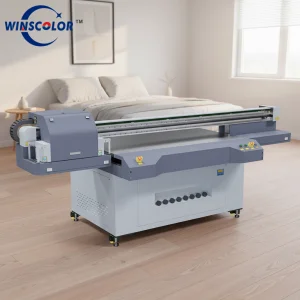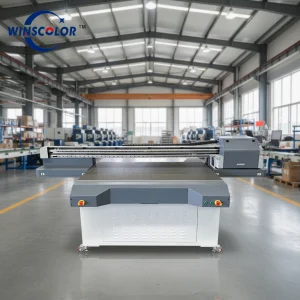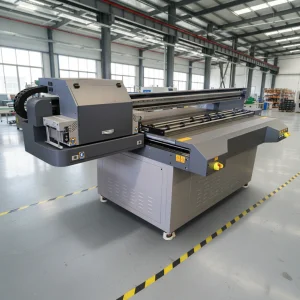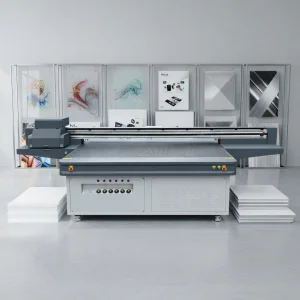
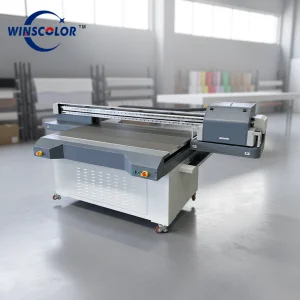
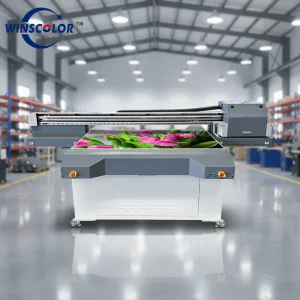
NTEK 2.5*1.3m UV Led Flatbed Printer with G6 Printhead CMYK Lc Lm W and V Factories, Products
Engineered for continuous production uptime, micron-level dot positioning, and robust substrate compatibility across packaging, sign graphics, and industrial manufacturing.
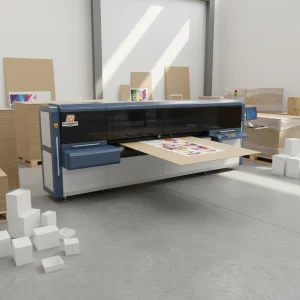
NTEK 2.5*1.3m UV Led Flatbed Printer with G6 Printhead CMYK Lc Lm W and V Factories, Products
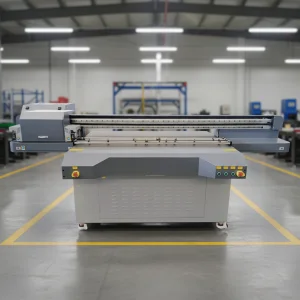

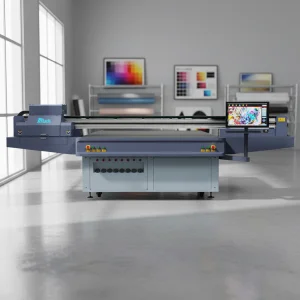
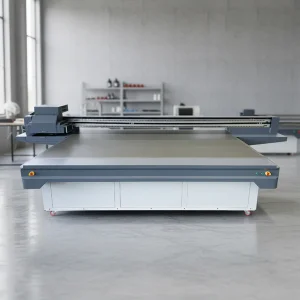
Famous Hot Sale Aluminum Acrylic Ceramic Dibond 2030 UV Flatbed Printer Suppliers, Exporter
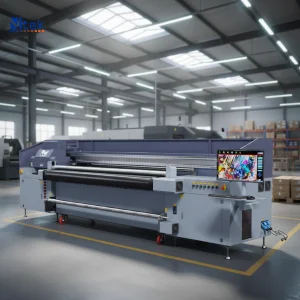
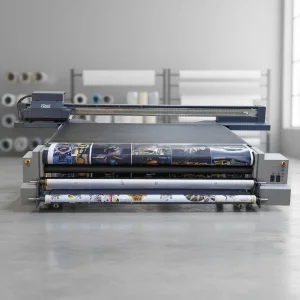
High-Quality Quality Inspection New Model YC2500HR Banner Roll to Roll UV Printer Supplier, Products
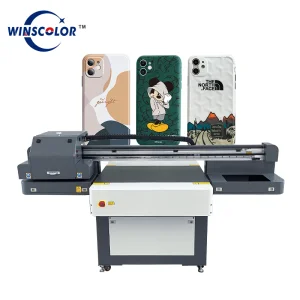
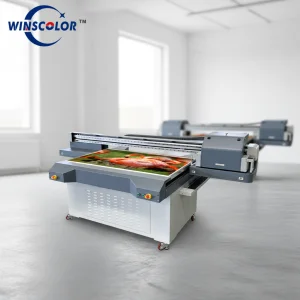
Wholesale Ntek UV 6090 Digital Small Format Inkjet Flatbed UV Printer Manufacturers, Supplier
Strategic analysis of piezoelectric drop-on-demand evolution, variable droplet waveforms, and cold-curing LED polymerization architectures driving sustainable manufacturing.
Modern industrial UV printers leverage industrial Ricoh Gen6 and Gen5e print engines, generating variable droplet distributions ranging from 5pl to 15pl. This eliminates visual grain across smooth photographic skin tones while maintaining high-density pigment coverage in solid vector layers.
Transitioning from mercury-vapor lamps to dual water-cooled UV-LED curing arrays drastically curtails heat deformation on heat-sensitive materials such as thin PVC films and polystyrene boards. Operating at specific 395nm wavelengths reduces thermal load by over 65% and slashes operational electricity consumption.
Embedded computer-vision inspection coupled with dynamic anti-static ionizer bars automatically regulates media gap height down to 0.1 mm precision. Real-time nozzle state analysis dynamically compensates for missing firing pins on long production runs without stopping the gantry.
How wholesale UV printing machines drive industrial profitability across structural architectural components, retail merchandising, and rigid corrugated packaging.
Direct ceramic tile and flat glass decoration using specialized silane adhesion primers. Withstands severe weather exposure, ASTM cross-hatch adhesion stress tests, and high moisture levels without delamination.
Single-pass and multi-pass digital carton printing eliminates costly flexographic polymer plates. Enables custom on-demand micro-flute corrugation and POS displays with instant version switching.
Employing hyper-elastic UV ink chemistries capable of up to 200% stretching elongation. Allows printed sheets to undergo post-cure vacuum deep-draw thermoforming without cracking or ink separation.
Precision spot-varnish overlays and multi-layer opaque white underbases produce tactile Braille lettering, durable button reliefs, and scratch-resistant front panels for electronic medical appliances.
Inside our Jinan production complex: complete vertical integration from structural frame milling to sub-micron printhead electronic integration.
Custom aviation-grade honeycomb aluminum beams withstand high g-force acceleration without lateral deflection, safeguarding line straightness during 1.8 m/s bidirectional carriage scans.
Equipped with dual Japanese THK ultra-silent linear guides and dual Panasonic AC brushless servos, providing non-jitter motion feedback and sub-micron positioning repeatability.
Independent dual negative-pressure regulators for white and color channels prevent ink weeping or starving under high-frequency jetting cycles, drastically curtailing printhead purge loss.
Evaluating Capital Expenditure (CapEx), ink consumable yield per square meter, and long-term equipment lifecycle return on investment (ROI).
Our OEM inks are precisely tuned to Ricoh Gen6 waveforms, achieving an average coverage of 110–130 m² per liter of CMYK ink at 720×1200 dpi. This lowers operational consumable expenditure by 35% compared to closed-cartridge systems.
By implementing German Igus drag chains, Italian Megadyne timing belts, and medical-grade Teflon pneumatic circuits, our industrial chassis delivers an MTBF rating in excess of 5,000 continuous operating hours under multi-shift runs.
Turnkey brand integration for global machinery distributors. Includes tailor-made sheet metal color schemes, localized RIP software branding (ColorGATE, Photoprint, Onyx), and customized PLC interface languages.
Ensuring compliance with international safety directives, low-emission manufacturing guidelines, and uninterrupted spare parts logistics.
Full conformance with the EU Machinery Directive 2006/42/EC and Electromagnetic Compatibility (EMC) standards. Curable ink solutions meet strict RoHS and REACH directives, certifying zero volatile organic compound (VOC) emissions during production.
To mitigate international transit bottlenecks, critical electronic driver boards, printhead manifolds, pumps, and optical encoders are backed by strategic safety inventories in North America, Western Europe, and Southeast Asia.
Proprietary cloud-enabled telemetry modules allow our core Jinan engineers to interface securely with field PLCs, running remote diagnostics, adjusting jetting waveforms, and resolving electronic edge errors in minutes.
In-depth responses compiled by our senior hardware, firmware, and chemical application engineers.
Explore our specialized roll-to-roll, corrugated board, and high-format flatbed digital printing portfolio engineered for high-volume manufacturing lines.