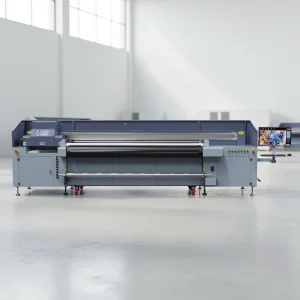
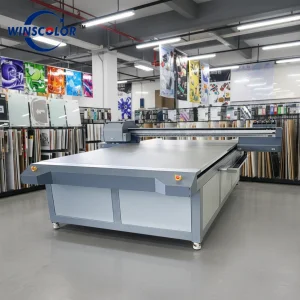
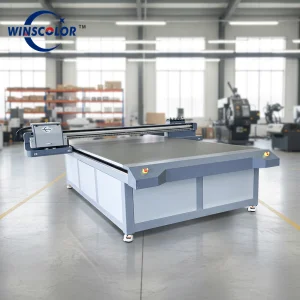
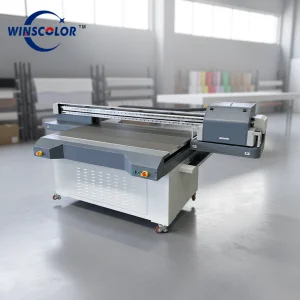
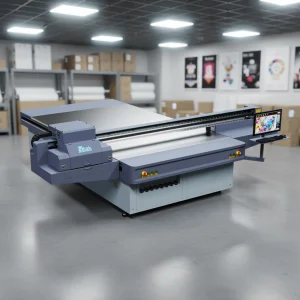
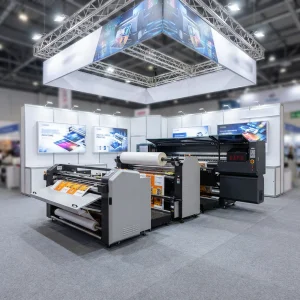
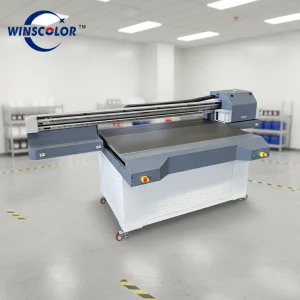
Explore our top industrial flatbed and hybrid configurations featuring advanced negative-pressure ink delivery, multi-zone vacuum suction beds, and instantaneous LED-UV cold curing.
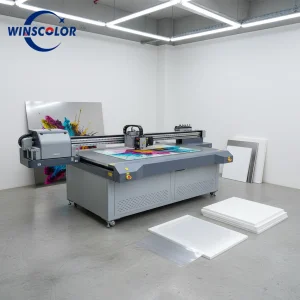
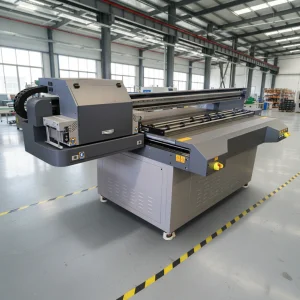
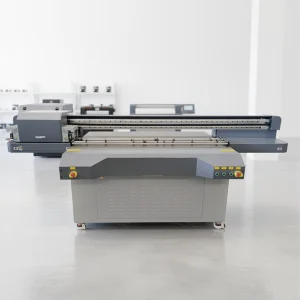
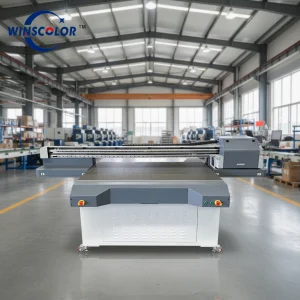
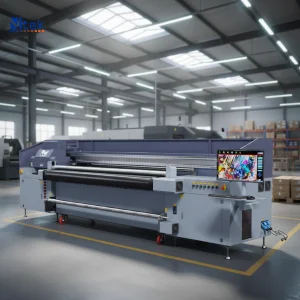
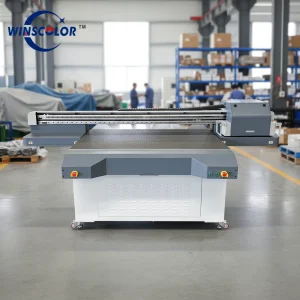
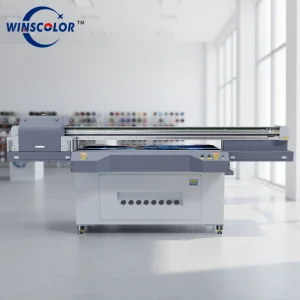
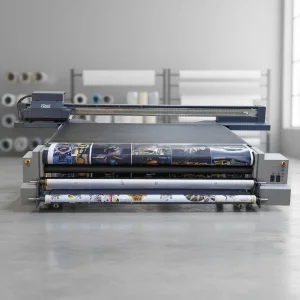
Unlike porous paper, PVC, or natural wood, glass presents an entirely non-porous, chemically inert, and high-surface-energy challenge. Overcoming delamination requires thermodynamic and mechanical precision.
Float glass naturally exhibits a clean surface tension above 70 dyn/cm, but airborne hydrocarbons quickly reduce this below 38 dyn/cm, causing UV ink bead-up and adhesive failure. Our wholesale UV glass printers integrate optimized silane-coupling wipe/spray primers (organofunctional silanes) that create a covalent chemical bridge between the silicon dioxide ($SiO_2$) matrix of the glass and the polyacrylate monomers of the UV-cured film, delivering permanent 5B cross-hatch adhesion tested per ASTM D3359.
Traditional mercury vapor lamps emit intense radiant infrared heat that expands thick architectural glass unevenly, resulting in thermal stress fracturing or micro-registration slippage. Our platforms employ high-intensity 395nm/365nm water-chilled LED-UV pinning arrays. Cold-cure UV lamps trigger radical photoinitiator cross-linking in milliseconds without raising the substrate core temperature by more than 3°C, safeguarding dimensional stability on 3mm to 50mm tempered glass slabs.
Jetting onto ultra-smooth glass requires micron-level drop placement. Equipped with industrial Ricoh Gen6 (MH5320) or Gen5 printheads, our glass printing engines utilize 5pL to 15pL multi-drop grayscale waveforms operating at up to 50 kHz fire frequencies. Supported by dual internal negative-pressure recirculation for white ink channels, titanium dioxide ($TiO_2$) particles are kept permanently suspended to eliminate nozzle starvation, micro-banding, and clogging during 24/7 industrial runs.
| Performance Vector | Standard Commercial Flatbed | Winscolor Industrial UV Glass Printing Engine | Operational Glass Fabricator Advantage |
|---|---|---|---|
| Adhesion Strength (ASTM D3359) | 1B - 2B (Easily peeled with fingernail/tape) | 5B Rating (Zero flaking across grid cuts) | Passes architectural building facade & kitchen wet zone durability standards |
| Curing System Technology | High-heat UV Mercury Arc / Air-Cooled LED | Dual Water-Cooled Multi-Zone LED-UV (395nm) | Prevents thermal cracking of annealed & tempered panels; 25,000hr diode life |
| Bed Load & Structure | Light sheet metal gantry (< 150 kg bed rating) | Heavy Annealed Steel Frame (> 1,000 kg bed load) | Withstands monolithic float glass slabs up to 50mm thickness without deflection |
| Optical Density & White Opacity | Single White Channel (OD < 1.8) | Staggered Dual/Triple High-Density White (OD > 2.6) | Total black-out backing for mirror glass, appliance panels, and privacy glazing |
| Tactile Surface Capability | Flat 2D ink deposit only | Layered Micro-Embossing + Spot Gloss Varnish | Produces etched glass imitation, tactile Braille signs, and 3D relief art murals |
Across global markets, tier-one manufacturers, architectural contractors, and interior decor specialists rely on digital UV flatbeds to replace expensive screen printing screens and messy ceramic frits for rapid on-demand customization.
Printing directly onto tempered curtain wall units, balustrades, acoustic partitions, and skylights. Digital ink profiles resist prolonged UV solar radiation without chalking, fading, or edge delamination.
Induction cooktop surrounds, smart refrigerator decorative doors, microwave door panels, and oven touch interfaces requiring high-opacity black borders, crisp translucent icons, and scratch-proof backing.
Direct printing of high-resolution marble veins, geometric backsplashes, and one-way privacy gradients on tempered float glass. Highly resistant to hot steam, cleaning agents, and kitchen grease.
Custom perfumery flacons, commemorative crystal trophies, glass spirit bottles with rotary fixtures, and collector art installations featuring selective tactile varnish and spot gold/metallic underbases.
As a pioneer in industrial CNC and digital printing machinery in Shandong, China, Winscolor integrates precision heavy machinery manufacturing with Tier-1 Japanese piezo printhead integration.
Unlike light aluminum extrusion equipment, our machine frames undergo complete thermal annealing and high-temperature stress relief, followed by 5-axis gantry CNC milling to achieve geometric planarity within ±0.02 mm across a 3.3-meter bed span. Dual Japanese THK silent linear guide rails and double ball screws guarantee zero carriage wobble when moving high-mass print assemblies across solid float glass panels.
By producing over 1,500 machines annually across our 20,000 m² Jinan campus, we obtain deep volume cost tiers on genuine Ricoh Gen6, Toshiba, and Epson industrial heads, German Igus cable chains, Panasonic AC servo drives, and Italian Megadyne timing belts. Wholesale distributor partners benefit from factory-direct pricing margins that are 35% to 50% more competitive than European or American repackaged brands.
Before packing in vapor-barrier vacuum foil and custom export-grade fumigated wooden crates, every UV glass printer executes continuous 72-hour bidirectional high-speed motion testing and multi-pass solid ink coverage verification. Every axis squareness, drop trajectory angle, vacuum chamber pull-rate, and emergency safety barrier is certified against strict ISO 9001 quality assurance metrics.
International glass processors demand total peace of mind. Our global export protocols deliver turnkey localized support, complete electrical conformity, and dependable consumable supply pipelines.
All Winscolor wholesale UV printers comply with EU Machinery Directive 2006/42/EC and Electromagnetic Compatibility Directive 2014/30/EU. Electrical cabinets feature UL-certified components, Schneider contactors, isolated low-voltage control loops, and optoelectronic safety interlocks that immediately stop the gantry if an operator reaches near the moving carriage, fully meeting OSHA and European workplace standards.
We provide localized engineering support across North America, the European Union, Southeast Asia, and the Middle East through trained distributor service centers and direct factory technical staff. Our machines feature embedded IoT remote telemetry modules, allowing factory engineers to diagnose circuit boards, verify piezo firing voltages, and fine-tune color ICC curves via encrypted cloud assistance within minutes of a service call.
A printing machine is only as profitable as its uptime. We maintain regional inventory hubs stocked with glass primers, specialized UV inks (hard formulations specifically optimized for glass shear resistance), replacement filter cartridges, secondary ink tanks, negative-pressure pumps, and Ricoh Gen6 piezo heads, ensuring next-day dispatch to keep your production runs active.
Send our senior engineering team your glass dimensions, hourly square meter output targets, and adhesion specifications. We provide complete layout drawings, ROI analyses, and free customized sample testing on your exact glass samples.
As digital printing captures market share from traditional screen printing and ceramic frit baking, leading equipment suppliers are driving breakthroughs in inks, surface physics, and robotic automation.
Manual wipes with chemical adhesion promoters are being replaced by automated gantry-mounted atmospheric plasma torches and flame-pyrolysis silicate deposition units. These units run ahead of the print carriage to break down organic impurities, increase glass surface energy above 72 dyn/cm, and deposit nanometer-thin silicate layers for permanent mechanical adhesion on heavy architectural panels.
While organic UV inks handle indoor partitions, splashbacks, and electronics, outdoor architectural glass is turning toward hybrid ceramic inks. These inks are digitally jetted at room temperature, pre-cured with LED-UV for transport handling, and then permanently fused into the glass matrix during the 680°C tempering cycle, ensuring complete chemical integration for building facades.
Modern glass fabricators are connecting industrial UV flatbeds directly to factory ERPs and 6-axis robotic suction arms. High-speed overhead CCD cameras scan the glass edge coordinates in real time, auto-compensating for board rotation and beveling errors, ensuring edge-to-edge full-bleed register with zero manual setup intervention.
Direct answers from our senior engineering team regarding ink chemistry, adhesion testing, production cycle times, and machine maintenance.
Float glass consists of non-porous silica structures with high polarity. Untreated glass bonds weakly to acrylate-based UV inks, often leading to edge peel when exposed to humidity or mechanical stress. Applying an organofunctional silane primer creates covalent chemical bonds with the glass's hydroxyl groups and links into the cross-linked UV polymer network, elevating adhesion from a failing 0B to a clean 5B per ASTM D3359 standard tests.
Our industrial flatbed beds are constructed from heavy-gauge structural channel steel, stress-relieved and surface-milled on 5-axis CNC machines to maintain flatness under loads up to 1,200 kg. Retractable pneumatic registration pins help position thick glass slabs, while a high-capacity multi-zone vacuum suction table with reverse-air blowback allows heavy panels to float on an air cushion for easy, scratch-free positioning.
Yes. By configuring independent channels for CMYK, Light Cyan, Light Magenta, White, and Gloss Varnish, the printer can execute layered "Color + White + Color" sandwich prints for double-sided viewing, or print a heavy opaque white base for mirror finishes. By layering clear gloss varnish at controlled drop heights, it creates realistic frosted etchings, simulated fluted glass patterns, and raised tactile 3D relief structures.
The Ricoh Gen6 (MH5320) head delivers higher jetting frequencies (up to 50 kHz vs. 30 kHz on Gen5) and smaller drop sizes (minimum 5pL vs. 7pL). This delivers sharper micro-text, smoother flesh tones, faster pass speeds on large panels, and reduced ink misting when operating across reflective glass surfaces.
Typical ink consumption for a full-color CMYK graphic on transparent glass averages 10 to 12 ml/m². When laying down a heavy, light-blocking double-pass white flood coat behind the image, total ink usage ranges between 22 and 26 ml/m². Sourcing direct factory UV ink bottles keeps total ink costs within $0.80 to $1.60 USD per square meter, giving producers strong gross margin advantages over screen printing setup costs.
Every printer includes a 12 to 24-month structural and electronic warranty (excluding consumable printhead nozzles). We provide comprehensive factory FAT (Factory Acceptance Testing), video installation guides, full English documentation, and direct access to senior technicians via WhatsApp/WeChat/TeamViewer. We also offer on-site commissioning and operator training through our certified local distributors.
Choose the right bed size, carriage configuration, and roll option to scale your glass decoration, sign fabrication, and industrial printing production lines.