Industrial UV Engineering White Paper & Procurement Standard

Wholesale UV Flatbed Printer Machine Manufacturers & Products

Empowering global industrial fabricators, commercial printers, and display converters with high-precision piezoelectric inkjet architecture, cold LED curing dynamics, and plate-free multi-layer industrial digital printing solutions.

Direct-From-Manufacturer Equipment

High-Precision Industrial UV Flatbed Systems

Engineered for continuous industrial run-rates, micro-drop precision, and multi-substrate adaptability across rigid boards and specialty components.
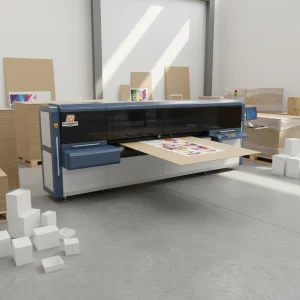
Digital Single Pass Corrugated Board Printing Machine
Famous High Speed Automatic Digital Single Pass Corrugated Board Printing Machine Large Format Carton Box Manufacturer, Company
View Specifications
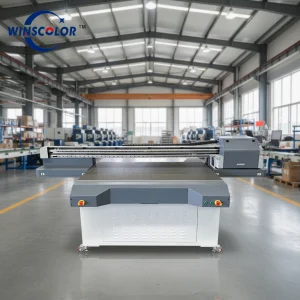
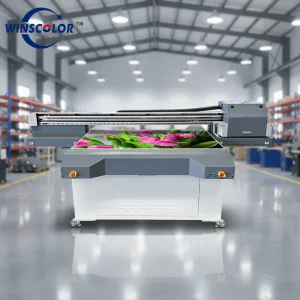
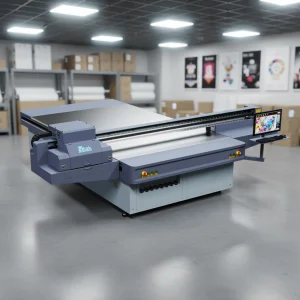
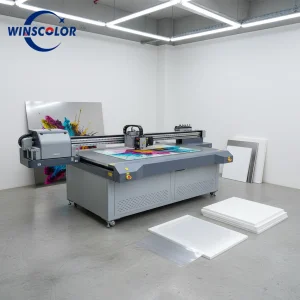
Acrylic Metal Wood PVC Board Glass LED UV Flatbed Printer
High-Quality Manufacturer of Acrylic Metal Wood PVC Board Glass LED UV Flatbed Printer Suppliers, Factories
View Specifications
OEM YC1610 Road Sign Printing Machine
OEM YC1610 UV Flatbed Printer Manufacture Road Sign Printing Machine Supplier, Suppliers
View Specifications
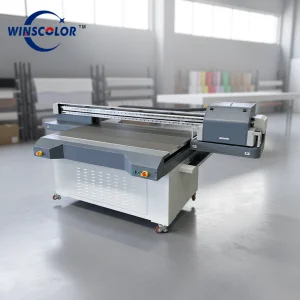
Wood Glass UV Flatbed Printer High Resolution 1610
Famous Ordinary Discount Wood Glass Uv Flatbed Printer High Resolution 1610 Digital UV Printing Machine Exporter, Companies
View Specifications
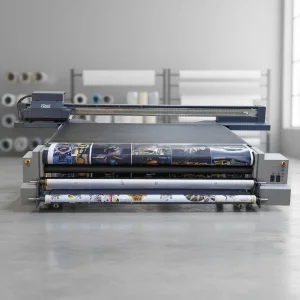
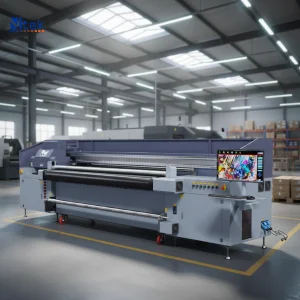
YC3321R Hybrid Flex Banner Printing Machine
High-Quality Large Format UV Roll to Roll Printers YC3321R Hybrid Flex Banner Printing Machine Factory, Companies
View Specifications
Small Digital UV LED Flatbed Printer for Ceramic Tiles Wood
Wholesale Good Wholesale Best Price Small Digital UV LED Flatbed Printer for Ceramic Tiles Wood Manufacturer, Factories
View Specifications
Phone Case Glass Bottle Canvas UV Flatbed Printer
High-Quality Factory Outlets Phone Case Glass Bottle Canvas UV Printing Machine UV Flatbed Printer Manufacturers, Supplier
View Specifications
NTEK Multifunction Large Format UV Flatbed Ceramic Printer
NTEK Multifunction Large Format UV Flatbed Printer Ceramic Printer Exporters, Product
View Specifications
Industry Economics & State of Technology

Global Industrial Landscape: The Digital UV Curing Transformation

Analyzing the macro shift from solvent evaporation and thermal drying toward instantaneous photopolymerization in modern smart factories.

9.2%
Compound Annual Growth (2024–2032)
< 0.05%
Volatile Organic Compound Emissions
65%
Thermal Energy Reduction vs Mercury Arc
100+
Rigid & Flexible Compatible Substrates

The global manufacturing environment has permanently shifted away from conventional analog printing methods such as screen printing, pad printing, and rotogravure for short-to-medium runs. The demand for instant personalization, zero-inventory packaging, and rapid prototyping has catalyzed the adoption of industrial ultraviolet (UV) flatbed printing machines. Wholesale UV flatbed printers have evolved from peripheral sign-shop tools into foundational hardware integrated into high-throughput production lines across North America, Europe, East Asia, and emerging production hubs in Southeast Asia and Latin America.

Unlike solvent inks that rely on carrier fluid evaporation—which emits hazardous volatile organic compounds (VOCs) and demands high thermal drying times—UV-curable inkjet chemistry functions through instantaneous free-radical photopolymerization. When oligomers, monomers, and photoinitiators are exposed to UV light emitted by cold ultraviolet light-emitting diodes (UV-LED arrays operating typically at 365–395 nm wavelengths), they crosslink into a hardened polymer network within fractions of a second. This allows the finished product to be stacked, processed, routed, or packed immediately off the printing bed, eliminating post-print staging buffers.

Engineering Operational Insight: Cold UV-LED arrays emit near-zero infrared (IR) radiant heat compared to traditional medium-pressure mercury arc lamps. This allows wholesale operators to print micro-thin styrenes, heat-sensitive PVC, acrylics, and ultra-thin fluted polypropylenes without the substrate bowing, warping, or suffering head-strike collision errors.

Technical Specification Benchmarks

Core Mechanical Engineering & Motion Control Architecture

Examining the structural mechanics, piezoelectric jetting physics, and sub-micron positioning systems underpinning wholesale UV platforms.

Heavy-Duty Tempered Steel Gantry

Structural stability is the primary defense against micro-banding. Fabricated from stress-relieved, high-tensile steel milled to within ±0.01 mm over a 3.2-meter span, preventing torsional deflection during rapid carriage deceleration.

Magnetic Linear Drives & Dual Rails

Eliminating lead-screw wear and backlash, linear magnetic motor drives paired with dual THK or Hiwin linear guide rails deliver silent, ultra-smooth carriage movement at scan velocities up to 1.8 m/s with sub-micron dot placement accuracy.

Piezoelectric Industrial Printheads

Deploying industrial Ricoh Gen6, Kyocera KJ4A, and Epson i3200-U1 printheads featuring metal nozzle plates, multi-level grayscale drop control (from 2.5 pl to 21 pl), and independent electronic channel firing up to 50 kHz drive frequencies.

Sub-Atmospheric Negative Pressure

Closed-loop digital negative pressure systems ensure absolute ink meniscus stabilization at the nozzle orifice during high-speed bidirectional scanning, preventing ink dripping, starved channels, and color deviation across sustained runs.

Independent Zoned Vacuum Platform

Segmented turbine vacuum chambers deliver concentrated hold-down force directly under varying media sizes, maintaining absolute substrate planarity without manual tape masking or pneumatic clamps.

White Ink Recirculation Circuit

Continuous mechanical stirring in the bulk tank combined with active cross-head ink recirculation prevents titanium dioxide pigment agglomeration, sediment fouling, and nozzle clogging, reducing daily maintenance overhead.

Architecture Class Printhead Technology Droplet Size Modulation Max Mechanical Speed Target Industrial Workflow
Industrial Precision Flatbed (YC2513L / YC2030) Ricoh Gen6 (MH5320) Piezo 5 pl – 15 pl Variable Dot Up to 50 m²/h (Production Mode) High-end architectural glass, electronics panels, high-spec signage
High-Speed Single Pass (Corrugated Carton) Fixed High-Density Piezo Array 6 pl – 24 pl High Impact Up to 1.5 m/s Linear Web Short-run eCommerce box production, corrugated packaging converters
Hybrid Belt / Roller UV (YC3200HR / YC2500HR) Kyocera KJ4A / Ricoh Gen6 3.5 pl – 12 pl Ultra-Fine Up to 80 m²/h (Draft/Continuous) Fleet vehicle graphics, backlit vinyl, corrugated plastic, multi-roll production
Compact Precision / Rotary (YC1610 / YC6090) Epson i3200-U1 / Ricoh GH2220 3.5 pl Micro-Droplet Up to 15 m²/h (Fine Art Mode) Drinkware (rotary), phone cases, luxury wooden giftware, membrane switches
Substrate Engineering & Chemistries

Material Science: Cross-Industry Application Solutions

Comprehensive surface tension matching, adhesion priming protocols, and finish engineering across challenging media types.

Architectural Glass

Float, Tempered & Textured Glass

Utilizing nano-molecular silane chemical primers to overcome low surface energy (dynes/cm). Enables scratch-resistant, water-resistant back-splashes, interior room partitions, and luxury retail installations.

Industrial Metrology

Anodized Aluminum & Stainless Steel

Direct printing of serial numbers, electrical schematics, control panel fascia, and UL-compliant equipment markings. Resists isopropyl alcohol wipe-downs, UV fading, and thermal thermal cycling up to 120°C.

Point-of-Purchase (POP)

Acrylic, Dibond & Foam PVC

Delivering high-opacity white base-layers with synchronized color-white-color "sandwich" modes for stunning double-sided transparent window displays and illumination without color shift.

Digital Packaging

Corrugated, Kraft & Honeycomb Paper

Zero-plate digital conversion for rapid carton production, shelf-ready packaging (SRP), and subscription display boxes with customized regional barcoding and localized versioning.

Architectural Wood

MDF, Natural Plywood & Veneer

Selective white ink printing preserves natural grain textures while depositing vibrant imagery for custom furniture, acoustical wall paneling, art reproduction, and retail shopfitting fixtures.

Ceramics & Stone

Porcelain Tiles & Polished Marble

High-build gloss varnish channels build realistic 3D micro-reliefs, simulated stone textures, and tactile finishes rated for interior decorative cladding and mosaic embellishment.

Specialty Drinkware

Rotary Cylindrical Integration

Continuous 360-degree seamless helical jetting for stainless steel tumblers, glass bottles, and cosmetic containers. Incorporates synchronized rotational encoders to eliminate visible overlap seams.

Flexible Substrates

Leather, TPU & Thermoforming Plastics

High-elasticity UV inks provide up to 250% elongation without micro-cracking or delamination, engineered specifically for deep vacuum thermoforming, automotive interiors, and leather accessories.

Financial Engineering

Enterprise TCO Formulation & Profitability Analysis

A rigorous economic framework for evaluating capital expenditure versus operating expenditure in industrial UV printing production.

Procurement teams evaluating wholesale UV flatbed equipment must assess the Total Cost of Ownership (TCO) over a standard 5-year industrial lifecycle. The overall cost per square meter ($C_{sqm}$) is governed by the following mathematical formulation:

C_{sqm} = \frac{CapEx_{amortized} + OpEx_{labor} + OpEx_{overhead}}{Volume_{annual}} + (Ink_{rate} \times Coverage_{avg}) + Primer_{sqm} + Maintenance_{nozzle}

Ink Consumption Dynamics: CMYK vs. White & Varnish

Ink represents the most flexible variable operating cost. Under standard ISO 12647-7 graphic evaluation criteria, a CMYK image with 100% total area coverage consumes approximately 8.5 ml to 10.5 ml per square meter when driven by 7 pl variable-dot printheads.

However, when producing industrial signage on transparent acrylic or black metal substrates, a 100% flood white underbase consumes an additional 12 ml to 15 ml per square meter due to the density requirements of titanium dioxide ($TiO_2$) pigments. Selective high-build tactile varnish can consume between 18 ml and 35 ml per square meter to generate embossed tactile Braille or textured effects. Incorporating OEM bulk wholesale ink tanks directly drops fluid costs by 45% to 65% compared to proprietary chipped cartridge ecosystems.

Electrical & Energy Consumption Paradigm

Legacy wholesale printers utilizing 2 × 4.5 kW medium-pressure mercury arc lamps typically consume upwards of 11 kWh during sustained production, along with large exhaust blowers to evacuate poisonous ozone ($O_3$) generated by ionizing 185 nm UV wavelengths. In contrast, modern solid-state UV-LED curing engines require only 0.8 kW to 1.5 kW total power, feature instant on/off switching with zero warm-up latency, and emit zero ozone. This yields direct electrical utility savings exceeding $4,200 annually per production shift.

Future Innovations

Emerging Technology Roadmap: The Next Era of Digital Deposition

Anticipating engineering milestones reshaping wholesale printing equipment over the next production cycle.

AI Computer Vision Active Registration

Integrated overhead line-scan CCD cameras autonomously detect substrate orientation, edge angles, and pre-cut packaging contours in real-time. The RIP automatically recalculates origin coordinates, eliminating jig alignment steps entirely.

Water-Based UV Hybrid Chemistries

Combining the odorless, ultra-thin film properties of aqueous water-based inks with instantaneous UV crosslinking. These systems produce ultra-flexible, zero-toxicity prints compliant with food-contact packaging and interior hospitality certifications.

Cloud-Integrated Industrial Telemetry (IoT)

Embedded sensors continuously measure carriage vibration profiles, printhead drive waveform voltages, ink viscosity temperatures, and vacuum air volume. Predictive maintenance algorithms detect pump degradation before field failures occur.

Technical & Sourcing Inquiries

Wholesale UV Printing Machines: Frequently Asked Questions

In-depth responses compiled by senior printing applications engineers for procurement directors, shop owners, and distribution managers.

What are the definitive differences between Ricoh Gen6, Kyocera KJ4A, and Epson i3200-U1 printheads?
The choice of printhead dictates operational durability, drop jetting frequency, and initial capital expenditure:

• Ricoh Gen6 (MH5320): Features an all-metal chassis, capable of jetting aggressive industrial UV inks without corrosion. Supports variable drop sizes from 5 pl to 15 pl at an operating frequency of up to 50 kHz. It is an industry workhorse for 24/7 continuous industrial environments with an expected operating life exceeding 3–5 years under proper maintenance.
• Kyocera KJ4A: Built for extreme speed, featuring 2,656 nozzles per head across a 108 mm print swath. Typically firing at 30–40 kHz with native 3.5 pl drops, Kyocera heads are favored for ultra-wide format hybrid platforms and high-speed corrugated single-pass production lines.
• Epson i3200-U1: Offers ultra-high native resolution (600 dpi per two rows) with smaller minimum droplet sizes (3.2 pl). It is cost-effective to replace, making it ideal for high-resolution graphics, boutique sign shops, and short-run consumer goods. However, it requires cleaner operating environments compared to stainless steel industrial heads.
How does surface tension (Dyne level) affect UV ink adhesion on metals and glass?
Adhesion failure on substrates such as architectural float glass, polished stainless steel, and untreated polypropylene stems from mismatched surface energy. The surface tension of liquid UV inkjet ink typically ranges between 26 and 32 dynes/cm. To achieve adequate wetting and molecular bonding, the substrate's surface energy must be at least 10 dynes/cm higher than the ink (optimally ≥ 42–46 dynes/cm).

Glass and metal surfaces possess high chemical inertness and adsorbed moisture layers. Applying an organofunctional silane-based primer creates a bridging molecular monolayer: one functional group chemically bonds to inorganic silicates or oxides on the material surface, while the other co-polymerizes with the UV acrylic monomer matrix upon LED irradiation. This achieves an ASTM D3359 cross-hatch adhesion rating of 5B (zero flaking).
What causes micro-banding in bidirectional UV printing and how is it eliminated?
Micro-banding is categorized into mechanical banding, optical banding, or aerodynamic deflection:

1. Mechanical Stepping Errors: In hybrid or flatbed gantry travel, inaccuracies in the Y-axis feed step as small as 5 microns can cause overlapping dark lines or white gaps. High-resolution optical linear encoders eliminate these micro-deviations.
2. Bidirectional Alignment: When printing left-to-right and right-to-left, variations in carriage velocity or printhead jetting delay will displace ink droplets. Precision software calibration of the bidirectional register is vital.
3. UV-LED Curing Gloss Differential: If symmetrical curing is not employed, droplets cured in the reverse pass experience a slightly different delay between jetting and pinning, causing subtle gloss differences. Dual-shutter LED lamps firing symmetrically prevent this optical discrepancy.
What are the site preparation and ambient environmental requirements for an industrial UV flatbed printer?
Industrial UV flatbed printers demand stable ambient parameters to sustain continuous calibration:

• Temperature Range: 20°C to 28°C (68°F to 82°F). Thermal fluctuations cause ink viscosity swings inside the sub-tanks, degrading meniscus stability and drop flight accuracy.
• Relative Humidity: 40% to 65% (non-condensing). Sub-40% humidity intensifies static buildup on plastics (such as acrylic and coroplast), which deflects tiny satellite droplets and causes edge haze. Built-in industrial anti-static ionizer bars help neutralize surface charges.
• Electrical Requirements: Dedicated clean power lines isolated from high-draw electrical equipment (like CNC routers or welders) with online UPS power backup to safeguard printheads and motion systems during sudden outages.
Why choose a wholesale manufacturer direct vs. a localized regional distributor?
Direct wholesale manufacturing sourcing provides distinct financial and technical advantages for expanding operations:

• Direct Engineering OEM Customization: Factory-direct relationships allow custom table dimensions, dual-carriage setups, specialized vacuum zone layouts, and specific printhead configurations matched to your substrate workflow.
• Elimination of Intermediate Margins: Capital equipment costs are reduced by 30% to 50%, with direct access to OEM replacement parts (pumps, filters, boards, linear motors) without distributor markups.
• Direct Level-3 Engineering Support: Direct communication with firmware and mechanical engineers provides tailored RIP ICC profiles, board-level diagnostics, and rapid turnaround on custom firmware modifications.
Comprehensive Machinery Range

Large-Format Hybrid, Roll-to-Roll & Specialty Solutions

Broaden your digital workshop capabilities with multi-mode roll-to-roll flatbed conversions, single-pass units, and wide-format hybrid platforms.
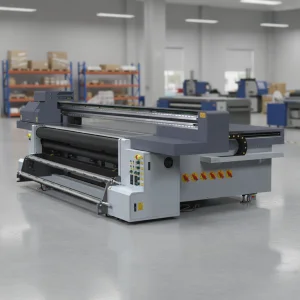

Ntek YC2513R Flatbed and Roll to Roll Machine
Famous Ntek YC2513R Flatbed and Roll to Roll Machine UV Digital Printer Supplier, Factory
View Specifications
UV Inkjet Hybrid Flatbed Printer Roller Printing Machine
High-Quality Large format UV Inkjet Hybrid Flatbed Printer Roller Printing Machine Company, Companies
View Specifications
Large Format Printing Machine Mural Banner Flatbed Printer
Wholesale Large Format Printing Machine Mural Banner Flatbed Printer Suppliers, Products
View Specifications
Customized High Speed Cup Stickers Box Aluminum UV Flatbed Printer
OEM OEM Customized High Speed High Precision Cup Stickers Box Aluminum Printing Machine UV Flatbed Printer Manufacturers, Suppliers
View Specifications
OEM YC2030 High Resolution UV Flatbed Printer
OEM YC2030 High Resolution Uv Flatbed Printer Digital Printing Machine Manufacturers, Factories
View Specifications
YC2500HR Banner Roll to Roll UV Printer
High-Quality Quality Inspection New Model YC2500HR Banner Roll to Roll UV Printer Supplier, Products
View Specifications
2030 UV LED Flatbed Printer for Wood
Famous Best quality Uv Wood Printing Machine 2030 Uv Led Flatbed Printer Price Suppliers, Company
View Specifications
OEM ODM Digital LED 1610 Flatbed UV Printer
OEM ODM Factory Digital LED Printing Machine 1610 Flatbed UV Printer Manufacturers, Factories
View Specifications