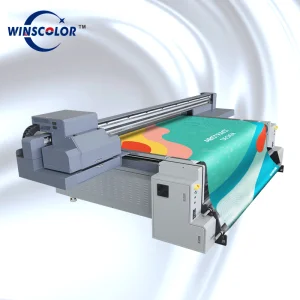
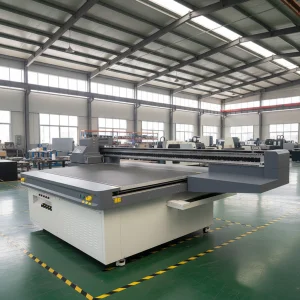
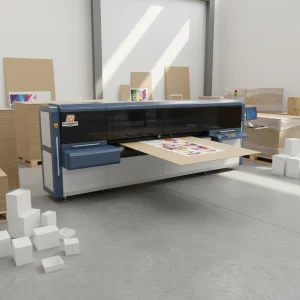
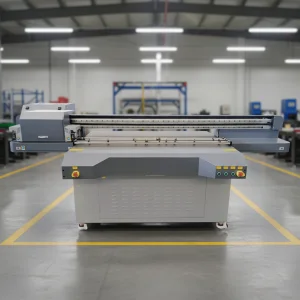
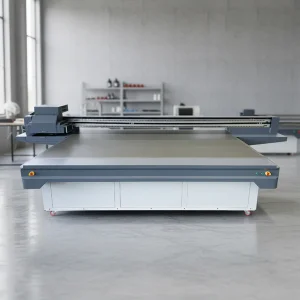
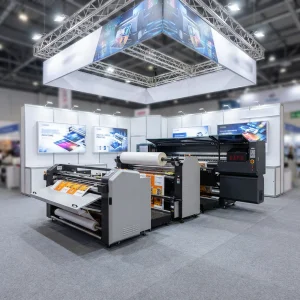
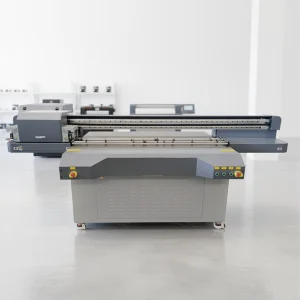
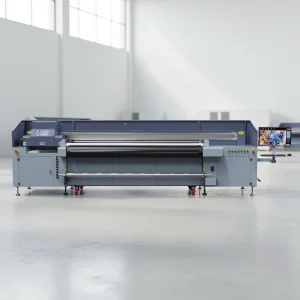
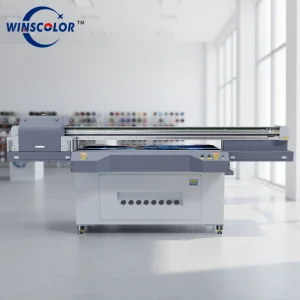
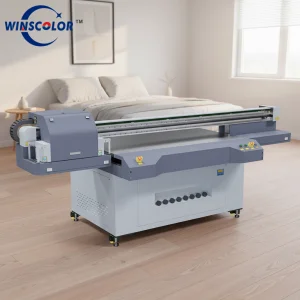
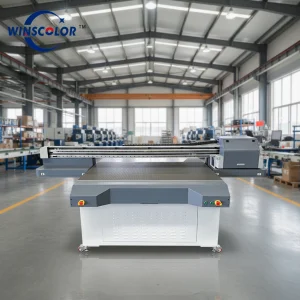
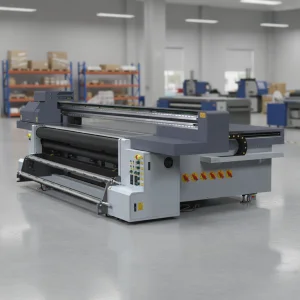
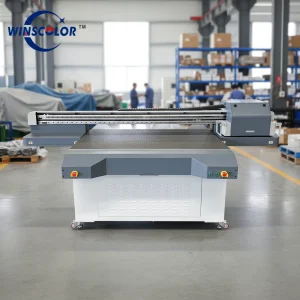
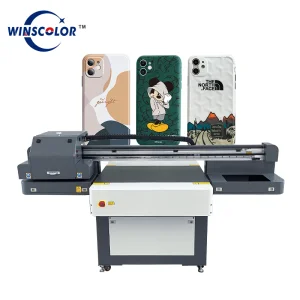
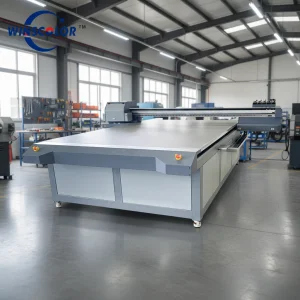
Explore factory-direct industrial digital equipment engineered with zoned negative-pressure vacuum platforms and linear motor drives designed explicitly for rigid aluminium, composite panels, and versatile hybrid feeds.
Printing on pure aluminium, anodised sheets, brushed composites (ACM/Dibond), and coated alloys involves overcoming distinct surface-energy boundaries and thermal expansion issues. State-of-the-art flatbed engineering addresses these physics challenges directly.
Aluminium has high thermal conductivity. Conventional mercury vapor lamps direct infrared radiation onto sheets, causing localized thermal expansion and bowing during high-pass runs. Modern 395nm cold-cure LED systems deliver instant photo-polymerization with near-zero heat transfer, preserving registration precision down to ±0.02 mm.
Untreated aluminium typically exhibits low surface dyne levels, resulting in ink reticulation or cross-hatch peel failures. Advanced wholesale UV aluminium printing systems integrate inline pyrosil/plasma ionization systems or custom cross-linking primers that bond chemically to metal oxides, delivering 5B cross-hatch adhesion results without flaking.
Industrial output requires consistent variable grayscale jetting (5pl to 15pl). By deploying high-frequency Ricoh Gen6 printheads driven by metal-shielded gantry guide rails, our printers maintain stable dot placement even across rough brushed sheets, decorative perforations, or industrial panel edges.
For international procurement directors, signage manufacturers, and industrial OEMs, sourcing from an integrated Chinese manufacturing powerhouse eliminates multi-tier middleman margins while unlocking rigorous component standardization and scalable throughput.
Every flatbed base undergoes high-temperature thermal stress relief annealing followed by 5-axis CNC portal milling. This ensures that the 2500×1300mm to 3300×2100mm vacuum tables maintain planarity within ±0.03mm over years of continuous shift cycles.
By producing structural gantries, negative pressure sub-ink chambers, and control software boards within Shandong’s advanced manufacturing belt, we shorten custom OEM development cycles from 9 months to 45 business days, lowering total operational acquisition costs by 35%.
Machines complete a continuous 72-hour print test on actual coated aluminium panels, running automated head temperature compensation, vacuum distribution checks, and curing tests before export clearance across CE, RoHS, and ISO9001 frameworks.
Industrial direct-to-substrate UV printing opens scalable commercial opportunities across high-margin fabrication sectors, replacing messy silkscreens and expensive film lamination.
Modern building architecture demands custom faux-marble, brushed bronze, and woodgrain finishes printed directly onto aluminium composite sheets (ACM). The printers deliver UV-resistant, non-yellowing finishes capable of withstanding exterior weathering, solar radiation, and rain abrasion.
Electronics manufacturers require durable, solvent-resistant graphics for machine control interfaces, anodised aluminium nameplates, and CE compliance tags. High-definition drop placement ensures micro-text down to 2pt size remains razor-sharp and legible.
Municipal departments and transportation contractors depend on reflective and non-reflective aluminium traffic sign systems. The inline dual-white channel delivers rich underbase opacity, ensuring vivid colors even against dark or brushed alloy backgrounds.
Browse the remainder of our engineered product line, including mid-format flatbeds, continuous hybrids, and dedicated packaging units built for reliable production shifts.
Direct answers addressing technical configuration, ink chemistry bonding, duty cycles, and international support networks.