Explore precision-engineered digital inkjet hardware built with high-frequency piezo printheads, tension-controlled conveyor feeding systems, and instant UV-LED curing technology.
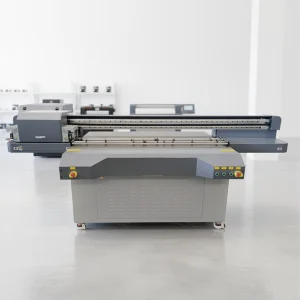
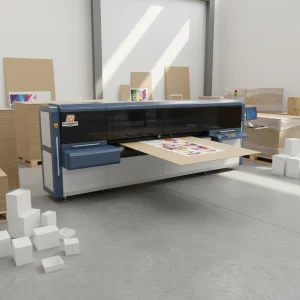
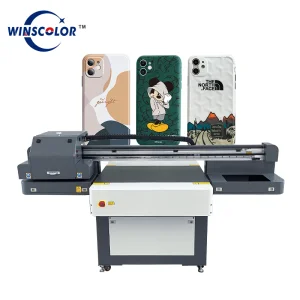
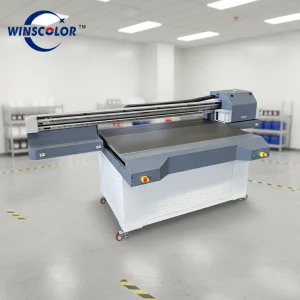
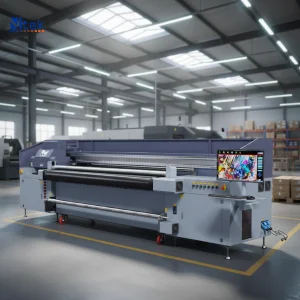
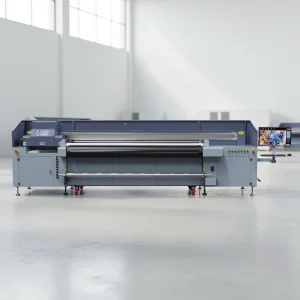
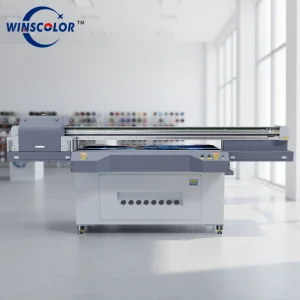
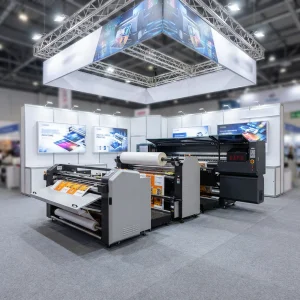
Analyzing how piezo droplet jetting physics, continuous belt synchronization, and cold-cure LED photopolymerization have rendered legacy analogue gravure and mechanical screen setups obsolete.
Industrial surface decoration and high-speed web conversion have reached a definitive inflection point. The global roll-to-roll and rigid-sheet manufacturing sector is transitioning away from fixed rotary cylinders, chemical gravure etching, and mechanical flexography toward agile, plate-less digital roller printing machine architectures. Historically, gravure roller systems required tens of thousands of dollars in tooling costs per cylinder and extended downtime for wash-ups, prepress plate validation, and color registration runs. In contrast, modern digital roller and hybrid UV machines leverage high-frequency drop-on-demand (DoD) piezoelectric printhead clusters synchronized with high-friction vacuum conveyor belts. This hybrid capability allows manufacturing plants to transition seamlessly between continuous roll substrates—such as coated vinyl, textile fabrics, TPU film, and metallic foils—and rigid flat panels like acrylic, expanded PVC, honeycomb corrugated board, and aluminum composite sheets, all on a unified motion chassis.
From an engineering standpoint, this operational leap is anchored in three core technological breakthroughs: variable drop grayscale jetting, sub-micron closed-loop motion encoder feedback, and ultraviolet photopolymerization curing kinetics. Modern industrial printheads, specifically the Ricoh Gen6 (MH5320/MH5340) and Kyocera KJ4A series, operate at native firing frequencies between 30 kHz and 50 kHz. By dynamically modulating waveform voltages, these heads generate picoliter drop volumes ranging from 3.5 pl for micro-text photographic sharpness up to 28 pl for maximum optical density, dense white opacity, and high-build tactile embossed textures. Coupled with dual magnetic linear motor gantries and Renishaw optical scales achieving ±0.01 mm bidirectional positioning repeatability, digital hybrid roller platforms eliminate step banding, edge curling, and color feathering even at sustained linear web speeds exceeding 120 square meters per hour.
Zero mechanical cylinders, zero gravure etching, and zero screen exposure frames. Direct CAD/RIP rasterization reduces job onboarding latency from weeks to seconds, unlocking hyper-profitable short-run and on-demand micro-batch manufacturing.
Equipped with semiconductor diode water-cooled 395nm UV-LED curing arrays. Cold curing delivers instantaneous polymerization without radiant infrared heat, preventing thermal deformation across heat-sensitive polymers, thin BOPP, and elastic synthetic textiles.
Seamlessly handles roll-fed media and rigid panels via multi-chamber zoned vacuum belts. Heavy pneumatic pressure pinch rollers ensure millimeter-accurate substrate stabilization, mitigating web weave and tension variance across non-uniform surfaces.
Strategic purchasing executives evaluate printing assets beyond hardware capex: analyzing ink yield per liter, printhead life-cycles, mechanical duty ratings, and energy footprints.
In large-scale B2B procurement across European contract printers, North American packaging converters, and Southeast Asian industrial signmakers, capital allocation strategies have matured significantly. Plant managers no longer prioritize sticker price alone. Rather, enterprise procurement mandates calculate a strict 36-month Total Cost of Ownership (TCO) equation encompassing four critical parameters: (1) ink fluidics efficiency and pigment coverage per milliliter, (2) mean time between failures (MTBF) of piezo nozzle plates, (3) mechanical frame vibration dampening under three-shift 24/7 duty cycles, and (4) open architecture ink formulation compatibility.
A dedicated industrial roller printing machine or hybrid UV platform operates in challenging environments where dust, static charges, and temperature swings are prevalent. Equipment built on lightweight sheet-metal frames inevitably succumbs to microscopic chassis torsion, resulting in nozzle drop deflection, head crashes, and progressive color misalignment over 12 to 18 months of intensive operation. Enterprise procurement teams demand heavy-duty, stress-relieved welded steel beds subjected to 650°C thermal annealing, paired with twin imported Japanese THK or Taiwanese Hiwin 25mm linear guide rails. This mechanical rigor ensures continuous multi-shift production capability with zero frame fatigue.
| Evaluation Parameter | Legacy Rotary / Analogue Setup | Entry-Level Desktop Flatbed | Industrial Hybrid Roller UV Fleet |
|---|---|---|---|
| Prepress Setup & Make-Ready | 2.5 – 6.0 Hours (Cylinder / Screen swap) | 15 – 25 Minutes (Manual board placement) | < 3 Minutes (RIP software queue) |
| Media Feeding Versatility | Fixed roll diameter only; zero rigid capacity | Rigid flat panels only; max 100mm height | Continuous Roll + Rigid Panels up to 50mm |
| Piezo Jetting Frequency / Speed | Fixed mechanical velocity (non-variable) | 8 – 14 kHz (~10 – 18 m²/hr) | 30 – 50 kHz (60 – 140 m²/hr production) |
| Substrate Flexibility & Thermal Load | High heat drying ovens; high shrink risk | Moderate heat; limited web tension control | Cold LED UV (< 38°C on substrate surface) |
| Ink Consumable Yield & Cost | High waste wash-up chemistry ($18–$28/kg) | Proprietary chipped cartridges ($120–$180/L) | Industrial Bulk Positive Tank ($32–$48/L) |
| Chassis Structure & Weight Rating | Massive cast iron (10,000+ kg, immoveable) | Sheet metal folding frame (120 – 350 kg) | Stress-relieved milled gantry (1,600 – 3,200 kg) |
How Jinan’s specialized digital printing manufacturing cluster integrates end-to-end CNC component milling, automated surface grinding, and rigorous factory acceptance testing.
Over the past decade, the center of gravity for high-end wide-format and industrial roller printing manufacturing has consolidated within specialized Chinese engineering clusters—most notably in Jinan, Shandong. Winscolor (operating under Jinan Yingcai Digital Technology Co., Ltd) represents the modern archetype of an Industry 4.0 intelligent printing equipment manufacturer. Spanning a dedicated 20,000-square-meter facility with six precision assembly lines, the operation merges vertical component manufacturing with world-class component sourcing, providing global distributors and B2B buyers with unprecedented supply chain resilience.
Unlike assemblers who outsource mechanical processing to third-party workshops, our Jinan manufacturing facility retains complete control over gantry milling, structural stress annealing, and table precision grinding. Every gantry beam is milled from aviation-grade extruded aluminum alloys or heavy structural steel on five-axis gantry CNC machining centers. After machining, laser interferometers verify planarity and linear straightness across a 3.3-meter travel path to within 0.015 mm. This structural foundation directly eliminates the microscopic high-frequency resonant vibrations that cause horizontal banding in high-speed bi-directional printing modes.
Furthermore, supply chain redundancy is built into every sub-assembly: servo drive systems utilize Omron and Panasonic AC brushless motors; pneumatic control systems integrate German Festo and SMC solenoid valves; and ink delivery pathways employ medical-grade PTFE tubing with negative-pressure automated degassing systems. By decoupling key sub-assemblies from single-source vulnerabilities and holding extensive buffer inventory of critical parts, our factory delivers complete custom machines within 10 to 18 business days—drastically outperforming standard 12-to-16-week European lead times while upholding CE, RoHS, and ISO 9001 quality certifications.
Autonomous manufacturing, multi-axis CNC milling, and dynamic printhead calibration bays.
Every roller platform undergoes a 72-hour nonstop print test before final crating and export dispatch.
Verified with dual Renishaw laser optical scales to ensure sub-pixel ink drop landing registration.
Providing global freight fulfillment, localized door-to-door DDP logistics, and 24/7 technical dispatch.
Assessing localized regulatory demands, substrate availability, and manufacturing requirements across major economic corridors worldwide.
Demand is driven by rapid customization in corrugated e-commerce packaging, architectural wallcoverings, and corporate event signage. Emphasis centers on UL GREENGUARD Gold certified low-VOC UV inks and UL-compliant electrical enclosures.
Characterized by strict carbon footprint accountability, energy efficiency standards, and RoHS chemical directives. Printing operations favor energy-sipping UV-LED engines that replace energy-intensive thermal hot-air drying ovens.
High-volume manufacturing hubs across Vietnam, Indonesia, India, and China require robust hardware capable of withstanding ambient humidity while executing continuous high-speed billboard and textile conversion.
Rapid investments in commercial retail centers and infrastructure projects fuel rapid demand for rugged, high-uptime machinery designed for industrial ceramic printing, outdoor architectural hoardings, and heavy traffic signage.
From flexible synthetic rolls to ultra-dense non-porous metals, our multi-channel UV fluidics enable high-adhesion printing across virtually any medium.
Seamless textured wallpaper, non-woven fabric, and faux-leather rolls printed with CMYK + White + High-Gloss tactile varnish for high-end luxury interiors.
Direct digital printing onto fluted kraft paper, white-top linerboard, and honeycomb cardboard without crushing flutes or requiring costly flexographic plates.
Micro-primer jetting ensures maximum scratch resistance on non-porous glass partitions, backlit retail acrylic panels, and decorative shower enclosures.
Direct-to-aluminum composite (Dibond), stainless steel nameplates, and road signage with extreme UV and chemical resistance against fading in outdoor conditions.
High-elongation flexible UV inks expand and bend naturally without micro-cracking on natural cowhide, synthetic PU leather, and athletic shoe uppers.
A breakdown of the precision motion gantry, closed-loop ink fluidics, automated negative pressure, and active static neutralization that ensure industrial-grade output.
Independent digital electronic regulators control white ink channels separately from color channels. Automated cyclical white agitation prevents heavy titanium dioxide pigment settling, preventing nozzle starvation and micro-channel clogs.
Twin static elimination bars mounted on both carriage flanks neutralize triboelectric charges up to ±20 kV generated during high-speed roll unspooling. This stops ink atomization mist and prevents stray satellite drops from marring edge sharpness.
Heavy-duty pneumatic air shafts with auto-clutch brakes maintain uniform unwinding and rewinding tension across wide 3.2m media rolls up to 100 kg, preventing web necking, tracking skew, and wrinkles during long unattended print cycles.
Complete your production setup with specialized flatbed systems, high-speed road signage printers, and custom OEM digital decorating engines.
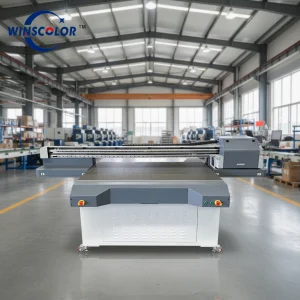
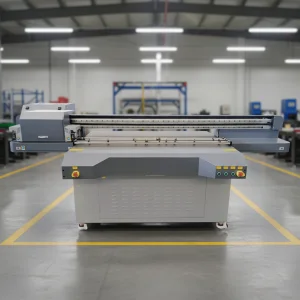
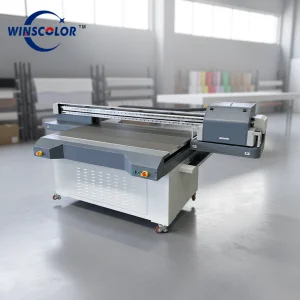
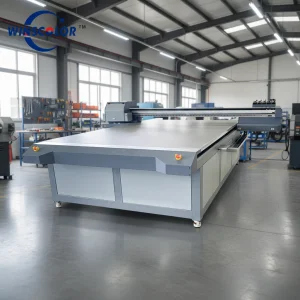
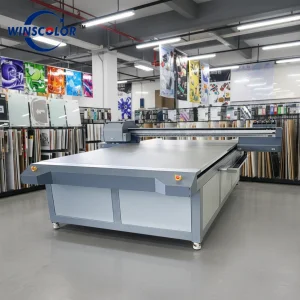

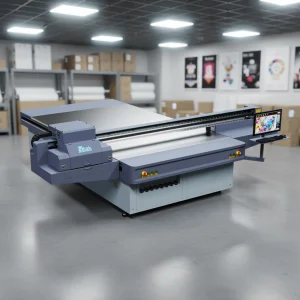
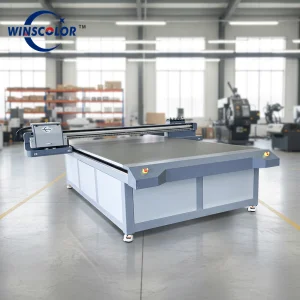
In-depth responses covering mechanical engineering tolerances, printhead maintenance, ink rheology, and OEM customization capabilities.
Traditional rotary gravure and flexographic roller machines rely on mechanically etched metal cylinders or photopolymer elastomer plates that carry ink onto moving web substrates. While exceptionally rapid for runs of 50,000 meters or more, they incur significant cylinder manufacturing costs, extensive setup labor, and massive waste during job changeovers. A digital hybrid roller machine utilizes non-impact piezoelectric inkjet printheads (such as Ricoh Gen6 or Kyocera) to deposit variable droplets directly from digital RIP vectors onto the media.
This completely eliminates mechanical plates, allows seamless design revisions between consecutive jobs, and enables variable-data serialization at full production speeds. Furthermore, the hybrid conveyor architecture accepts both flexible rolled substrates and rigid boards up to 50mm in thickness on a single production platform.
Under standard industrial operating protocols—defined as maintaining positive room ventilation at 20°C–26°C with 40%–60% non-condensing relative humidity and adhering to automated daily wiping and capping routines—industrial Ricoh Gen6 (MH5320) printheads exhibit a typical operational lifespan of 3 to 5 years (exceeding 100 billion actuations per nozzle). Winscolor machines integrate automated negative pressure regulation, dual-stage 5-micron sub-tank filtration, and automatic anti-crash sensors to protect the physical silicon nozzle plate from media collisions, maximizing the return on investment of every printhead assembly.
Our hybrid platforms utilize a multi-zone vacuum suction table integrated directly underneath a seamless, heavy-friction synthetic conveyor belt. A high-torque pneumatic pinch roller assembly applies uniform downward pressure across the entry feed line. As the media unspools from the dual air-expansion shaft, an optical-electronic tension feedback loop measures resistance and dynamically balances feed speed. This synchronization prevents longitudinal tracking skew, lateral wander, and substrate cockling even when processing heavy 100kg rolls of PVC banner, synthetic leather, or textured canvas.
Non-porous, high-surface-energy substrates such as float glass, polished stainless steel, and glazed ceramics possess low surface tension that can cause UV monomers to bead rather than form a continuous chemical bond. Winscolor provides three complementary solutions: (1) automated inline digital jetting of silane-based chemical adhesion primers through dedicated head channels; (2) optional corona discharge or atmospheric plasma surface treatment modules integrated onto the gantry; and (3) customized hard-curable ink chemistries formulated with bifunctional acrylate oligomers that achieve 4H–5H pencil hardness post-cure.
All Winscolor industrial printing machines carry full CE Declaration of Conformity compliance (covering the European Machinery Directive 2006/42/EC and Low Voltage Directive 2014/35/EU), along with ISO 9001:2015 manufacturing quality assurance. Our UV-LED ink fluidics comply fully with the European Union REACH chemical regulation (EC 1907/2006), RoHS directives, and VOC emission benchmarks matching UL GREENGUARD Gold criteria, ensuring safe integration within indoor retail spaces, schools, and healthcare environments.
Yes. As a direct source manufacturer with in-house five-axis CNC machining, electronic board development, and RIP integration teams, we support comprehensive OEM/ODM partnerships for global regional equipment brands. OEM options include custom exterior sheet-metal styling, specialized powder-coat RAL colors, branded GUI touchscreens, customized vacuum bed zoning, expanded gantry heights up to 200mm, and integrated inline slitting or rotary modules designed around your specific production volumes.
